


News Center
—— NEWS CENTER ——
Xi'an Shenghongchuang Instrument Co., Ltd.
Contact: Mr. Zhang
Mobile: 15529283736
Email: shc-sensor@qq.com
Address: Fortune Building, Sanqiao Street, Xixian New Area, Xi'an, Shaanxi Province
How Are Xi'an Shenghongchuang Pressure Sensors? Assess Application Requirements First, Then Product Compatibility
For machinery and equipment integration, pipeline pressure monitoring, hydraulic system upgrades, or automated production line construction, the reliability of a pressure sensor should not be judged solely by a single quotation or promotional specifications. It should be evaluated comprehensively based on accuracy, measuring range, medium, installation environment, signal output, and subsequent service.
Xi'an Shenghongchuang Instruments & Meters Co., Ltd. is responsible for brand operations, sales, and technical services, while its manufacturing base, Shaanxi Qinkong Sensor Technology Co., Ltd., focuses on the R&D and production of industrial sensors, transmitters, and intelligent digital display instruments. Its pressure measurement and control products cover conventional industrial applications and provide selection and non-standard customization support for complex operating conditions such as high temperature, high pressure, and strong interference.
From the practical purchasing perspective of industrial users, the key criteria for evaluating Shenghongchuang pressure sensors should include stable product operation, suitability for operating conditions, quality control processes, and technical response efficiency. For projects seeking controllable long-term operating costs, thorough parameter confirmation at the initial stage is usually more important than simply reducing the purchase unit price.
Measurement Accuracy and Long-Term Stability
The core function of a pressure transmitter is to convert on-site pressure changes into standard electrical signals for reading by PLCs, DCSs, recorders, or digital display control instruments. Common outputs include 4-20mA, 0-10V, and RS485. Users should select according to the interface and anti-interference requirements of the on-site control system to avoid adding conversion modules later.
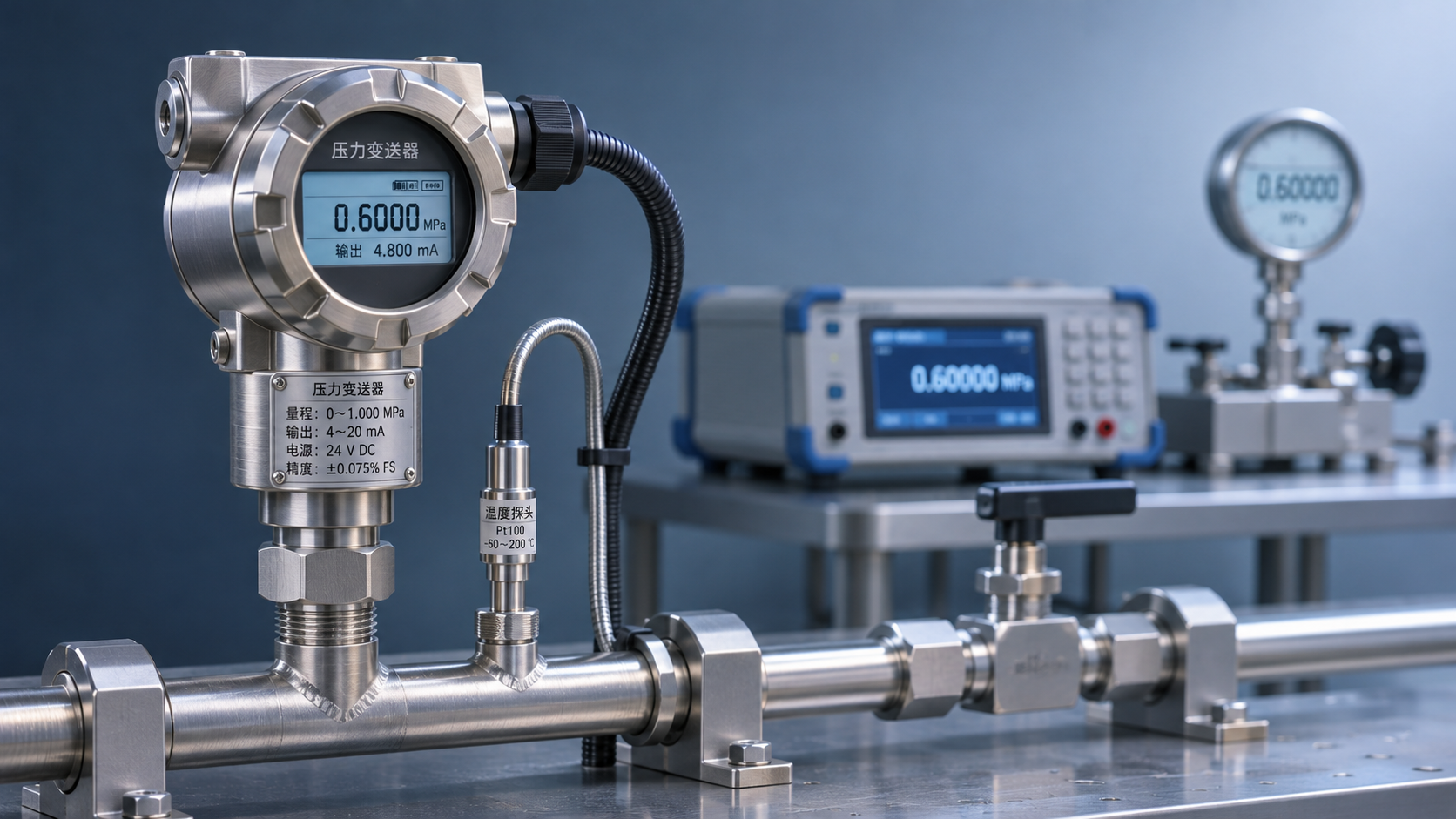
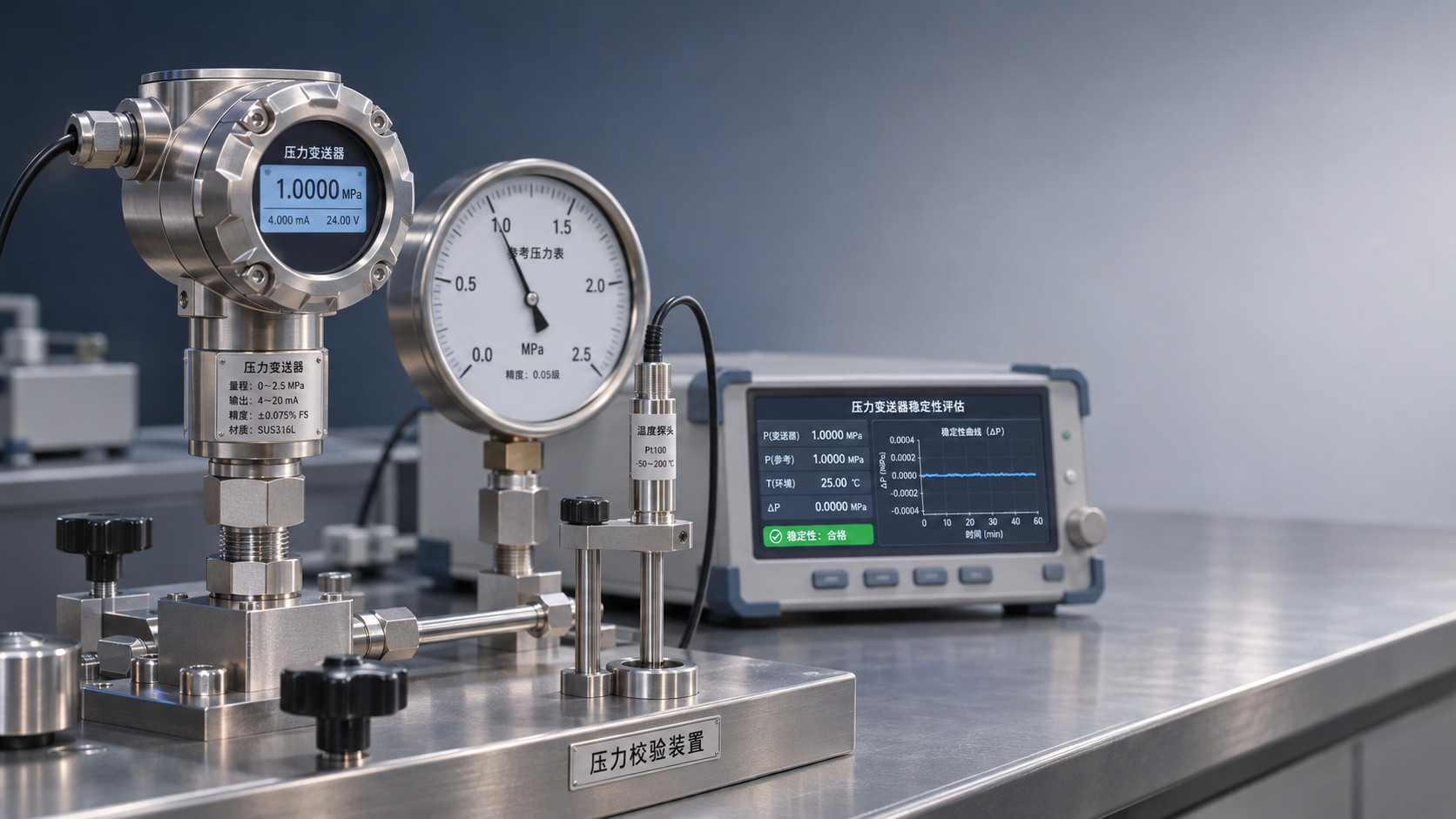
Shenghongchuang products undergo processes including precision machining, program commissioning, accuracy calibration, finished-product inspection, and factory acceptance during production. For equipment requiring continuous operation, zero drift, full-scale error, and repeatability deserve more attention than one-time test data, especially in pumping stations, air compressors, hydraulic stations, and chemical pipelines.
Generally, conventional industrial pressure measurement can use Class 0.5, Class 0.25, or higher accuracy grades according to control precision requirements. If the application is only for equipment interlock protection, measuring range and pressure resistance margin usually take priority. If it is used for process measurement, quality traceability, or high-precision closed-loop control, the accuracy grade, temperature drift specifications, and calibration report should be confirmed as priorities.
Adaptability to Complex Operating Conditions Determines the User Experience
How to Select Products for High-Temperature, High-Pressure, and Corrosive Media Environments
Pressure sensors do not always come into contact with clean air or room-temperature water. Oils, steam, corrosive liquids, viscous media, particle-containing fluids, and high-temperature gases can all affect the selection of sensor diaphragms, seals, and process connections. Before purchasing, the medium name, temperature range, viscosity, corrosiveness, and the presence of pressure pulsation should be provided.
304 stainless steel is suitable for most conventional industrial environments, offering good corrosion resistance and cost-effectiveness. When the medium contains highly corrosive components or higher corrosion resistance is required at welded areas, 316 or 316L materials are worth considering. The low-carbon characteristics of 316L help reduce the risk of intergranular corrosion after welding, but whether its use is necessary should still be determined by the on-site medium.
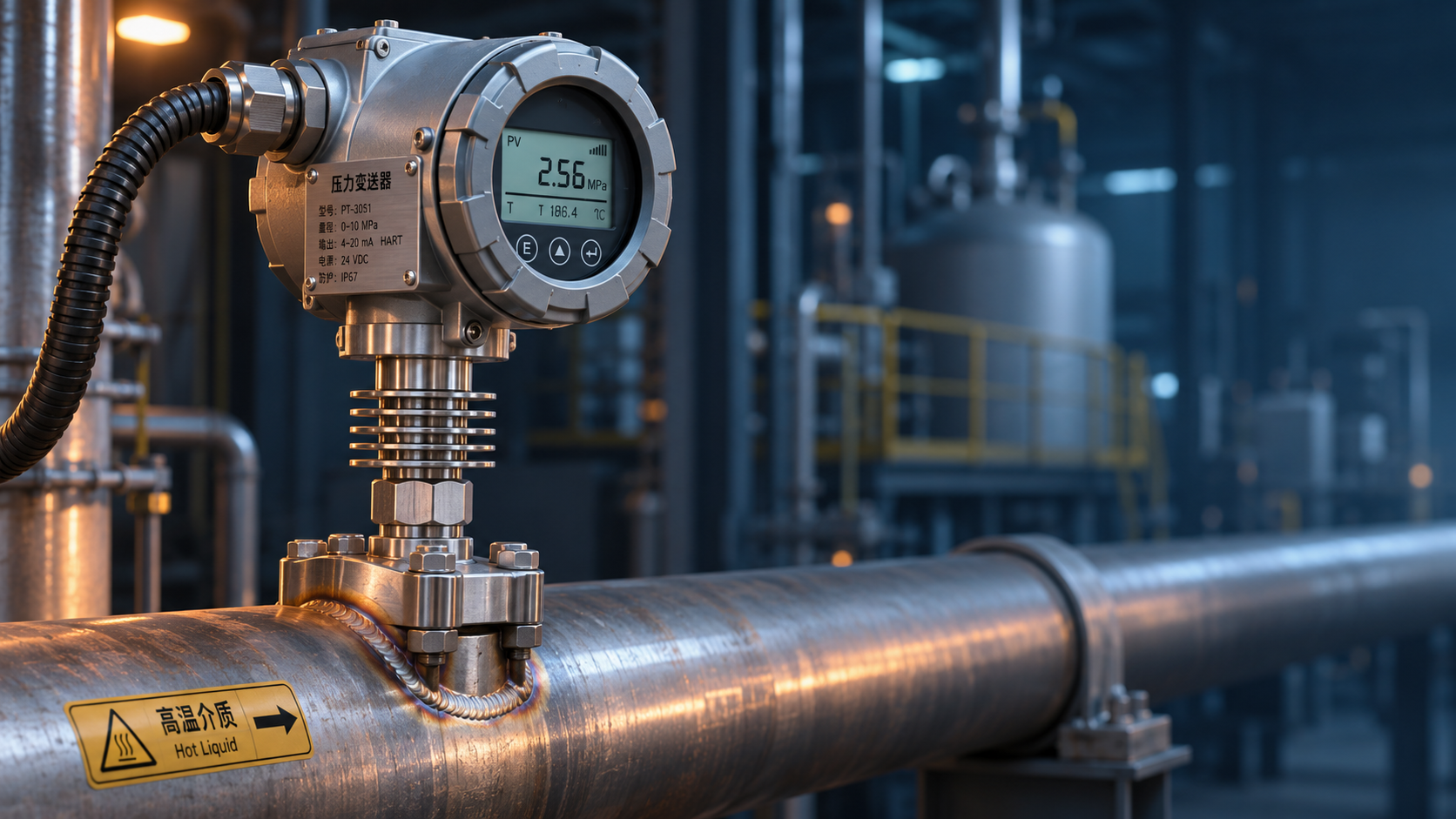
Under high-temperature operating conditions, it is not sufficient to consider only whether the medium temperature is below the product's rated upper limit. The impact of heat conduction on internal sensing elements must also be considered. Where necessary, heat dissipation structures, impulse lines, diaphragm seals, or remote transmission methods can be used to reduce temperature effects, while the installation location should avoid direct radiation from equipment heat sources.
High-Speed Dynamic Pressure Measurement Requires Attention to Response Time
For stamping equipment, rapidly actuated hydraulic mechanisms, test benches, and pulsating pressure monitoring, the response time of high-speed pressure transmitters is a key indicator. If the signal changes rapidly while the sensor responds slowly, the data received by the control system will lag, which may affect action judgment, alarm timing, and process analysis results.
During actual selection, in addition to millisecond-level response capability, the refresh rate of the acquisition module, PLC scan cycle, communication delay, and pipeline damping should also be checked. Even if the sensor itself responds quickly, overly long impulse lines, blocked pressure ports, or a low-speed acquisition system can reduce overall dynamic performance.
Shenghongchuang can provide corresponding product matching and technical communication based on application conditions. For non-standard projects, it is recommended to specify the pressure fluctuation frequency, peak pressure, installation space, power supply conditions, and data acquisition method at one time to reduce repeated sampling and on-site adjustments.
Whether the Product Portfolio and Customization Services Are Suitable for Project Procurement
From Single-Point Measurement to Complete Measurement and Control Solutions
In addition to pressure transmitters, Shenghongchuang also offers level transmitters, differential pressure transmitters, load cells, displacement sensors, force sensors, torque sensors, temperature and humidity sensors, flow meters, and intelligent digital display control instruments. When a set of equipment includes multiple measurement points, centralized procurement helps standardize interfaces, parameter descriptions, and technical communication.
The challenges in industrial projects often lie not in standard components themselves, but in interface dimensions, cable lengths, protection requirements, display methods, alarm control logic, and special mounting structures. Suppliers capable of providing non-standard customization services are generally more suitable for retrofit projects, complete equipment manufacturers, and end users with clearly defined process boundary conditions.
Purchasing personnel can assess “product unit price” by separating it into five parts: equipment cost, installation cost, commissioning cost, maintenance cost, and downtime risk. For measurement and control points that require long-term operation, the value delivered by stability and after-sales technical support is often reflected throughout the subsequent service life.
Recommended Confirmations Before Procurement
Keep Quotations, Samples, and Site Conditions Consistent
First, confirm the actual working pressure and maximum instantaneous pressure. The measuring range should neither be too small nor unnecessarily oversized. Usually, keeping the working pressure within 30% to 80% of the full scale makes it easier to balance measurement resolution and overload safety margin, although the specific selection still needs to be determined based on pressure fluctuation characteristics.
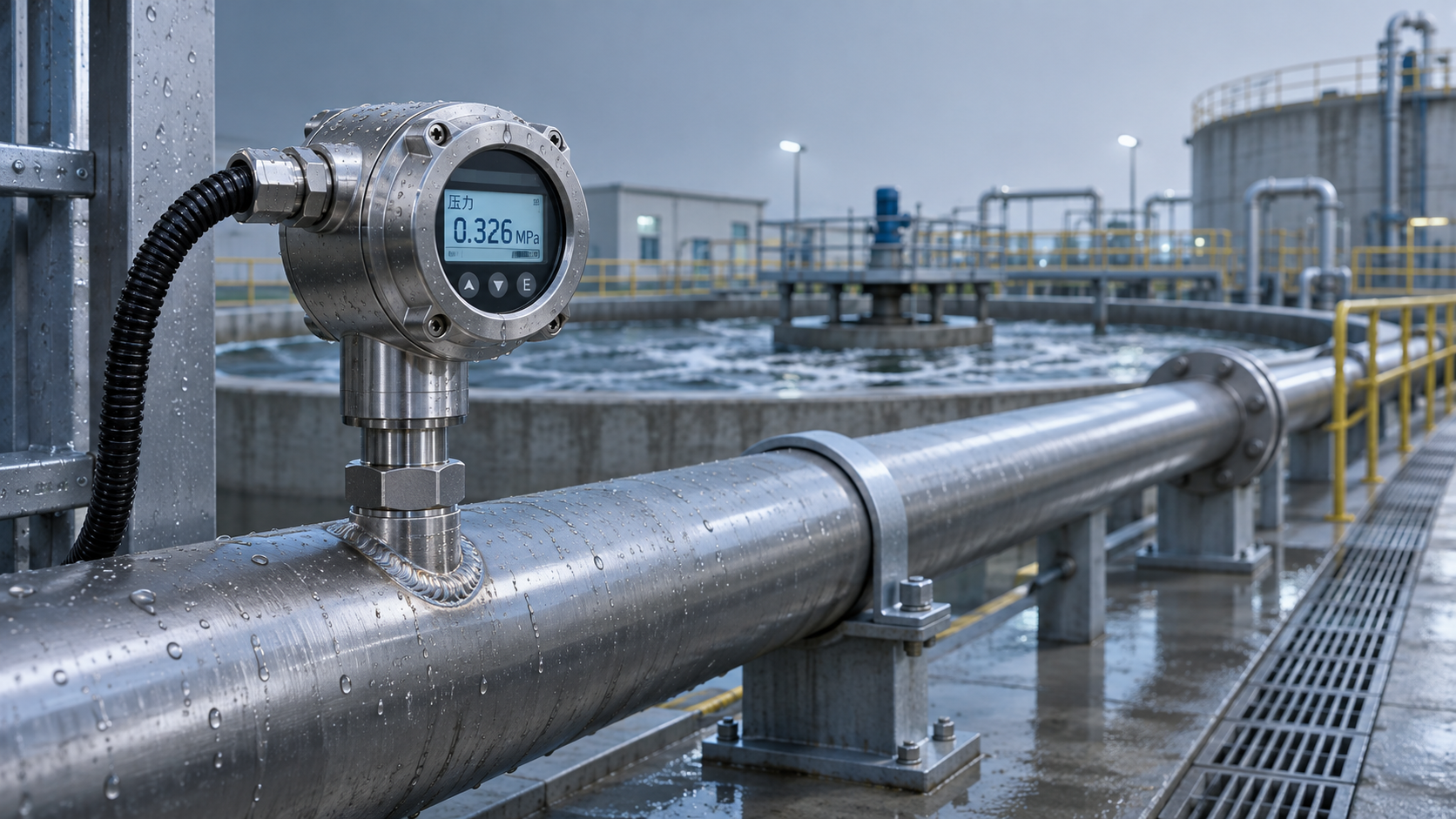
Second, confirm the process connection and electrical connection methods, including thread specifications, installation direction, connector model, cable length, and protection rating. For outdoor, humid, dusty, or electromagnetically noisy areas, waterproofing, dust protection, shield grounding, and surge protection should all be incorporated into the solution.
Finally, the supplier should be requested to provide a clear description of the model, measuring range, accuracy, output, material, and delivery lead time based on the operating conditions. For bulk procurement or key equipment integration, sample verification can be conducted first to observe installation convenience, data stability, and compatibility with the control system before confirming the formal purchase quantity.
To assess whether Xi'an Shenghongchuang pressure sensors are suitable for the current project, information such as the medium, pressure range, temperature, connection, output signal, operating environment, and estimated quantity can be compiled and submitted to technical personnel for the corresponding selection proposal, parameter documentation, and quotation recommendations, ensuring that the product configuration is better suited to actual equipment operating conditions.
- Pressure Transmitter
- Level Transmitter
- Differential Pressure Transmitter
- Pressure Sensor
- Force Sensor
- Flow meter
- Displacement Sensor
- Digital Display Instrument
- 数显控制仪表
- Control Instrument
- 智能数显控制仪表
- High-Speed Pressure Transmitter
- Load Cell
- Temperature and Humidity Sensor
- Torque sensor
- How Are Xi'an Shenghongchuang Pressure Sensors?
Related Recommendations
 Compensation Principles and Temperature Drift Parameters of Temperature-Compensated Pressure Transmitters
 Selecting a High-Temperature Liquid Pressure Transmitter: How to Determine Temperature, Sealing, and Range
 Sewage Containing Sand Easily Clogs Pipes? Installation and Selection Tips for Anti-Clogging Pressure Transmitters
 How Do You Evaluate a High-Stability Pressure Transmitter? Understanding Long-Term Drift and Temperature Effects