


News Center
—— NEWS CENTER ——
Xi'an Shenghongchuang Instrument Co., Ltd.
Contact: Mr. Zhang
Mobile: 15529283736
Email: shc-sensor@qq.com
Address: Fortune Building, Sanqiao Street, Xixian New Area, Xi'an, Shaanxi Province
Key Hygienic Control Considerations for Hygienic Flush-Mounted Diaphragm Differential Pressure Transmitters in CIP Systems
CIP cleaning systems perform in-place cleaning for production lines in the food, beverage, biopharmaceutical, dairy, and fine chemical industries. Their cleaning effectiveness depends not only on cleaning solution concentration, temperature, and flow rate, but also on whether all process measurement instruments feature fully cleanable hygienic structures. Hygienic flush-mounted diaphragm differential pressure transmitters are commonly used to monitor parameters such as filter differential pressure, pipeline resistance, liquid level differential, and pump inlet-to-outlet differential pressure. Once a retention area forms at the installation point, it may become an accumulation point for microorganisms, proteins, sugars, or process residues.
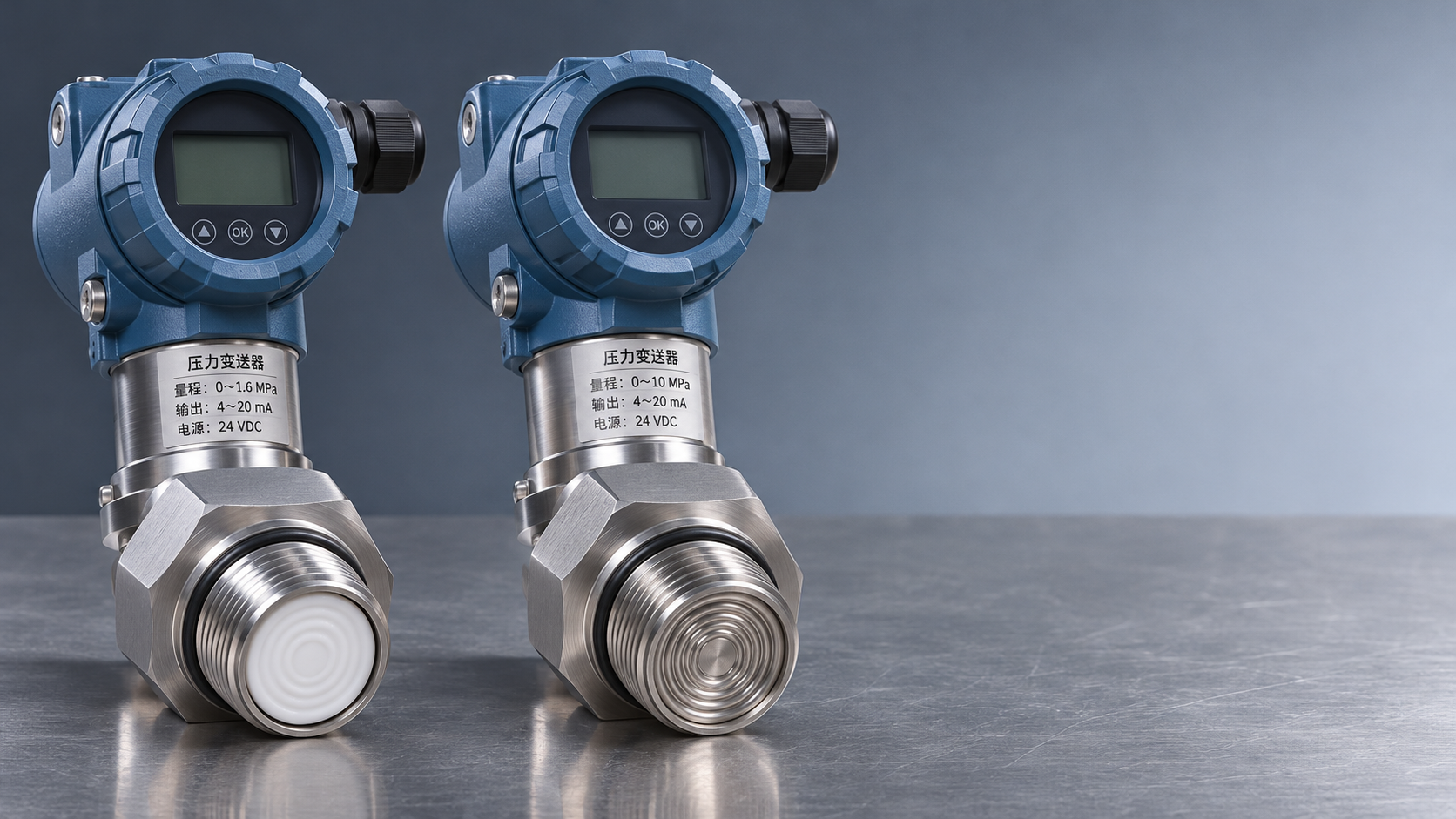
A hygienic dead zone generally refers to a localized area where cleaning solution cannot make sufficient contact, fluid displacement is incomplete, or residual liquid cannot drain naturally. For differential pressure measurement, traditional impulse lines, threaded cavities, stepped connection surfaces, and excessively long diaphragm extension sections may all reduce CIP coverage. The core value of a hygienic flush-mounted diaphragm structure lies in making the pressure-sensing diaphragm as flush as possible with the inner wall of the pipeline or vessel, thereby reducing medium retention at the instrument connection.
During technical evaluation, attention should not be limited to the transmitter range and output signal. Diaphragm flatness, process connection type, sealing materials, installation orientation, temperature resistance, and resistance to chemical cleaning should also be incorporated into the same evaluation system. For production lines requiring frequent CIP, the hygienic design of the instrument is as important as measurement stability; together, they affect equipment validation, batch quality, and maintenance costs.
How Flush-Mounted Diaphragm Structures Reduce Residue and Retention
Flush Alignment Between the Diaphragm and Process Surface
Hygienic flush-mounted diaphragm differential pressure transmitters should use a design in which the wetted diaphragm is flush or nearly flush with the end face of the process connection. If there are noticeable recesses around the diaphragm, low-velocity zones can easily form as the cleaning solution flows through, making residual media difficult to remove. For high-viscosity materials, particle-containing slurries, or protein-based media, even shallow localized recesses may increase cleaning validation difficulty.
During a CIP cycle, fluid generally relies on a certain flow velocity to generate turbulence or wall shear force to remove adherent materials. In engineering practice, the cleaning flow velocity may be controlled in combination with pipe diameter, cleaning solution properties, and loop arrangement. A typical reference flow velocity range for hygienic piping is 1.5m/s to 3.0m/s. The flush-mounted diaphragm surface should not disrupt this flow field, avoiding backflow, vortices, or liquid stagnation at the transmitter installation port.
For the high-pressure and low-pressure sides of a differential pressure transmitter, the structural consistency of the wetted ends on both sides should be checked simultaneously. If only one side uses a hygienic flush-mounted diaphragm connection while the other side still uses a long, narrow impulse line or ordinary threaded fitting, cleaning blind spots may remain throughout the measurement loop. This may also cause inconsistent pressure transmission response on the two sides, affecting zero stability and differential pressure readings.
Key Flatness Details to Inspect
Selection documentation should clearly specify the surface condition at the diaphragm edge, weld transition areas, and near sealing grooves. Wetted surfaces should be smooth and continuous, with no sharp corners, burrs, cracks, or machining marks. Metal wetted parts used in hygienic processes are typically made of 316L stainless steel, and material compatibility should be confirmed according to the corrosiveness of the medium.
Surface roughness is one of the key indicators for assessing cleaning difficulty. For demanding hygienic applications, priority may be given to the Ra value of wetted surfaces. For example, surfaces with Ra not exceeding 0.8μm are generally more conducive to reducing the risk of adhesion; when handling high-purity or high-viscosity media, the polishing grade should also be further confirmed in accordance with the user's validation standards.
The diaphragm itself must balance sensitivity and mechanical strength. Excessive thinness may reduce pressure resistance and overload resistance, while excessive thickness may affect response to small differential pressures. In practical applications, the range should be determined based on differential pressure across the filter, pumping fluctuations, and CIP pressure peaks, with a reasonable overload margin reserved to prevent permanent diaphragm deformation caused by pressure shocks during cleaning changeover stages.
Hygienic Selection of Process Connections and Sealing Methods
Prioritize Verifiable Hygienic Connections
Hygienic flush-mounted diaphragm differential pressure transmitters should be matched with clamp-type, aseptic flange-type, or other process connections suitable for hygienic piping. Compared with ordinary threaded connections, clamp connections offer higher installation and removal efficiency, make the connection end-face structure easier to observe and inspect, and help reduce material accumulation at thread roots. For measurement points requiring periodic maintenance or calibration, standardized hygienic interfaces can reduce downtime.
The length of the installation spool and internal wall transition are equally important. If an instrument is connected to the main pipe through an excessively long branch pipe, the interior of the branch becomes a typical dead-leg area. In engineering design, branch pipe length should be minimized, and the process connection end face should be positioned close to the main pipe flow path. For unavoidable branch pipes, the ratio of their length to internal diameter should be evaluated in accordance with process hygiene specifications, and displacement effectiveness should be confirmed through cleaning validation.
Differential pressure measurement involves two pressure tapping points. During installation, avoid having one side at a high point where gas can accumulate and the other at a low point where liquid can accumulate. Air bubbles or condensate can introduce additional static pressure, causing output fluctuations or even zero drift. For liquid media, the height, connection method, and thermal conditions of the two hygienic pressure taps should be kept as consistent as possible to reduce systematic errors.
Seals Determine Whether the Connection Is Truly Cleanable
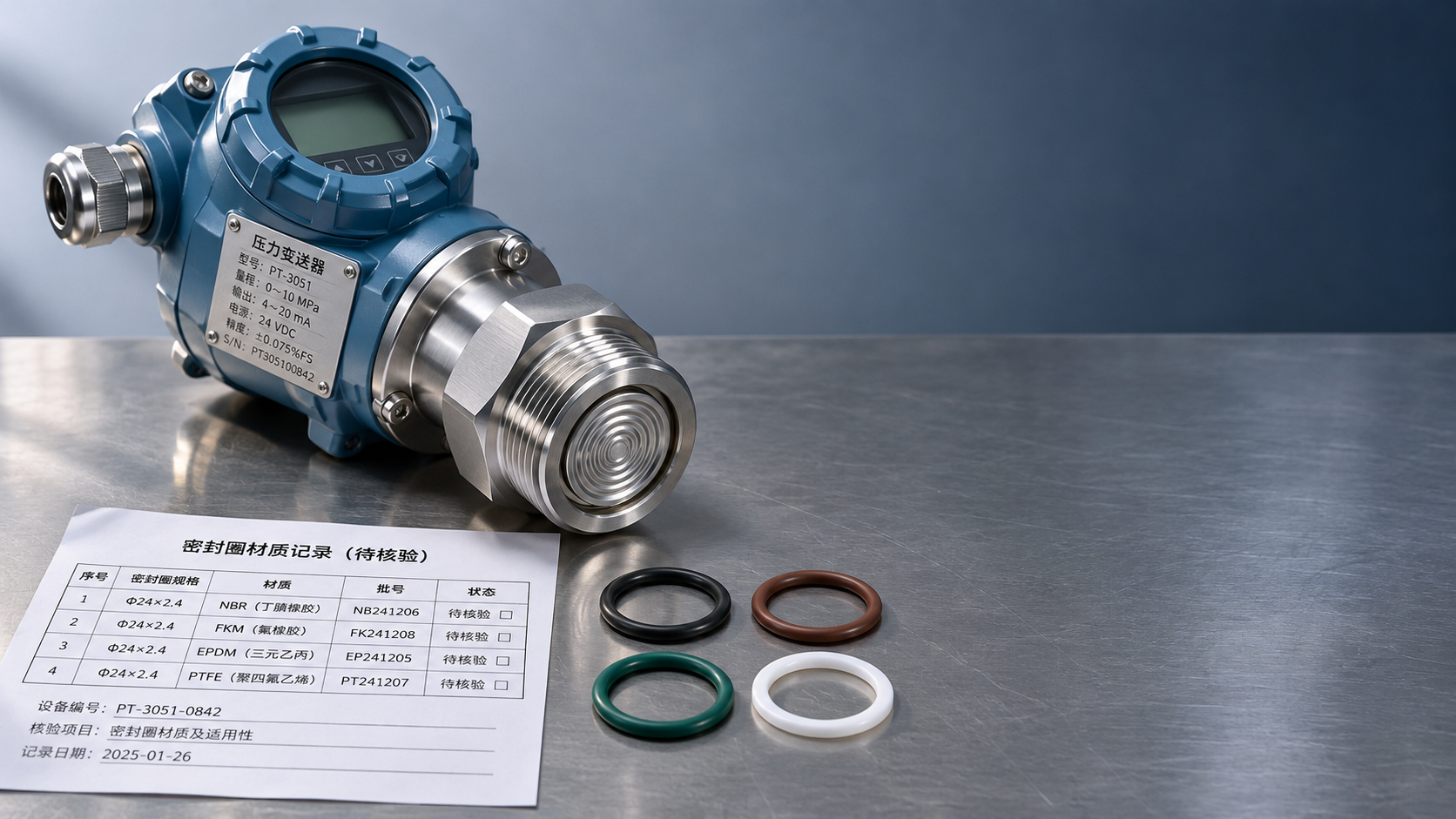
A flush-mounted diaphragm structure does not inherently eliminate dead zones; seal selection and assembly quality are equally critical. O-rings should match groove dimensions. Excessive compression may cause extrusion, cracking, or edge rolling, while insufficient compression may create tiny gaps that allow cleaning solution and process media to enter repeatedly. After each disassembly and reassembly, check whether the seals have aged, changed color, swollen, or developed cuts.
Common elastomer materials include EPDM, FKM, and PTFE, but the actual selection must be based on the cleaning solution formulation, operating temperature, and medium properties. For conditions involving alkaline cleaning, acid cleaning, and hot-water circulation, sealing materials must withstand both chemical media and thermal cycling; decisions cannot be made solely based on corrosion-resistance data at room temperature.
If the CIP cleaning temperature reaches 80℃ to 95℃, it should be confirmed that the differential pressure transmitter's isolation diaphragm, fill fluid, seals, and electronic unit all meet the corresponding temperature requirements. In particular, for differential pressure measurement solutions with remote diaphragm seals, uneven heating of the capillaries on both sides may cause temperature drift, which needs to be controlled through proper routing, consistent insulation, and zero calibration.
Resistance Capability and Installation Control Under CIP Conditions
Ensure the Instrument Withstands Cleaning Without Interfering with It
A CIP process typically includes pre-rinsing, alkaline cleaning, intermediate rinsing, acid cleaning, final rinsing, and, where necessary, hot-water or steam treatment. Pressure, temperature, pH value, and medium viscosity vary across different stages, and the differential pressure transmitter should maintain seal integrity and reliable output throughout the entire cycle. For filter differential pressure monitoring, instantaneous readings during cleaning can also be used to assess filter element blockage, residual liquid discharge, and loop flow continuity.
The installation location should preferably be in an area that can be fully flushed by the main flow, avoiding the highest point of the pipeline, long-term low-flow branches, or blind ends that are difficult to drain. For horizontal pipelines, hygienic fittings should be arranged according to medium flow direction and drainage direction. For tanks or filters, pressure taps should avoid material deposition areas while also preventing cleaning spray from directly creating localized high-pressure impact.
Although the electrical portion of the differential pressure transmitter does not directly contact the medium, on-site moisture, condensation, and high-pressure washdown environments should still be considered. The enclosure protection rating, wiring port sealing, cable routing, and mounting bracket stability must all meet site requirements. Signal outputs may use 4mA to 20mA, RS485, or other control-system-compatible methods, and anti-interference performance during cleaning pump start-stop operation should be verified during commissioning.
Recommendations for Differential Pressure Transmitter Selection, Validation, and Maintenance
Comprehensive Confirmation from Process Parameters to Hygienic Structure
Before selecting a hygienic flush-mounted diaphragm differential pressure transmitter, first determine whether the measurement target is filter differential pressure, liquid level differential, flow restriction differential pressure, or equipment pressure drop. Different applications determine the required range, static pressure capability, overload capability, and response speed. For example, filter differential pressure may be concentrated within a relatively low range, whereas pump systems or high-pressure filtration processes require higher static pressure ratings; the model must not be selected solely according to normal operating differential pressure.
It is recommended to establish a selection checklist covering medium name, maximum operating temperature, maximum cleaning temperature, cleaning solution concentration, normal differential pressure, maximum single-side pressure, connection standard, and output method. For critical control points, zero shift, damping settings, alarm thresholds, and fault output logic should also be confirmed, enabling the transmitter to serve both process control and reliable CIP status assessment.
After installation, loop inspection and cleaning validation should be performed before commissioning. Validation is not limited to confirming that the instrument has a signal; it should also include observing whether the zero point remains stable before and after CIP, whether visible residue is present around the diaphragm, whether seals leak, and whether differential pressure changes during different cleaning stages conform to equipment operating patterns. For critical hygienic points, inspection results may be included in equipment maintenance records.
Establish a Periodic Maintenance Mechanism
For routine maintenance, avoid directly scraping the diaphragm with hard tools, and do not use pressure exceeding the instrument's allowable range for blowdown. If slow output response, zero abnormalities, failure of differential pressure to return to zero after CIP, or reduced repeatability occurs, first inspect diaphragm contamination, seal condition, and pressure tapping passages on both sides rather than directly adjusting zero parameters.
The calibration interval may be determined according to process criticality, frequency of use, and corporate quality management requirements. For measurement points frequently exposed to temperature cycling, pressure pulsation, or aggressive cleaning media, inspection frequency should be increased as appropriate. Calibration should use suitable pressure standard equipment, and changes in zero point, span, hysteresis, and repeatability should be recorded to identify long-term drift trends.
Xi'an Shenghongchuang Instrumentation Co., Ltd. can provide recommendations on range matching, process connection configuration, and non-standard customization for hygienic flush-mounted diaphragm differential pressure transmitters based on CIP pipeline dimensions, medium characteristics, cleaning conditions, and control system requirements. Before determining an instrument solution, project technical personnel may submit existing piping drawings, cleaning temperature, pressure range, and connection standards for targeted evaluation of hygienic structure and measurement compatibility by professionals.
Related Recommendations
 How should mounting connections and safety margins be determined for a high-pressure transmitter used in ultra-high-pressure equipment?
 How an Oil-Filled Pressure Transmitter Works: Pressure Transfer Through the Isolation Diaphragm and Fill Fluid
 Ceramic-Core vs. Oil-Filled Pressure Transmitters: How to Choose Based on Corrosion Resistance and Overload Capacity
 How should the wetted parts of a 316L pressure transmitter be inspected for corrosive media?