News Center
—— NEWS CENTER ——
Xi'an Shenghongchuang Instrument Co., Ltd.
Contact: Mr. Zhang
Mobile: 15529283736
Email: shc-sensor@qq.com
Address: Fortune Building, Sanqiao Street, Xixian New Area, Xi'an, Shaanxi Province
Corrosion-Resistant Level Sensor Recommendations: A Systematic Selection Method from Medium, Operating Conditions to Installation
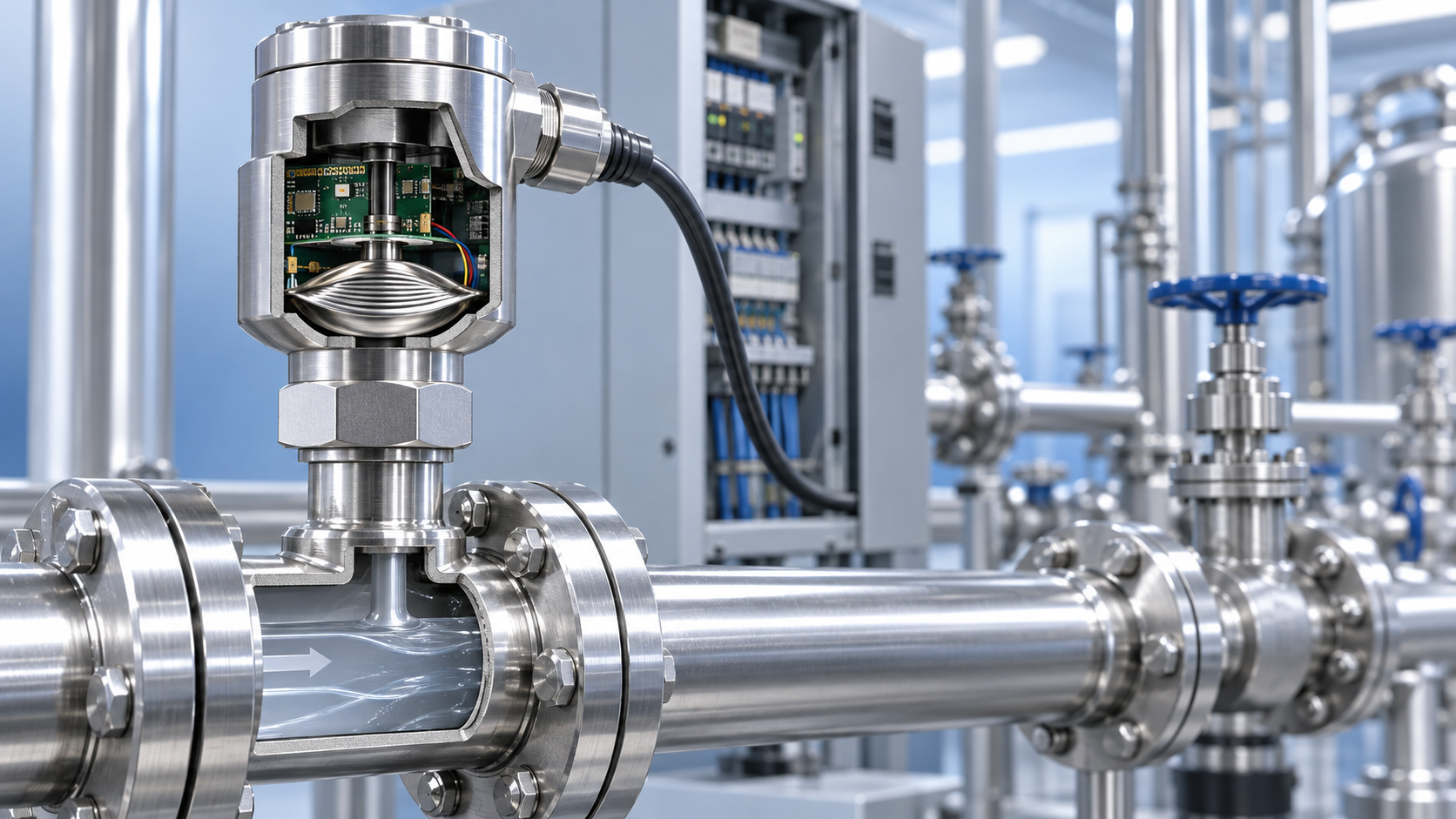
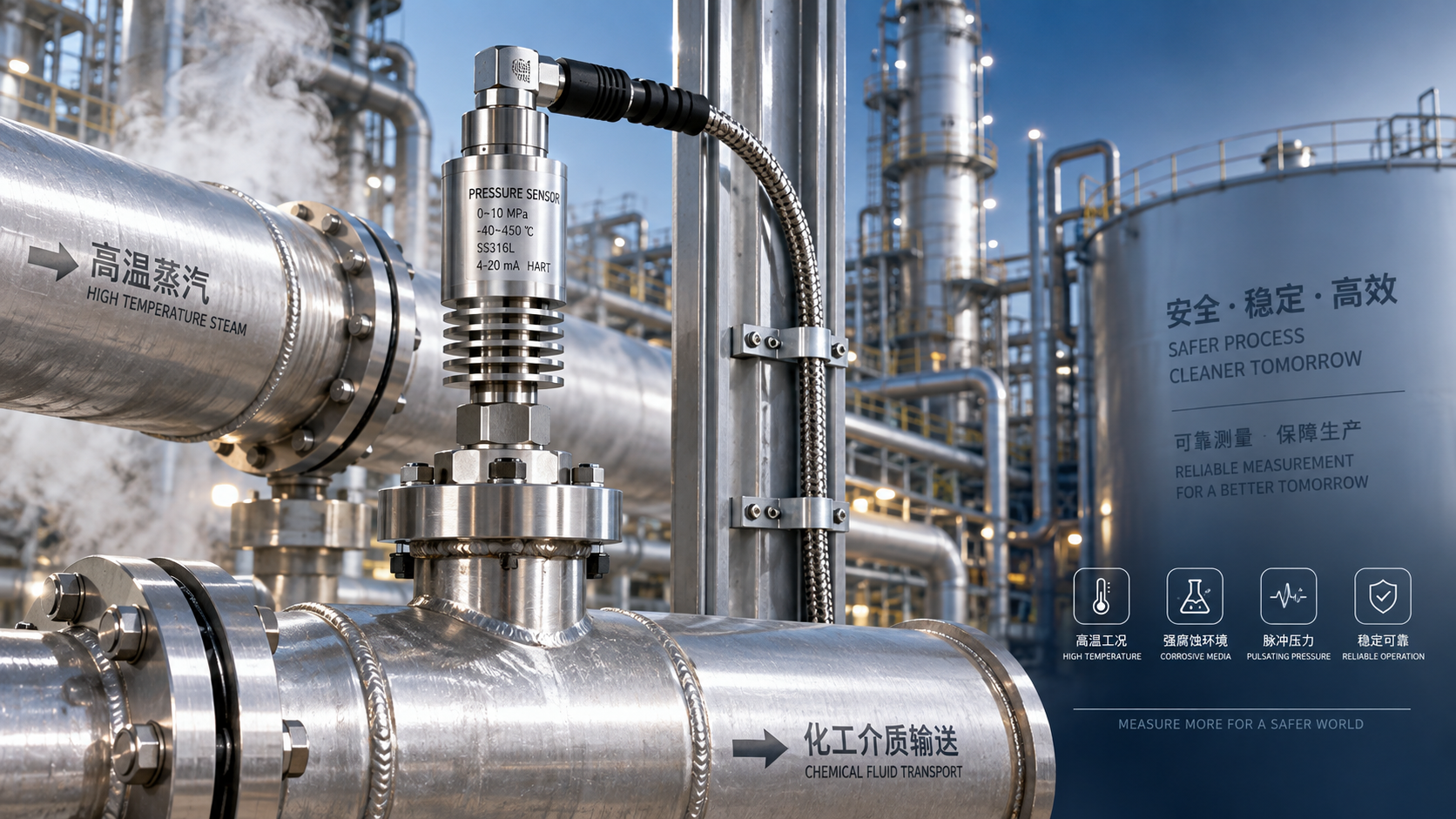
Strong acids, strong alkalis, high-salinity wastewater, and media containing corrosive solvents can continuously corrode the diaphragms, probes, sealing rings, pressure-guiding structures, and cable connectors of level measurement equipment. Once a level sensor experiences material swelling, seal failure, or output drift, it can affect tank measurement and may also cause safety risks such as overflow, dry running, and interlock failure. Therefore, recommendations for corrosion-resistant level sensors should not focus only on measuring range and price, but should comprehensively consider the chemical properties of the medium, temperature and pressure, installation method, accuracy requirements, and maintenance conditions.
Xi'an Shenghongchuang Instruments Co., Ltd. provides level transmitters, pressure transmitters, differential pressure transmitters, and supporting intelligent digital display control instruments for industrial automation measurement and control applications. Relying on the standardized manufacturing and testing capabilities of Shaanxi Qinkong Sensor Technology Co., Ltd., its products can be adapted to application scenarios such as machinery manufacturing, chemical energy, metallurgy and building materials, environmental monitoring, logistics and warehousing, and automated production lines, and can be non-standard customized according to tank structure, medium characteristics, and on-site control systems.
For technical evaluators, the corrosion resistance of a level sensor is not a single indicator, but the combined result of “wetted materials + sealing structure + measurement principle + installation environment.” For example, when handling concentrated alkaline solutions, a PTFE wetted layer generally offers good resistance; however, under high-temperature, high-pressure, or frequent thermal cycling conditions, the compatibility of seals, housing connection methods, and installation flanges must also be verified.
In actual projects, it is recommended to clarify the medium concentration, maximum temperature, maximum working pressure, tank height, level fluctuation range, the presence of foam or crystallization, and whether the control system requires 4-20mA, RS485, or switching signals before procurement. The more complete the information, the more accurate the level sensor selection will be, and the more controllable subsequent calibration and maintenance costs will be.
Are Strong-Alkali Level Sensors Corrosion-Resistant? The Key Depends on Wetted Materials and Sealing Methods
Strong-Alkali Conditions Cannot Be Selected Based Solely on “Stainless Steel”
Whether a strong-alkali level sensor is corrosion-resistant depends first on the type and concentration of the medium. Media such as sodium hydroxide, potassium hydroxide, and alkaline cleaning solutions have relatively limited effects on certain metal materials at normal temperature and low concentrations; however, when the concentration increases to 30%, 50%, or even higher, or when the medium temperature exceeds 60℃, material resistance changes significantly.
316L stainless steel offers good general corrosion resistance, but this does not mean it is suitable for long-term use in all high-concentration strong-alkali environments. For high-temperature concentrated alkali, chlorine-containing alkaline solutions, or conditions involving crystalline particles, wetted materials such as PTFE, PFA, PVDF, and Hastelloy should be evaluated as a priority, rather than determining a solution directly based only on conventional media compatibility tables.
Diaphragm pressure level sensors are commonly used for closed vessels or pressurized tanks, converting hydrostatic pressure into level height. If the medium is prone to crystallization, adhesion, or diaphragm corrosion, corrosion-resistant diaphragms, flush diaphragm structures, or designs with enlarged wetted openings can be used to reduce measurement lag caused by medium residue.
In strong-alkali storage tanks, sealing rings are also a weak point. Ordinary rubber seals may harden, swell, or crack, allowing liquid to enter the sensor. During selection, the seal material should be confirmed, such as FKM, EPDM, or PTFE-encapsulated seals, and the supplier should be required to specify their compatibility with the medium concentration and temperature range.
Do High-Accuracy Level Sensors Have Large Errors? First Distinguish Accuracy, Error, and On-Site Factors
High Accuracy Does Not Mean the Same Readings Can Be Maintained at Every Site
A high-accuracy level sensor does not inherently mean a large error. Taking hydrostatic level sensors as an example, common accuracy classes can reach 0.5%FS and 0.25%FS, while higher classes are available for certain precision applications. Here, FS refers to full scale. For example, for a product with a 5m range, 0.5%FS corresponds to a basic error of approximately plus or minus 25mm.
However, total on-site error does not come only from the sensor itself. Changes in medium density, liquid temperature fluctuations, tank pressure changes, electromagnetic interference, installation position deviation, and zero drift can all affect the final displayed value. For liquids whose density changes significantly with temperature, if level is still converted using a fixed density, visible deviations may occur in the level result even when the sensor accuracy is high.
Are low-error level sensors suitable for high-precision requirements? The answer is yes, but this must be based on the correct measuring range and reasonable installation. An excessively large range reduces effective resolution, while an excessively small range may cause damage due to overpressure or level fluctuations. It is generally recommended that the normal level fall within 30% to 80% of the measuring range to balance measurement stability and safety margin.
For applications with stringent requirements, such as quality-control measurement, liquid preparation control, and batch feeding, long-term stability and repeatability should also be considered. It is recommended to verify the zero point after commissioning and establish a calibration cycle of 3 months, 6 months, or 12 months according to process risks. Inspection intervals should be appropriately shortened at sites with high temperature, corrosion, or strong vibration.
Common Factors Affecting Level Measurement Results
How to Select a Vibration-Resistant Level Sensor? Focus on Structural Strength and Signal Stability
Vibration Conditions Require Both Mechanical Fatigue and Signal Disturbance to Be Addressed
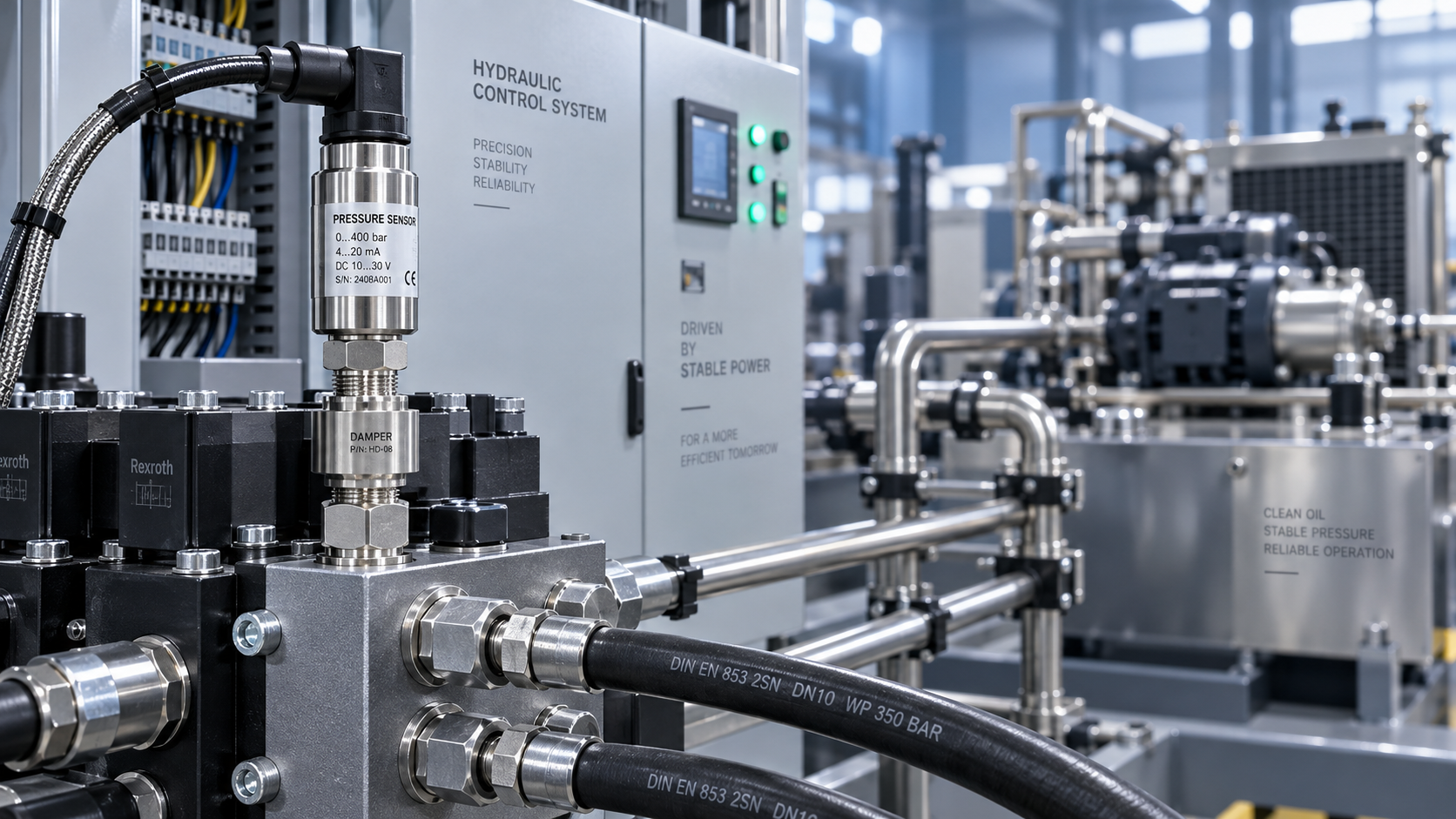
Near pump sets, compressors, mixing tanks, mobile equipment, construction machinery, and automated production lines, level sensors may be affected by continuous vibration or instantaneous impact. When selecting a vibration-resistant level sensor, priority should be given to confirming the vibration source, frequency range, amplitude, and whether frequent start-stop operation occurs at the installation point, rather than merely requiring a “vibration-resistant” label.
Where tank wall vibration is obvious, flange or threaded connections must provide sufficient mechanical strength, and the cable outlet should use a reliable compression and sealing structure. The vented cable of a submersible level sensor must not be subjected to long-term tension, wear, or repeated friction against the tank wall; otherwise, vent compensation and signal stability may be affected.
At the signal level, products with 4-20mA output and damping settings can be selected to enable the control system to smooth short-term fluctuations. Level points requiring rapid interlocking should not use excessively long damping times, while applications for inventory monitoring or buffer tank level display can set filtering parameters of 1 second, 3 seconds, or 5 seconds according to process response requirements.
If the site includes frequency converters, motors, and high-power equipment, anti-interference design must also be considered. Sensor signal cables should use shielded twisted-pair cables, with the shielding layer grounded at one end in accordance with site specifications, and the 24V DC power supply should be stable and reliable. Maintaining a reasonable distance between sensor cables and 380V power lines can reduce display fluctuations caused by induced interference.
How to Wire a 24V-Powered Level Sensor? Using a Two-Wire 4-20mA System as an Example
Before Wiring, the Nameplate, Output Type, and Control-Side Input Method Must Be Verified
24V-powered level sensors are commonly used in PLC, DCS, digital display meters, and remote control systems. Among them, two-wire 4-20mA products complete power supply and signal transmission through the same loop. Typically, the sensor positive terminal is connected to the positive DC power terminal, the sensor negative terminal is connected to the analog input terminal of the control equipment, and the input terminal then returns to the negative power terminal.
Wiring must not be determined only by wire color; the product nameplate, manual, or terminal markings should prevail. Common markings include “V+,” “V-,” “OUT,” “24V+,” “I+,” and “I-,” and their definitions may vary among models. Connecting a three-wire voltage-output product as a two-wire system may result in no output, abnormal heating, or damage to the acquisition module.
4mA generally corresponds to the lower limit of the measuring range, while 20mA corresponds to the upper limit. For example, for a level sensor with a 0-3m range, 12mA theoretically corresponds to approximately 1.5m level. During commissioning, first verify the current value under an empty-tank or known-level condition, then check the range conversion, unit settings, and alarm thresholds in the PLC project.
Before energizing, confirm that the power polarity, load capacity, and total loop resistance meet the requirements. For long-distance transmission, it is recommended to use shielded cables with a matching cross-sectional area and provide waterproofing, corrosion protection, and strain relief at the junction box. If the displayed value remains at 0, full scale, or fluctuates frequently, check the power supply, cable, terminals, analog channel, and sensor zero-point condition in sequence.
Which Is Better, an LED Level Sensor or an LCD Level Sensor? Select According to On-Site Viewing Requirements
The Display Method Supports Inspection Efficiency and Does Not Replace Core Measurement Performance
Strictly speaking, LED and LCD are usually on-site display methods for level transmitters or intelligent digital display control instruments, rather than measurement principles of level sensing elements. The choice between the two should be based on installation location, ambient light, power supply conditions, viewing distance, and the frequency of operator inspections; display type must not be equated with measurement accuracy.
LED digital displays have higher brightness and are suitable for workshop environments with strong lighting where quick long-distance viewing is required. In tank areas, pump rooms, and production-line sites, red or green LED displays are generally easier to identify. LCD displays consume less power and can show more characters and parameter information, making them suitable for applications requiring the viewing of units, set values, alarm status, or multiple process data items.
If a level sensor is installed outdoors, the display should also take sun protection, anti-condensation measures, and low-temperature visibility into account. Strong direct sunlight may affect the readability of ordinary LCDs, while high-humidity environments require attention to panel sealing ratings. For unattended systems, on-site display is not essential, but the reliability of remote signals and alarm interlocks must be ensured as a priority.
When purchasing, it is recommended to clarify whether local display is required, whether the display unit is m, mm, %, or L, and whether upper and lower limit alarms and relay outputs are required. For projects that need to complete level display, control, and alarms simultaneously, level sensors can be used together with intelligent digital display control instruments to improve operation and maintenance efficiency.
Installation Precautions and Key Model Comparison Points for Hygienic Flush-Diaphragm Level Sensors
Flush-Diaphragm Structures Help Reduce Material Build-Up, but the Installation Surface Must Maintain Process Hygiene
Hygienic flush-diaphragm level sensors are commonly used in food, pharmaceutical, fine chemical, fermentation, liquid preparation, and media prone to adhesion. The flush-diaphragm design can reduce medium residue in conventional cavity-type connections, lowering the risk of material build-up, blockage, and cleaning dead zones. However, its installation performance depends heavily on the flatness of the welding socket, clamp connection, sealing gasket, and inner tank wall surface.
The installation location should avoid mixing impellers, feed inlets, return inlets, and high-speed flushing areas to prevent direct impact on the diaphragm. For vessels with CIP or SIP cleaning processes, confirm that the sensor wetted materials can withstand cleaning solution concentration, cleaning temperature, and steam sterilization conditions, particularly the maximum temperature resistance and allowable pressure range.
The differences between 3051 level sensors and 3351 level sensors are usually reflected in structural series, pressure ranges, output functions, applicable operating conditions, and configuration methods; the price range of 1151 level sensors also varies according to measuring range, accuracy, wetted materials, diaphragm type, display function, and explosion-proof requirements. Project selection should not compare only series names, but should use actual technical parameters and process compatibility as the basis for assessment.
For procurement personnel, it is recommended to provide the supplier at one time with the medium name, concentration, temperature, pressure, level range, vessel dimensions, connection standard, signal requirements, explosion-proof requirements, and delivery quantity. Xi'an Shenghongchuang Instruments Co., Ltd. can assist with technical confirmation, model configuration, wiring recommendations, and selection of supporting instruments for corrosion-resistant level sensors according to on-site operating conditions, reducing the risk of rework caused by missing parameters.
To determine a level measurement solution for strong alkali, high salinity, high temperature, vibration resistance, or hygienic applications, please organize the medium parameters, measuring range, installation connection, and output signal requirements, and contact professional technical personnel for one-to-one selection confirmation to obtain level sensor configuration recommendations and a quotation proposal matched to the operating conditions.
- Pressure Transmitter
- Level Transmitter
- Differential Pressure Transmitter
- Strong Alkali Level Sensor
- Corrosion-Resistant Level Sensor
- Vibration-Resistant Level Sensor
- High-Accuracy Level Sensor
- High-accuracy liquid level sensor
- 24V-Powered Level Sensor
- LCD Level Sensor
- LED Level Sensor
- 3051 Level Sensor
- 3351 Level Sensor
- Hygienic Flush Diaphragm Level Sensor
- 1151 Level Sensor
- 数显控制仪表
- Control Instrument
- 智能数显控制仪表
- 强碱液位传感器耐腐蚀吗
- 耐腐蚀液位传感器推荐
- 高准确度液位传感器误差大吗
- 抗振液位传感器怎么选型
- 误差小液位传感器适合高精度需求吗
- 24V供电液位传感器怎么接线
- LED液位传感器和LCD液位传感器哪个好
- 3051液位传感器和3351液位传感器区别
- 1151液位传感器价格范围
- 卫生平膜型液位传感器安装注意事项
Related Recommendations
![]() Southchip Technology Launches Its First Optical Sensor, the SC52115, for Wearable Devices
Southchip Technology Launches Its First Optical Sensor, the SC52115, for Wearable Devices How does a pressure sensor convert changes in applied force into usable electrical signals?
 Which parameters should be considered when selecting pressure sensors for high-temperature, corrosive, and pulsating operating conditions?
 Hydraulic equipment pressure fluctuates frequently. How can sensors be configured to improve control stability?