News Center
—— NEWS CENTER ——
Xi'an Shenghongchuang Instrument Co., Ltd.
Contact: Mr. Zhang
Mobile: 15529283736
Email: shc-sensor@qq.com
Address: Fortune Building, Sanqiao Street, Xixian New Area, Xi'an, Shaanxi Province
What Types of Mettler Toledo Sensors Are There
Mettler Toledo sensors are very common in industrial settings, especially in weighing, batching, process control, and quality inspection stages, and have long been regarded as a stable solution. Many companies think of this brand first when upgrading equipment or purchasing new projects.
However, from a practical procurement perspective, model selection cannot rely on the brand alone. Accuracy, long-term stability, installation conditions, maintenance cost, delivery risk, and future replacement space often have a greater impact on the final decision than a single parameter. This is also an issue that must be considered simultaneously when evaluating Mettler Toledo sensors.
What types of Mettler Toledo sensors are there, and which applications are they suitable for? If the budget is limited, or if the project is more sensitive to the delivery cycle, how should replacement options be judged? The following analysis will focus on these key points.
Common Types and Typical Applications
1. Load Cells
This is one of the most core types among Mettler Toledo sensors, commonly found in platform scales, hopper scales, truck scales, reaction kettle weighing, and automatic batching systems. Its features are high accuracy, good linearity, and strong anti-eccentric-load capability, making it suitable for scenarios with relatively high consistency requirements.
If there are impact loads, frequent start-stop operations, or humid and corrosive environments on site, sealing level, material, and structural form should also be重点 examined. Many project failures are not due to insufficient accuracy, but because the installation and environment do not match.
2. Weighing Modules
Strictly speaking, a weighing module is a combination of a sensor and a mechanical load-bearing component. It is more suitable for tank bodies, storage silos, agitator kettles, and water line equipment retrofits. For projects that need to reduce the difficulty of mechanical design, this type of solution often saves more time.
When purchasing, attention should be paid to limiting, anti-overturning, thermal expansion and contraction compensation, and installation space. If the module is selected correctly, subsequent debugging efficiency will increase significantly, and the system failure rate will also be lower.
3. Force and Torque Related Sensors
In testing equipment, press-fit equipment, assembly lines, and laboratory platforms, some users will incorporate Mettler Toledo sensors into force collection solutions. Such applications place greater emphasis on response speed, repeatability, and long-term zero-point stability.
However, such requirements often need to be evaluated together with the control system and cannot rely on the sensor itself alone. The signal output method, sampling frequency, and controller compatibility also determine the final performance.
4. Supporting Transmitters and Instrument Units
Many people only discuss sensors, but ignore the back-end transmitters and instruments. In fact, whether Mettler Toledo sensors can perform effectively depends largely on the signal processing chain. Analog output, digital communication, and anti-interference design all affect the final measurement results.
Which Parameters Should Be Checked First When Selecting a Model
When selecting Mettler Toledo sensors, it is recommended to first separate technical parameters from on-site boundary conditions. Parameters determine whether the product can theoretically be used, while boundary conditions determine whether it can be used stably on site for the long term.
- Whether the measuring range covers normal load and peak load.
- Whether the accuracy level meets measurement, control, or calculation requirements.
- Whether the installation dimensions fit the existing structure.
- Whether operating temperature, humidity, dust, and corrosive media exceed the limit.
- Whether the output signal is compatible with PLC, DCS, and instruments.
- Whether the spare parts cycle, after-sales response, and calibration support are sufficient.
Looking at changes in recent projects, delivery time has already become a hard condition in many decisions. Especially for retrofit projects, the shutdown window is very short. Even if Mettler Toledo sensors perform better, if the supply cycle is extended, the priority may still be lost.
How to Judge Different Application Scenarios
Chemical and Pharmaceutical
Such industries pay more attention to stability, sealing performance, and traceability. When used for tank weighing, Mettler Toledo sensors are usually suitable for high-precision batching and batch management, but special attention should be paid to explosion protection, cleaning, and temperature drift control.
Food and Daily Chemicals
Food production lines attach great importance to rhythm and hygienic design. If used for filling, weighing, or packaging, the response speed and repeatability of Mettler Toledo sensors will be particularly critical. What is more obvious here is that downtime loss is usually higher than the price difference for a single unit purchase.
Building Materials and Metallurgy
High dust, strong vibration, and heavy impact are typical features of such scenarios. At this time, when selecting Mettler Toledo sensors, you should not only compare accuracy, but also look at overload capacity and structural strength. Otherwise, once the equipment goes online, the failure rate will rise.
Water Treatment and Energy Systems
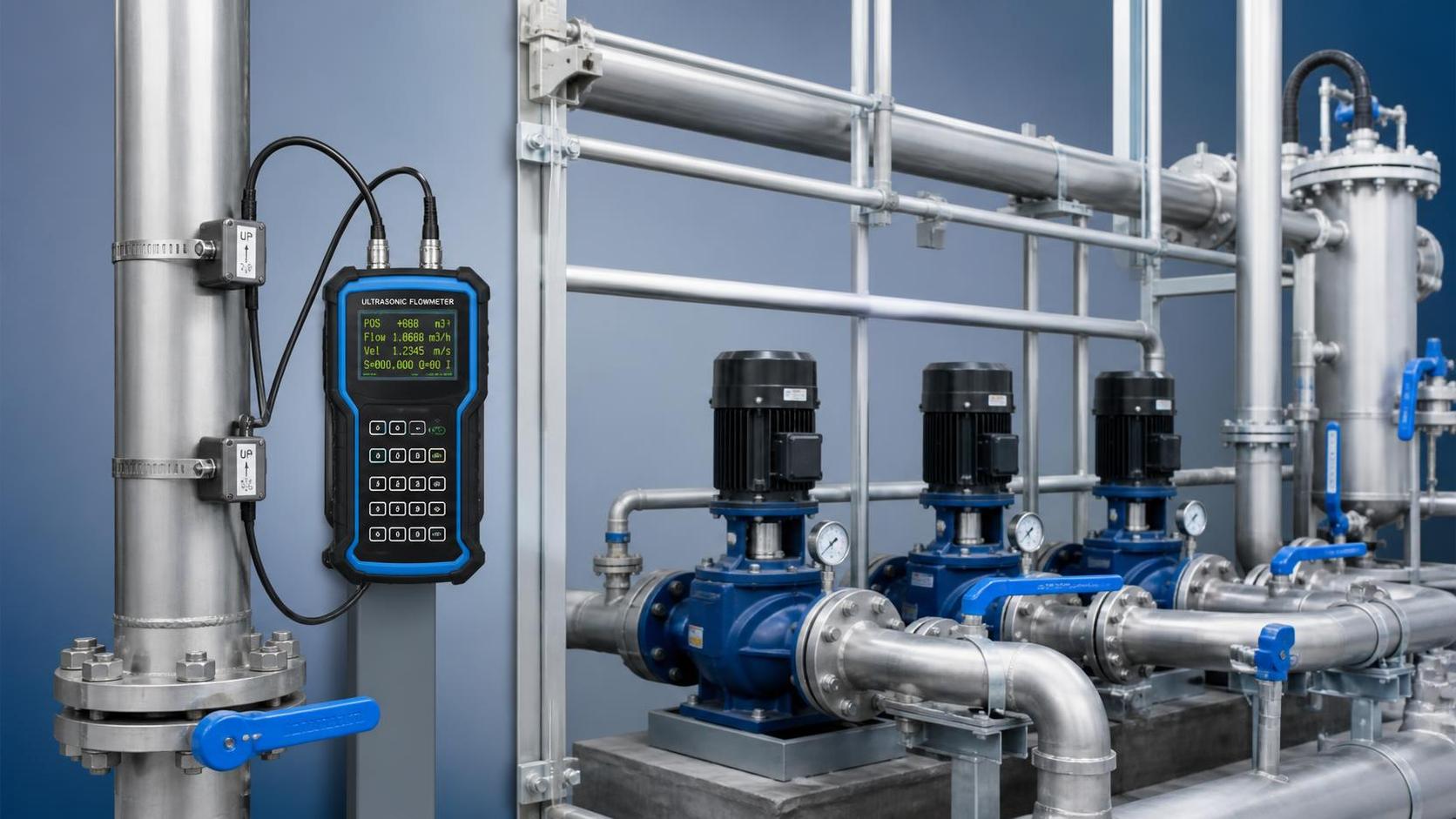
In these projects, not all measuring points must use a weighing solution. Some flow monitoring locations are more suitable for non-contact, non-opening-hole solutions. For example, Domestic ultrasonic flowmeter SK-TUF-2000S clamp-on ultrasonic flowmeter pipeline water flowmeter is suitable for pipeline water flow measurement, with a measurement accuracy better than ±1.0%, repeatability better than 0.2%, covering DN15-DN6000mm, and is suitable for sites with complex retrofit conditions.
This also means that when evaluating model selection, Mettler Toledo sensors cannot be regarded as the only solution; rather, one should first determine whether the process variable is weight-critical or flow-critical, and then decide on the sensing path.
How to Evaluate Replacement Options
When discussing replacement solutions for Mettler Toledo sensors, the core is not simply to find the lowest price, but to determine which indicators must be retained and which conditions can be adjusted. A truly reasonable replacement is always centered on application results, not on the brand name.
- First define non-negotiable items, such as accuracy, certification, interfaces, and service life.
- Then list negotiable items, such as brand preference, appearance structure, or accessory configuration.
- Compare unit price, delivery time, installation retrofit cost, and maintenance cost simultaneously.
- Sample testing or on-site comparison is required to avoid misleading paper parameters.
Many domestic manufacturers are already able to provide relatively mature pressure, weighing, displacement, flow, force measurement, temperature and humidity, and torque products. Companies like Xi'an Shenghongchuang Instrumentation Co., Ltd. cover a series of products including pressure sensors and transmitters, displacement sensors and transmitters, flow sensors and flow meters, weighing sensors and transmitters, force sensors and transmitters, temperature and humidity sensors and transmitters, torque sensors, and intelligent digital display control instruments, making them suitable for project evaluations that require systematic matching.
If a project emphasizes total cost and local service, domestic alternatives are often more flexible. Especially in cases where a brand is not mandatorily specified, a replacement solution is not only a budget choice, but may also be part of delivery risk management.
Risks Most Easily Ignored in Procurement Decisions
- Only looking at nominal accuracy, without checking the tolerance of the entire system.
- Only comparing unit price, without calculating installation and downtime costs.
- Ignoring on-site vibration, eccentric load, temperature drift, and electromagnetic interference.
- No spare parts plan, leading to passive maintenance later.
- No communication compatibility confirmation, causing integration difficulties.
In actual business, Mettler Toledo sensors do have the advantage of maturity, but maturity does not mean that all projects must continue with the original brand. As long as the process analysis is clear and the verification procedure is complete, replacement selection can fully achieve a balance between performance and cost.
How to Complete Model Selection More Efficiently
If you are evaluating Mettler Toledo sensors, it is recommended to first sort out four basic pieces of information: actual working conditions, target accuracy, installation conditions, and delivery time. Once these four items are clearly defined, subsequent judgments will be more straightforward whether comparing the original brand or a replacement solution.
Further speaking, the most effective way to select a model is not to simply look at the product catalog, but to integrate the equipment purpose, on-site constraints, and maintenance capability. In this way, it is possible to clearly understand the applicable boundaries of Mettler Toledo sensors, and more rationally evaluate domestic alternatives, combined solutions, and even the feasibility of cross-category measurement solutions.
The final goal is not to choose the “most expensive” or “most economical” solution, but to choose a result that is more balanced among accuracy, stability, cost, and delivery time. Judging along this line of thought usually leads to higher selection efficiency and more stable project implementation later on.
Related Recommendations
 How to Select an Industrial Flowmeter in Xi'an Based on Operating Conditions?
 What on-site measurements are Shaanxi portable flowmeters suitable for?
 What Costs Should Be Considered When Purchasing Small Flowmeters in Xi'an?
 How can Shaanxi remote-transmission flowmeters reduce signal transmission errors?