


News Center
—— NEWS CENTER ——
Xi'an Shenghongchuang Instrument Co., Ltd.
Contact: Mr. Zhang
Mobile: 15529283736
Email: shc-sensor@qq.com
Address: Fortune Building, Sanqiao Street, Xixian New Area, Xi'an, Shaanxi Province
Waterproof Rating Requirements for Local Display Pressure Transmitters: Assess Operating Conditions First, Then Determine the IP Rating
Local display pressure transmitters integrate pressure measurement, signal conversion, and on-site reading, and are commonly used in equipment piping, pump stations, storage tanks, filtration systems, and automated production lines. During procurement, the waterproof rating is often regarded as a key parameter, but the assumption that “the higher the IP rating, the better” is not comprehensive. Actual selection should take into account the installation location, whether high-pressure washing is present, environmental humidity, dust concentration, wiring method, and maintenance frequency.
The IP protection rating consists of “IP” followed by two digits: the first digit indicates protection against solid foreign objects and dust, while the second digit indicates water protection capability. For example, IP65 can generally meet dustproof and water spray protection requirements in typical industrial sites; IP67 is suitable for applications with a low risk of short-term immersion but where standing water, rain exposure, or equipment washing may occur; IP68 requires clarification of immersion depth, duration, and medium conditions, and cannot be directly considered equivalent to long-term underwater use based solely on the rating name.
For pressure transmitters with digital display heads, weak points in water protection are typically not the pressure-sensitive core, but the display panel, buttons, enclosure joints, cable entries, and terminal areas. Even if the main body uses a stainless steel housing, the actual protection capability of the entire unit can be significantly reduced if the cable sealing gland specification is mismatched, the end cover is not tightened, or the sealing ring has aged.
Xi'an Shenghongchuang Instrumentation Co., Ltd. and its subsidiary Shaanxi Qinkong Sensor Technology Co., Ltd. can provide selection support for pressure transmitters, local display pressure transmitters, and compatible intelligent digital display control instruments according to installation conditions. For high-humidity, washdown, outdoor, and complex industrial sites, the overall protection structure and installation details should be clarified while confirming the measuring range, accuracy, and output signal.
IP Rating Differences: Understand the Meaning of the Digits and Avoid Focusing Only on Promotional Parameters
First Digit: Dust Protection Determines Long-Term Stability
The first digit of the IP rating mainly reflects the enclosure's protection capability against solid foreign objects such as fingers, tools, metal particles, and dust. In dust-prone areas such as machinery manufacturing, building material processing, metallurgical auxiliary equipment, and logistics warehousing, dust protection directly affects display window cleanliness, terminal insulation performance, and internal circuit reliability.
IP5X indicates a dust-protected structure that prevents the ingress of large amounts of dust that could affect normal equipment operation; IP6X indicates a dust-tight structure that prevents dust from entering the enclosure under specified test conditions. If a transmitter is installed for long periods in environments with cement dust, metal powder, graphite dust, or atomized cutting fluid, the overall unit structure of IP65, IP66, or higher should generally be prioritized for evaluation.
It should be noted that dusty environments should not be assessed based on the enclosure alone. If aviation connectors, Hirschmann connectors, or direct cable outlets are used, the protection rating of the connector itself must match that of the transmitter body. Even if the main body reaches IP67, the use of an ordinary junction box or damaged conduit on site may still cause terminal moisture, signal drift, or display abnormalities.
Second Digit: Water Protection Corresponds to Different Types of Exposure
The second digit reflects the equipment's resistance to dripping water, water spray, powerful water jets, and immersion. A common on-site misunderstanding is to directly equate a “humid environment” with “requiring IP68.” In fact, workshop moisture, condensation, high-pressure washing, and short-term standing water impose different requirements on sealing structures.
For example, if equipment is installed near an indoor control cabinet and is exposed only to occasional condensation or low-intensity cleaning, IP54 or IP65 may be considered; if installed in food processing, washing stations, or vehicle wash areas where water-gun washing is present, more attention should be paid to the suitability of IP66 for powerful water jets; if the instrument installation location may be temporarily submerged by standing water, the immersion conditions corresponding to IP67 need to be verified.
The protection rating must correspond to the test conditions stated in the manufacturer's technical documentation. IP67 generally refers to withstanding short-term immersion at specified pressure and duration; it does not mean the device can be placed in a pool, sewage pit, or at the bottom of a liquid container for long periods. For continuous immersion, the IP68 test depth, duration, medium temperature, corrosiveness, and cable sealing solution should also be confirmed.
Selection by Installation Location: On-Site Adaptation Logic for Display Pressure Transmitters
Conventional Indoor Equipment: IP65 Generally Offers High Cost Performance
In mechanical hydraulic stations, air compressor piping, injection molding equipment, automated machines, and ordinary water treatment systems, local display pressure transmitters are often installed on equipment sides, pipeline branches, or instrument brackets. These locations typically involve dust, oil mist, occasional splashing, and manual wiping, and IP65 can generally cover the main risks.
Under such operating conditions, the factors affecting reading stability are often mechanical vibration, medium pulsation, joint leakage, and electromagnetic interference rather than the waterproof rating alone. If pressure fluctuations are frequent, a damper or buffer tube may be added, or a product suitable for dynamic pressure measurement may be selected; if located near frequency converters, motors, or high-power switching equipment, shield grounding and 4-20mA signal transmission quality should be considered.
When the display head needs to be checked frequently or adjusted on site, the installation orientation should also be determined in advance. The display panel should be positioned for convenient viewing, avoiding an upward-facing position where water can accumulate or a downward-facing position where dust can collect. The cable entry should preferably be arranged downward or diagonally downward to reduce the risk of condensation entering the wiring chamber along the cable.
Frequent Washdown Areas: Focus on IP66 and Structural Resistance
The periphery of food equipment, cleaning stations, vehicle manufacturing, surface treatment, and certain chemical installations may use water guns for regular cleaning. If the water stream is close or the washing pressure is high, IP65 alone may be insufficient, and IP66 together with the corresponding overall unit sealing design should be evaluated.
High-pressure water jets not only test enclosure sealing, but also continuously impact the display lens, button gaps, terminal end cover, and cable gland. If the transmitter has buttons for zero adjustment, range setting, or alarm setting, it should be confirmed whether the button area uses a reliable sealing design to avoid button failure, screen fogging, or internal moisture after repeated cleaning.
The cleaning medium must also be included in the assessment. Room-temperature clean water, detergent-containing aqueous solutions, weak acid and weak alkali liquids, and high-temperature steam have different effects. A waterproof rating does not equal a corrosion-resistance rating. If corrosive spraying is present, the housing material, diaphragm material, sealing ring material, and chemical resistance of the display window should also be verified.
Outdoor and High-Humidity Areas: Preventing Condensation Is More Critical Than Rain Protection Alone
Pressure transmitters installed outdoors experience day-night temperature differences, rain, frost, solar radiation, and high-humidity air. Even when the enclosure reaches IP65 or IP67, condensation may still form internally due to temperature changes. Therefore, instruments should be avoided where water accumulates for long periods, direct sunlight is present, or drainage is poor.
For pump rooms, underground utility tunnels, wastewater treatment stations, and areas around cooling towers, environmental humidity may remain above 80% for extended periods, creating a higher risk of moisture in the wiring chamber. In such cases, waterproof connectors with matching specifications should be used to ensure that the cable outer diameter falls within the compression range of the sealing ring, and a drip loop should be reserved during cable routing to reduce moisture entering the instrument along the cable.
If lightning strikes, surges, or long-distance signal transmission are present on site, suitable surge protection and reliable grounding should also be configured. The waterproof rating addresses the risk of enclosure ingress and cannot replace electrical protection; for products with 24VDC power supply, 4-20mA output, or RS485 communication, both power and signal circuits should be installed in accordance with on-site specifications.
Waterproof Rating Selection Table: From Environmental Risks to Configuration Recommendations
When selecting a local display pressure transmitter, it is recommended to first list the actual on-site risks and then determine the protection rating. Assessment criteria should not include only “whether water is present,” but also the direction of the water source, spray intensity, cleaning frequency, duration of standing water, dust type, and ease of instrument maintenance.
If multiple operating conditions exist within the same project, configurations may be assigned by area rather than applying the highest rating uniformly to all measuring points. For projects with more than 100 measuring points, selection based on actual risk classification is generally more favorable for controlling procurement costs, spare parts management, and the difficulty of subsequent maintenance.
Pressure connection, measuring range, medium compatibility, and output method remain the basis for selection. For example, common ranges for hydraulic systems may be 0-1MPa, 0-10MPa, 0-25MPa, or higher; water supply and gas pipelines should be determined based on actual operating pressure, peak pressure, and safety margin. The measuring range should generally not be operated near full scale for long periods, and an appropriate margin should be retained to reduce overload risk.
Avoid Misjudgment: Parameters to Verify Beyond the Waterproof Rating
First, confirm the pressure medium. Water, compressed air, hydraulic oil, steam, corrosive liquids, and viscous media have different requirements for pressure connections and sensitive diaphragms. For acids and alkalis, particle-containing liquids, or high-viscosity media, simply increasing the IP rating cannot solve issues such as clogging, corrosion, and diaphragm damage. Diaphragm seals, pressure guiding devices, or special material solutions should be used when necessary.
Second, confirm temperature and pressure. Conventional ambient temperature, medium temperature, and high-temperature steam conditions should be assessed separately. High-temperature media may be conducted through the pressure connection to electronic components, causing zero drift or shortened display life; systems with frequent pressure shocks need to focus on overload capability, response speed, and vibration resistance rather than comparing only enclosure protection parameters.
Third, confirm display and control requirements. If only on-site readings are needed, standard products with LED or LCD displays may be selected; if upper and lower limit alarms, relay control, or frequency conversion interlocking are required, the setting range, hysteresis, relay capacity, and output logic of the alarm pressure transmitter should be verified. For applications requiring remote monitoring, 4-20mA, 0-10V, or RS485 output methods should be compatible with existing PLC, DCS, or intelligent instruments.
During project initiation or equipment retrofit, information such as the medium name, measuring range, overload pressure, connection size, output signal, supply voltage, installation location, cleaning method, and target IP rating can be compiled. After providing these conditions to professional technical personnel, the local display pressure transmitter model, sealing structure, and installation accessories can be matched more accurately, reducing downtime and maintenance caused by water ingress, abnormal readings, or selection deviations.
If you need to select a suitable local display pressure transmitter for machinery manufacturing, chemical energy, water treatment, intelligent equipment, or automated production lines, you can submit your selection requirements to Xi'an Shenghongchuang Instrumentation Co., Ltd. together with on-site photos, process parameters, and installation dimensions to obtain specific configuration recommendations for waterproof rating, measuring range, connection, signal, and control functions.
Related Recommendations
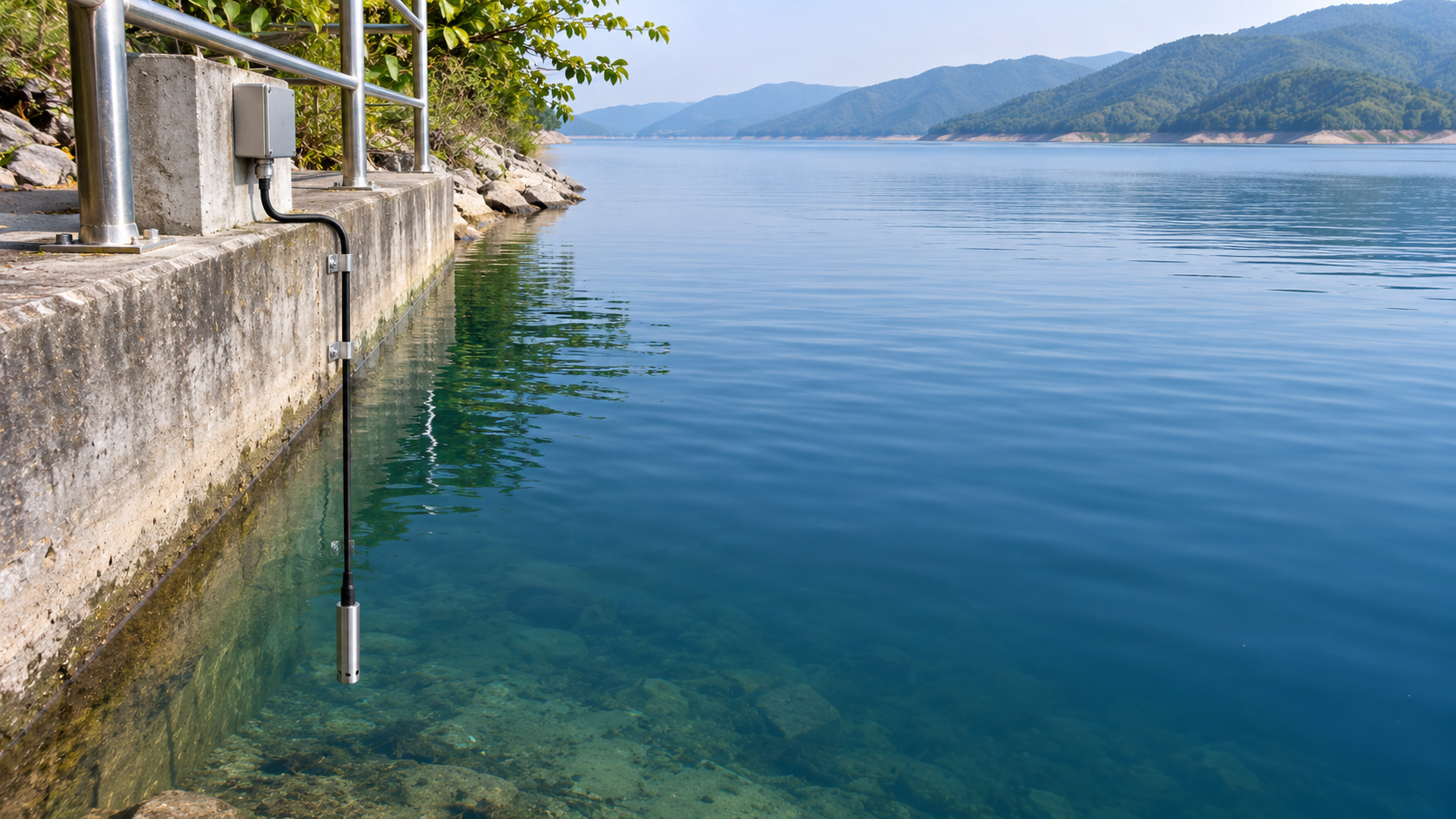
 What Can Hydraulic Pressure Transmitters Measure? Applications from Reservoir Water Levels to Pipeline Pressure
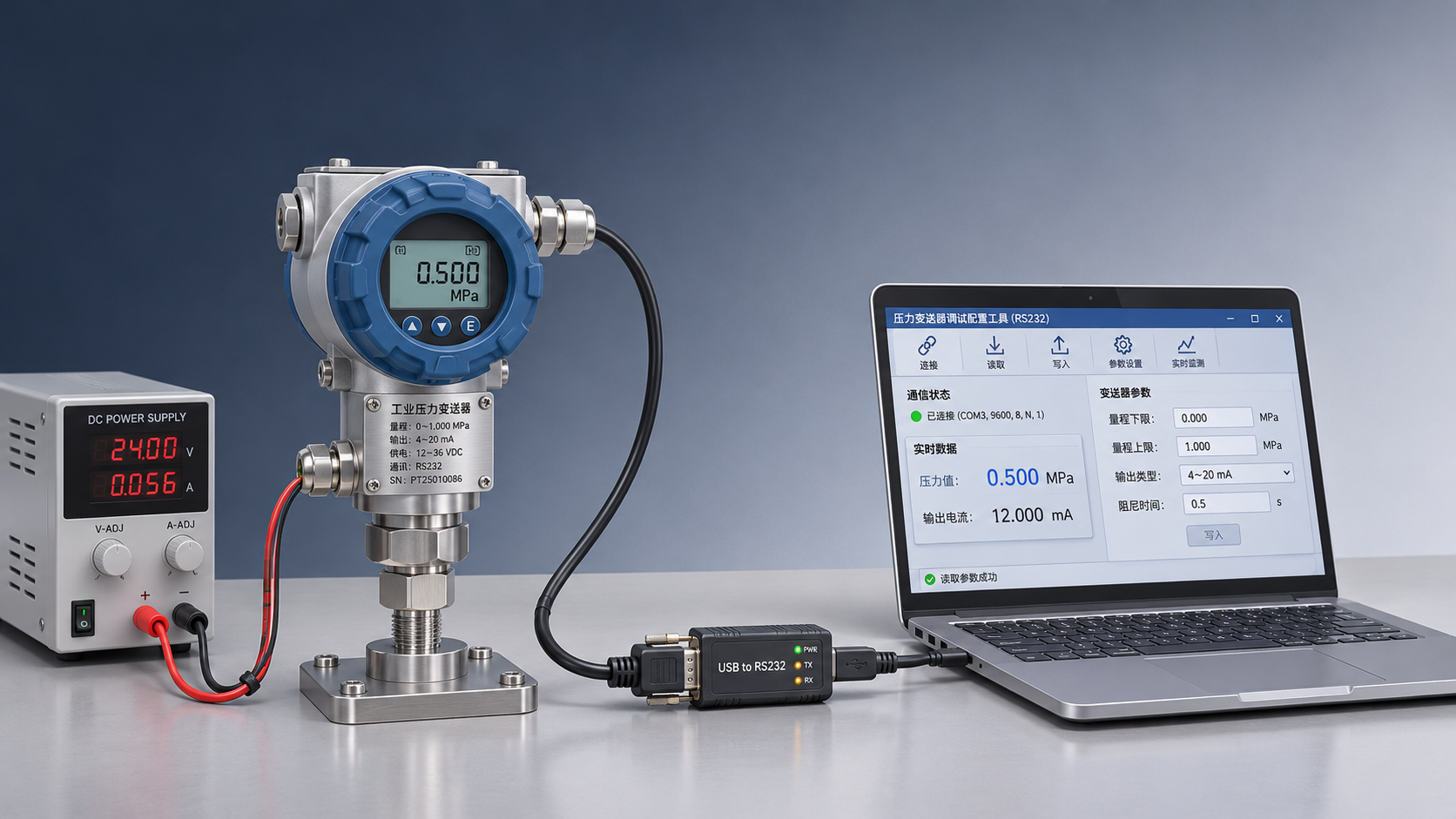
 Connecting an RS232 Pressure Transmitter to a Host Computer: Serial Port Parameters and Communication Troubleshooting
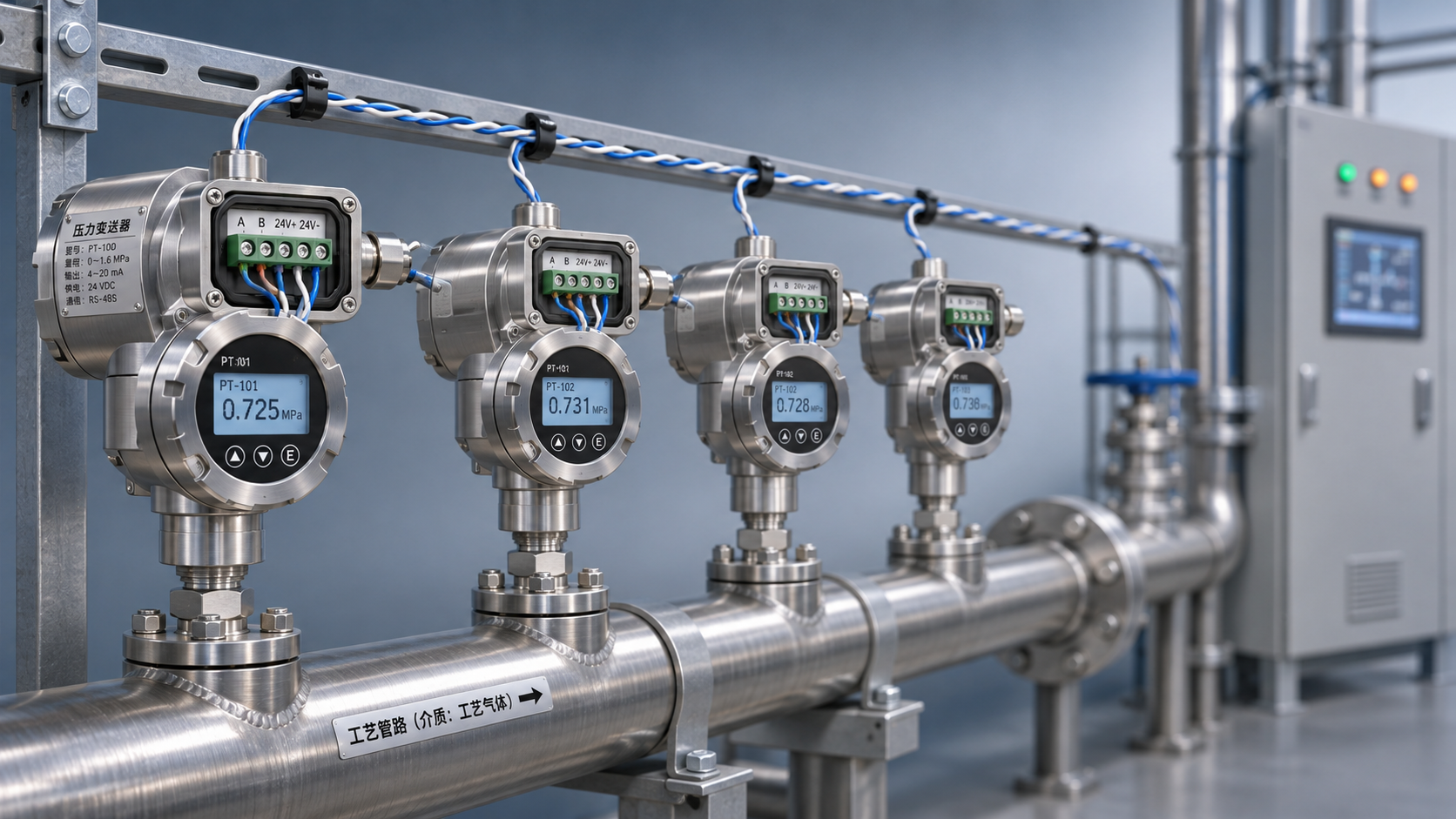
 RS485 Pressure Transmitter Multi-Drop Networking: How to Set the Terminating Resistor and Device Addresses?
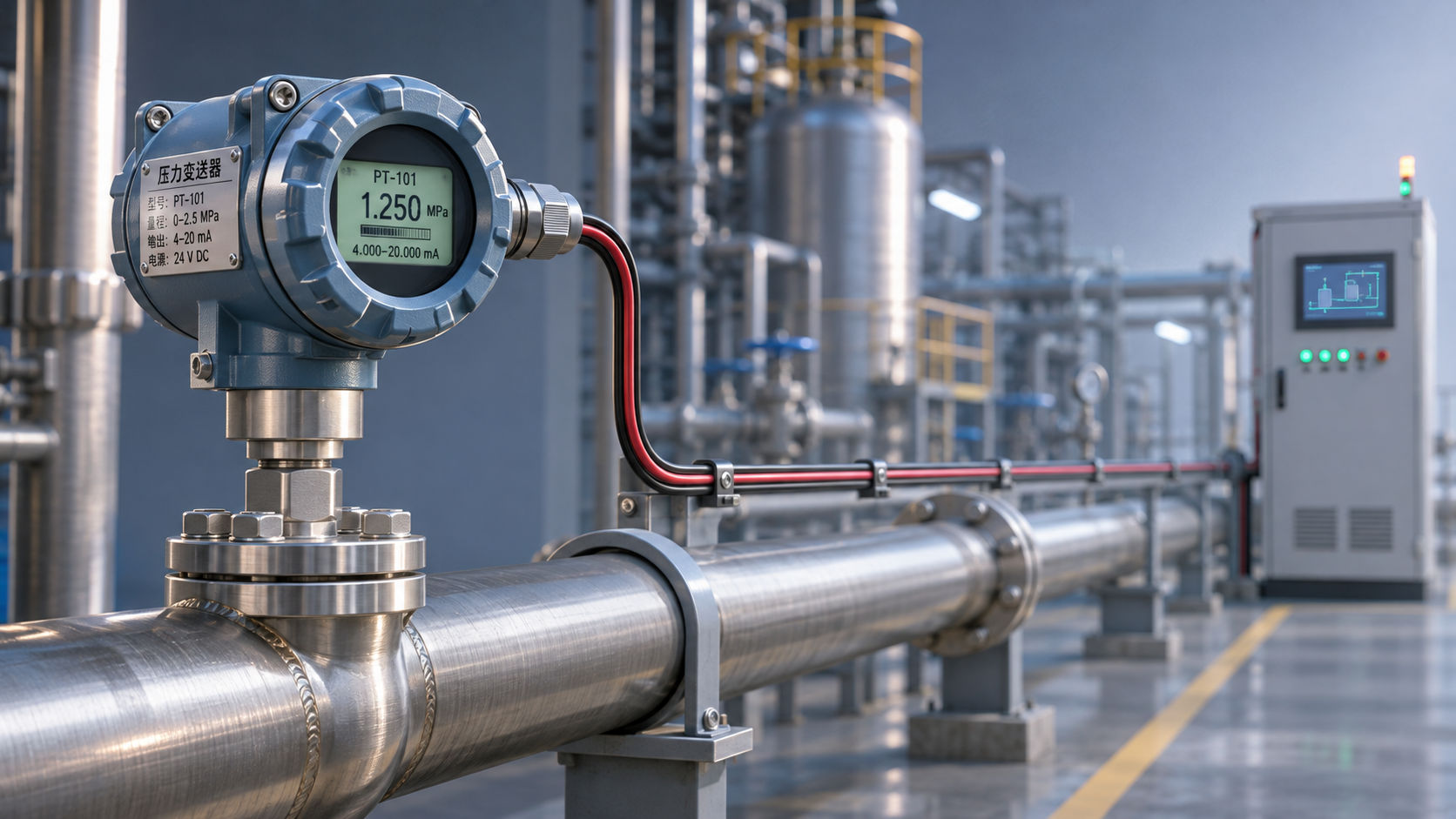
 How Does a HART Pressure Transmitter Use an Overlay Signal for Remote Configuration?