


News Center
—— NEWS CENTER ——
Xi'an Shenghongchuang Instrument Co., Ltd.
Contact: Mr. Zhang
Mobile: 15529283736
Email: shc-sensor@qq.com
Address: Fortune Building, Sanqiao Street, Xixian New Area, Xi'an, Shaanxi Province
What data can a hydraulic pressure transmitter measure? From reservoir water-level monitoring to pressure monitoring in water supply networks, this article explains common applications, selection considerations, and installation precautions based on measurement principles and actual operating conditions.
1. What Does a Hydraulic Pressure Transmitter Measure?
Obtaining Operating Data from Pressure Signals
A hydraulic pressure transmitter directly measures pressure. Its sensing element detects changes in the pressure of water or other media in a pipe and converts them into electrical signals for acquisition by digital indicators, controllers, or monitoring platforms.
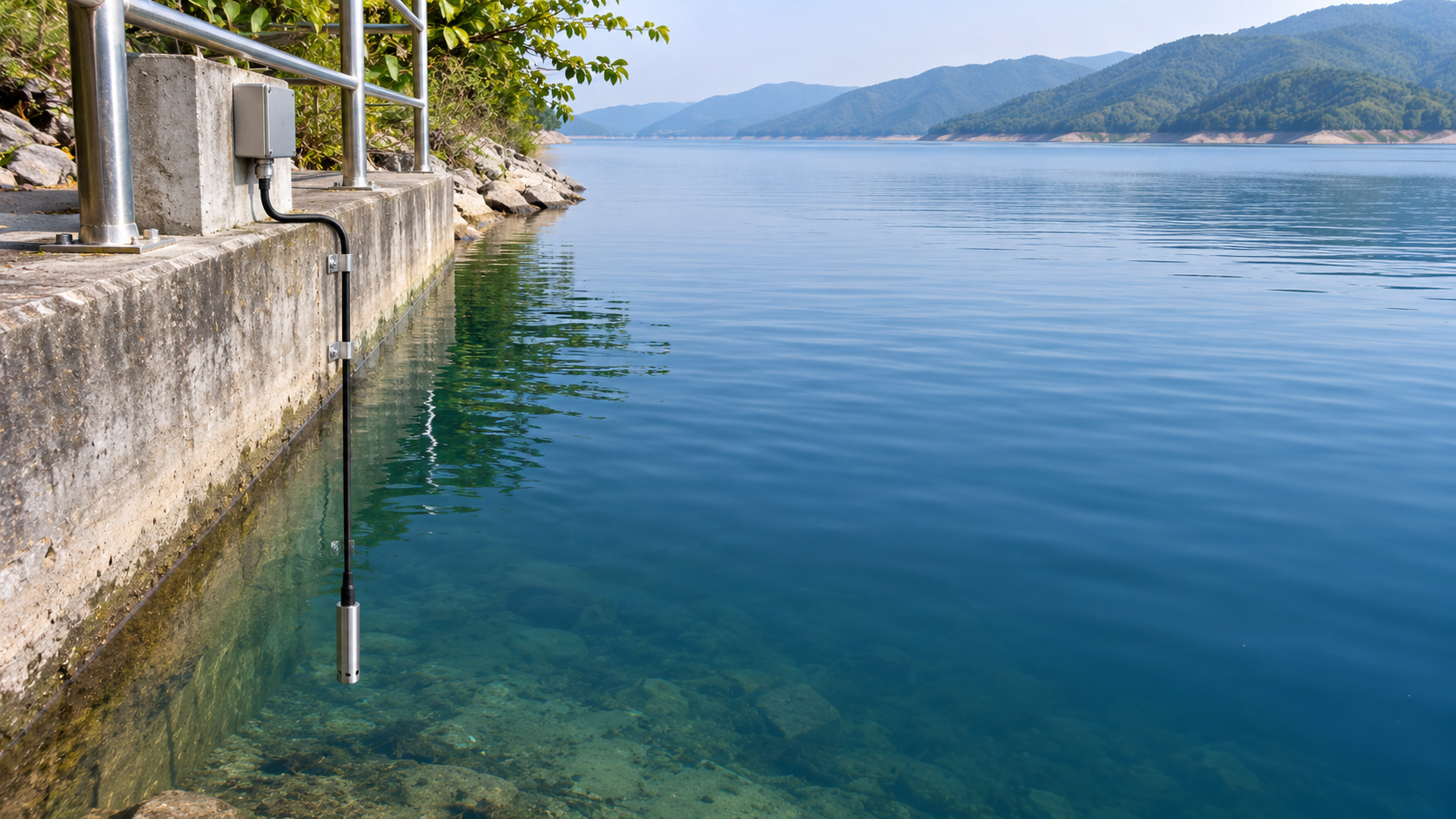
In open water bodies such as reservoirs and storage tanks, a submersible level transmitter can use the hydrostatic pressure of water to calculate the liquid level. In water supply networks, a pressure transmitter directly indicates the pipe pressure at the measurement point. The two applications require different installation methods and range selections.
Pressure data can also be combined with information such as flow rate and pump operating status to analyze water supply conditions. However, a single pressure measurement point cannot directly measure flow rate, locate leaks, or determine water quality; these assessments require data from other sensors and systems.
Basic Principle of Level Measurement Using Hydrostatic Pressure
The pressure generated by a stationary liquid is related to the height of the liquid column and can be expressed by the formula
P = ρgh
where P is the pressure generated by the liquid column, ρ is the liquid density, g is the acceleration due to gravity, and h is the height of the liquid column above the measurement point.As a rough estimate for clean water at room temperature, a 1-meter water column produces approximately 9.8 kPa of static pressure, while a 10-meter column produces approximately 98 kPa. Actual conversions should also account for water temperature, liquid density, local acceleration due to gravity, and instrument calibration conditions.
For open water, gauge-pressure measurement or atmospheric pressure compensation is generally used. The measured level is the water depth above the sensor diaphragm. To determine the water-surface elevation, the elevation of the sensor installation point must also be added, and the reference datum must be verified.
2. Key Applications from Reservoirs to Pipe Networks
Water-Level Monitoring in Reservoirs, Rivers, and Pumping Stations
In reservoirs and rivers, submersible level transmitters can continuously collect water-depth data at measurement points, providing basic data for observing water-level trends, recording operational decisions, and issuing warnings. Sensors should be installed in representative locations that are easy to maintain, away from strong currents, floating debris, and areas where sediment accumulates.
In pumping-station sumps or drainage tanks, level signals can be sent to a control system to support pump start/stop control and high- and low-level alarms. Start/stop thresholds should be set according to effective volume, inflow and outflow capacity, and equipment operating requirements to prevent frequent pump cycling.
Where water levels fluctuate significantly, the range should cover the minimum operating level and any potential maximum level, with an appropriate margin. If the site is subject to sediment abrasion or impacts from floating debris, a protective tube can be used as appropriate for the operating conditions, while ensuring unobstructed water entry.
Uses of Data from Different Measurement Points
Pressure Monitoring in Water Supply Networks and Filtration Equipment
Pressure transmitters in water supply pipes are typically installed at pump outlets, key points in the network, or near end users to monitor whether pressure meets operating requirements. Data from multiple measurement points can help operators compare pressure changes across different areas.
For example, if pump outlet pressure is normal but pressure at the network endpoint remains low, operators can investigate the cause by considering flow rate, valve position, and changes in water consumption. Abnormal pressure is only a troubleshooting clue; it is not sufficient on its own to confirm a pipe leak or equipment failure.
Differential pressure transmitters can be used to measure the pressure difference between the inlet and outlet of filtration equipment. As the filter media captures contaminants, the differential pressure may gradually increase. The specific cleaning threshold should be determined based on equipment requirements, flow rate, and operating experience.
3. Level Measurement Products and Selection Considerations
Selecting a Level Transmitter for Site Conditions
For applications that require submersion in liquid to measure hydrostatic pressure, consider the JKU901 High-Temperature Level Transmitter Sensor with Domestic High-Temperature Pressure Guide. This product converts hydrostatic pressure into an electrical signal through a sensing element, with temperature compensation and linearity correction, and is suitable for level measurement in water supply and drainage, environmental protection, and other fields.
The JKU901 documentation specifies a measuring range of 0.0–110 m. When placing an order, determine the specific range based on the highest and lowest levels at the site. The sensor section can be submerged in liquid, while the transmitter section can be secured with a flange or bracket. The installation location should still be confirmed based on the site structure.
The product documentation lists an IP68 ingress protection rating and an ExiaⅡCT4-7 explosion protection marking. For long-term immersion or use in hazardous areas, further verify the applicable component, complete certification, connection method, and site safety requirements. The marking alone is not sufficient to determine whether the entire system is suitable.
Key Parameters and Selection Considerations
Matching the Range, Accuracy, and Signal
A wider range is not always better. For example, for an instrument with a 0–10 m range and 0.5% full-scale accuracy, the basic permissible error can generally be understood as approximately ±0.05 m. Refer to the product technical documentation for the specific definition of error and other influencing factors.
For signal output, two-wire 4–20 mA is commonly used for long-distance transmission in industrial settings. For RS-485 communication, verify the communication protocol, address settings, and compatibility with the host system. Different output options are not necessarily available simultaneously, so confirm the requirements before ordering.
In addition to accuracy and signal output, check the wetted materials, cable length, medium temperature, and power supply requirements. For operating conditions involving sediment, corrosive media, or possible freezing, confirm product suitability based on the actual environment.
4. Installation, Maintenance, and Data Use
Consider Measurement Point Location and Pressure Surges During Installation
Submersible level sensors should be securely fixed to prevent them from swaying with the water flow or striking the tank wall. The measurement point must not be buried in sediment, and protective devices must not block the pressure-sensing area. For models requiring an air vent, protect the vent path as specified by the product requirements.
Before installing a network pressure transmitter, verify the connection specifications, sealing method, and medium conditions. Installation must be carried out after safely isolating and depressurizing the system. Pump starts and stops and rapid valve operation can cause water hammer, so consider transient pressure and permissible overload capacity when selecting the instrument.
During commissioning, compare instrument readings with a reliable manual staff gauge, standard pressure gauge, or calibration device. If a discrepancy is found, first check the installation elevation, range settings, wiring, and signal conversion before deciding whether to calibrate or service the instrument.
Establish Routine Inspection and Data Verification Procedures
During operation, regularly check whether contaminants have accumulated on the pressure-sensing area, whether cables and connectors are damaged, and whether seals remain intact. Set the cleaning interval according to water quality and site conditions. Follow the product instructions when cleaning to avoid damaging the sensing diaphragm.
If the monitoring platform displays fluctuating, unchanged for an extended period, or out-of-range data, verify it against the actual site water level, pressure gauges, and equipment status. Abnormal readings may result from power supply issues, wiring faults, a blocked measurement point, or a genuine sudden change in operating conditions.
Xi'an Shenghongchuang Instrumentation Co., Ltd. provides sensor and transmitter products and technical services. Before selecting a product, prepare information such as the medium to be measured, level or pressure range, installation location, operating temperature, and output interface, and discuss the specific configuration with technical personnel.
Related Recommendations
 What Can Hydraulic Pressure Transmitters Measure? Applications from Reservoir Water Levels to Pipeline Pressure
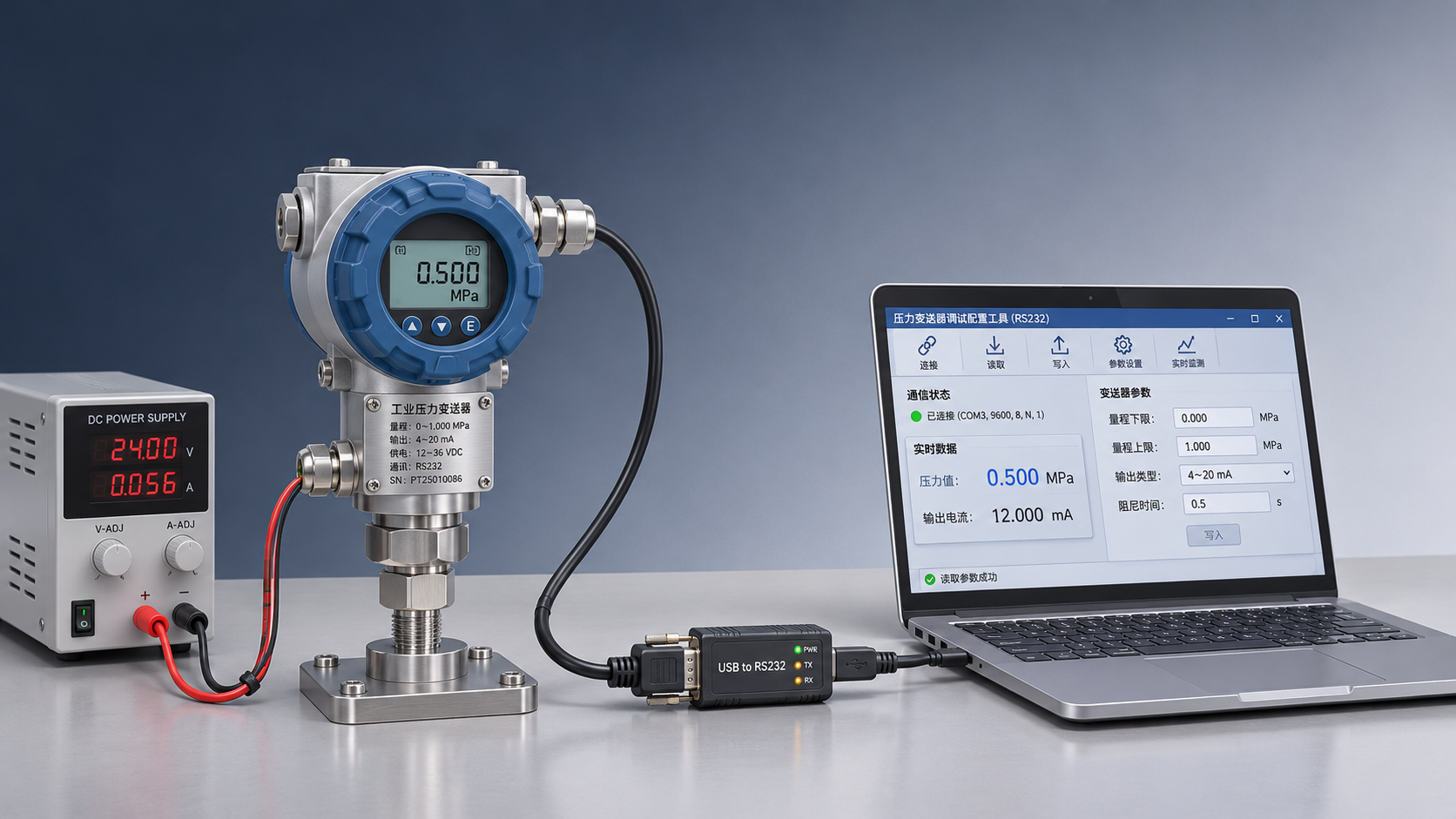
 Connecting an RS232 Pressure Transmitter to a Host Computer: Serial Port Parameters and Communication Troubleshooting
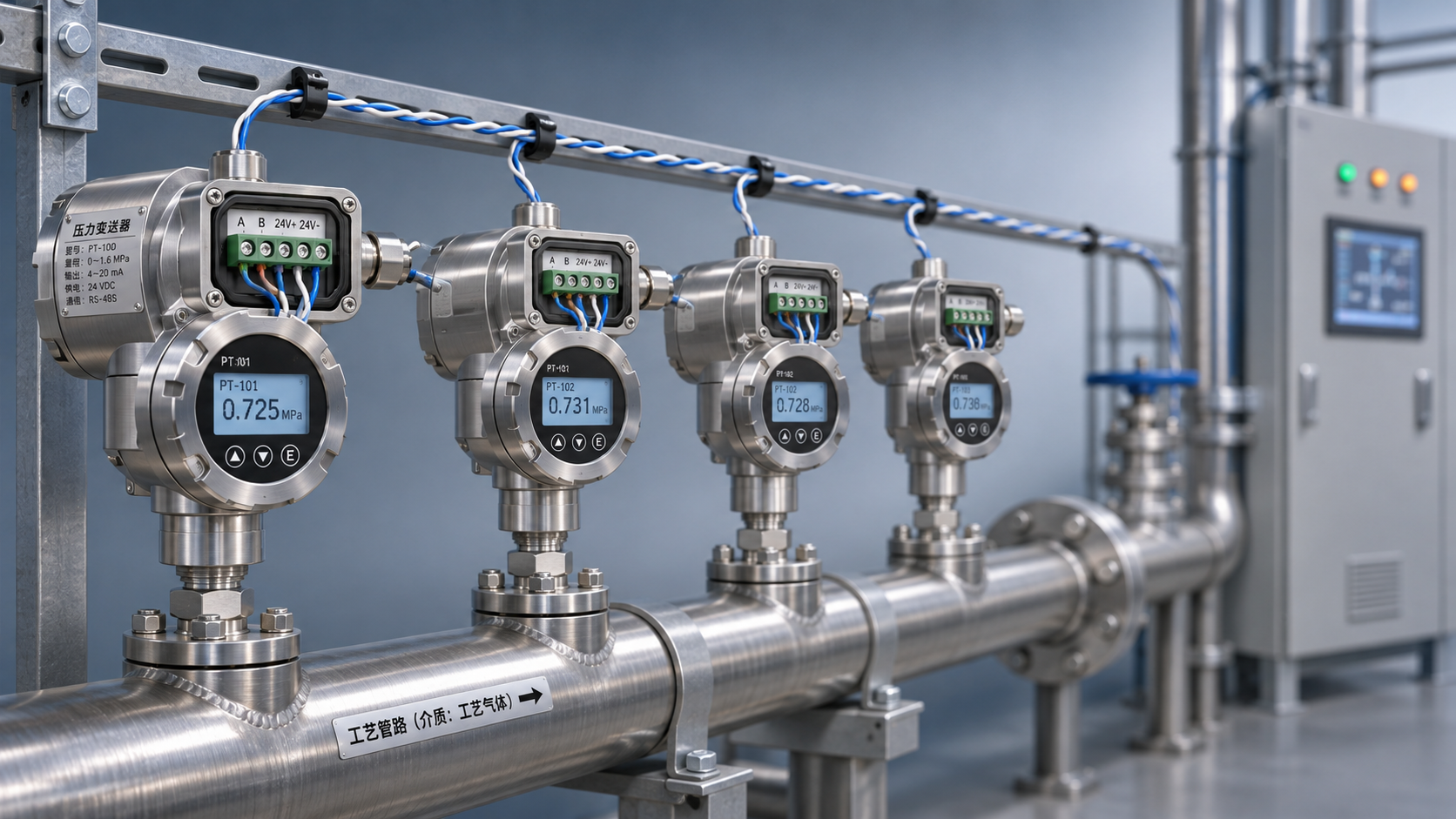
 RS485 Pressure Transmitter Multi-Drop Networking: How to Set the Terminating Resistor and Device Addresses?
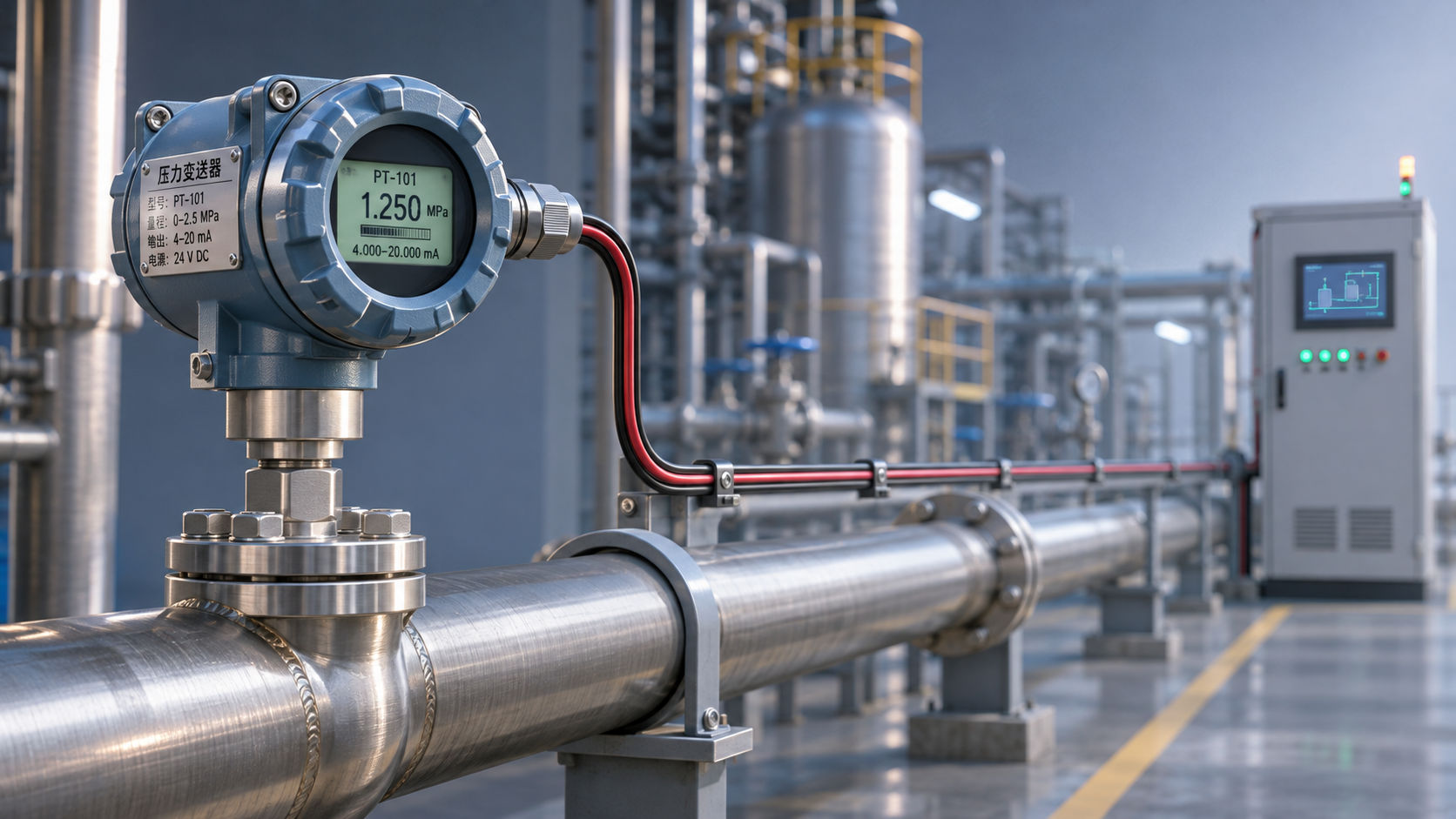
 How Does a HART Pressure Transmitter Use an Overlay Signal for Remote Configuration?