


News Center
—— NEWS CENTER ——
Xi'an Shenghongchuang Instrument Co., Ltd.
Contact: Mr. Zhang
Mobile: 15529283736
Email: shc-sensor@qq.com
Address: Fortune Building, Sanqiao Street, Xixian New Area, Xi'an, Shaanxi Province
The lead time for custom pressure transmitters affects procurement plans and project schedules, and is typically influenced by factors such as technical requirements, material availability, and production scheduling. Every stage, from confirming requirements to product delivery, can affect the actual lead time. The overall timeline should therefore be assessed based on the specific configuration and acceptance requirements.
I. Technical Requirements Determine the Complexity of Customization
1. Measurement Range and Accuracy Requirements
Pressure type, range, and accuracy are fundamental to estimating the lead time. Different measurement types, such as gauge pressure, absolute pressure, and sealed gauge pressure, may have different requirements for the sensor core and calibration plan. If materials for a standard range are available, preparation is generally more straightforward.
When the range is small, overload capacity requirements are high, or the customer has specific requirements for measurement performance as temperature changes, the sensor core selection and compensation solution need further evaluation. The more specific the accuracy requirements, the more time is usually needed for calibration and verification.
When placing an order, it is advisable to specify the normal operating pressure, maximum operating pressure, and any pressure peaks that may occur. For example, a normal operating range of 0–1 MPa does not mean that the equipment will never be subjected to higher transient pressures under all operating conditions.
2. Media, Temperature, and Installation Conditions
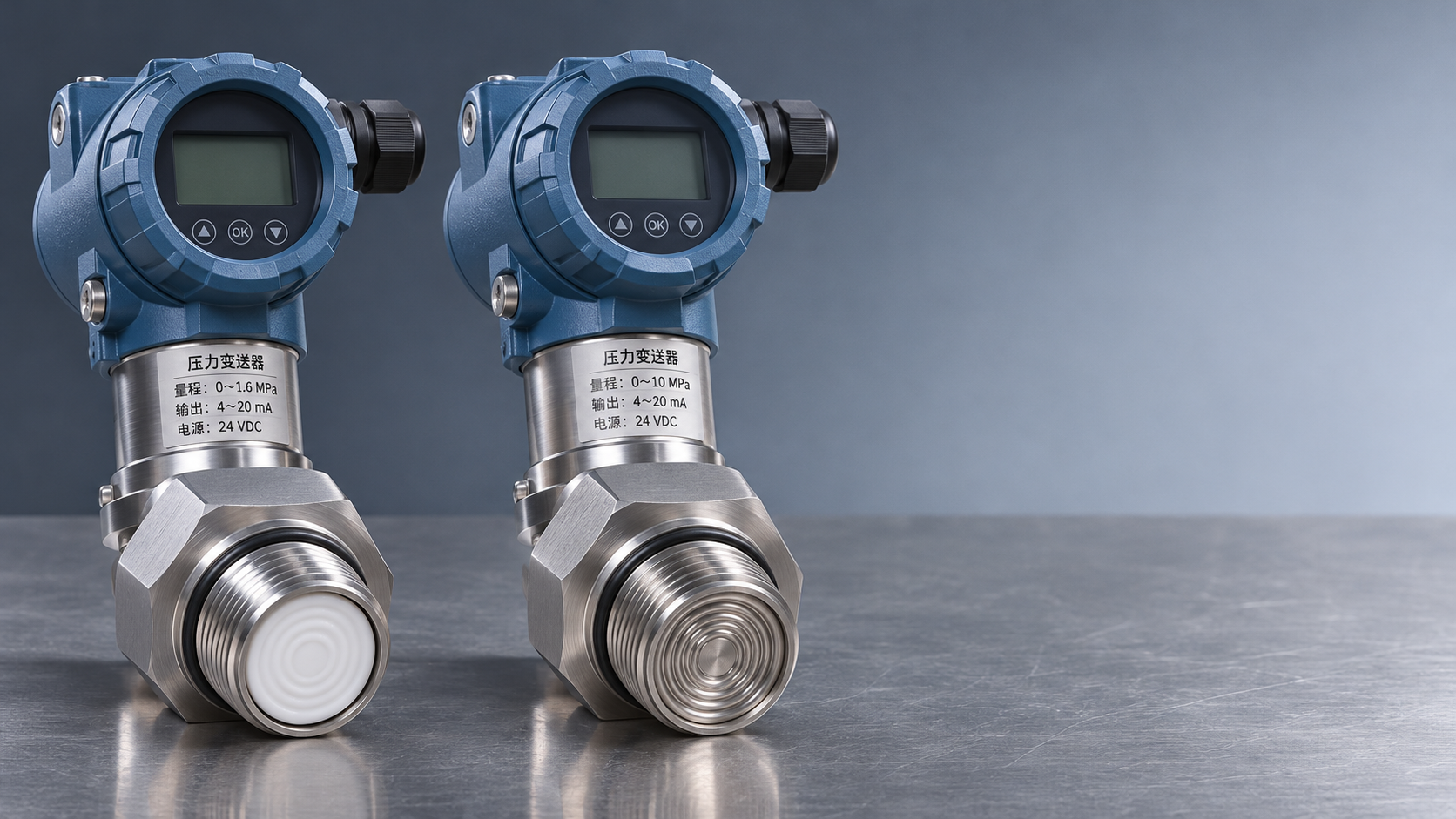
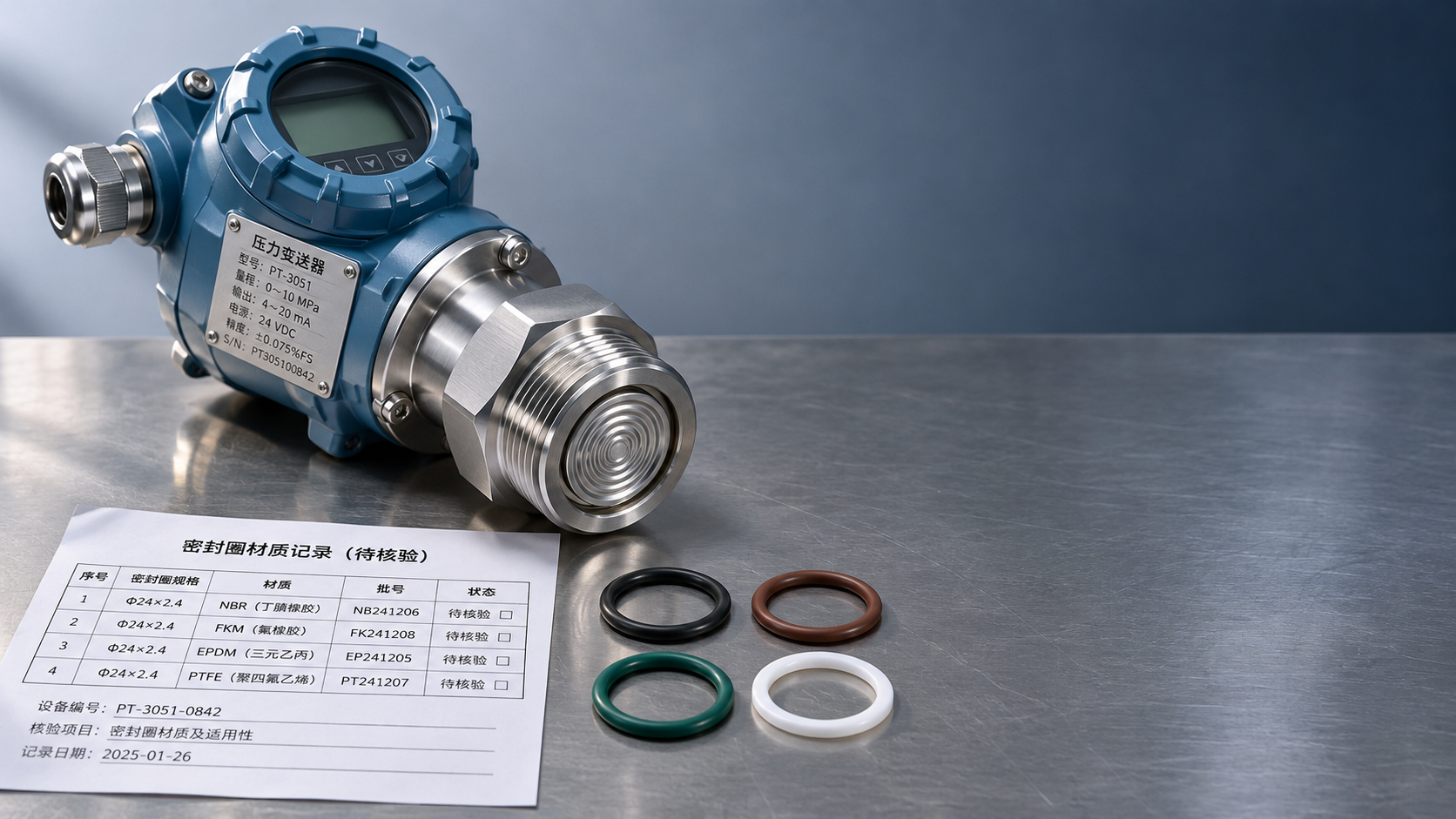
The measured medium affects the wetted materials, sealing structure, and process selection. Clean water, oil, and corrosive media have different compatibility requirements for diaphragms, connectors, and seals. For media that crystallize, are viscous, or are prone to clogging, a special isolation structure may also need to be considered.
Site conditions such as high or low temperatures, vibration, and electromagnetic interference can also affect structural design and testing arrangements. The temperature range should distinguish between the medium temperature and the ambient temperature. Providing only a single temperature value may lead to repeated selection changes.
Thread specifications, flange dimensions, installation space, and cable outlet method should be determined as early as possible. Non-standard connectors, special housings, or matching installation components often require additional drawing confirmation, part machining, and assembly verification.
II. Material Availability and Production Scheduling Affect Actual Delivery
1. Availability of Key Materials
Pressure sensor cores, circuit boards, housings, connectors, seals, and cables can all affect lead time. Supply conditions vary between standard and special specifications, and the final status should be confirmed based on inventory and procurement feedback when the order is confirmed.
The procurement lead time for special alloy wetted materials, custom diaphragms, or specified brands of electronic components may be longer than for standard materials. Even if just one key material is unavailable, it may affect complete unit assembly and subsequent testing.
If the project allows, and media compatibility, accuracy, and installation requirements are met, alternative materials or standard interfaces can be discussed with technical personnel. Any alternative must be confirmed by both parties; safety should not be compromised simply to shorten the lead time.
2. Quantity, Batches, and Production Line Scheduling
Production arrangements differ for prototypes, small batches, and volume orders. Prototypes may require more design verification, while batch production requires consideration of material readiness, tooling preparation, assembly cycle times, and unit-by-unit testing.
An increase in order quantity does not necessarily increase the manufacturing time per unit proportionally, but the total assembly and inspection workload generally increases. If multiple projects are scheduled for production at the same time, production sequence and the availability of equipment and personnel can also affect the estimated completion time.
The starting point for calculating lead time should be clearly defined—for example, after the technical agreement, order, and payment terms have all been confirmed. Production completion, ex-works, and arrival at the site should also be treated as separate milestones to avoid misunderstandings about the delivery date.
III. Calibration, Acceptance, and Site Requirements Should Not Be Overlooked
1. Calibration Items and Documentation Requirements
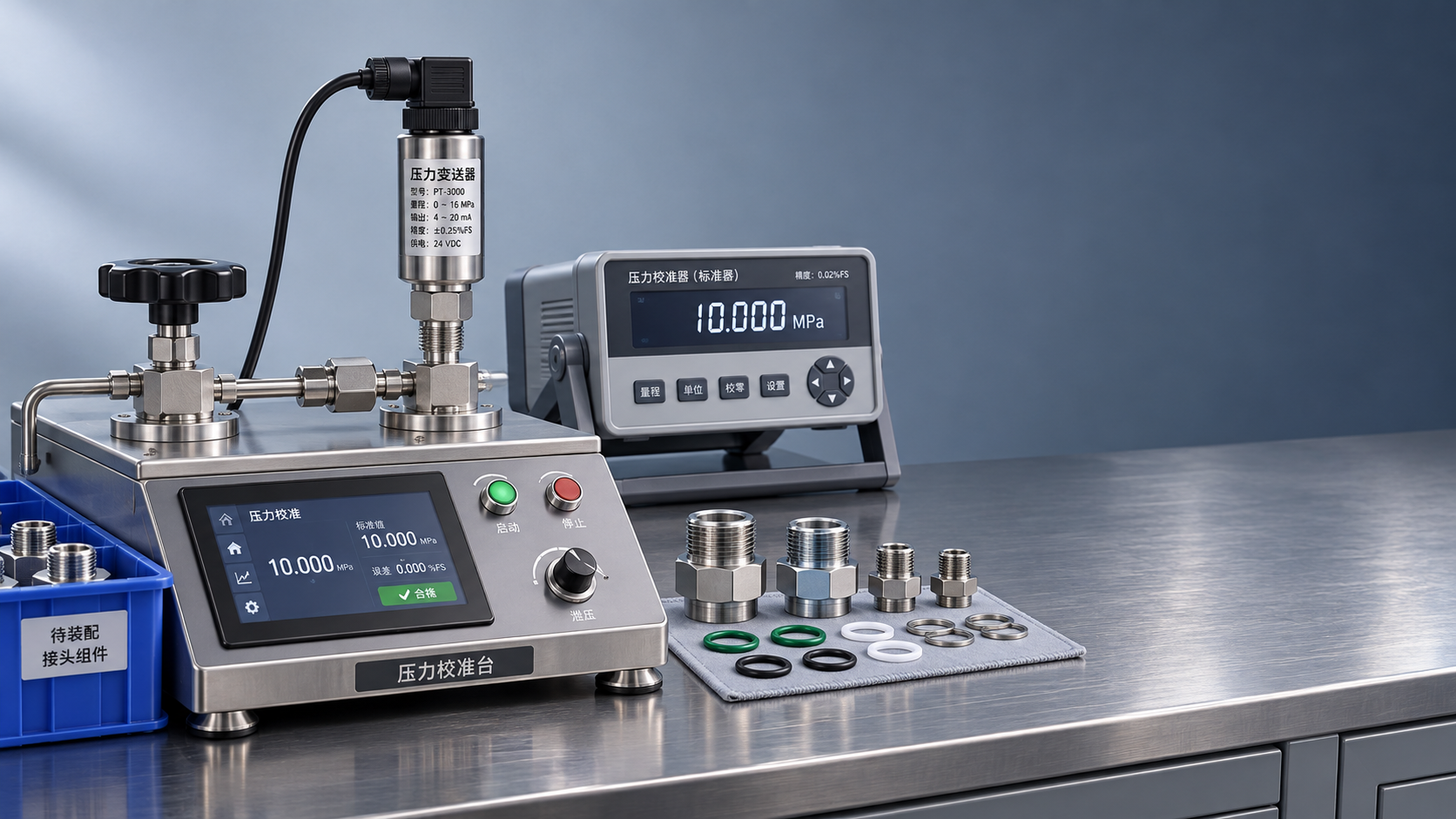
Before shipment, pressure transmitters typically undergo assembly inspection, parameter setup, and pressure calibration. If the customer requires additional test points, performance verification under specific temperature conditions, or records in a special format, these requirements should be raised at the quotation stage.
For example, calibration may cover the zero point, full scale, and intermediate points. The specific test points, number of pressure cycles, and permissible error should follow the agreement between both parties. Additional test items may also increase the time required for test equipment and data processing.
If third-party calibration, special inspection, or certification documents are required, confirm the applicable scope, the institution's schedule, and certificate requirements in advance. External testing lead times may depend on submission arrangements and cannot be estimated directly using the time required for routine factory testing.
2. Supporting Instruments and Communication Interfaces
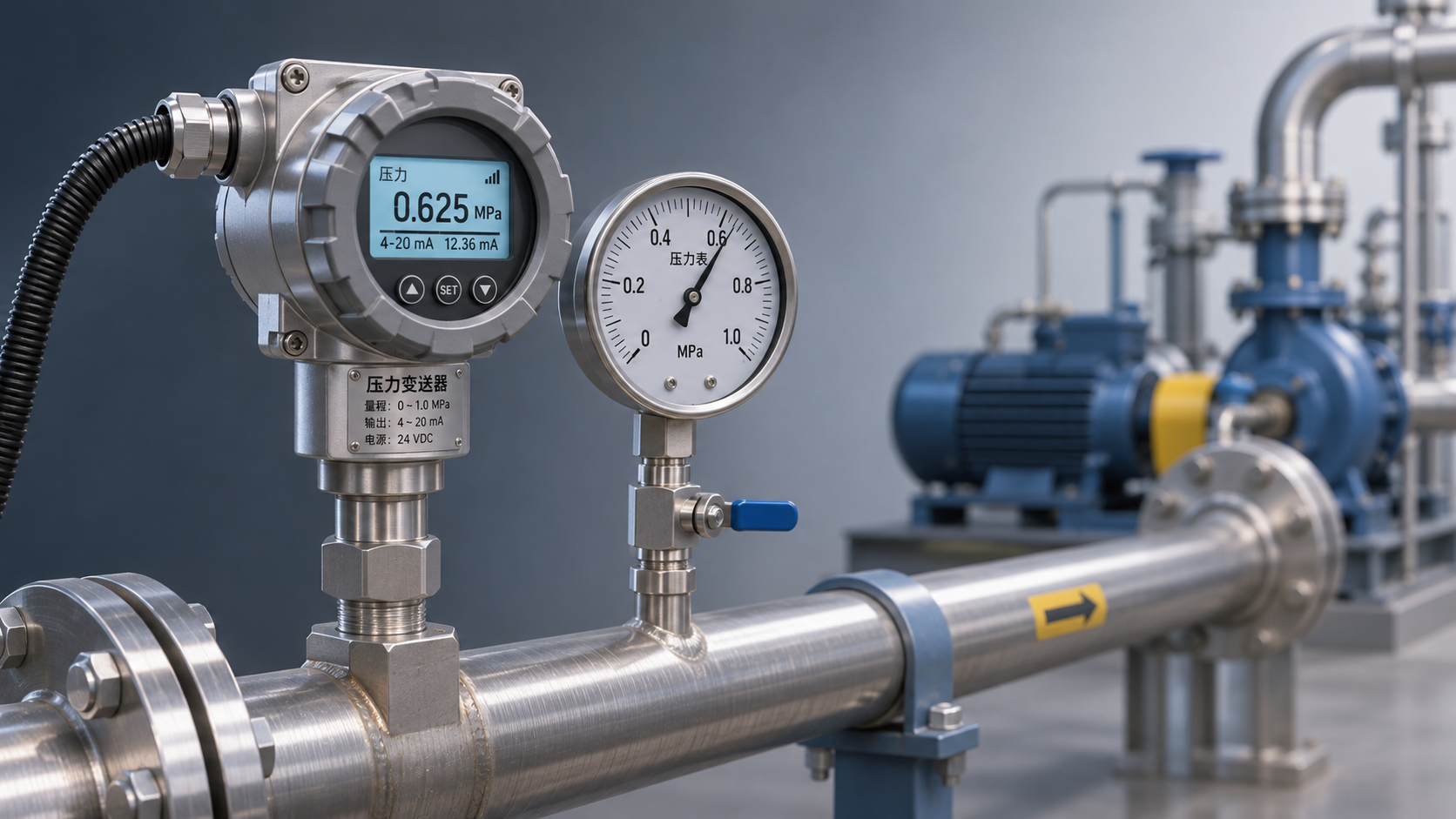
In a project, pressure transmitters are often used alongside flow instruments, control cabinets, and host systems. The power supply, signal type, and interface protocol should be checked separately to avoid rework caused by interface incompatibility after the equipment arrives on site.
For pipelines that require simultaneous monitoring of conductive liquid flow, the domestic JTLD inline intelligent electromagnetic flowmeter can be evaluated according to the medium and pipeline conditions. This product can display instantaneous and cumulative flow and offers output options such as 4–20 mA. The specific interface and configuration should be based on the confirmed order details.
The suitability of different instruments is not interchangeable. When selecting an electromagnetic flowmeter, conditions such as the medium's electrical conductivity must also be confirmed. When selecting a pressure transmitter, the pressure range, wetted materials, and installation interface should be checked in particular.
IV. Common Factors Affecting Lead Time and Procurement Preparation
1. Lead Time Factors at a Glance
The following table helps identify details that are easy to overlook during a quotation inquiry; it is not a fixed lead-time commitment. The actual lead time also depends on design maturity, material status, order quantity, and acceptance arrangements.
Repeated changes to technical requirements may affect several stages, including design, procurement, and production. In particular, if the interface or material is changed after dedicated parts have entered production, the work already completed and the lead time must be reassessed.
For projects with tight schedules, you can ask whether delivery in batches is possible—for example, delivering a prototype needed for installation and commissioning first, followed by the remaining units in agreed batches. The acceptance criteria for each batch should also be agreed upon.
2. Information to Prepare Before Requesting a Quotation
Preparing operating-condition information in advance helps the supplier determine whether to use a standard configuration or develop a custom design. The more complete the information, the more efficient technical discussions and quotation confirmation are generally likely to be.
For a common 4–20 mA signal, specify the power supply conditions, wiring method, and whether a local display is required. For communication-enabled configurations, also confirm the protocol, address settings, and system integration requirements.
Project Communication Recommendations
Xi'an Shenghongchuang Instrument Co., Ltd. provides sensor and transmitter selection and customization services. Its production base is Shaanxi Qinkong Sensor Technology Co., Ltd. The specific lead time must be confirmed based on the technical solution, material availability, and production schedule.
To arrange a custom order, please submit the pressure range, medium, operating temperature, installation interface, output signal, order quantity, and desired delivery date together. This will help technical personnel assess the solution and provide a lead-time response tailored to your requirements.
Related Recommendations
 Ceramic-Core vs. Oil-Filled Pressure Transmitters: How to Choose Based on Corrosion Resistance and Overload Capacity
 How should the wetted parts of a 316L pressure transmitter be inspected for corrosive media?
 What Causes Unstable Readings on a Pressure Transmitter with an LCD Display?
 What usually affects the lead time for a custom pressure transmitter?