News Center
—— NEWS CENTER ——
Xi'an Shenghongchuang Instrument Co., Ltd.
Contact: Mr. Zhang
Mobile: 15529283736
Email: shc-sensor@qq.com
Address: Fortune Building, Sanqiao Street, Xixian New Area, Xi'an, Shaanxi Province
Introduction
As a core component of industrial automation control, the calibration accuracy of the PTS-PTS502 pressure transmitter directly affects system stability. This article is written by professional engineers from Xi'an Shenghongchuang Instrumentation Co., Ltd., a manufacturer of diffused silicon Hirschmann pressure sensors, and explains in detail the standardized calibration process for PTS series transmitters, helping purchasing decision-makers master key evaluation indicators and ensure the selection of cost-effective industrial-grade pressure sensing equipment.
The Importance of PTS-PTS502 Pressure Transmitter Calibration
In industrial automation control systems, the accuracy of pressure transmitters directly affects the stability and reliability of the entire system. The PTS-PTS502 pressure transmitter adopts diffused silicon Hirschmann sensor technology and features high accuracy and high stability. However, even the highest-quality sensors may drift during use due to environmental factors, mechanical stress, or long-term operation. Therefore, regular calibration is a key step in ensuring measurement accuracy.
Preparation Before Calibration
Before calibrating the PTS-PTS502 pressure transmitter, it is necessary to ensure that all equipment is in normal working condition. The following are the necessary preparations before calibration:
- Check whether the appearance of the pressure transmitter shows any damage or corrosion.
- Ensure the power supply is stable and the voltage meets the equipment requirements.
- Prepare a standard pressure source (such as a pressure calibrator) and a digital multimeter.
- Connect the transmitter to the calibration equipment and ensure there is no leakage.
- Preheat the equipment for at least 15 minutes to ensure temperature stability.
PTS-PTS502 Pressure Transmitter Calibration Steps
The calibration process must be carried out strictly in accordance with standardized procedures to ensure the accuracy and repeatability of the data. The following are the detailed calibration steps:
1. Zero Calibration
Zero calibration is the first step in the calibration process, and its purpose is to ensure that when there is no pressure input, the transmitter output signal is zero. The specific operations are as follows:
- Connect the pressure port of the pressure transmitter to the atmosphere to ensure there is no pressure input.
- Use a digital multimeter to measure the transmitter output signal (usually 4-20mA).
- If the output signal is not 4mA (zero signal), adjust it using the transmitter's zero adjustment screw until the output signal is 4mA.
2. Full-Scale Calibration
Full-scale calibration ensures that the transmitter output signal is 20mA at the maximum operating pressure. The specific operations are as follows:
- Use a standard pressure source to apply full-scale pressure to the transmitter.
- Measure the output signal. If the signal is not 20mA, adjust it using the full-scale adjustment screw.
- Repeat zero and full-scale calibration until both reach the standard values.
3. Linearity Test
The linearity test is used to verify whether the transmitter output shows a linear relationship throughout the entire measurement range. The test steps are as follows:
- Starting from zero, gradually increase the pressure to full scale, and record the output signals at multiple pressure points (such as 25%、50%、75%).
- Compare the measured values with the theoretical values and calculate the linearity error.
- If the error exceeds the allowable range, recalibration or sensor replacement may be required.
Common Problems and Solutions During Calibration
When calibrating the PTS-PTS502 pressure transmitter, the following common problems may be encountered:
1. Unstable Output Signal
If the output signal fluctuates significantly, possible causes include unstable power supply, poor circuit connection, or sensor damage. The solutions are as follows:
- Check whether the power supply voltage is stable and ensure it meets the equipment requirements.
- Check all connection circuits to ensure there is no looseness or oxidation.
- If the problem is still not resolved, the sensor may need to be replaced.
2. Accuracy Still Fails to Meet Standards After Calibration
If the accuracy still fails to meet requirements after multiple calibrations, it may be due to sensor aging or mechanical damage. In this case, it is recommended to contact a professional manufacturer such as Xi'an Shenghongchuang Instrumentation Co., Ltd. for repair or replacement.
Summary and Call to Action
Calibration of the PTS-PTS502 pressure transmitter is a key step in ensuring its measurement accuracy and system stability. By strictly following standardized procedures for zero calibration, full-scale calibration, and linearity testing, the reliability of the equipment can be effectively improved. As a professional diffused silicon Hirschmann pressure sensor manufacturer, Xi'an Shenghongchuang Instrumentation Co., Ltd. provides one-stop services from production to after-sales support, ensuring that customers obtain cost-effective industrial-grade pressure sensing equipment.
If you would like to learn more about the PTS-PTS502 pressure transmitter or other flow control equipment, please contact us immediately to obtain professional technical support and solutions.
Related Recommendations
![]() Southchip Technology Launches Its First Optical Sensor, the SC52115, for Wearable Devices
Southchip Technology Launches Its First Optical Sensor, the SC52115, for Wearable Devices How does a pressure sensor convert changes in applied force into usable electrical signals?
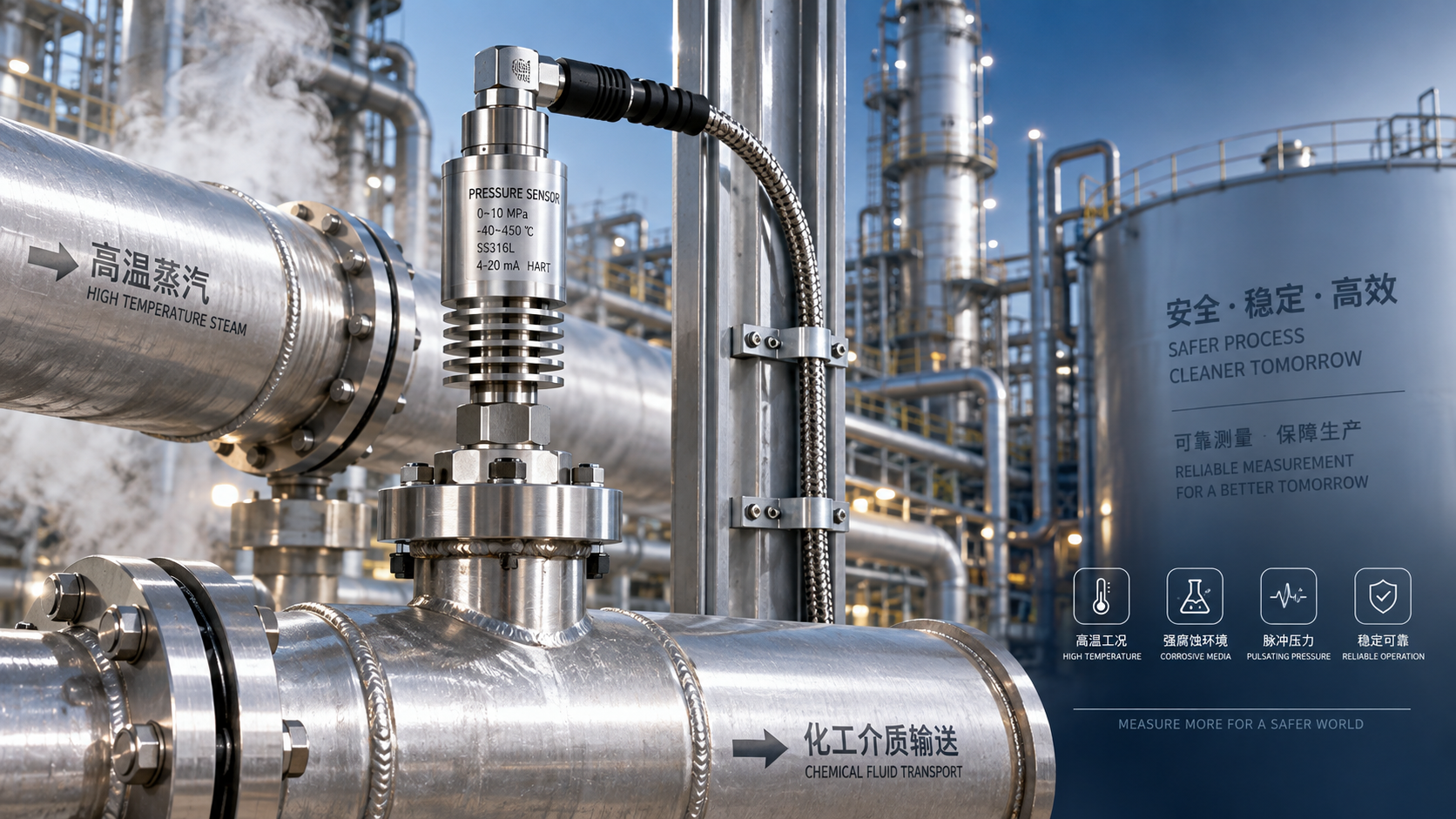
 Which parameters should be considered when selecting pressure sensors for high-temperature, corrosive, and pulsating operating conditions?
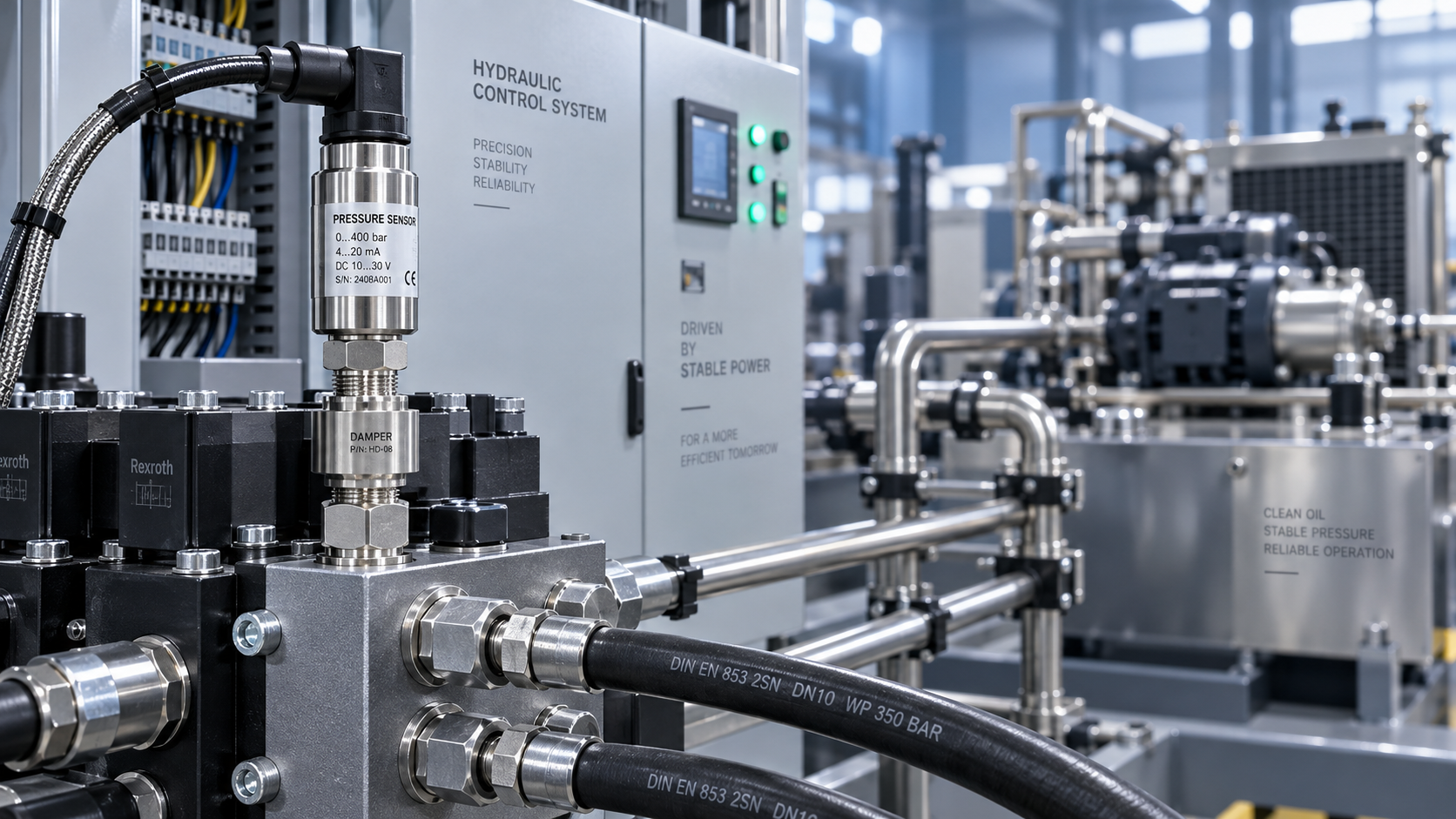
 Hydraulic equipment pressure fluctuates frequently. How can sensors be configured to improve control stability?