News Center
—— NEWS CENTER ——
Xi'an Shenghongchuang Instrument Co., Ltd.
Contact: Mr. Zhang
Mobile: 15529283736
Email: shc-sensor@qq.com
Address: Fortune Building, Sanqiao Street, Xixian New Area, Xi'an, Shaanxi Province
How Do Diffused Silicon Wheatstone Pressure Sensors Improve Industrial Measurement Accuracy?
Core Technology and Working Principle
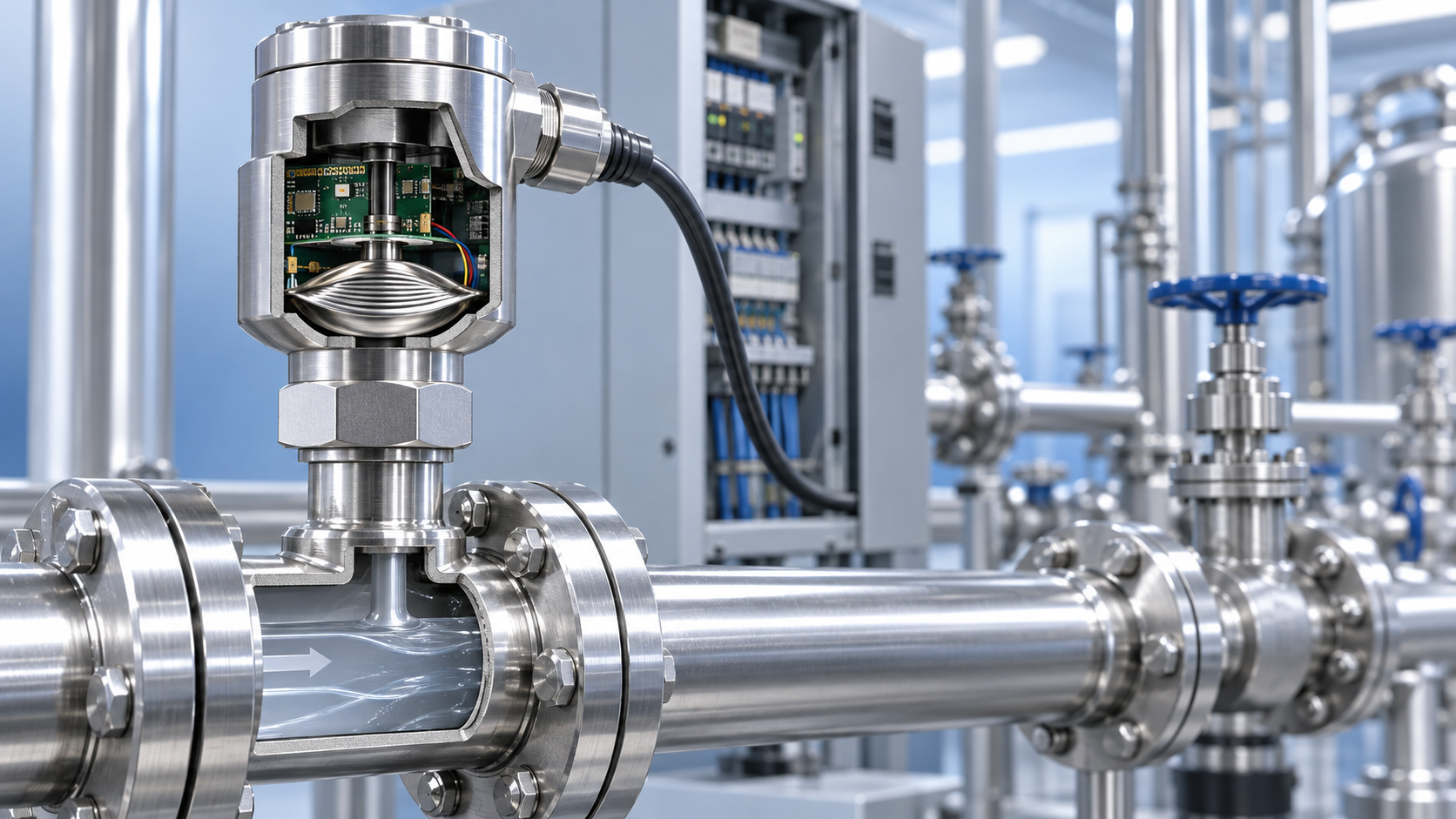
In the field of industrial measurement, the PTS-PTS501 pressure transmitter significantly improves measurement accuracy and stability by virtue of its core component—the diffused silicon Wheatstone pressure sensor. This sensor adopts the principle of forming a Wheatstone bridge by diffusion on a single-crystal silicon wafer. When external pressure is applied, the silicon diaphragm deforms, causing changes in the resistance of the bridge arms, and outputs a standard 4-20mA or digital signal through the signal conditioning circuit. Its unique temperature compensation technology can control temperature drift within ±0.02%FS/℃, ensuring that 0.05 class accuracy is maintained even in a working environment of -20℃~+65℃.
Compared with traditional ceramic piezoresistive sensors, the diffused silicon structure offers higher sensitivity and stronger overload resistance. Taking the ZFBY-ZFBY3801 model as an example, its measuring range covers 0~100MPa, with overload protection up to 150%FS, making it particularly suitable for high-pressure scenarios such as oil and natural gas pipelines. Through the IP67 protection design of the Hirschmann connector, it can also effectively resist interference from industrial environments such as moisture and dust.
Accuracy Class and Selection Guide
The YH-A series provides multiple accuracy options ranging from 0.1 class to 0.05 class, and users need to match them according to actual requirements:
- Routine Monitoring: 0.2 class accuracy (±0.2%FS) is suitable for general process control
- Precision Metering: 0.1 class accuracy (±0.1%FS) meets trade settlement requirements
- High-Calibration Applications: 0.05 class accuracy (±0.05%FS) is used for laboratory calibration systems
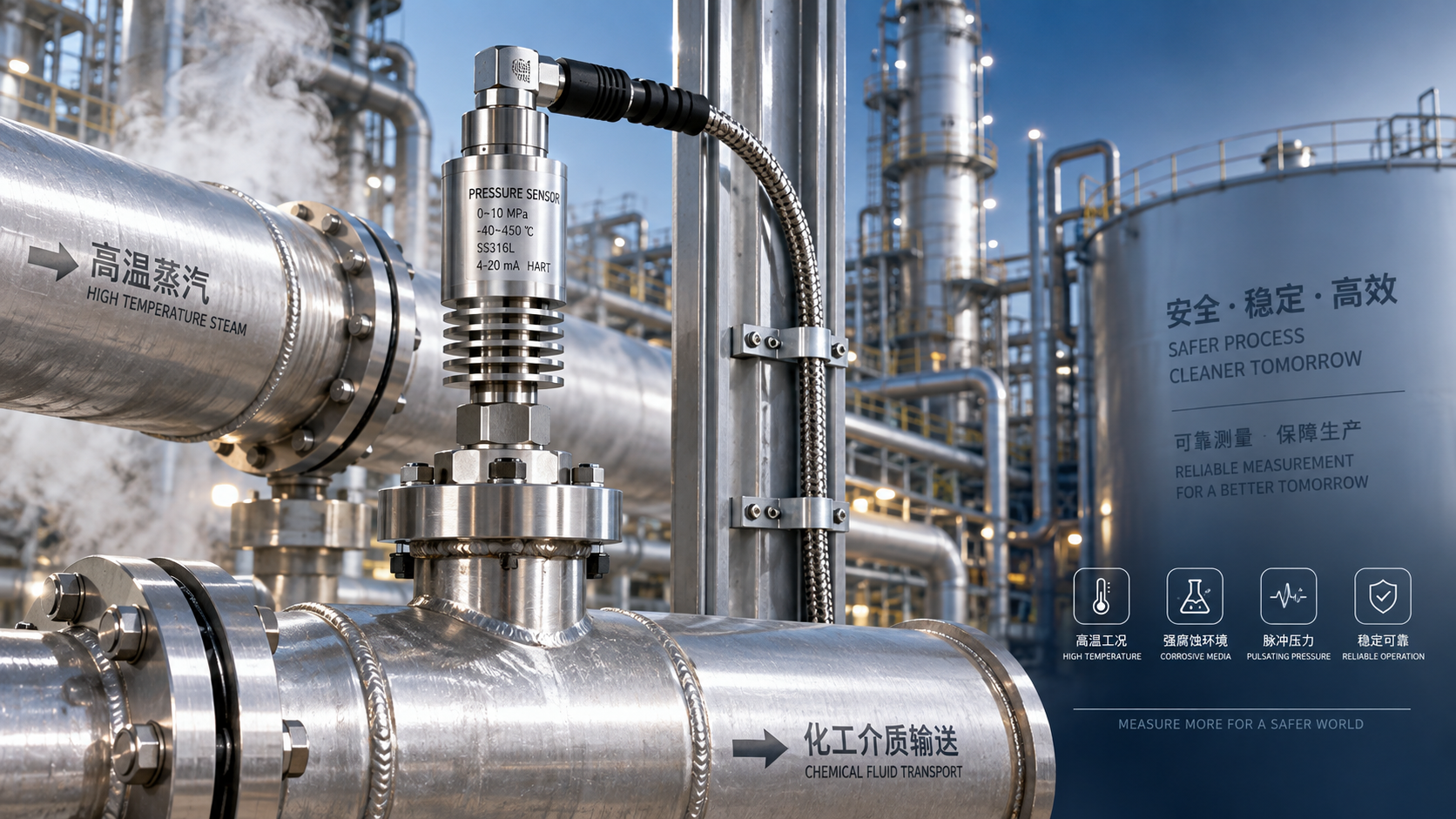
When selecting a model, special attention should be paid to indicators such as measuring range and media compatibility in the TMS-GH186 specifications. For example, in the chemical and metallurgical industries, a 316L stainless steel isolation diaphragm model should be selected to resist acid and alkali corrosion; while the BP-IB series provides a 0~1kPa micro-pressure range, which is specifically used for low-pressure scenarios such as ventilation systems.
Common Fault Diagnosis and Handling
Common faults encountered by operators in BP-IN sensors can be divided into three categories:
Regular calibration is the key to ensuring accuracy. It is recommended to carry out performance verification every 6 months according to the JJG882-2019 regulation. For intelligent models such as TMS-QY110, the health status of the sensor can also be diagnosed online through the HART protocol.
Industrial Application Cases
In the thermal power and papermaking industry, the AO-X sensor is integrated into the steam pressure control system, and its 0.1 class accuracy increases boiler thermal efficiency by 12%. Similarly, Domestic Weighing Sensor F212 Bellows Weighing Force Sensor Spring Press Sensor achieves a weighing error of ±0.02% in electronic platform scale applications by virtue of its high sensitivity of 2.0±0.1mV/V, fully demonstrating the technical strength of domestic high-precision sensors.
Summary and Operating Recommendations
Through material innovation and structural optimization, the diffused silicon Wheatstone sensor provides excellent measurement performance for pressure transmitters such as the PTS-PTS501. Operators should master the maintenance points in the equipment manual and regularly check seals and electrical connections. For users who need solutions with higher cost performance, they may consider domestically substituted products such as the F212 series, whose successful applications in aerospace, chemical engineering and other fields have already verified their reliability.
If you need technical information or customized solutions for specific models, please feel free to contact the professional technical team of Xi'an Shenghongchuang Instrument Co., Ltd. We will provide you with full-process services that comply with ISO9001 standards.
Related Recommendations
![]() Southchip Technology Launches Its First Optical Sensor, the SC52115, for Wearable Devices
Southchip Technology Launches Its First Optical Sensor, the SC52115, for Wearable Devices How does a pressure sensor convert changes in applied force into usable electrical signals?
 Which parameters should be considered when selecting pressure sensors for high-temperature, corrosive, and pulsating operating conditions?
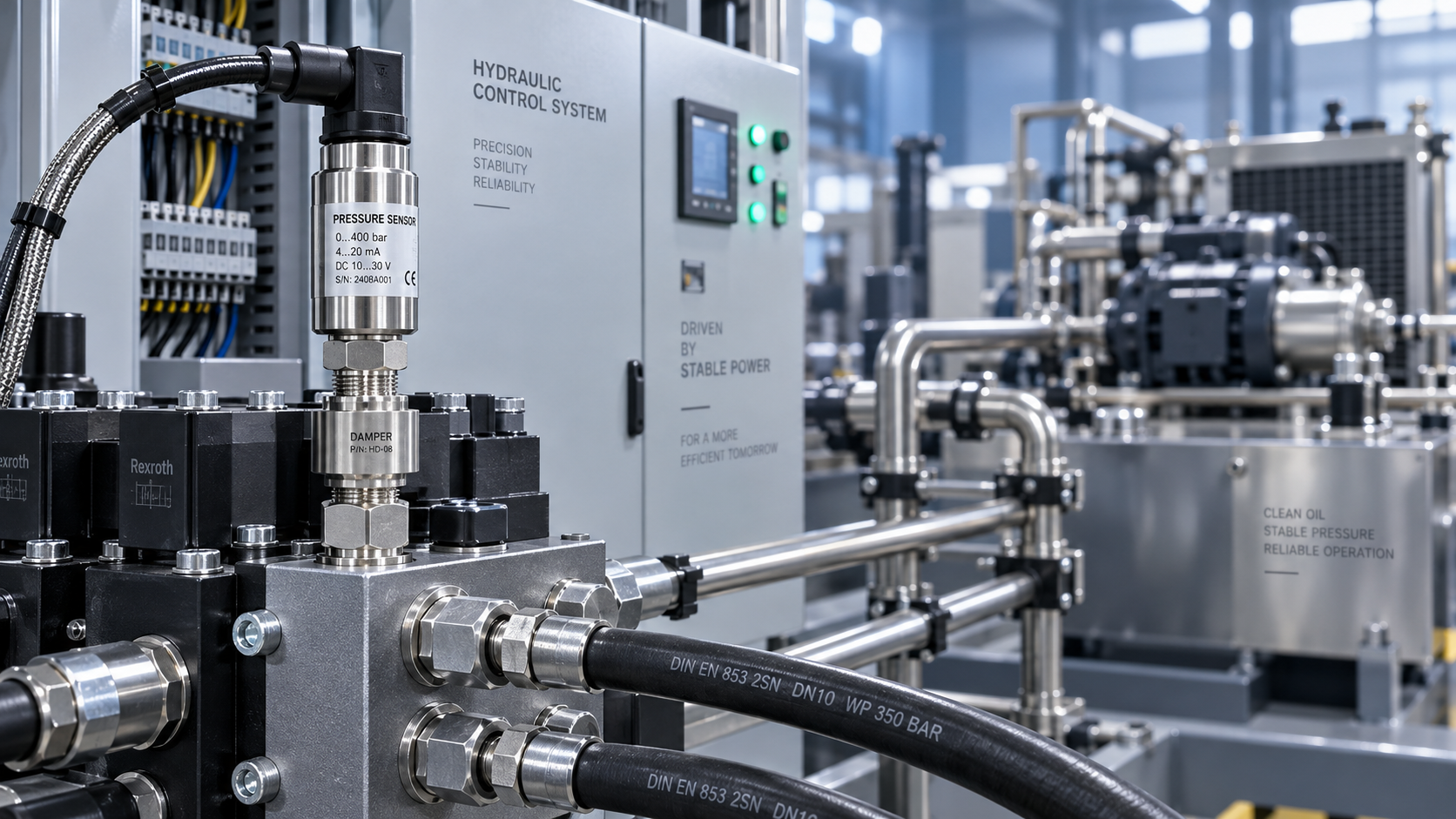
 Hydraulic equipment pressure fluctuates frequently. How can sensors be configured to improve control stability?