News Center
—— NEWS CENTER ——
Xi'an Shenghongchuang Instrument Co., Ltd.
Contact: Mr. Zhang
Mobile: 15529283736
Email: shc-sensor@qq.com
Address: Fortune Building, Sanqiao Street, Xixian New Area, Xi'an, Shaanxi Province
Is Xi'an Shenghongchuang's water-supply level sensor suitable for use in water treatment plants? For users concerned about the stability, accuracy, and durability of water-level monitoring, this question is particularly important. Based on the company's capabilities in sensor R&D and manufacturing, this article analyzes its suitability for use in water treatment plants.
Liquid-level monitoring in a water treatment plant is not simply a matter of being able to detect the water level. The equipment must maintain stable output during continuous operation and under humid conditions, electromagnetic interference, and relatively long maintenance intervals. For purchasers, determining whether Xi'an Shenghongchuang's water-supply level sensor is suitable for use in a water treatment plant depends mainly on whether its measurement principle, structural materials, signal compatibility, installation method, and after-sales service match the actual operating conditions.
Xi'an Shenghongchuang Instrumentation Co., Ltd. is located in the Xixian New Area of Shaanxi Province and has the capability to develop and manufacture various products, including pressure sensors, pressure transmitters, flow sensors, temperature and humidity sensors, and intelligent digital display control instruments. In water-supply applications, liquid-level monitoring is often linked with pressure, flow, and control instruments. Therefore, manufacturers with coordinated capabilities across multiple product categories generally have advantages in solution integration and subsequent technical communication.
Core Requirements of Water Treatment Plants for Water-Supply Level Sensors
Common monitoring points in water treatment plants include raw-water tanks, clear-water tanks, intermediate storage tanks, elevated water tanks, and collection wells at booster pump stations. The measuring range at different points typically varies from 1 meter to 20 meters, while some deep-well or elevated-tower applications may exceed 30 meters. The equipment must not only cover the required range, but also provide long-term zero-point stability and reliable signal transmission.
Why Liquid-Level Monitoring Cannot Be Evaluated by Price Alone
Many users focus only on the cost of a single unit during initial procurement, but water treatment plants place greater emphasis on total life-cycle cost. If a sensor requires calibration every 3 months, or frequently experiences drift, blockage, or water ingress within 1 year, the costs of shutdown troubleshooting and manual inspection can easily exceed the price difference between devices.
Generally, water-supply level sensors need to meet 4 basic requirements: controllable measurement error, stable output signals, corrosion-resistant materials, and low maintenance frequency. For water treatment plants with well-established PLC or remote monitoring systems, compatibility with interfaces such as 4-20mA and RS485 is also required to facilitate connection to existing control cabinets and supervisory computer platforms.
Selection Considerations Under Typical Operating Conditions
In clear-water tanks and finished-water tanks, the medium is relatively stable, so the focus is on accuracy, resistance to condensation, and long-term stability under immersion. In raw-water tanks or at the front end of a treatment process, sediment, floating matter, and impurities may be present, so the sensor requires a clog-resistant structure and strong resistance to contamination. If the cable length at the installation point reaches 30 meters to 100 meters, an interference-resistant design is also very important.
The table below can be used to assess the basic suitability requirements of water-supply level sensors in different water treatment plant scenarios. Purchasing personnel can use it to quickly determine whether the requirements of the actual site are met.
As shown in the table, whether Xi'an Shenghongchuang's water-supply level sensor is suitable for use in a water treatment plant cannot be determined independently of the specific tank and process section. If the site mainly involves conventional conditions such as clear-water tanks and storage tanks, and the sensor needs to work with the existing instrumentation system, products with mature industrial signal outputs are more likely to be successfully implemented.
Does Xi'an Shenghongchuang Have the Necessary Foundation for Application Based on Its Capabilities?
Determining whether a sensor company is suitable for water-supply projects requires more than looking at the name of a single product. Its R&D and manufacturing foundation must also be considered. Xi'an Shenghongchuang has long focused on pressure, flow, displacement, temperature and humidity, and intelligent digital display control instruments. This means that it has a relatively complete technical pathway covering signal acquisition, transmission, electrical interfaces, and industrial field applications.
What Value Does Multi-Category Capability Bring to Water Treatment Plants?
Liquid-level monitoring in a water treatment plant usually does not operate independently. Instead, it forms part of the control logic together with pump start-stop control, valve interlocking, flow statistics, and pressure protection. If a supplier is also familiar with pressure transmitters, flowmeters, and display control instruments, project communication can often reduce interface confirmations by 2 to 3 rounds and improve commissioning efficiency.
This is particularly important in renovation projects, where purchasers are more concerned about whether the equipment can be connected to the existing system. If the level sensor output matches the existing PLC, variable-frequency drive, or digital display meter, subsequent wiring and parameter tuning will be smoother. For a water treatment plant operating on a tight schedule, reducing 1 water-supply interruption window or 1 rework operation can significantly reduce management pressure.
The Suitability Foundation Mainly Depends on These 4 Items
- Whether it provides industrial-grade signal outputs, such as 4-20mA, 0-10V, or RS485.
- Whether it can provide common measuring ranges according to the liquid level height, such as 5 meters, 10 meters, and 15 meters.
- Whether it can match the on-site control instruments, display terminals, and alarm linkage logic.
- Whether it provides technical communication, installation guidance, and commissioning support.
Judging from its business structure, Xi'an Shenghongchuang is not merely a trading company. It is a high-tech enterprise covering R&D, production, and business operations. Such enterprises are generally better suited to the needs of B2B project procurement in non-standard adaptation, interface adjustment, and instrument linkage solutions.
Which Parameters Should Be Carefully Checked When Selecting a Water-Supply Level Sensor?
For the question “Is Xi'an Shenghongchuang's water-supply level sensor suitable for use in a water treatment plant?”, the most direct approach is to check the parameters. As long as the key parameters match the site and the installation and maintenance conditions are controllable, many water-supply applications are feasible. Conversely, even a well-known brand may create operational risks if its details do not match the application.
6 Items to Confirm Before Procurement
- Whether the measuring range covers the highest liquid level, with a safety margin of 5% to 10% reserved.
- Whether the accuracy class meets the control requirements; common requirements may refer to ±0.5%FS or better.
- Whether the power supply is consistent with the site, commonly 24V DC.
- Whether the output signal is compatible with the control system, especially the 4-20mA input module.
- Whether the wetted materials, sealing structure, and cable protection are suitable for long-term humid conditions.
- Whether the installation method facilitates subsequent removal, cleaning, and annual calibration.
The table below lists commonly used parameter-checking criteria for liquid-level monitoring in water treatment plants. It is suitable for joint evaluation by purchasing, equipment, and automation personnel, helping avoid focusing on a single indicator while overlooking system compatibility.
Based on actual procurement experience, range, accuracy, and output are only basic items. The factors that truly determine the user experience are often the materials, protection, and installation details. Especially in water treatment plant environments with moisture, sediment, or long cables, attention to detail often directly affects operational stability over 1 year to 3 years.
Common Misunderstandings and Recommendations for Avoiding Them
The first common misunderstanding is selecting a range that is too close to the maximum. For example, selecting a 10-meter range directly for a tank with a depth of 10 meters may work in the short term, but liquid-level fluctuations, installation errors, and full-scale impact can increase operational risks. A more reliable approach is to reserve a margin of 0.5 meters to 1 meter based on the actual operating conditions.
The second misunderstanding is overlooking cable and junction-box protection. Many liquid-level sensor bodies have no problem, but unstable signals are actually caused by water ingress at connectors, non-standard shield grounding, or interference from cable trays. The third misunderstanding is overlooking the relationship with the control cabinet, resulting in the discovery only after delivery that the signal formats are inconsistent, thereby extending the delivery cycle.
Implementation and Maintenance Recommendations for Water Treatment Plant Applications
Even if the product itself is suitable, an inappropriate implementation method can affect the results. For water-supply liquid-level monitoring projects, it is recommended to proceed in 5 steps: “site survey, parameter confirmation, installation and wiring, integrated commissioning and calibration, and operational review.” Renovation of small measurement points can generally be completed within 3 days to 7 days, while large-scale linked projects require an approximately 2-week scheduling window.
Key Points During Installation and Integrated Commissioning
The sensor should be installed as far as possible away from areas subject to strong inflow and outflow disturbances to reduce the impact of liquid-level fluctuations on the signal. If there is mixing, a pump suction inlet, or obvious turbulence inside the tank, the installation point should be positioned away from the source of interference. For applications involving long remote-transmission distances, commonly used industrial signal methods can be prioritized, together with proper shield grounding.
During integrated commissioning, at least 2 liquid-level comparisons are recommended: one static liquid-level check and one dynamic rising-and-falling liquid-level response test. If the data deviation remains within the permitted range and there is no obvious drift during 24 hours of continuous operation, the system can generally enter the stable operation stage.
How Should the Maintenance Interval Be Scheduled?
For clear-water tanks with a relatively high level of cleanliness, an appearance and signal inspection is recommended every 6 months. For locations such as raw-water tanks and pre-settling tanks with more impurities, the inspection frequency can be increased to once every 1 month to 3 months. Maintenance should mainly cover wiring, mounting points, probe surface condition, and observation of zero-point drift.
Which Purchaser Groups Are Better Suited?
- Equipment engineers working on new construction or renovation projects for water treatment plants.
- Automation system integrators requiring coordinated configuration of liquid level, pressure, and flow.
- Purchasing managers concerned with delivery support, technical response, and ease of subsequent maintenance.
- Project teams seeking an industrial instrumentation supplier rather than a supplier of individual miscellaneous components.
Returning to the original question, is Xi'an Shenghongchuang's water-supply level sensor suitable for use in a water treatment plant? From the perspective of industry application suitability, if the project requires an industrial-grade liquid-level monitoring solution and emphasizes coordination with pressure, flow, and display control systems, Xi'an Shenghongchuang has a solid foundation for application. The real key is not to make a general judgment about whether it can be used, but to select the product according to the tank type, range, signal, installation, and maintenance conditions.
For water treatment plants, pump-station renovation contractors, and system integrators, confirming the site parameters first and then discussing interfaces, materials, and control requirements with the manufacturer is often more valuable than simply comparing prices. If you are evaluating whether Xi'an Shenghongchuang's water-supply level sensor is suitable for use in a water treatment plant, it is recommended that you submit the operating-condition information as soon as possible to obtain a customized solution that better matches the site, further consult on product details, and learn more about water-supply monitoring solutions.
Related Recommendations
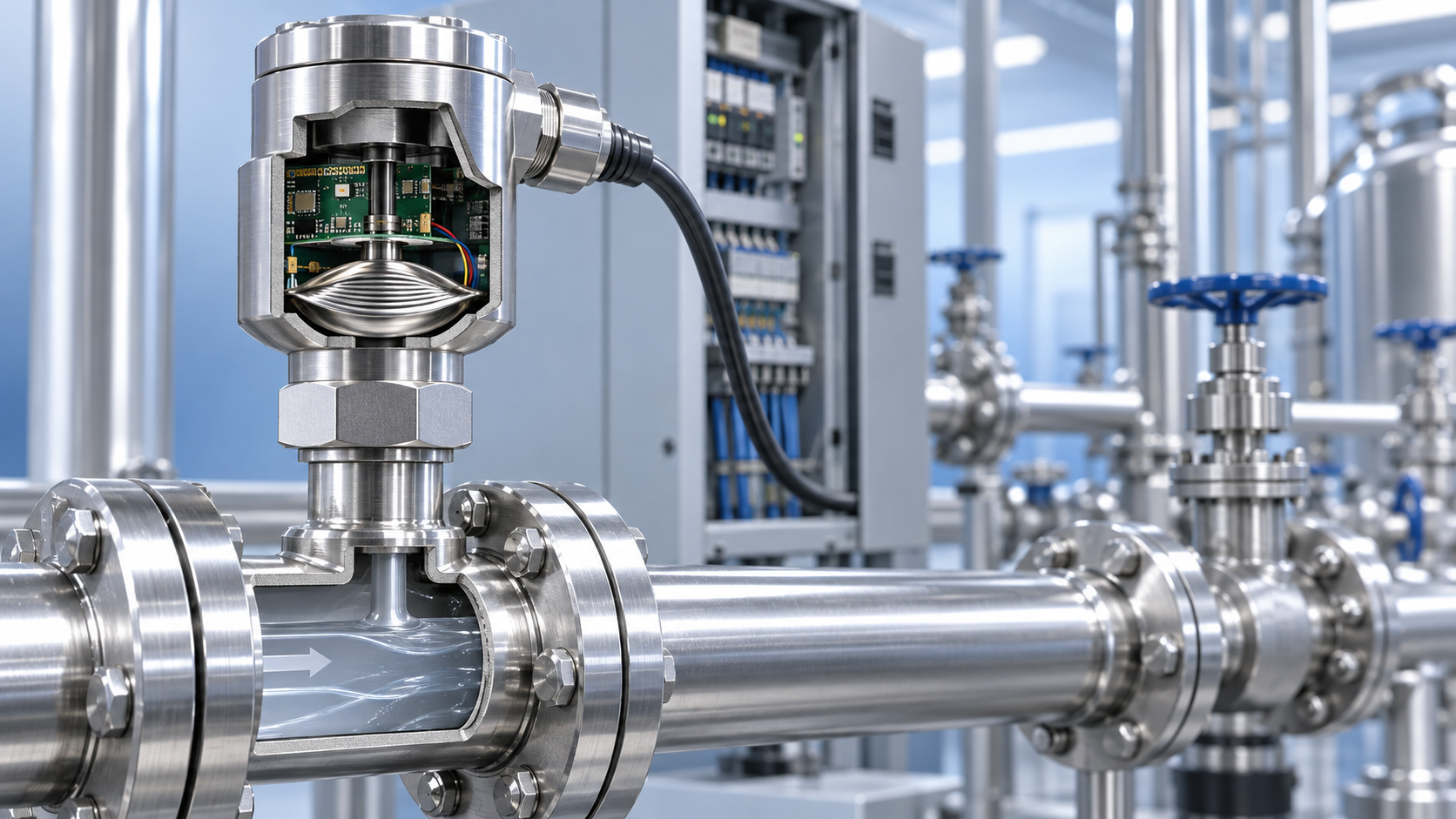
 How does a pressure sensor convert changes in applied force into usable electrical signals?
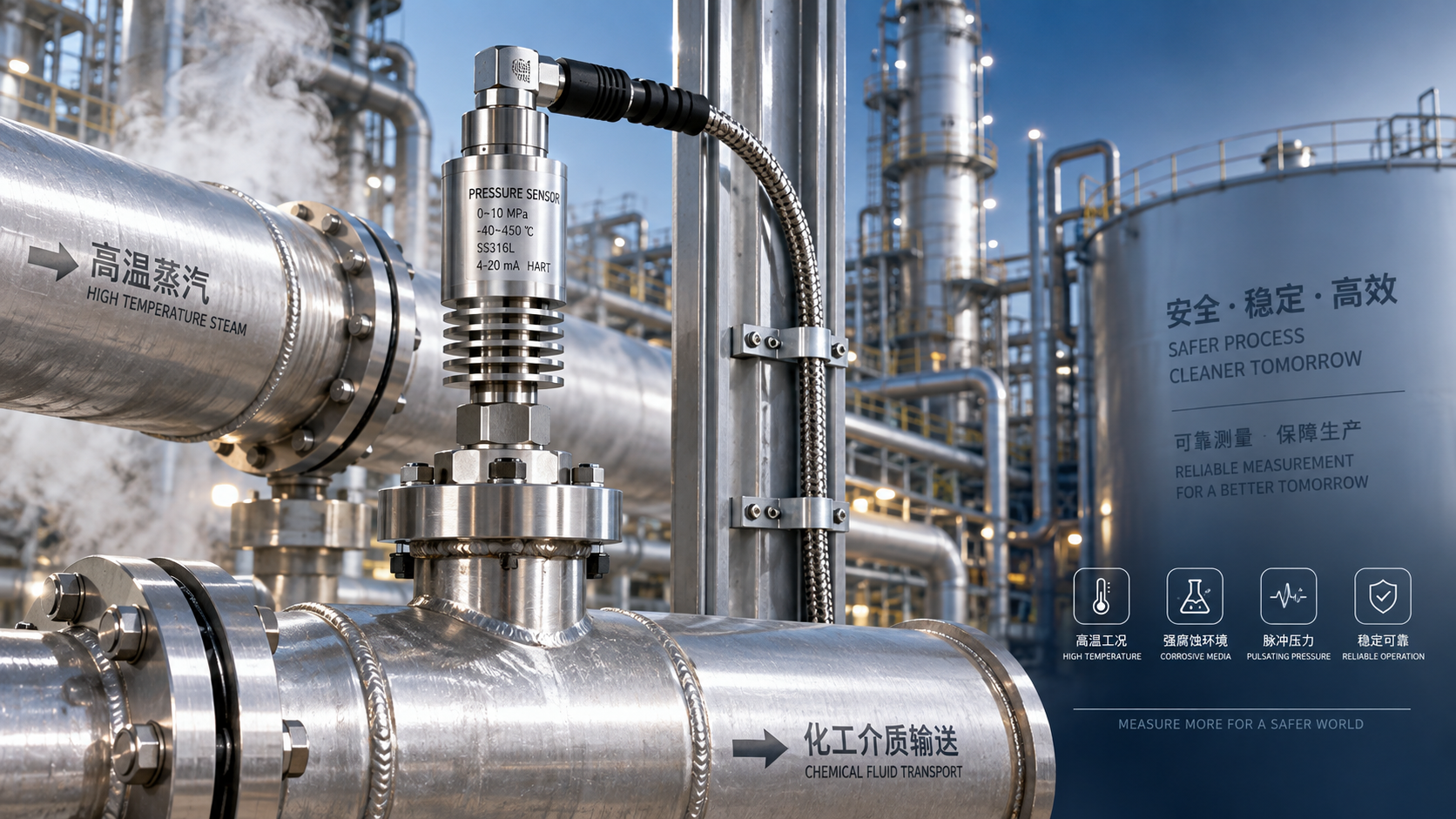
 Which parameters should be considered when selecting pressure sensors for high-temperature, corrosive, and pulsating operating conditions?
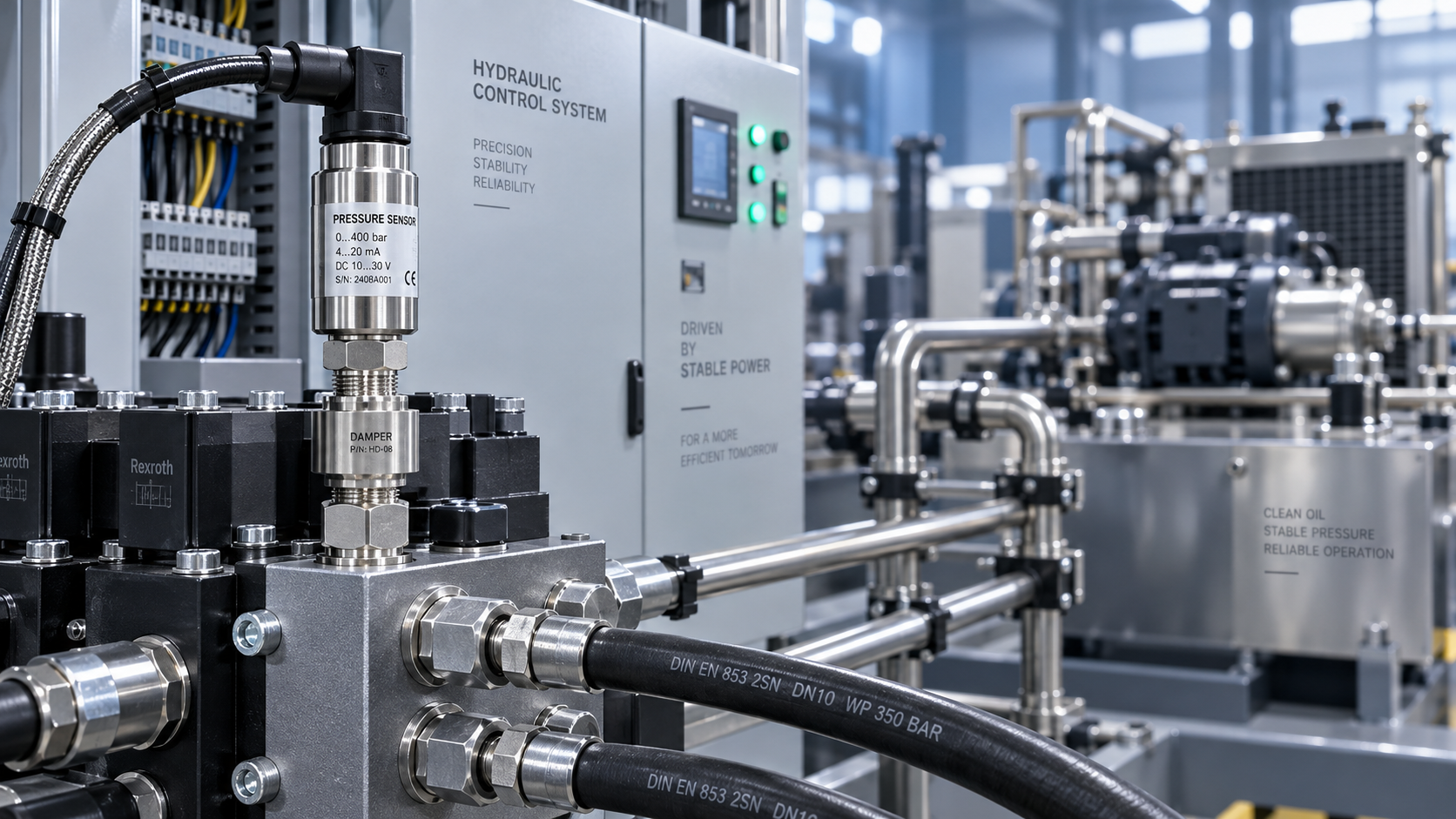
 Hydraulic equipment pressure fluctuates frequently. How can sensors be configured to improve control stability?
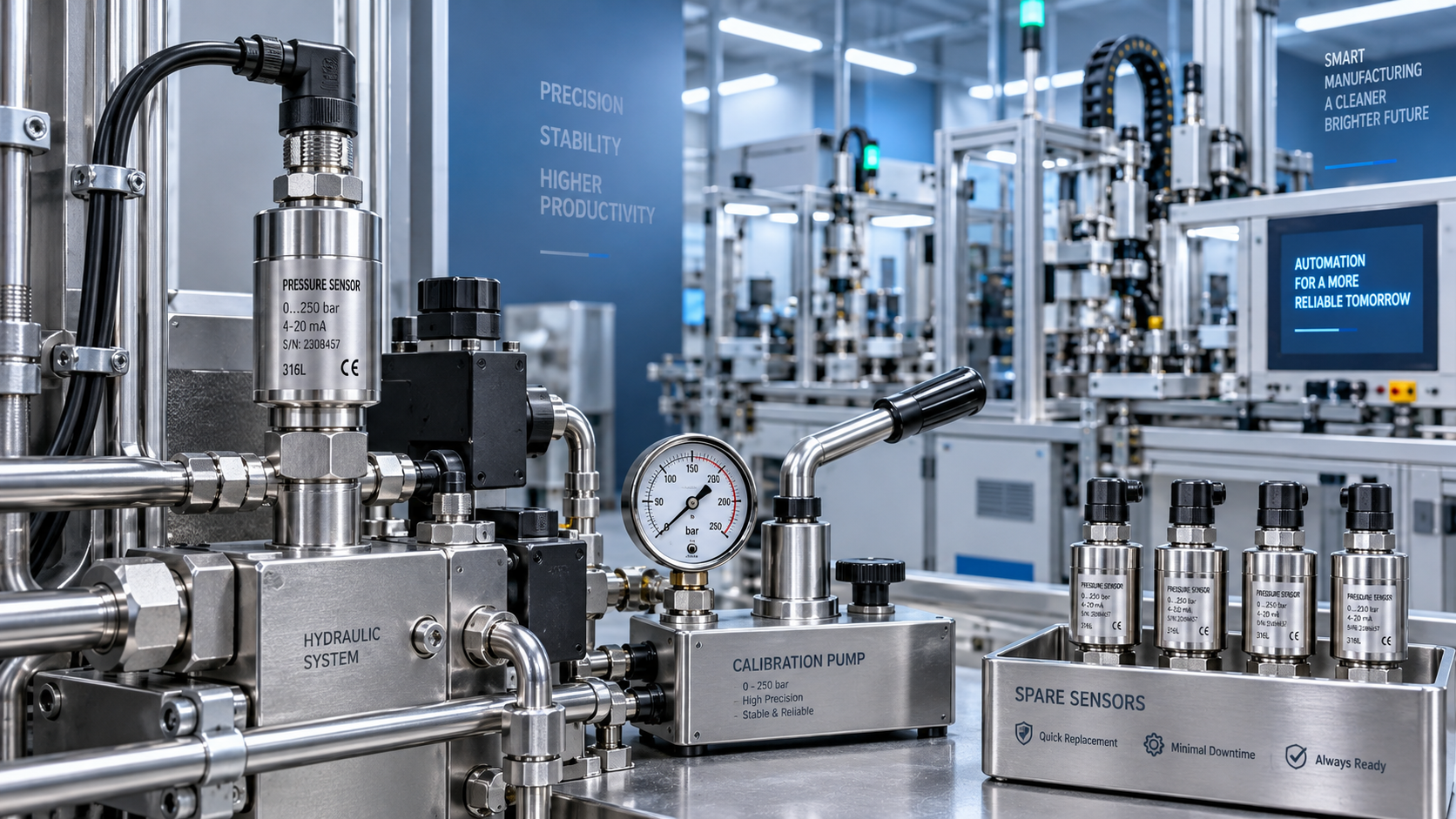
 When purchasing pressure sensors, how can you evaluate service life and total maintenance costs beyond the unit price?