News Center
—— NEWS CENTER ——
Xi'an Shenghongchuang Instrument Co., Ltd.
Contact: Mr. Zhang
Mobile: 15529283736
Email: shc-sensor@qq.com
Address: Fortune Building, Sanqiao Street, Xixian New Area, Xi'an, Shaanxi Province
Can Shenghongchuang pressure transmitters replace imported brands? For many procurement managers, equipment engineers, and project managers, the answer is not a simple “yes” or “no”, but depends on the specific operating conditions, accuracy requirements, system compatibility, and follow-up service capabilities. The overall judgment is that, in most conventional industrial scenarios, domestic pressure transmitters already have strong replacement capability. Manufacturers such as Shenghongchuang, which have R&D, production, and application support capabilities, have particular advantages in cost performance, delivery efficiency, and localized service; however, under extreme operating conditions, ultra-high accuracy, or specific certification requirements, careful evaluation according to project standards is still required.
What users truly care about is not “whether it can be replaced”, but “whether it remains stable after replacement”
Users who search for “Can Shenghongchuang pressure transmitters replace imported brands” are usually not seeking general information, but are preparing for procurement, replacement, or project selection. They are more concerned about whether measurement will be accurate after switching to domestic products, whether operation will be stable, whether maintenance will be worry-free, and whether the total cost will be more reasonable.
Especially at industrial sites, a pressure transmitter is not an isolated component. It is often related to equipment control, production continuity, and safety interlocks. Once the selection is improper, the result may not only be an instrument failure, but also shutdown, false alarms, data drift, or even process fluctuations. Therefore, users are particularly cautious.
To judge whether imported brands can be replaced, first look at four core dimensions
If “replacement” is understood simply as a lower price, it is easy to make a wrong decision. Truly effective replacement must at least meet four conditions: comparable performance, application suitability, controllable service life, and adequate after-sales response. If any one of these is missing, replacement may remain only on paper.
The first is whether the performance parameters meet on-site requirements, including measuring range, accuracy grade, stability, temperature drift performance, overload capacity, and output signal. The second is whether the operating conditions are suitable, such as medium characteristics, installation method, temperature environment, vibration and shock, and protection rating. The third is life-cycle cost, rather than only looking at the purchase unit price. The fourth is delivery and service capability.
From the perspective of product capability, Shenghongchuang pressure transmitters have a practical foundation for domestic replacement
Xi'an Shenghongchuang Instrument Co., Ltd. is not a single distribution-oriented enterprise, but a specialized high-tech enterprise covering pressure sensors, pressure transmitters, displacement, flow, weighing, force measurement, temperature and humidity, torque, and intelligent digital display control instruments. This means it is closer to a “manufacturer with a technical system” rather than merely an assembly or OEM supplier.
For users, this kind of enterprise background is very important. Whether a pressure transmitter can operate stably involves sensing elements, compensation technology, structural design, packaging process, calibration capability, and complete machine testing procedures. A manufacturer with R&D and production experience in multiple types of sensors often has more accumulated experience in application understanding and system integration.
In other words, whether Shenghongchuang pressure transmitters can replace imported brands is not judged by slogans, but by whether they have independent design, operating-condition adaptation, and batch delivery capabilities. From the company’s business structure, it at least has the product foundation and manufacturing foundation to meet industrial site requirements.
In which scenarios domestic replacement has more advantages
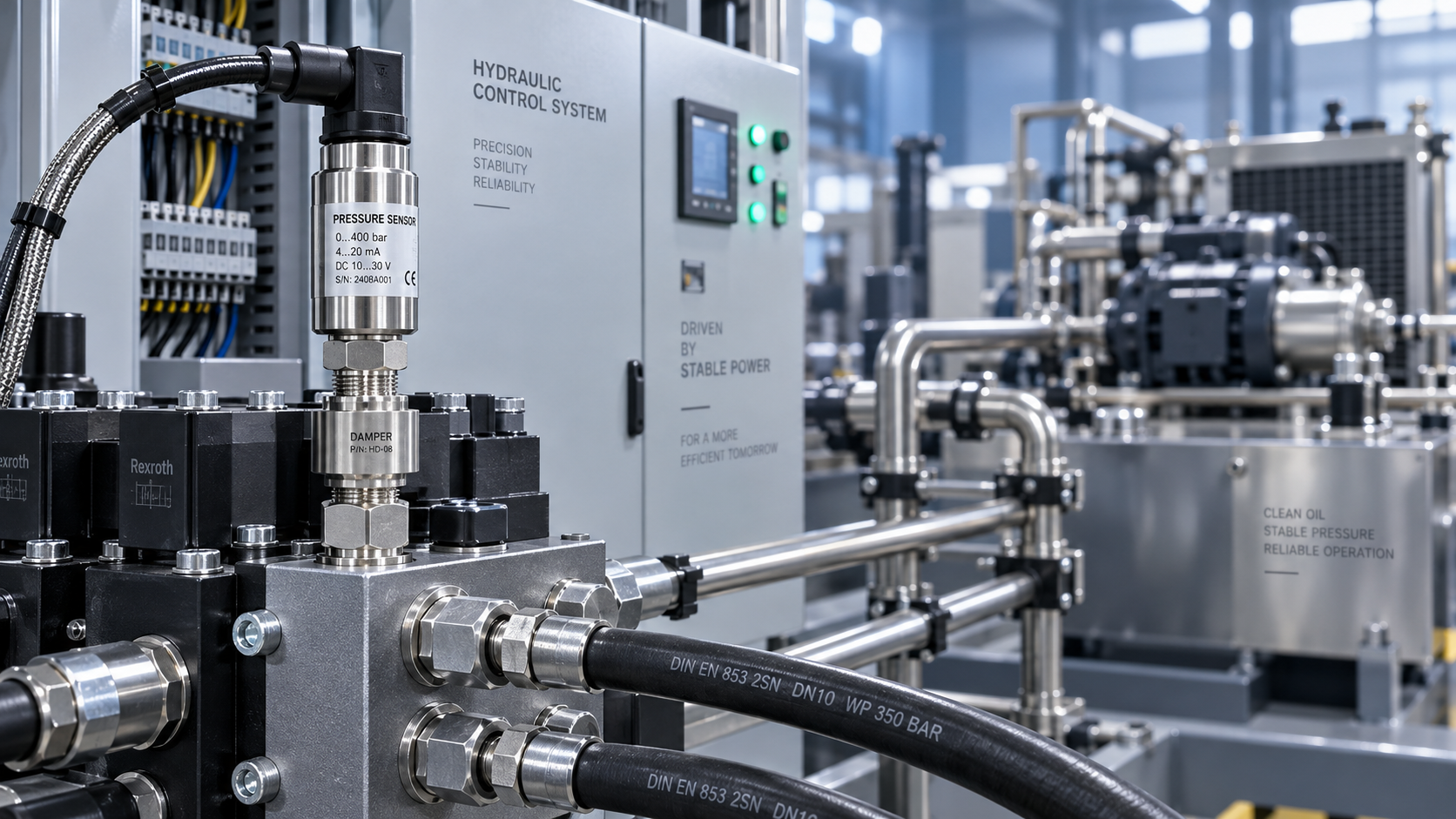
In most general industrial scenarios, the replacement value of domestic pressure transmitters is already very obvious. For example, water supply systems, air compressor equipment, hydraulic equipment, environmental protection equipment, HVAC systems, general automated production lines, storage tank liquid level conversion, factory supporting machinery, and similar applications place greater emphasis on stability, durability, delivery time, and maintenance efficiency.
In such projects, the previous advantages of imported brands mainly came from brand awareness and long-term market accumulation. However, as domestic technology matures, many users have shifted their judgment focus from “whether it is imported” to “whether the on-site effect is reliable”. As long as the parameters match and the quality is stable, products from manufacturers such as Shenghongchuang have every opportunity to play a replacement role.
In addition, localized service is also a key advantage. When installation questions, signal abnormalities, zero drift, or operating-condition adjustments occur, domestic manufacturers usually respond faster and have lower communication costs. For continuous-production enterprises, service timeliness often has more practical value than brand halo.
In which situations conclusions cannot be drawn simply with the words “domestic replacement”
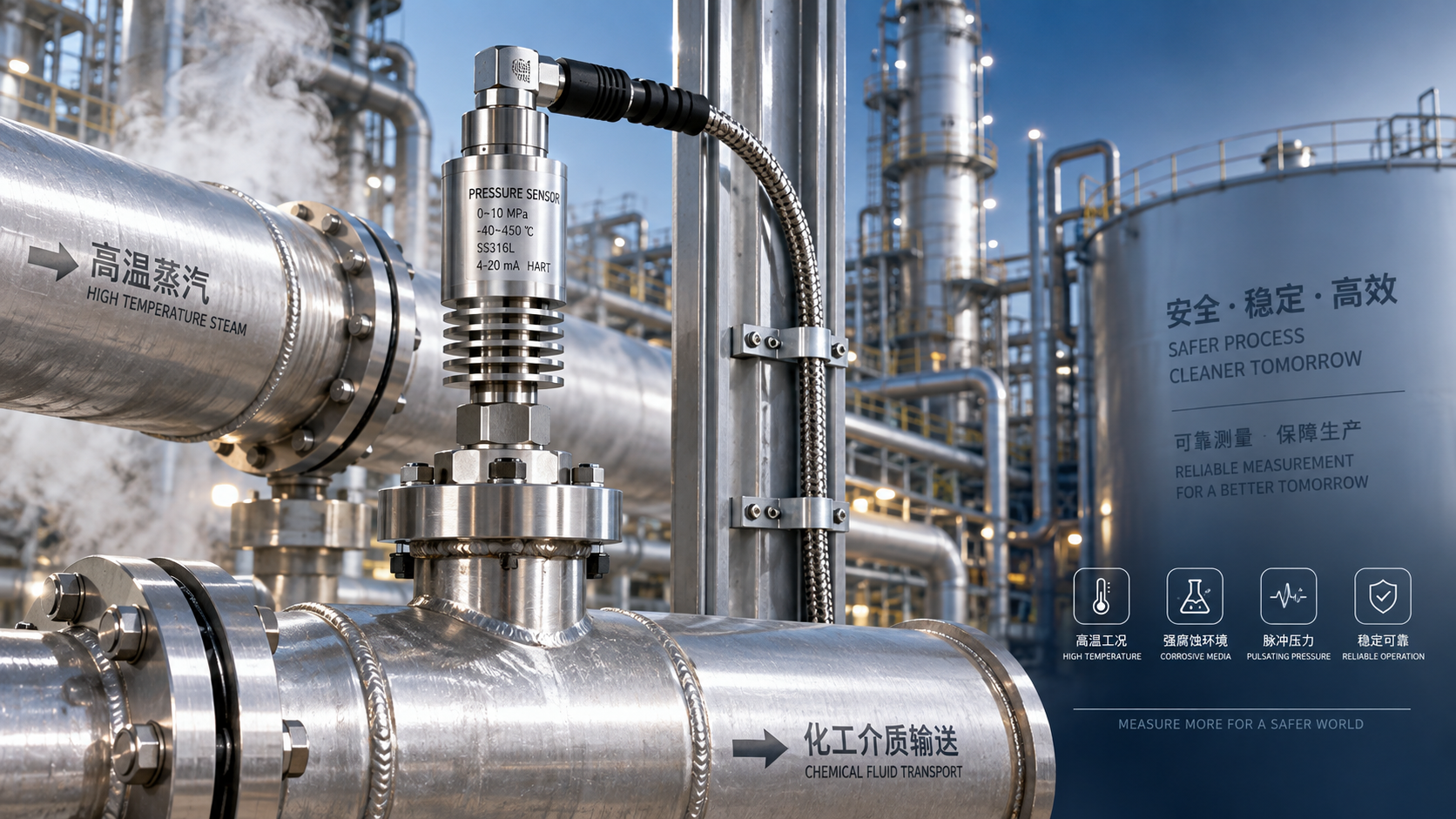
Although the trend of domestic replacement is clear, it does not mean that all projects can be switched without differentiation. If the site involves highly corrosive media, high temperature and high pressure, strong pulsating pressure, long-term outdoor extreme environments, or very high requirements for long-term zero stability, the product design and historical application cases need to be checked more carefully.
There are also some projects with explicit requirements for certifications, standards, or customer-specified brands, such as certain export equipment, special chemical processes, energy projects, or high-end complete systems. In such cases, procurement decisions are determined not only by performance, but also by certification systems, customer acceptance practices, and supply chain standards. Therefore, price and conventional parameters alone cannot be compared.
Therefore, whether Shenghongchuang pressure transmitters can replace imported brands ultimately comes down to “whether a specific model can replace a specific application”, rather than remaining at a general judgment at the brand level. The more demanding the project, the more necessary it is to conduct operating-condition verification and sample validation.
What buyers should focus on most is not promotional claims, but these five judgment points
First, check whether the measuring range and accuracy truly meet process requirements. Some sites do not require excessively high accuracy, and choosing too high a level only increases costs; some occasions are very sensitive to small fluctuations, and insufficient accuracy will cause control deviations. Before making a judgment, the process tolerance should be clarified first, rather than blindly pursuing higher parameters.
Second, check medium compatibility. Whether the measured medium is gas, clean water, oil, or corrosive acid or alkali liquid determines whether the wetted material, diaphragm structure, and sealing solution are suitable. Many “quality problems” are actually not caused by poor product quality itself, but by failures resulting from wrong material selection.
Third, check the output method and system compatibility. Whether signal forms such as 4-20mA, 0-10V, and RS485 match PLC, DCS, or control instruments, whether the power supply conditions are consistent, and whether the installation interface is convenient for replacement will all affect retrofit difficulty and later stability.
Fourth, check long-term stability and batch consistency. For users purchasing in batches, passing a one-time sample test does not mean that there will be no problems in large-scale applications. Stable manufacturing capability and standardized factory calibration determine whether subsequent batches will be worry-free.
Fifth, check whether after-sales support is professional. A truly reliable manufacturer is not only able to sell products, but can also help users with selection confirmation, fault diagnosis, and operating-condition optimization. For industrial users, this capability is often more important than a unit price lower by several hundred yuan.
From a cost perspective, the value of replacing imported brands is not only reflected in the purchase price
Many enterprises consider domestic replacement initially for cost control, but if they focus only on the purchase price, they may easily overlook greater benefits. The total cost of a pressure transmitter includes purchase cost, spare parts cycle, shutdown risk, maintenance time, and after-sales coordination efficiency. When these factors are combined, they are often more critical than the unit price.
If a product is cheap to purchase but requires frequent on-site replacement, is difficult to troubleshoot, and has a long delivery cycle, the actual cost of use will not be low. Conversely, if Shenghongchuang pressure transmitters can provide sufficient stability under conventional operating conditions while offering faster delivery and more timely technical support, then their value to enterprises is not just “cheap”, but better overall input-output performance.
This is also why more and more equipment manufacturers and end factories are willing to test domestic solutions. As long as the replacement process is verifiable and the risks are controllable, the advantages of localized brands in cost and efficiency will gradually increase.
If you are preparing to replace imported brands, it is recommended to proceed in this way for greater stability
The most practical approach is not to replace everything in one step, but to first select one or two typical operating conditions for verification. First confirm the key parameters, installation dimensions, output method, and on-site issues of the original imported model, then ask the supplier to provide a corresponding replacement solution, and observe stability and maintenance performance through small-scale trial operation.
During the verification stage, it is recommended to focus on recording zero drift, full-scale output, repeatability under temperature fluctuations, anti-interference performance, and installation convenience. If it is key equipment, attention should also be paid to the failure rate during the continuous operation cycle and matching with the control system. Only with sufficiently solid data will subsequent batch replacement have a stronger basis.
For procurement managers, this phased replacement method makes it easier to balance cost and risk; for engineering and technical personnel, it can also reduce on-site uncertainty caused by a one-time large-scale switch. This is more reliable than making decisions purely based on brand impressions.
Conclusion: Whether it can be replaced depends on “whether it is suitable”, not “whether it is imported”
Returning to the original question, can Shenghongchuang pressure transmitters replace imported brands? Overall, in a large number of conventional industrial applications, as long as the operating conditions are clear, the parameters match, and the verification is sufficient, Shenghongchuang pressure transmitters have strong feasibility for domestic replacement, especially with practical advantages in cost control, delivery speed, and localized service.
However, if the project falls under extreme operating conditions, high-accuracy control, or scenarios with special certification requirements, a conclusion should not be drawn directly with one sentence of “domestic replacement”. Instead, a professional evaluation should be conducted based on the specific model, medium environment, and system requirements. Truly mature selection logic is never about blindly trusting imported products, nor blindly pursuing low prices, but about finding the solution that best fits the site and offers the highest comprehensive value.
For users preparing to purchase or replace pressure transmitters, the issue most worth focusing on is not the brand origin, but whether the product can operate stably for a long time under your operating conditions. Once this issue is clearly understood, whether to choose Shenghongchuang will naturally become clearer.
Related Recommendations
 How does a pressure sensor convert changes in applied force into usable electrical signals?
 Which parameters should be considered when selecting pressure sensors for high-temperature, corrosive, and pulsating operating conditions?
 Hydraulic equipment pressure fluctuates frequently. How can sensors be configured to improve control stability?
 When purchasing pressure sensors, how can you evaluate service life and total maintenance costs beyond the unit price?