


News Center
—— NEWS CENTER ——
Xi'an Shenghongchuang Instrument Co., Ltd.
Contact: Mr. Zhang
Mobile: 15529283736
Email: shc-sensor@qq.com
Address: Fortune Building, Sanqiao Street, Xixian New Area, Xi'an, Shaanxi Province
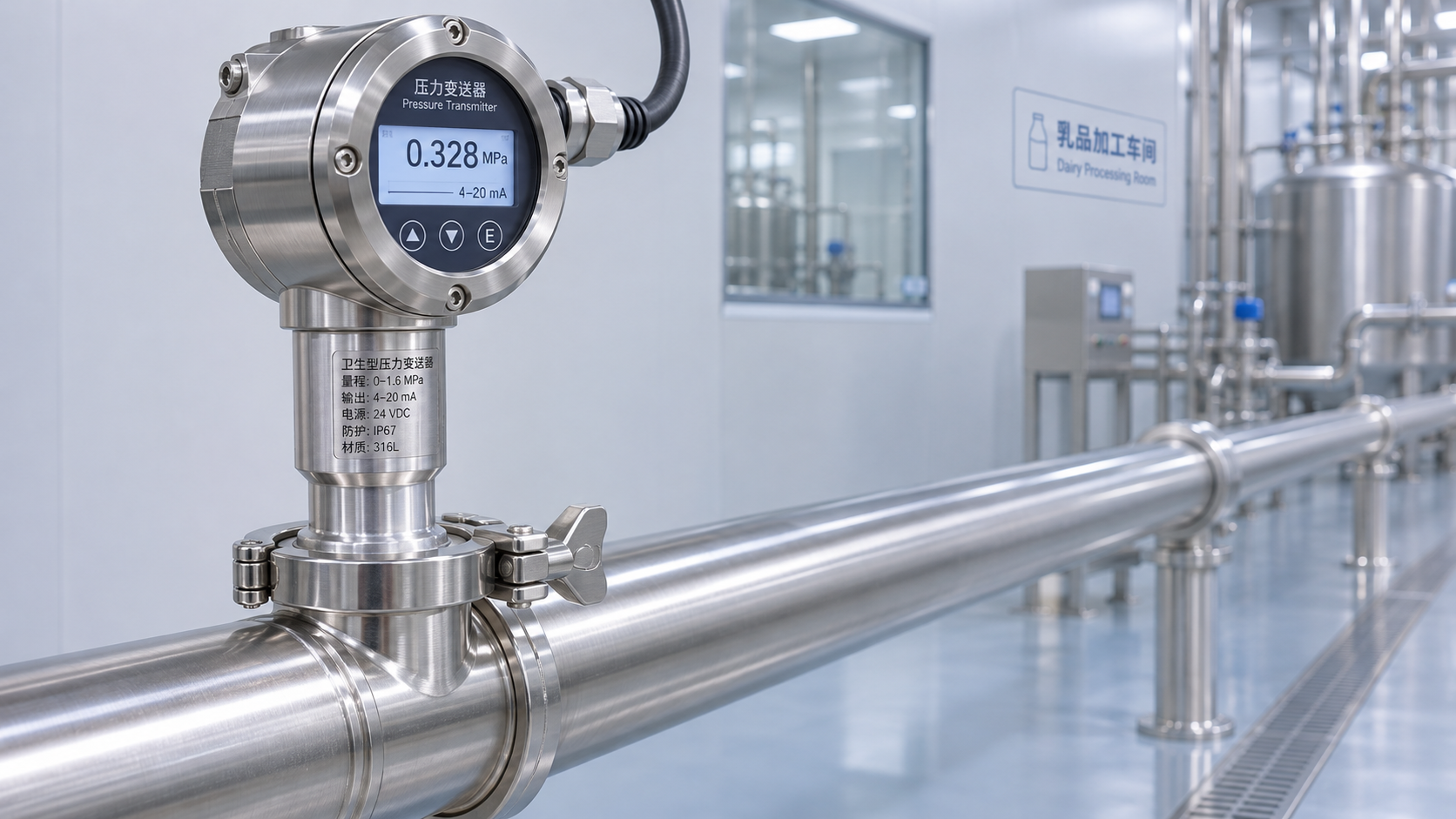
When purchasing a pressure transmitter for milk production, in addition to measurement performance, check the wetted materials, hygienic connections, and cleaning compatibility to reduce contamination risks and future maintenance costs. What really needs to be confirmed is not whether a single parameter looks good, but whether the sensor, fittings, and entire dairy pipeline can collectively meet production and cleaning requirements.
1. Confirm Wetted Materials and Hygienic Design
Check Each Wetted Component Individually
Proteins and fats in milk can easily leave residue on equipment surfaces. When purchasing, ask the supplier to list all wetted components, including the isolation diaphragm, process connection, seals, and any welded areas that may contact the product. Do not rely solely on the housing label to determine the material of the entire instrument.
316L stainless steel is commonly used for wetted metal components, but the specific grade should be confirmed against the technical documentation and material certificates. Seals should be selected based on the milk, cleaning agents, and disinfection conditions, and their suitability for food contact, temperature resistance, and chemical resistance should be confirmed.
The surface finish of wetted parts should also be checked. The diaphragm, welds, and connection surfaces should have no obvious scratches, cracks, or pits that are difficult to clean. If the project specifies surface roughness requirements, state the measurement locations, acceptance method, and values in the order.
Hygienic Design: Focus on Cleanability
Prioritize a flush diaphragm or a measurement design suitable for hygienic applications to prevent product from collecting in narrow pressure passages and dead ends. Whether a specific design is suitable should also be assessed based on pipe diameter, flow rate, installation orientation, and fluid viscosity.
Hygienic clamp connections are easy to assemble and disassemble, but using a clamp does not automatically ensure that there will be no dead spaces after installation. The connection dimensions, seal shape, and position of the welded socket should all match the existing pipeline to ensure that cleaning solution can effectively flush the area around the diaphragm.
The diaphragm is usually thin and should not be scraped with hard objects or pressed directly during inspection and cleaning. The purchase documents can require the supplier to provide an installation cross-section drawing, cleaning instructions, and a repair plan in the event of diaphragm damage.
2. Verify Online Cleaning and Disinfection Conditions
Provide the Supplier with the Actual Cleaning Recipe
CIP cleaning typically includes steps such as water rinsing, alkaline washing, acid washing, or disinfection; the specific procedure depends on the plant process. When requesting a quotation, provide the name, concentration, temperature, contact time, and cycle frequency for each cleaning medium rather than simply stating “CIP compatible.”
For example, a production line might use an approximately 2% alkaline solution and circulate it at around 80°C for 20 minutes. These values are provided only as examples for discussion; they are not standard process parameters or a guarantee of equipment resistance. Purchasers should refer to recipes validated at their own facility and limits confirmed in writing by the supplier.
In addition to the diaphragm and seals, confirm whether the cable, connector, housing, and display components can withstand on-site washdown. If steam sterilization or high-temperature hot-water disinfection is required, separately verify the SIP conditions, permitted duration, and cooling requirements.
Verify Temperature, Pressure, and Cleaning Effectiveness Together
Cleaning temperatures may exceed normal production temperatures and may involve thermal cycling. Confirm the allowable temperatures for the wetted end, electronic components, and seals separately, and check temperature derating conditions if necessary. Do not rely solely on a single maximum-temperature value.
Cleaning pump startup, valve switching, and steam condensation can all cause pressure fluctuations. When selecting equipment, consider normal operating pressure, cleaning pressure, possible pressure peaks, and vacuum conditions, and confirm the equipment’s overload and vacuum operating ranges.
After installation, cleaning coverage and residues can be checked according to the plant’s hygiene validation procedures, for example through visual inspection, residue testing, or process validation records. Cleaning compliance depends on the complete system; the transmitter manual alone cannot replace on-site validation.
3. Ensure Installation Compatibility and Measurement Reliability
Match the Range and Signal to Site Conditions
The pressure transmitter range should cover normal operation and reasonable fluctuations, while avoiding an excessively wide range that could reduce measurement resolution at the low-pressure end. Selection should also distinguish between gauge pressure, absolute pressure, or other measurement modes, and verify the accuracy required for process control.
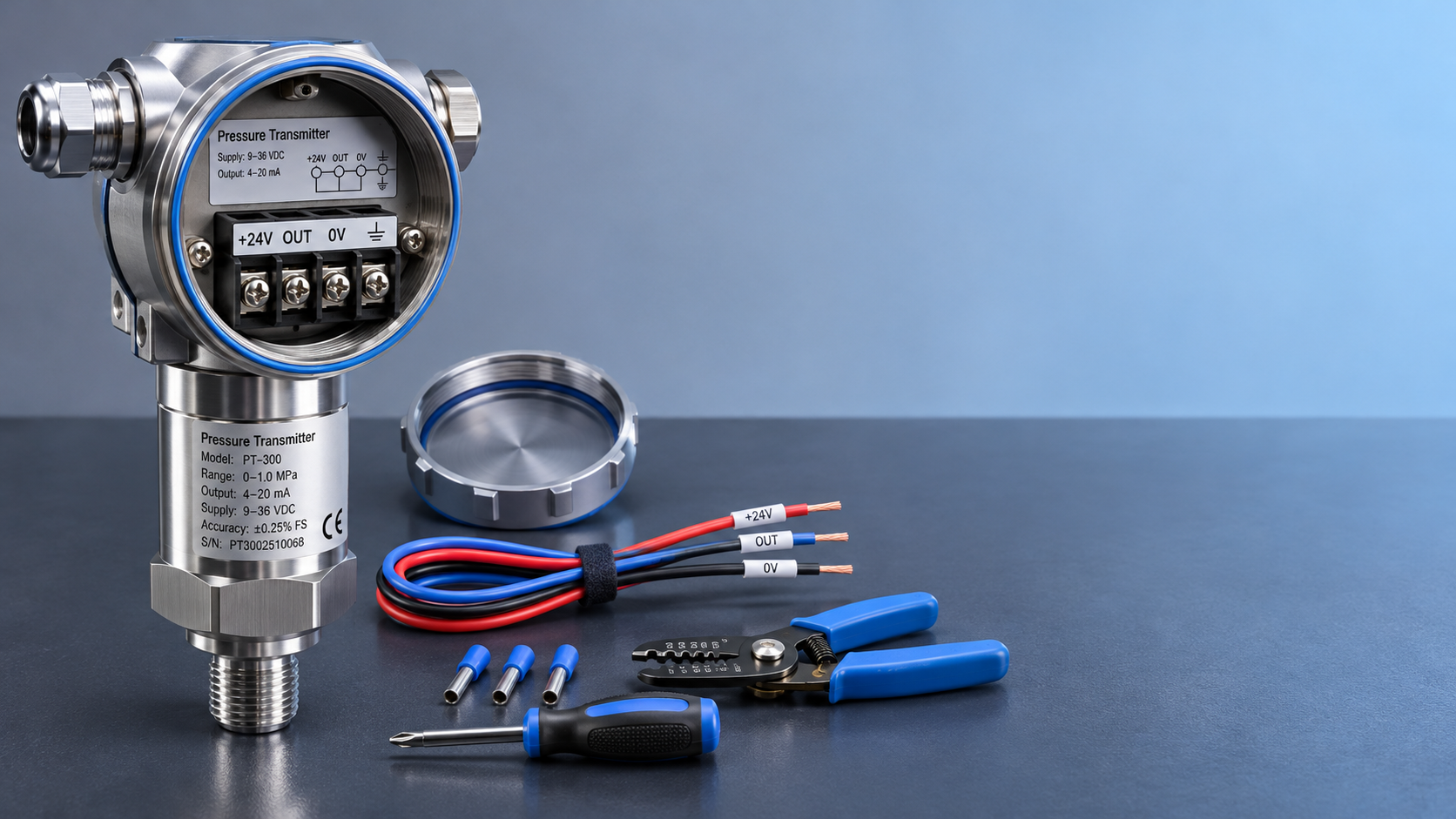
For electrical requirements, confirm the power supply, output signal, and control system interface. For example, a 4–20 mA signal is a common choice, but the final selection should be based on the input requirements of the PLC or display instrument, and the wiring method and communication requirements should also be verified.
If the equipment is installed in a damp or frequently washed-down area, verify the ingress protection rating of the complete instrument and the conditions under which it applies, including cable entry, connector tightening, and installation orientation. The ingress protection rating does not replace the need to check the corrosiveness of cleaning agents or high-temperature washdown conditions.
Select Pressure and Weighing Sensors Separately
In addition to monitoring pipeline pressure, a dairy production line may also require weighing of batching hoppers or storage systems. These two types of sensors serve different purposes: pressure transmitters measure process pressure, while load cells measure loads or force. They are not interchangeable.
For batching and weighing applications, you can learn about the TQ-H15 Chinese-Made Column-Type Tension Load Cell for Batching Hoppers and Aggregate Scales. The product information lists a capacity range of 5 kg–20 t and applications such as batching scales and force measurement. The specific model should be selected according to the equipment load.
Note that the application of a load cell does not mean it is suitable for direct contact with milk or for CIP cleaning. If the installation location may come into contact with product or cleaning solution, separately verify its materials, protection, and hygienic suitability.
4. Finalize Documentation, Acceptance, and Maintenance
Include Verbal Commitments in the Purchase Documents
When requesting a quotation and placing an order, ask the supplier to provide the datasheet for the specified model, a list of wetted materials, a drawing of the connection dimensions, and installation and maintenance instructions. For food-contact compliance, hygienic certification, or third-party testing, specify the applicable regulations or certification scope, and verify that the certificates cover the ordered model and configuration.
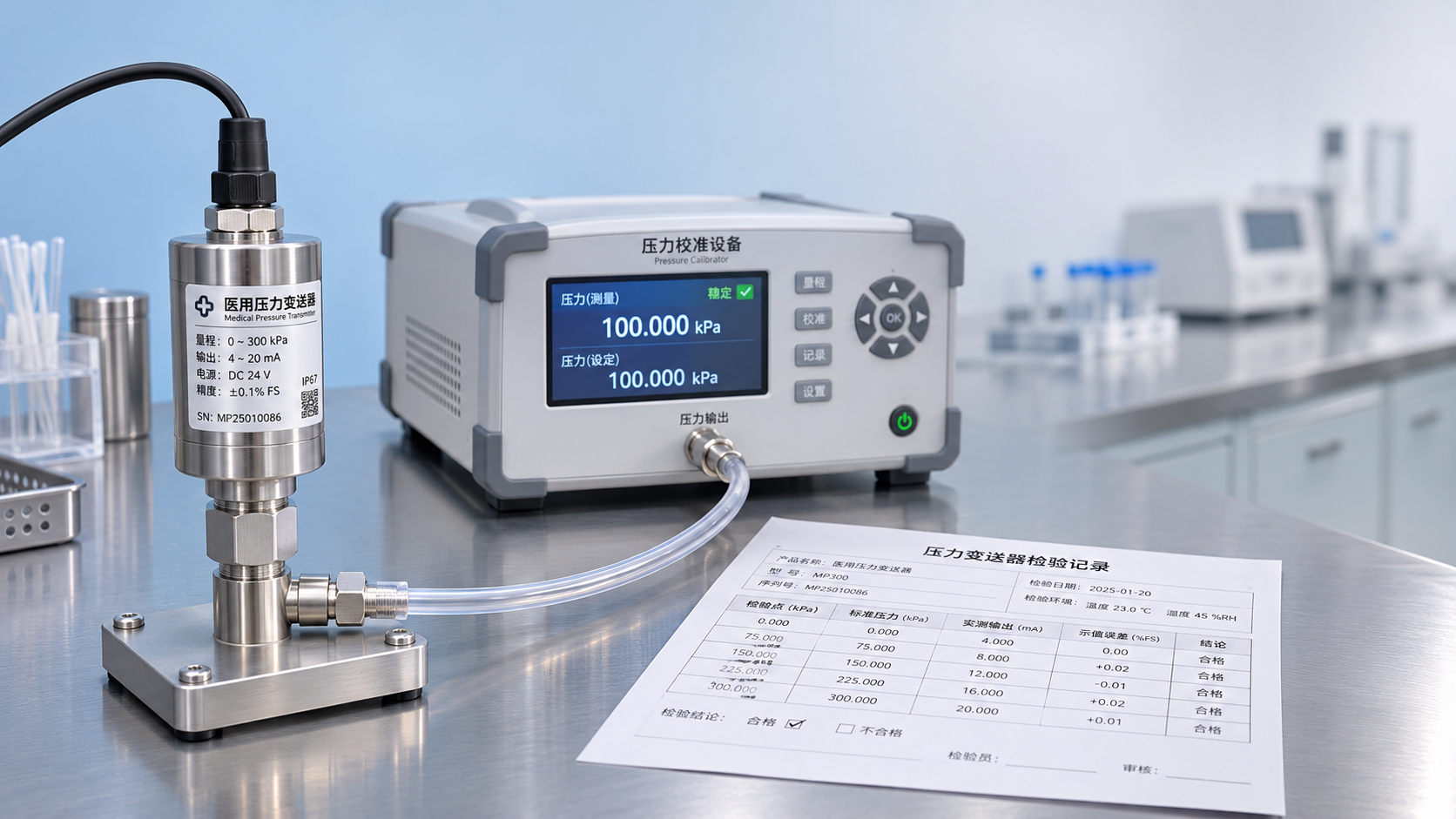
Calibration documentation should also meet project requirements. Confirm the factory calibration record, range units, accuracy specifications, and traceability information for the reference standards used. If the production quality system requires recalibration at a specific interval, confirm the disassembly and calibration methods in advance.
Xi'an Shenghongchuang Instrumentation Co., Ltd. provides sales and technical services for sensors, transmitters, and associated instruments. For hygienic pressure measurement or non-standard connections, refer to the written technical documentation for the specific model and the configuration confirmed by both parties.
Establish an Incoming Inspection and Replacement Procedure
Acceptance Priorities
Upon delivery, check the model, range, connection specifications, and seal materials; inspect the diaphragm for damage and the connections for scratches; and confirm that the accompanying documents match the order. Before installation, clean the equipment according to plant requirements to prevent contamination from transport or construction from entering the pipeline.
After commissioning, include zero checks, seal inspections, and reviews of cleaning effectiveness in the maintenance plan. If there is reading drift, leakage at a connection, or recurring residue, first investigate diaphragm damage, seal condition, and installation dead spaces before deciding whether to calibrate, repair, or replace the equipment.
Before purchasing, it is advisable to prepare an operating-conditions sheet covering process pressure, temperature, connection dimensions, and CIP or SIP conditions, and submit it to the supplier together with the required acceptance documents for confirmation. Place the order based on the written selection results and the planned on-site validation.
Related Recommendations
 What hygienic design and cleaning requirements should be checked when purchasing a milk pressure transmitter?
 What compliance requirements should be checked when using a medical pressure transmitter in medical equipment?
 Unstable Signals Near a Variable Frequency Drive? Key Selection Considerations for an EMI-Resistant Pressure Transmitter
 How to wire a 24 VDC pressure transmitter: two-wire vs. three-wire configurations