News Center
—— NEWS CENTER ——
Xi'an Shenghongchuang Instrument Co., Ltd.
Contact: Mr. Zhang
Mobile: 15529283736
Email: shc-sensor@qq.com
Address: Fortune Building, Sanqiao Street, Xixian New Area, Xi'an, Shaanxi Province
How to Choose a Domestic Level Transmitter? Don't Focus Only on Price
When purchasing a domestic level transmitter, many projects compare the quoted price first.
However, what truly affects the results is often not the unit price, but whether the selected model suits the actual site conditions.
Even the same device may have completely different requirements when used in a clean-water tank, an acid-alkali tank, or a high-temperature storage tank.
If the accuracy is selected too high, the budget can easily be driven up.
If the output signal does not match, connecting it to the downstream control system can become very troublesome.
A more common problem is an incomplete assessment of the operating conditions, which later causes frequent drift, clogging, and false alarms.
Therefore, the key to choosing a domestic level transmitter is not “which supplier is cheaper,” but “which type is more suitable.”
Check Accuracy First, but Don't Look Only at Accuracy
Accuracy is usually the first parameter considered when purchasing a domestic level transmitter.
Common accuracy grades include 0.5%, 0.25%, and 0.1%.
The smaller the number, the lower the theoretical measurement error.
However, in actual applications, higher accuracy is not always more cost-effective.
If the application only involves water-tank level monitoring, process control, or high- and low-level alarms, 0.5% is often sufficient.
If measurement, batching, or continuous process control is involved, 0.25% or an even higher grade should be considered.
More importantly, the stability of a domestic level transmitter is often more critical than its initial accuracy.
A device being highly accurate immediately after installation does not mean it will remain stable six months later.
Temperature drift, zero drift, medium buildup, and on-site interference can all reduce the actual performance compared with the rated accuracy.
Therefore, three questions should be clarified during model evaluation:
- What is the required accuracy across the measuring range?
- Is temperature compensation provided?
- How stable is the device after long-term use?
How to Determine the Output Signal: It Determines the Difficulty of Downstream Integration
In the selection of a domestic level transmitter, the output signal is an item that is very easily overlooked.
But once it is overlooked, on-site rewiring, module replacement, and program changes will immediately increase costs.
Common outputs include 4-20mA, 0-20mA, 0-5V, 1-5V, and 0-10V.
If the transmission distance is relatively long or electromagnetic interference at the site is strong, 4-20mA should be given priority.
It offers stronger interference resistance and better compatibility in industrial environments.
For short-distance transmission inside equipment, a voltage signal can also be used.
The prerequisite is that the controller's input terminal must be clearly matched; otherwise, acquisition abnormalities may occur.
Recent project developments show that many sites are shifting from single-point detection toward system integration.
This also means that domestic level transmitters are no longer independent components, but part of the control loop.
Therefore, before placing an order, it is best to confirm the following items in full:
- Which input signals are supported by the PLC or DCS?
- Is the on-site power supply 24VDC or a wide-voltage power supply?
- What are the cable length and wiring environment?
- Will later expansion or model replacement be required?
Medium Characteristics and Operating Conditions Are the Key to Selecting a Domestic Level Transmitter
Many level measurement problems are not caused by the transmitter itself, but by an incomplete assessment of the operating conditions.
When purchasing a domestic level transmitter, at minimum, the medium, temperature, pressure, and installation method must be clearly specified.
Start with the medium.
The selection logic is different for clean water, wastewater, oil products, and mildly corrosive liquids.
If the medium is non-corrosive to 316L stainless steel, the compatibility range will be broader.
If corrosion, crystallization, high viscosity, or material buildup is present, the diaphragm isolation and structural design must be further confirmed.
Next, consider the temperature.
Normal-temperature operating conditions are relatively easy to handle, while high-temperature media require particular attention to compensation and temperature resistance.
For example, some solutions can accommodate a relatively wide medium-temperature range and are more suitable for complex industrial sites.
Next comes the installation environment.
Tank depth, vessel shape, and whether installation is from the top or bottom will all affect the measurement method.
If the connection does not match, an adapter will be required, increasing both the leakage risk and maintenance difficulty.
Common connections include M20×1.5, G1/2, and G1/4, which must be verified against the on-site requirements.
When Reviewing the Specifications, Don't Overlook These Problem-Prone Details
Selecting a domestic level transmitter does not end with entering the measuring range and price into a table.
The factors that truly determine the subsequent failure rate are usually several inconspicuous details.
An increasingly obvious sign is that more and more projects are preparing an “on-site compatibility checklist” in advance.
The benefits are direct: faster communication, less rework, and a more stable delivery cycle.
How to Assess Whether a Product Is Worth Selecting Based on Solution Experience
To determine whether a domestic level transmitter is reliable, you cannot rely solely on its promotional page.
A more effective approach is to evaluate the parameters, materials, application scenarios, and installation conditions together.
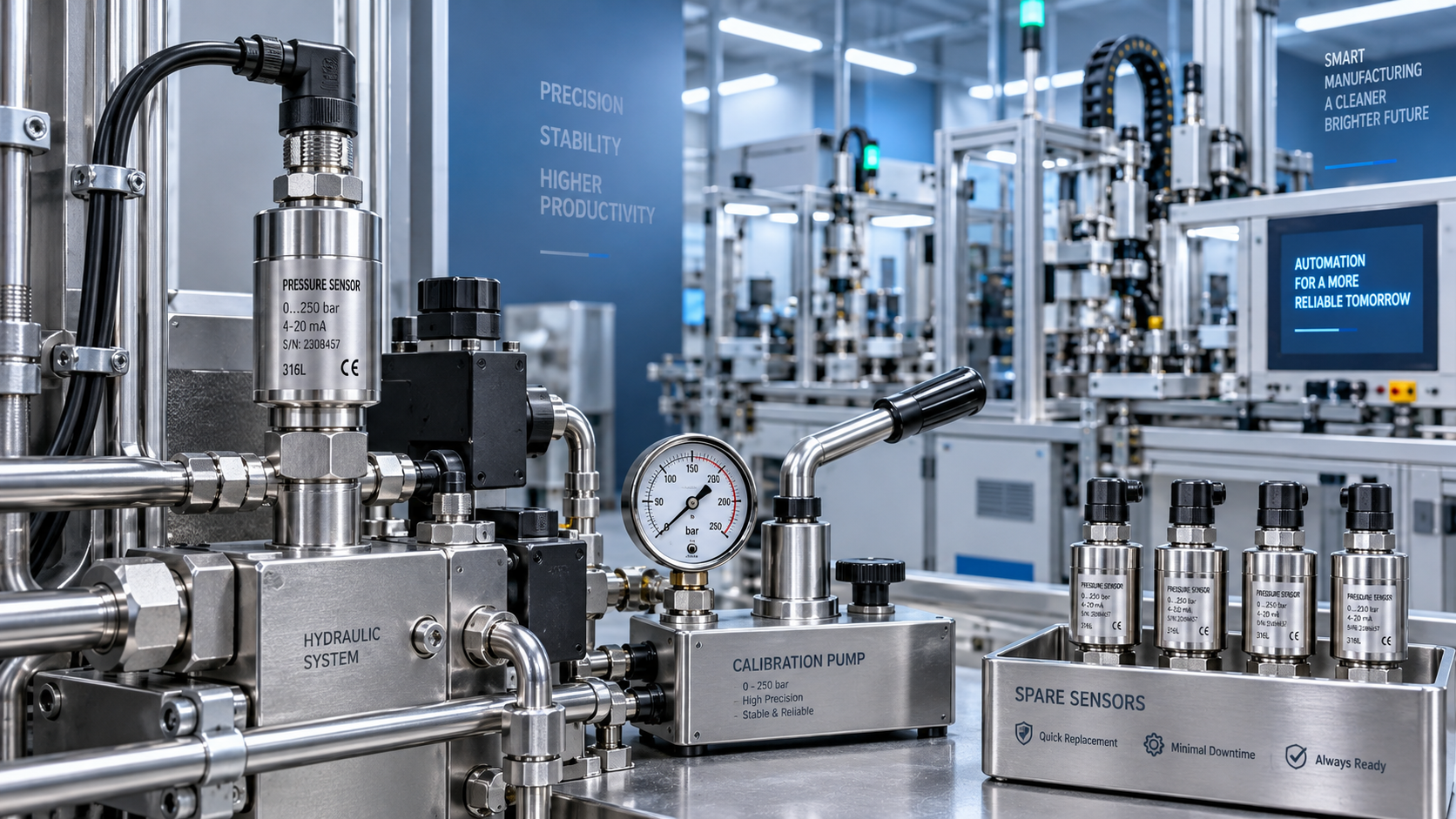
For example, some industrial sites give priority to a 316L stainless-steel isolation diaphragm design.
The reason is practical: it balances corrosion resistance, sealing performance, and installation convenience.
This type of design is also more common in measurements involving high-temperature gases, liquids, fluids, and viscous media.
Products such as Domestic General-Purpose Pressure Transmitter N-10 for Water, Hydraulic Oil, and Pneumatic Pressure Measurement usually provide multiple accuracy, signal, and connection configurations.
If the project involves level conversion, coordinated pressure monitoring, or control of complex media, this type of solution can provide useful reference value.
Especially in petroleum, chemical, power, environmental protection, and pharmaceutical applications, sites usually do not consider only a single parameter.
During the purchasing stage, greater attention should be paid to whether the product offers sufficient adaptability.
For example, whether the measuring range is selectable, whether the power supply supports 12-36VDC wide-voltage input, and whether threaded or flanged installation is supported.
Once these conditions are matched, subsequent commissioning and maintenance will be much less demanding.
When Purchasing a Domestic Level Transmitter, Follow This Sequence for Confirmation
To make the selection of a domestic level transmitter more reliable, proceed in the following order.
- First, confirm the properties of the medium, including whether it is corrosive, viscous, or prone to crystallization.
- Then confirm the measuring range to avoid selecting one that is too large or too small.
- Next, confirm the on-site temperature, pressure fluctuations, and installation space.
- Then confirm the output signal and power supply requirements.
- Finally, verify the connection, electrical wiring, and maintenance method.
If the project schedule is tight, it is recommended to organize this information into a table before requesting a quotation.
This will make communication with suppliers more efficient and model confirmation more accurate.
Xi'an Shenghongchuang Instrumentation Co., Ltd. has long specialized in the sensor and transmitter field, with products covering pressure, displacement, flow, weighing, force measurement, temperature and humidity, torque, and intelligent digital display controllers.
From the perspective of selection logic, there is no universal answer for domestic level transmitters.
The truly practical approach is to evaluate accuracy, output signal, and operating-condition compatibility within the same decision matrix.
Only when the parameters match the actual site conditions can a domestic level transmitter truly deliver stable, durable, and easy-to-maintain performance.
Related Recommendations
 How does a pressure sensor convert changes in applied force into usable electrical signals?
 Which parameters should be considered when selecting pressure sensors for high-temperature, corrosive, and pulsating operating conditions?
 Hydraulic equipment pressure fluctuates frequently. How can sensors be configured to improve control stability?
 When purchasing pressure sensors, how can you evaluate service life and total maintenance costs beyond the unit price?