News Center
—— NEWS CENTER ——
Xi'an Shenghongchuang Instrument Co., Ltd.
Contact: Mr. Zhang
Mobile: 15529283736
Email: shc-sensor@qq.com
Address: Fortune Building, Sanqiao Street, Xixian New Area, Xi'an, Shaanxi Province
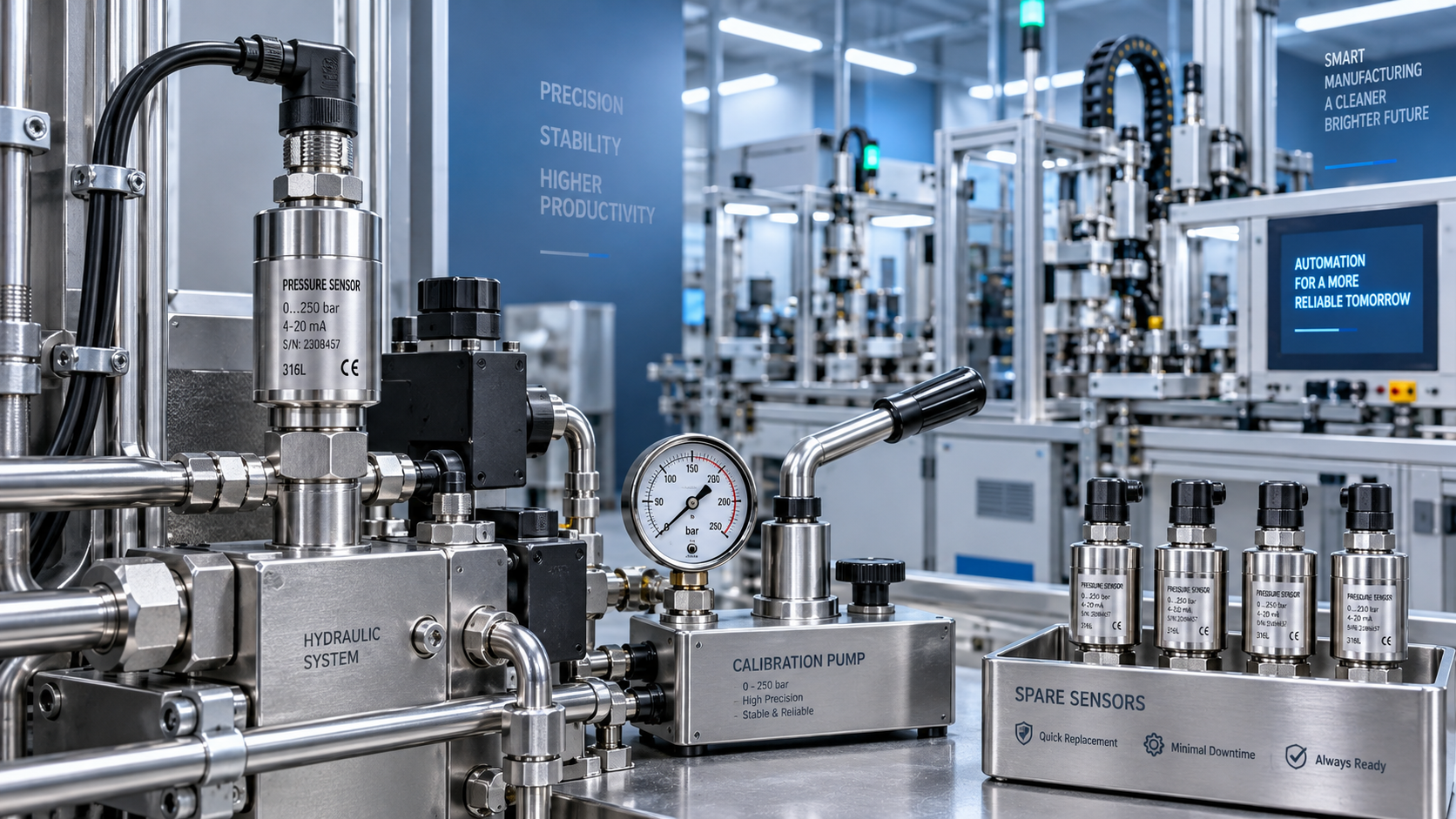
The price of a high-stability pressure transmitter is not determined only by the model; it is also closely related to the accuracy class, measuring range, material process, output signal, and application scenario. Only by understanding these core factors can you more efficiently select a product with stable performance and better cost performance.
For procurement in chemical engineering, water treatment, hydraulic equipment, HVAC systems, and automated production lines, focusing on the price of a high-stability pressure transmitter is actually an assessment of long-term operating costs, installation compatibility, and later maintenance risks, rather than only the one-time purchase unit price.
Xi'an Shenghongchuang Instrument Co., Ltd. has long served the sensor and transmitter application market, covering pressure, displacement, flow, weighing, force measurement, temperature and humidity, torque, intelligent digital display control instruments, and many other fields. For enterprise users requiring stable measurement, batch matching, and customized solutions, understanding the pricing logic is often more important than simply comparing quotations.
Core Factors Affecting the Price of High-Stability Pressure Transmitters
In sensor procurement, even for the same pressure transmitter, the price difference between different configurations can reach 20%—80%. This difference usually comes from 5 key dimensions, including accuracy, range, material, signal type, and environmental adaptability, rather than a single brand label.
The Higher the Accuracy Class, the Higher the Manufacturing and Calibration Cost
The price of a high-stability pressure transmitter is first affected by the accuracy class. The accuracy of common industrial-grade products is mostly ±0.5%FS and ±0.25%FS, while scenarios with higher requirements may select ±0.1%FS or even higher grades. The higher the accuracy, the stricter the requirements for sensing elements, compensation algorithms, and factory calibration.
For equipment operating continuously for more than 8 hours and for more than 300 days per year, higher accuracy usually means more stable data and smaller process control fluctuations. However, if the site only requires ordinary monitoring, blindly pursuing high accuracy will instead increase the overall budget.
Beyond Accuracy, Long-Term Stability Also Matters
Many buyers only look at the initial error while ignoring long-term drift. High-stability products often place greater emphasis on zero drift control over 6 months, 12 months, or even 24 months. If frequent disassembly and inspection are inconvenient after equipment installation, long-term stability has more procurement value than one-time high accuracy.
Measuring Range and Overload Capacity Determine Core Cost
Range is another factor that directly affects the price of a high-stability pressure transmitter. Common ranges vary from 0-10kPa and 0-1MPa to 0-60MPa. Low-range products are more sensitive to tiny pressure changes and usually require more refined structural design; high-range products require stronger overpressure resistance.
If there is an instantaneous impact pressure of 1.5 times to 2 times under operating conditions, such as hydraulic system start-stop or pump and valve switching, a high-overload design will increase the requirements for internal isolation structure and welding process, all of which will be reflected in the final quotation.
To more intuitively see the impact of different configurations on the price range, you can first compare the following common procurement dimensions.
It can be seen from the table above that there is no unified standard for the price of high-stability pressure transmitters. During procurement, application requirements should be identified first, and configuration differences should then be compared. If key parameters are ignored and only the quotation level is considered, it is very easy to buy products that are usable in the short term but unstable in the long term.
Materials, Sealing, and Processes Create Actual Price Differences
Under corrosive media, humid environments, or high-temperature operating conditions, material selection has a very obvious impact on price. Common 304 stainless steel is suitable for most conventional operating conditions, while 316L has stronger adaptability in salt spray, weak acid and weak alkali, or more complex media, and the procurement cost also increases accordingly.
In addition, welded sealing, potting protection, vibration-resistant design, and temperature compensation processes will also create differences. If the on-site temperature fluctuation is between -20℃ and 80℃, or continuous vibration exists, the service life performance of ordinary structures and high-stability structures often differs by more than 1 time.
Output Signal and Installation Method Affect System Matching Cost
4-20mA is still the most common output method on industrial sites, with strong anti-interference capability and suitability for medium- and long-distance transmission. If the project needs to connect to PLCs, frequency converters, remote acquisition terminals, or building control systems, methods such as 0-5V, 0-10V, and RS485 are also relatively common.
Different output forms affect not only the price of the transmitter itself, but also the wiring method, power supply conditions, and control cabinet interface cost. If only the price of a single sensor is compared during procurement, without calculating the complete wiring and commissioning costs, the final budget will often exceed expectations.
Price Evaluation Criteria Differ Across Application Scenarios
Even when focusing on the price of high-stability pressure transmitters, the evaluation logic differs across industries. Water treatment pays more attention to stable operation and moisture protection, hydraulic equipment focuses more on impact resistance, while chemical systems care more about corrosion resistance and sealing reliability.
Water Treatment and Water Supply Systems: Emphasis on Long-Term Continuous Operation
In secondary water supply, pump station control, and filtration equipment, pressure transmitters usually need to operate continuously for more than 12 months and work with variable-frequency control for pressure stabilization. Such projects have relatively high requirements for zero drift, environmental protection, and convenient on-site maintenance.
If the on-site space is limited and humidity is relatively high, it is recommended to focus on confirming the protection rating, connector structure, and wiring method. Compared with low-priced products, configurations with better stability may have an initial procurement cost 10%—30% higher, but later failure downtime losses are usually lower.
Hydraulic and Engineering Equipment: Focus on Impact Resistance and Overload Protection
Equipment such as hydraulic stations, injection molding machines, and construction machinery is often accompanied by pulsating pressure and instantaneous impact, and the working pressure may fluctuate between 10MPa and 35MPa. In this case, a higher price for a high-stability pressure transmitter does not necessarily mean waste; instead, it may reduce the cost of frequent replacement.
For such operating conditions, it is recommended to pay attention to 4 items: overpressure capacity, vibration resistance, response speed, and threaded interface matching. If low-priced products need to be replaced more than 2 times within one year, the overall cost of use has often already exceeded the investment in purchasing a mid- to high-end configuration at one time.
Chemical Engineering and Process Control: More Attention to Materials and Sealing Structure
For systems in contact with corrosive liquids, media containing particles, or high-temperature steam, the procurement focus should not remain only on the price of the high-stability pressure transmitter itself. Instead, it is necessary to first confirm whether the wetted material, sealing method, and installation position are reasonable.
In such operating conditions, a material error is more dangerous than a relatively high price. Diaphragm damage caused by media mismatch may lead to shutdown, rework, and repeated procurement, and the hidden cost is far higher than the additional upfront investment of several hundred yuan or over one thousand yuan.
For common industry scenarios, buyers can quickly identify key concerns according to the table below and avoid missing key parameters during the model selection stage.
The table reflects an important conclusion: different operating conditions have different price sensitivity points. Truly reasonable procurement is not about choosing the cheapest solution, but about finding a balance among service life, accuracy requirements, maintenance difficulty, and system compatibility.
Practical Selection Methods When Procuring High-Stability Pressure Transmitters
During the inquiry stage, if enterprises can clarify 6 basic items of information in advance, they can usually significantly improve model selection efficiency and make the price of high-stability pressure transmitters closer to actual needs, rather than passively accepting vague quotations.
First Confirm 6 Key Parameters
- Measured medium: gas, clean water, oil, or corrosive liquid
- Pressure range: such as 0-1MPa, 0-10MPa, 0-25MPa
- Accuracy requirement: ±0.5%FS, ±0.25%FS, etc.
- Output signal: 4-20mA, 0-10V, RS485
- Installation interface: M20×1.5, G1/4, G1/2, etc.
- Working environment: temperature, humidity, vibration, power supply conditions
The more complete these 6 items of information are, the more accurate the configuration and price provided by the supplier will be. If information about the medium, range, or interface is missing, secondary confirmation, delivery delays, or even rework and replacement can easily occur later, and it is not uncommon for project progress to be affected by 7 days to 15 days.
Do Not Compare Only Unit Prices; Calculate Total Life-Cycle Cost
For B2B procurement, it is recommended to evaluate from at least 4 dimensions: purchase price, installation and commissioning cost, maintenance and replacement frequency, and downtime risk. Although some low-priced products have lower initial expenditure, if drift, unstable signals, or media corrosion problems occur within 6 months, the actual cost will rise rapidly.
Especially in automation equipment and process control systems, once the pressure signal becomes abnormal, it may affect interlock judgment, valve action, or pump unit control. Compared with a price difference of tens of yuan to several hundred yuan, the loss caused by 1 on-site shutdown is usually more worthy of attention.
Pay Attention to Sampling, Testing, and Batch Consistency
If the project purchase quantity is 20 units, 50 units, or more than 100 units, it is recommended to conduct sample testing first and then confirm the batch order. During the sample stage, priority should be given to verifying signal output, interface sealing, installation space, and compatibility with the control system, so as to avoid problems being exposed collectively after batch delivery.
Choosing a Supplier with Multi-Type Sensor Matching Capability Is More Efficient
In many automation projects, pressure transmitters are not purchased in isolation. They are often selected simultaneously with flowmeters, temperature and humidity transmitters, displacement sensors, weighing or force measurement products. In this case, the supplier's overall matching capability will directly affect communication costs and project coordination efficiency.
Xi'an Shenghongchuang Instrument Co., Ltd. focuses on pressure sensors and pressure transmitters, as well as product fields including displacement, flow, weighing, force measurement, temperature and humidity, torque, and intelligent digital display control instruments. For customers requiring systematic procurement and coordinated multi-product selection, this type of supply capability helps reduce interface inconsistency and repeated communication problems.
Common Misunderstandings and Procurement Recommendations
There are many common misunderstandings in the market around the price of high-stability pressure transmitters. Many procurement problems are not caused by insufficient budget, but by unclear requirement definitions, incomplete understanding of parameters, or focusing only on immediate costs while ignoring long-term operating value.
Misunderstanding 1: Believing That the Larger the Range, the More Universal It Is
For the sake of “universality,” some users choose a range that is significantly higher than the actual operating conditions. For example, when the working pressure is only 0.6MPa, they choose 0-10MPa. Although this seems safer, it will reduce effective resolution, affect control accuracy, and is also not conducive to realizing the true value of high-stability products.
Misunderstanding 2: Equating High Stability with High Price
The price of high-stability pressure transmitters is indeed usually higher than that of ordinary configurations, but this does not mean that all high-priced products are suitable for the current project. The key lies in whether they match the on-site operating conditions, control system, and maintenance method. A suitable solution is the one with better cost performance.
Misunderstanding 3: Ignoring Delivery Time and After-Sales Cooperation
For equipment manufacturers and engineering project parties, delivery time is also part of procurement cost. The delivery cycle of conventional configurations may be 3 days to 7 days, while some customized parameters may require 1 week to 3 weeks. If the project production schedule is tight, the more sufficient the early confirmation is, the lower the subsequent delivery risk will be.
Therefore, it is recommended to confirm parameters, application environment, sample requirements, batch quantity, and delivery schedule simultaneously during inquiry. This can not only help more accurately evaluate the price of high-stability pressure transmitters, but also ensure that the product is truly suitable for equipment operation requirements.
When procuring high-stability pressure transmitters, the core is not simply pursuing a low price, but finding a more reliable configuration combination by considering accuracy class, measuring range, material process, output method, and application scenario. For enterprise users who need to balance stability, matching efficiency, and long-term use cost, choosing a supplier with matching capabilities for multiple categories of sensors and instruments is more conducive to project implementation.
If you are evaluating the price of high-stability pressure transmitters, or need overall model selection combined with pressure, flow, displacement, weighing, force measurement, and other products, please contact Xi'an Shenghongchuang Instrument Co., Ltd. to obtain customized solutions, consult product details, and learn about sensor solutions that are more suitable for your project requirements.
Related Recommendations
 How does a pressure sensor convert changes in applied force into usable electrical signals?
 Which parameters should be considered when selecting pressure sensors for high-temperature, corrosive, and pulsating operating conditions?
 Hydraulic equipment pressure fluctuates frequently. How can sensors be configured to improve control stability?
 When purchasing pressure sensors, how can you evaluate service life and total maintenance costs beyond the unit price?