News Center
—— NEWS CENTER ——
Xi'an Shenghongchuang Instrument Co., Ltd.
Contact: Mr. Zhang
Mobile: 15529283736
Email: shc-sensor@qq.com
Address: Fortune Building, Sanqiao Street, Xixian New Area, Xi'an, Shaanxi Province
Foreign trade in custom weighing sensors requires attention not only to product performance and certification compliance,but also to customer requirements,delivery time,packaging and transportation,and after-sales support。To succeed in overseas markets,enterprises must make coordinated efforts in technology,quality,and service。
For sensor enterprises engaged in overseas business,foreign trade in custom weighing sensors is not simply “receiving orders—production—shipment”。Customers often come from different application scenarios such as industrial automation,warehousing and logistics,food equipment,medical equipment,and port machinery,and they have clear requirements for measuring range,accuracy,installation dimensions,output signals,and environmental adaptability。
Xi'an Shenghongchuang Instrument Co., Ltd. has long been deeply engaged in product fields including pressure,displacement,flow,weighing,force measurement,temperature and humidity,torque,and intelligent digital display control instruments。In the foreign trade market,if an enterprise wants to improve inquiry conversion rates and reduce rework risks,the key lies in properly completing three steps:early-stage technical confirmation,mid-stage quality control,and later-stage service coordination。
Why Foreign Trade in Custom Weighing Sensors Tests Comprehensive Capabilities More
Foreign trade in standard products focuses more on price and inventory comparison,while foreign trade in custom weighing sensors places greater emphasis on project capability。For an overseas order,from requirement confirmation to batch delivery,the common cycle is 2—6 weeks;if structural changes,cable customization,or protection upgrades are involved,the cycle may be extended by another 7—15 days。
4 Core Points That Overseas Customers Care About Most
- Whether it meets the installation space,force application method,and measuring range of the target equipment。
- Whether it provides stable output,such as mV/V,0-5V,0-10V,4-20mA,or digital signals。
- Whether it can adapt to temperature,humidity,dust,impact,and continuous working environments。
- Whether samples,small batches,and mass production can be completed within the agreed delivery time。
Common Pain Points in Custom Business
Problems in many foreign trade orders do not arise because the product cannot be made,but because the technical boundaries are not clarified in advance。For example,a customer may only state “used for hopper weighing”,but does not specify whether it is single-point force application or multi-point support,does not explain the ratio between static load and impact load,and does not indicate whether eccentric loading exists at the installation position;all of these will directly affect model selection。
Another frequent issue is inconsistent parameter expression。Overseas buyers commonly use different units such as lb,N,kg,and t,and accuracy requirements may also be stated separately as combined error,nonlinearity,and repeatability。If sales personnel quote only based on “maximum measuring range” while ignoring zero output,temperature drift,and creep indicators,the probability of returns and replacements will increase significantly at a later stage。
The following table can help foreign trade teams quickly identify key confirmation items in foreign trade for custom weighing sensors,avoiding sample mismatch or batch rework caused by incomplete communication。
As can be seen from the table,the difficulty in foreign trade for custom weighing sensors is not a single parameter,but the matching of “mechanical structure + electrical output + application environment”。Whoever can fully confirm these 4 categories of information before quotation will be more likely to secure long-term orders。
Which Customers Are More Suitable for Custom Solutions
If the customer's annual purchase volume is above 100 units,or the equipment has already formed fixed installation standards,a custom solution is usually more valuable than a general-purpose model。It can reduce adapters,simplify wiring,and improve assembly efficiency;in the long run,it can reduce the overall cost of use by 5%—15%。
How to Do Technical Confirmation and Model Selection for Custom Weighing Sensors Well
Technical confirmation is the first checkpoint that determines the success or failure of foreign trade in custom weighing sensors。A qualified supplier should not only receive drawings and quantities,but should also help customers complete the application conditions。One additional confirmation in the early stage can usually reduce 2—3 rounds of modifications in the later stage。
First Confirm 6 Basic Parameters
- Rated measuring range and safe overload range。
- Force application method:tension,compression,shear,or torque coupling。
- Installation dimensions,thread specifications,hole spacing,and overall height。
- Output signal and power supply method。
- Operating temperature,humidity,waterproof and dustproof rating。
- Cable length,connector type,and shielding requirements。
Then Determine Whether Custom Amplification or Transmission Is Needed
Many customers purchase not just the sensor body,but a complete signal chain。If the terminal controller can only read 4-20mA or 0-10V,then providing only mV/V output will increase the difficulty of on-site commissioning。For overseas equipment integrators,using a transmitter or display instrument together can often shorten the installation cycle by 1—3 days。
Comparison of Typical Model Selection Scenarios
Under different application scenarios,the structural focus of weighing sensors is not the same。The following table can be used during foreign trade communication to quickly determine which type of custom solution better matches the customer's equipment。
If the customer cannot accurately describe the working conditions,the sales team can first start from the application scenario,and then confirm the measuring range,force application,and output item by item。This is more efficient than directly asking “what model do you need”,and it is also more in line with the communication logic of B2B project procurement。
3 Details to Control During the Drawing and Sample Stages
First,dimensional tolerances must be clearly defined。Especially for positions such as the force center,mounting hole positions,and thread depth,even a difference of 1—2mm may affect the customer's equipment assembly。Second,the cable outlet direction and length must be fixed,otherwise errors are likely to occur during batch assembly。Third,sample testing conditions must be agreed consistently,including loading method,test temperature,and sampling equipment。
Certification,Quality Control,and Delivery Processes Cannot Be Ignored
In foreign trade for custom weighing sensors,many orders are not lost due to product performance,but due to compliance and delivery details。Overseas customers particularly value document completeness,batch consistency,and after-sales response speed。For batch projects,factories usually need to establish at least 5 control points from incoming materials to shipment。
5 Items Recommended for Inspection Before Foreign Trade Delivery
- Whether the technical specification is consistent with the final sample。
- Whether label information includes key fields such as model,measuring range,output,and serial number。
- Whether test records cover items such as zero point,full scale,and repeated loading。
- Whether the packaging has shockproof,moisture-proof,and terminal protection measures。
- Whether accompanying documents include wiring instructions,installation recommendations,and troubleshooting tips。
How Delivery Management Affects Customer Repurchase
Foreign trade customers often purchase according to the shipment plan of complete machines,and the weighing sensor is only one component among them。If sample delivery is delayed by 5 days,complete machine testing may be postponed by 1 week;if batch delivery is delayed by 2 weeks,the customer's end project will also be affected in a chain reaction。Therefore,when making quotations,sales personnel should clearly state the sample cycle,mass production cycle,and reorder cycle,rather than vaguely promising “arrange as soon as possible”。
Recommendations for Common Delivery Milestones
To reduce foreign trade disputes,it is recommended to divide the project into 5 milestones:requirement confirmation,drawing confirmation,sample confirmation,batch production,and shipment acceptance。After the responsibility boundaries of different milestones are clarified,communication efficiency will improve significantly。
For overseas customers,traceable process documents and stable delivery times are just as important as product accuracy。Especially for OEM or equipment matching projects,the ability to maintain batch consistency often determines subsequent repurchases more than a one-time low price。
Packaging and Transportation,After-Sales Support,and Long-Term Cooperation Recommendations
Although weighing sensors are not necessarily large in size,they are components that are relatively sensitive to mechanical stress and circuit integrity。If packaging and transportation are handled improperly in foreign trade for custom weighing sensors,even if the factory inspection is qualified,zero drift,housing dents,or cable damage may still occur at the customer's site。
Practical Recommendations for Packaging and Transportation
Routine recommendations include:individual packaging for each unit,protective sleeves at the ends,buffering materials inside,and markings on the outer carton indicating fragile orientation and moisture-proof reminders。For export sea freight projects,the warehousing and transportation cycle may reach 20—40 days,and the requirements for moisture resistance and shock resistance will be higher than those for ordinary domestic shipments。
After-Sales Support Boundaries Should Be Agreed in Advance
Foreign trade customers are most concerned about slow after-sales response。It is recommended to clarify 3 types of content before the transaction:technical support response time,abnormality judgment process,and spare parts strategy。For example,the customer conducts appearance and wiring inspection within 48 hours after receiving the goods,and completes basic function confirmation within 7 days after installation;this helps both parties quickly define the source of the problem。
Two Directions for Establishing Long-Term Cooperation
The first is standardized customization,turning high-frequency requirements into fixed drawings,fixed wiring,and fixed packaging,so that subsequent order cycles can be shortened by 20%—30%。The second is solution-based output,providing weighing sensors together with transmitters,display instruments,and mounting accessories to help customers reduce coordination costs among multiple suppliers。
For enterprises with R&D,production,and multi-category sensor matching capabilities,this type of integrated service is more likely to create differentiation。Xi'an Shenghongchuang Instrument Co., Ltd. covers product directions such as pressure,displacement,flow,weighing,force measurement,temperature and humidity,torque,and intelligent instruments,and can provide more complete technical support ideas in equipment matching and project coordination。
To do foreign trade in custom weighing sensors well,the key is not simply lowering prices,but forming a closed loop in requirement clarification,parameter selection,quality control,delivery management,and after-sales response。Only by connecting technology,quality,and service can overseas customer trust and project transaction rates be truly improved。
If you are looking for a weighing sensor solution more suitable for your equipment application scenario,or want to evaluate the model selection and delivery risks of an existing project,please contact us immediately to obtain a custom solution,consult product details,and learn more about supporting sensor solutions。
Related Recommendations
 How does a pressure sensor convert changes in applied force into usable electrical signals?
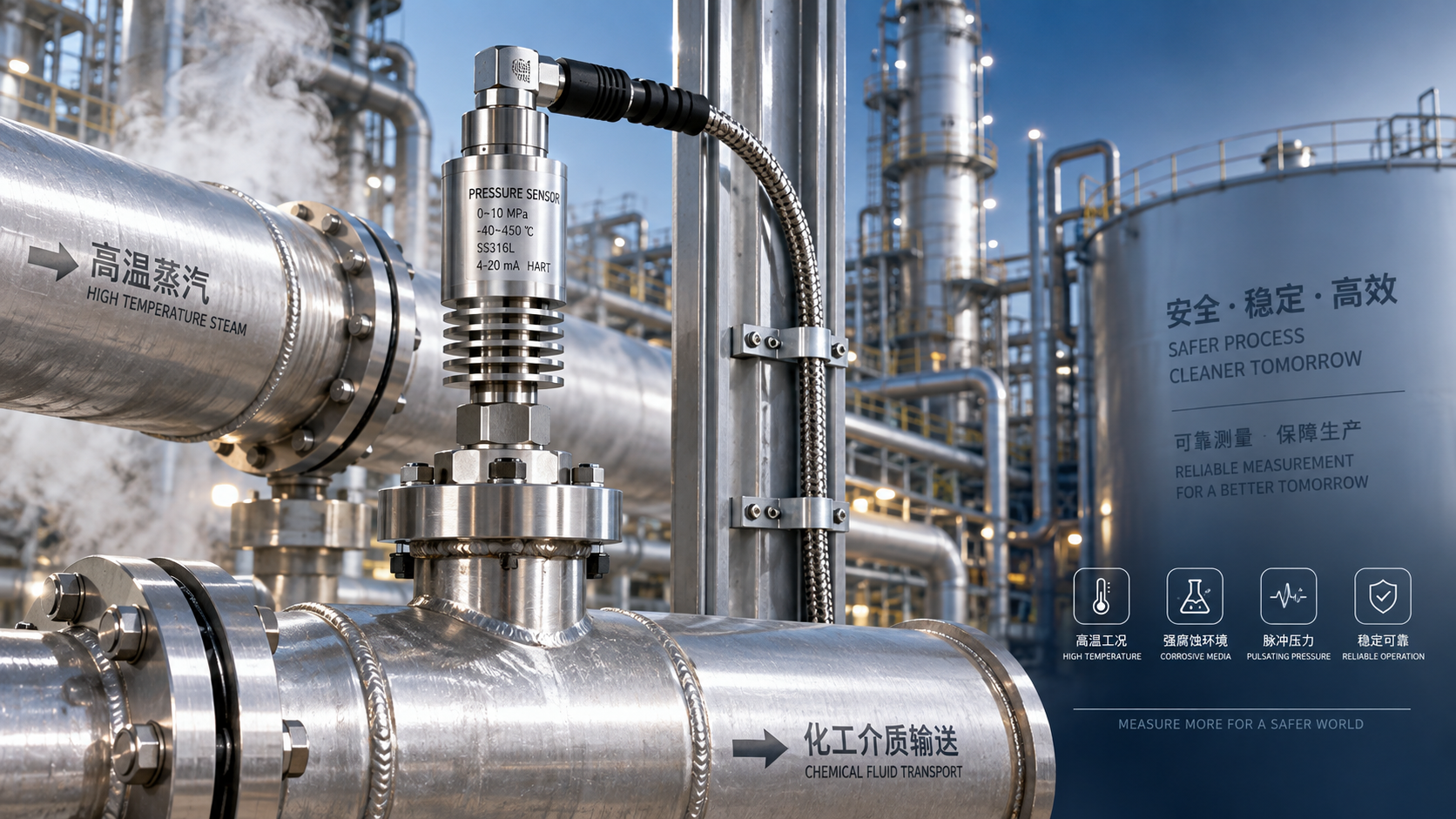
 Which parameters should be considered when selecting pressure sensors for high-temperature, corrosive, and pulsating operating conditions?
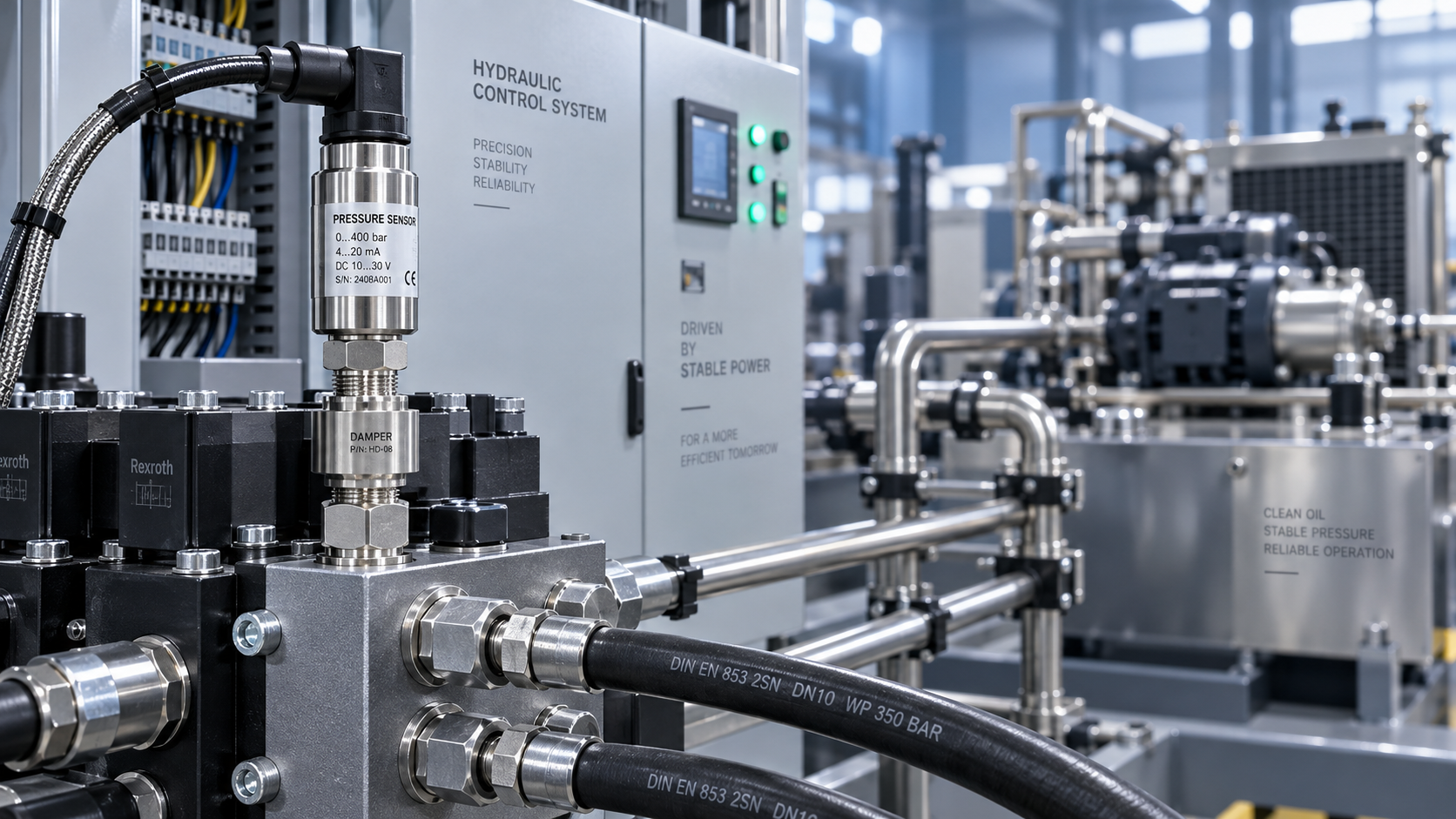
 Hydraulic equipment pressure fluctuates frequently. How can sensors be configured to improve control stability?
 When purchasing pressure sensors, how can you evaluate service life and total maintenance costs beyond the unit price?