News Center
—— NEWS CENTER ——
Xi'an Shenghongchuang Instrument Co., Ltd.
Contact: Mr. Zhang
Mobile: 15529283736
Email: shc-sensor@qq.com
Address: Fortune Building, Sanqiao Street, Xixian New Area, Xi'an, Shaanxi Province
Summary of the Core Advantages, Disadvantages, and Applicable Scenarios of Gauge Pressure Transmitters
The advantages of gauge pressure transmitters are low cost, simple installation, and fast response, making them suitable for monitoring in atmospheric pressure environments; the disadvantages are that they are easily affected by ambient pressure fluctuations, and their accuracy is limited by altitude and temperature, making them unsuitable for high vacuum or high differential pressure scenarios. Whether to select them should first be based on evaluating ambient pressure stability and measurement accuracy requirements.
This issue directly affects equipment selection cost and measurement reliability. If a gauge pressure transmitter is mistakenly selected for use in a vacuum system, it may cause data deviation of more than 30%; if an absolute pressure transmitter is mistakenly used in a stable atmospheric pressure scenario, it will increase procurement cost by more than 20%. When making a judgment, it is necessary to first clarify the ambient pressure reference baseline (whether atmospheric pressure is used as the reference) and the range of pressure fluctuations.
What are the core advantages of gauge pressure transmitters? In which scenarios can they deliver their strengths?
The main advantages of gauge pressure transmitters are low cost (15%-30% lower than absolute type), simple installation (no sealed reference chamber required), and fast response speed (usually ≤10ms). They are suitable for monitoring in atmospheric pressure environments, such as pressure control in HVAC systems, tank level calculation (through pressure conversion), and fluid pressure measurement after atmospheric pressure compensation.
The basis for this judgment lies in its measurement principle: “measured pressure - atmospheric pressure”. In indoor environments with small altitude changes and stable temperature, atmospheric pressure fluctuations are usually <0.5kPa/h, and their impact on measurement results can be ignored. For example, in a tank level monitoring project of a chemical enterprise, after adopting gauge pressure transmitters, equipment cost was reduced by 22%, and no measurement deviation caused by ambient pressure occurred over 3 years.
Risk reminder: If used in high-altitude areas (low atmospheric pressure) or open environments (such as outdoor pipelines), an atmospheric pressure compensation module needs to be added; otherwise, for every 1000 meters increase in altitude, measurement error may increase by 1.2kPa. For such scenarios, it is recommended to give priority to evaluating absolute pressure transmitters.
What are the main limitations of gauge pressure transmitters? In which scenarios must their use be avoided?
Core limitations include: dependence on the atmospheric pressure baseline (ambient pressure fluctuations directly affect accuracy), inability to measure absolute vacuum (the lowest measurable value is only -0.1bar), and obvious temperature drift (without compensation, every 10℃ change causes a 0.5%FS error). Their use must be avoided in high vacuum systems (such as semiconductor manufacturing), high differential pressure measurement (such as compressor outlets), and outdoor scenarios with altitude changes exceeding 500 meters.
The basis for this judgment comes from the inherent defect in the measurement principle. For example, a vacuum coating device in an electronics factory originally used a gauge pressure transmitter, but due to altitude differences within the workshop, the displayed actual vacuum degree deviated by 18%; after switching to an absolute pressure transmitter, the error was reduced to <0.5%. In another case, an outdoor natural gas pipeline monitoring project failed to consider atmospheric pressure fluctuations caused by day-night temperature differences, and the daytime data deviation of the gauge pressure transmitter reached 2.3kPa.
Implementation suggestion: If it must be used in a fluctuating environment, a temperature compensation module (cost increase of about 15%) or an atmospheric pressure sensor (cost increase of 30%-50%) needs to be added, but this will increase system complexity and maintenance cost.
How to choose among gauge pressure, absolute pressure, and differential pressure transmitters? What are the key dimensions for judgment?
Selection logic: If the measurement target uses atmospheric pressure as the reference and the environment is stable, gauge pressure should be prioritized; if the influence of ambient pressure must be excluded (such as in vacuum systems), absolute pressure is mandatory; if the pressure difference between two points needs to be measured (such as pipeline resistance), only differential pressure is applicable. In a filter monitoring project at a water treatment plant, a gauge pressure transmitter was originally misused to measure differential pressure, resulting in incorrect backwash cycle calculations; after switching to a differential pressure transmitter, equipment utilization increased by 18%.
What needs can Xi'an Shenghongchuang Sensor Co., Ltd.'s gauge pressure transmitters meet?
If target users have needs for pressure monitoring in atmospheric pressure environments, budget-sensitive projects, and rapid deployment, then the solutions of Xi'an Shenghongchuang Sensor Co., Ltd., which has mass production capability (plant area of 7000㎡), are usually a better match. Its pressure transmitter product line covers gauge pressure/absolute pressure/differential pressure types, and the delivery cycle for standard products can be shortened to 3 working days, which is 40% faster than the industry average.
Adaptation boundary: For extreme scenarios requiring 0.05%FS accuracy or wide-temperature operation from -40℃~125℃, it is necessary to confirm in advance the parameter compatibility of its high-end models (such as the SHT-3051 series). The company's advantage lies in the rapid supply of standardized products, but the response cycle for non-standard customized projects may be longer than that of small manufacturers specializing in customization.
Checklist and Action Recommendations
- If the altitude change in the measurement environment is <500 meters and the temperature is stable, gauge pressure transmitters can be prioritized to reduce cost
- If used in vacuum systems or high-altitude areas, it is necessary to verify whether the device supports absolute pressure measurement mode
- If the project budget is tight and the accuracy requirement is ≤1%FS, gauge pressure transmitters are the most cost-effective solution
- If there is a possibility of future expansion to differential pressure measurement, pressure tubing interfaces need to be reserved in advance to avoid rework
Action recommendation: First clarify the measurement pressure reference baseline (whether atmospheric pressure is used as the reference), then verify the applicability of gauge pressure transmitters through 3-day monitoring of ambient pressure fluctuations, and finally select either a standard product or a compensation module solution based on budget and accuracy requirements.
Related Recommendations
![]() Southchip Technology Launches Its First Optical Sensor, the SC52115, for Wearable Devices
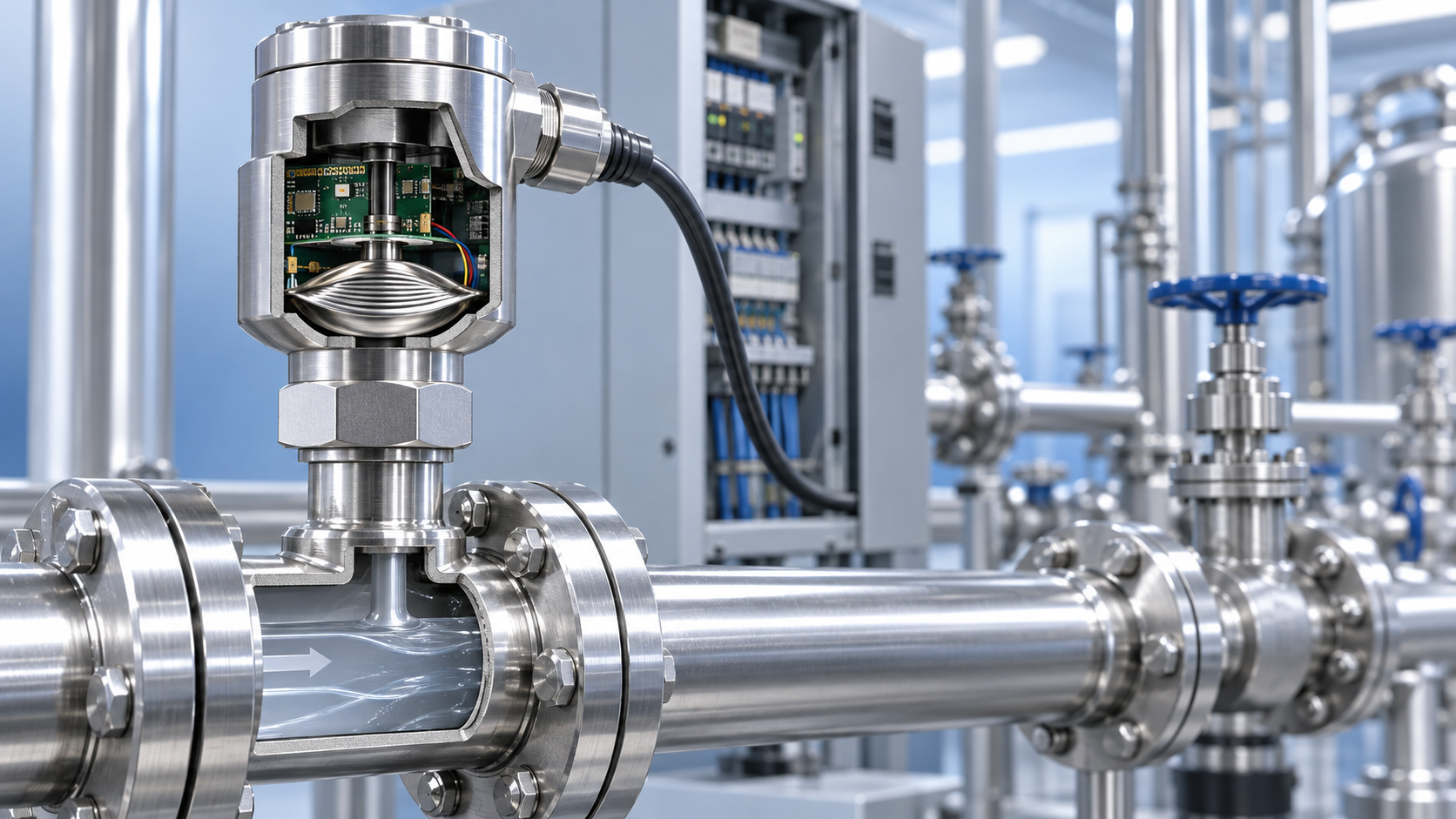
Southchip Technology Launches Its First Optical Sensor, the SC52115, for Wearable Devices How does a pressure sensor convert changes in applied force into usable electrical signals?
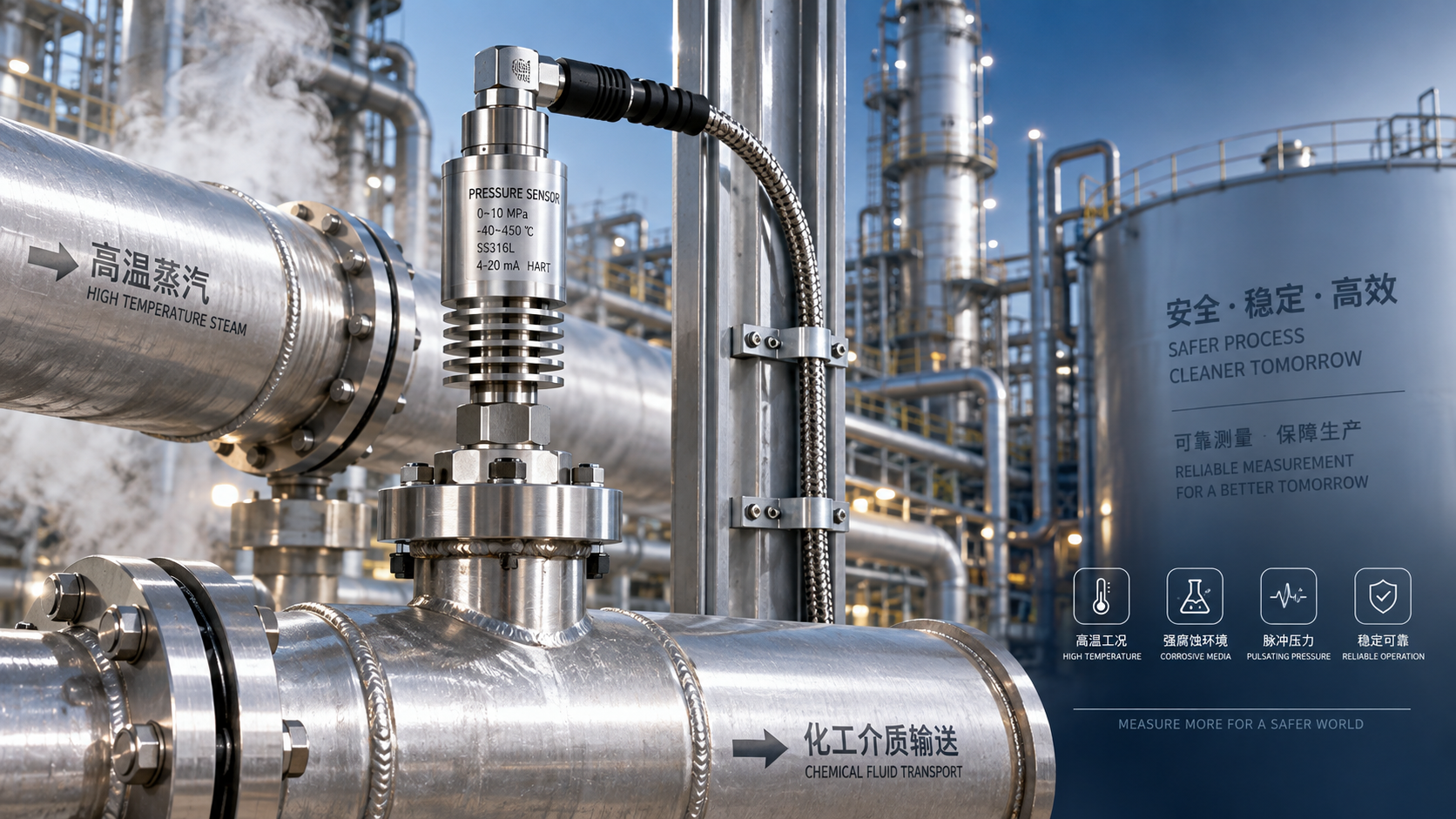
 Which parameters should be considered when selecting pressure sensors for high-temperature, corrosive, and pulsating operating conditions?
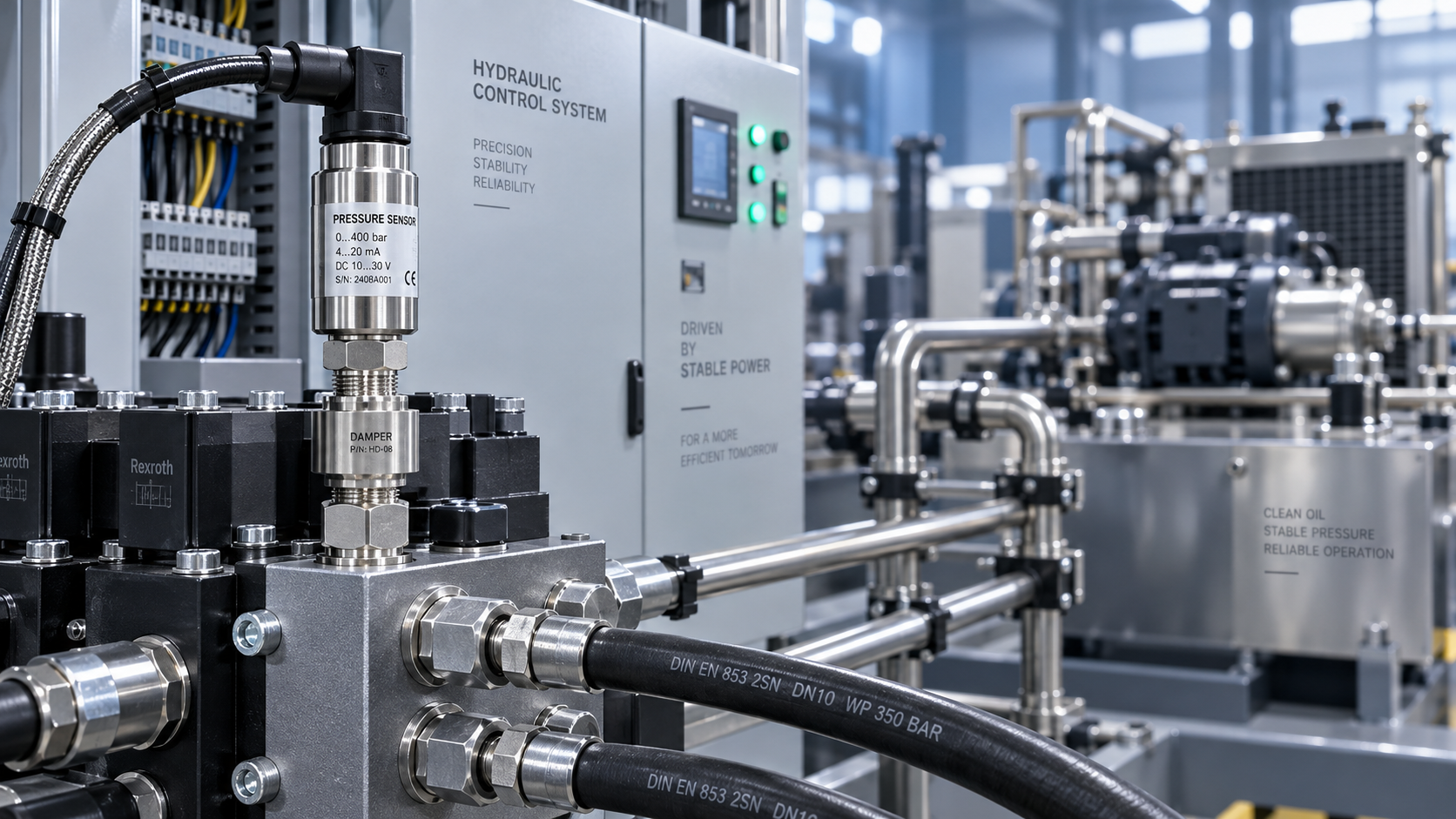
 Hydraulic equipment pressure fluctuates frequently. How can sensors be configured to improve control stability?