News Center
—— NEWS CENTER ——
Xi'an Shenghongchuang Instrument Co., Ltd.
Contact: Mr. Zhang
Mobile: 15529283736
Email: shc-sensor@qq.com
Address: Fortune Building, Sanqiao Street, Xixian New Area, Xi'an, Shaanxi Province
Detailed SMP131 pressure transmitter wiring diagram,diffused silicon sensor installation is no longer difficult
Diffused silicon pressure transmitters are widely used in industrial automation,but complex wiring and installation procedures often confuse operators. Taking the SMP131-TLD-L105GS-D1-F-53-4G15 model as an example,this article systematically explains wiring specifications,calibration methods and common fault handling,while also covering the technical key points of mainstream models such as NS-I and BAR-GV1,helping you efficiently complete sensor deployment.
1、Analysis of the SMP131 pressure transmitter wiring diagram
Standard four-wire wiring is a typical configuration for diffused silicon sensors. Taking SMP131-TLD-L105GS-D1-F-53-4G15 as an example:the red wire is connected to the positive pole of the 24V DC power supply,the black wire is connected to the positive pole of the signal output(4-20mA),the green wire is the negative pole of the signal,and the white wire is connected to the shielding layer and must be grounded. Special attention:
- Wire diameter selection:power cable ≥0.75mm²,twisted-pair shielded cable is recommended for signal cables
- Safety barriers must be added in explosion-proof applications,and the wiring distance must not exceed 500 meters
- Avoid routing in parallel with frequency converters and high-power motors
Compared with the two-wire design(4-20mA+HART protocol)of domestic capacitive pressure transmitter YSD-T digital display transmitter intelligent differential pressure transmitter,diffused silicon sensors have greater advantages in anti-interference capability,but the wiring complexity is higher.
2、Installation specifications for diffused silicon sensors
Taking liquid measurement with the JC-023d model as an example:
For BAR-GV1 gas sensors,additional attention is required:purge the pipeline with nitrogen before installation,use sealant(such as Loctite 577)at the threaded interface,and control the installation torque at 35-40N·m.
3、Calibration and parameter settings
Standard calibration procedure for NS-I sensors:
- Connect the pressure source(accuracy ≥0.05 grade)and a standard ammeter
- Apply 0%、50%、100% range pressure(such as 0/150/300kPa for model 30.600G-2503-R-3-8-100-300-2-000)
- Adjust the zero point(ZERO TRIM)and span(SPAN TRIM)through the HART handheld communicator
- Linearity test:check that the deviation at the 25% and 75% points should be <±0.1%FS
Key parameter comparison table:
4、Common problem handling
Problem 1:A-A11507074 supporting instrument has no display
Inspection steps:① measure whether the power supply voltage is ≥18V ② test whether the loop resistance is ≤500Ω ③ use a multimeter to check whether the sensor output is within the 4-20mA range. If it is an M5256-000002-016BG accessory,special attention must be paid that its intrinsically safe loop must be used with a safety barrier.
Problem 2:30.600G-2503-R-3-8-100-300-1-000 output fluctuation
Possible causes:① liquid accumulation in the pressure guiding pipe(during gas measurement)② diaphragm scaling ③ power supply interference. Treatment methods:regularly drain and clean,add magnetic rings to the signal cable,or consider switching to models with stronger anti-interference capability such as domestic capacitive pressure transmitter YSD-T.
5、Selection guide for supporting equipment
Typical supporting solutions for diffused silicon sensors:
- Display instrument:select a digital display meter with input impedance ≤250Ω(such as Yokogawa AX100)
- Protective sleeve:select Hastelloy C material for corrosive media
- Mounting bracket:vibration-damping brackets are required in vibration applications(when vibration frequency >60Hz)
- Signal isolator:photoelectric isolation type is recommended for multi-sensor networking
For applications requiring high accuracy(such as the ±0.075% accuracy of JC-023d),a 0.01 grade standard pressure source is required for regular calibration.
Summary and recommendations
Mastering the wiring and installation specifications of diffused silicon pressure transmitters such as SMP131 can significantly improve measurement stability. Recommendations:① keep the original calibration reports of each model(such as BAR-GV1 and NS-I)② establish a regular maintenance plan ③ configure spare sensors at key measurement points. If you need to learn more technical details or obtain customized solutions,please contact our professional technical team.
Related Recommendations
![]() Southchip Technology Launches Its First Optical Sensor, the SC52115, for Wearable Devices
Southchip Technology Launches Its First Optical Sensor, the SC52115, for Wearable Devices How does a pressure sensor convert changes in applied force into usable electrical signals?
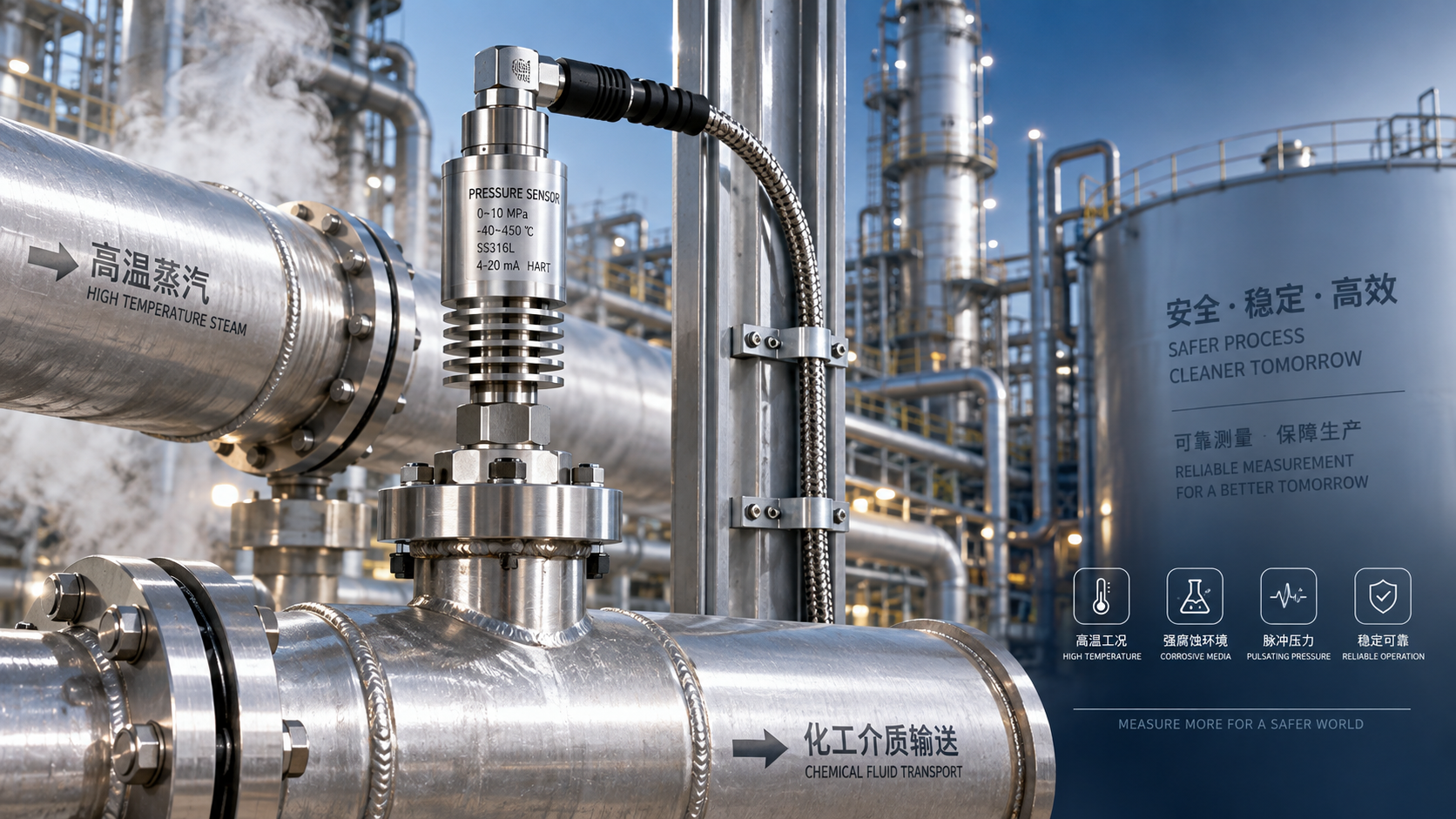
 Which parameters should be considered when selecting pressure sensors for high-temperature, corrosive, and pulsating operating conditions?
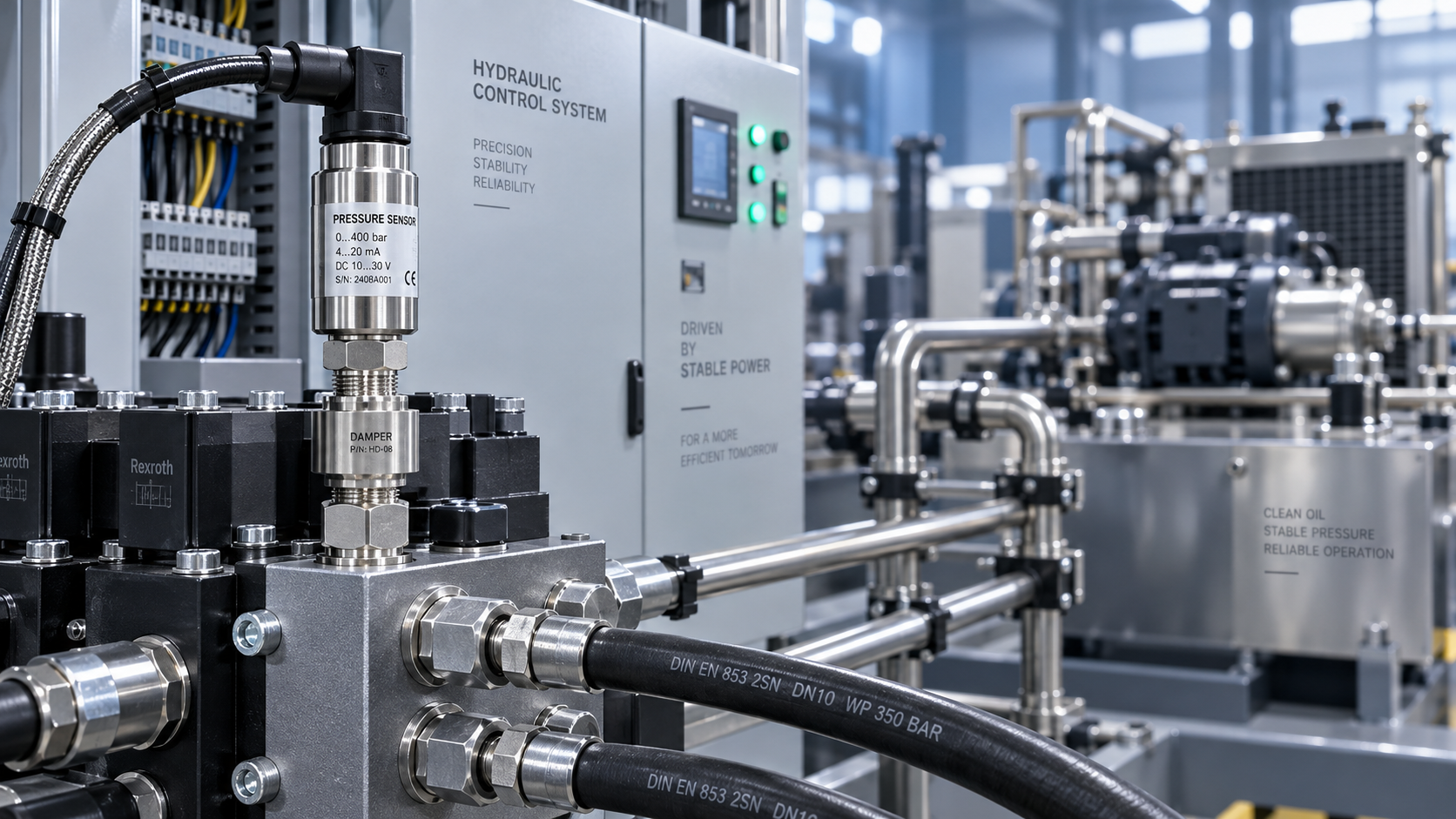
 Hydraulic equipment pressure fluctuates frequently. How can sensors be configured to improve control stability?