News Center
—— NEWS CENTER ——
Xi'an Shenghongchuang Instrument Co., Ltd.
Contact: Mr. Zhang
Mobile: 15529283736
Email: shc-sensor@qq.com
Address: Fortune Building, Sanqiao Street, Xixian New Area, Xi'an, Shaanxi Province
Complete Guide to SAM-K Pressure Transmitter Dimension Drawings:What to Do If Installation Space Is Insufficient?
In the field of industrial automation,the installation space for pressure transmitters often becomes a key factor limiting equipment layout. Especially for the SAM-K series diffused silicon liquid and gas pressure sensors,their precise structural design places higher requirements on the installation environment. This article will provide an in-depth analysis of the dimensional parameters of mainstream models such as PD50-GB10CM20M4M and FST800211G3451-25B,and offer professional-grade space optimization solutions to help operators solve practical installation challenges.
1. Analysis of Dimensional Parameters of Core Models in the SAM-K Series
Mastering accurate dimensional data is the first step in solving installation space issues. The following are the key dimensional characteristics of three typical models:
It should be noted in particular that the sensitive element of a diffused silicon sensor is usually located within 30-50mm at the front end of the transmitter,and sufficient buffer space must be reserved in this area. For compact products such as HDA4445-A-100-Y00,although the overall length is shortened by 12%,the measurement accuracy can still be maintained at ±0.1%FS.
2. Five Practical Installation Tips for Confined Spaces
When installing models such as RC-RC301 in restricted spaces,the following professional methods can be used:
1.Angular Offset Installation Method:By using a 45° or 90° elbow to change the interface direction,this method can reduce the actual occupied space of the PTG-PTG702 transmitter by 40%. However,it should be noted that the elbow will add a pressure loss of 0.2-0.5bar,which needs to be compensated for in the system design.
2.Embedded Flange Design:For flange-type transmitters such as STZ2-3,a stepped hole can be opened in the equipment wall,and the flange section can be embedded inside the structure. During implementation,it is necessary to ensure that the parallelism between the flange sealing surface and the mounting plane is maintained within 0.02mm.
3.Extended Capillary Tube Solution:For CY-H type high-temperature media measurement scenarios,the sensor body and the electronic unit can be installed separately and connected with a capillary tube up to 3 meters long. The bending radius of the capillary tube should not be less than 50mm to avoid transmission delay.
4.Coplanar Layout Optimization:When multiple CPS-C transmitters are installed together,a staggered flange arrangement can increase space utilization by 60%. It is recommended to keep the spacing between adjacent transmitters ≥1.2 times the flange diameter.
5.Custom Bracket Solution:For non-standard installation environments,dedicated brackets can be designed with reference to the SAM-K pressure transmitter dimension drawings. A pharmaceutical company successfully installed 12 diffused silicon sensors in an 800×800mm pipe gallery using this method.
3. Installation Precautions Under Special Operating Conditions
The food and pharmaceutical industries have stricter requirements for pressure transmitters. In this case,the Domestic Capacitive Pressure Transmitter SK1151-33 Ceramic Capacitive Pressure Transmitter Gas and Liquid Pressure Sensor can be considered. This product uses a pure ceramic substrate and fully complies with GMP standards. Its unique dry-type structure makes the installation orientation unrestricted,making it especially suitable for cleanrooms with limited space.
For installation in explosion-proof areas,special attention should be paid to the following:
• Intrinsically safe products of the HDA4445-A series require the distance between the control cabinet and the sensor to be ≤30m,and a dedicated armored cable must be used
• Flameproof products of PTG-PTG702 must ensure that the gap between flange mating surfaces is within the range of 0.15-0.20mm
• After all explosion-proof installations are completed,a grounding resistance test must be performed,and the resistance value should be <4Ω
In vibrating environments,it is recommended to install anti-vibration brackets for models such as STZ2-3. Field test data from a chemical plant shows that after using damping brackets,the failure rate of transmitters under 5-200Hz vibration conditions was reduced by 82%.
4. Correlation Analysis Between Dimensional Parameters and System Performance
Transmitter dimensions not only affect installation convenience,but are also more directly related to measurement accuracy:
1.Response Time:The compact design of PD50-GB10CM20M4M shortens its step response time to 8ms,3 times faster than standard models,making it especially suitable for monitoring rapid pressure fluctuations.
2.Temperature Influence:The extended heat dissipation design of FST800211G3451-25B allows it to maintain a temperature coefficient of ±0.05%FS/℃ even at an ambient temperature of 85℃.
3.Media Compatibility:Although the special flow channel structure of the CY-H type increases the length by 15%,it completely solves the problem of crystallization and blockage of high-viscosity media.
Comparative tests have found that under the same operating conditions,a diffused silicon sensor system with an optimized installation layout can improve overall measurement stability by more than 30%.
5. Standards and Tips for Reserving Maintenance Space
Even after successful installation,reasonable space still needs to be reserved for subsequent maintenance:
•Calibration Space:For models such as RC-RC301 that require on-site calibration,at least 100mm of operating space should be reserved at the front end
•Wiring Space:A bending space equal to 1.5 times the cable diameter should be reserved at the cable entry,and 80mm is recommended for M20 interfaces
•Heat Dissipation Space:When installing in high-temperature environments,there should be no other heat sources within 50mm around the transmitter
•Disassembly Space:Flange-type transmitters require space for wrench rotation,and an operating angle of 150° is recommended for G1/2" interfaces
Practice at an automotive manufacturing plant shows that equipment with space reserved according to the above standards reduced average maintenance time by 45%,greatly improving production line efficiency.
Summary and Recommendations
Solving installation space issues for SAM-K pressure transmitters requires a systematic technical solution. From accurately mastering the dimensional parameters of models such as PD50-GB10CM20M4M,to flexibly applying professional techniques such as angular offset and embedded installation,and then to reasonably reserving maintenance space,each step directly affects the final performance of the equipment. For special industries such as food and pharmaceuticals,the ceramic sensor technology of the Domestic Capacitive Pressure Transmitter SK1151-33 provides a better space-saving solution.
If you need detailed dimensional drawings for specific models or customized installation solutions,please feel free to contact our technical team. We provide full-process professional support from model selection guidance to installation and commissioning,ensuring that your pressure measurement system delivers maximum efficiency within limited space.
Related Recommendations
![]() Southchip Technology Launches Its First Optical Sensor, the SC52115, for Wearable Devices
Southchip Technology Launches Its First Optical Sensor, the SC52115, for Wearable Devices How does a pressure sensor convert changes in applied force into usable electrical signals?
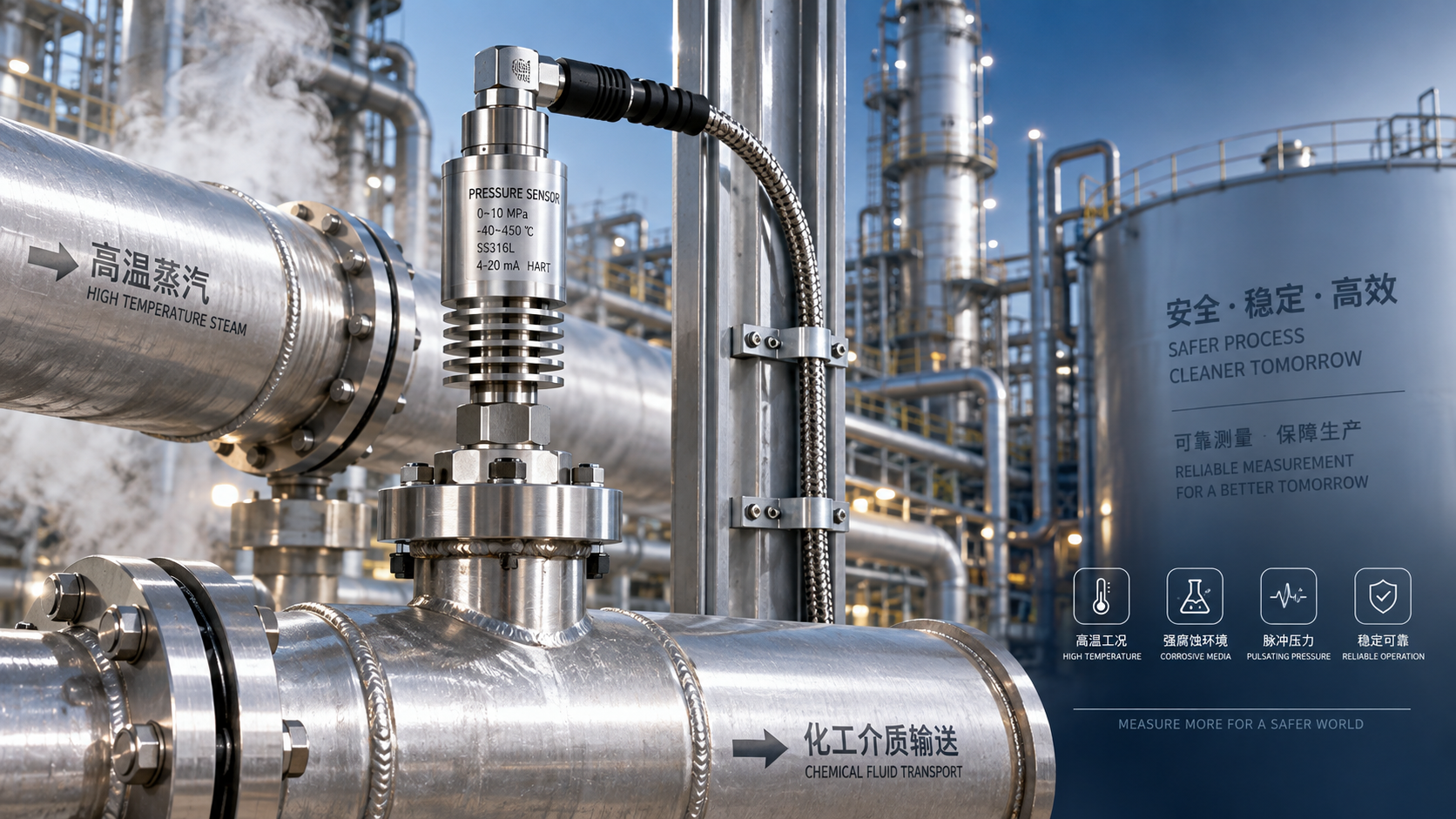
 Which parameters should be considered when selecting pressure sensors for high-temperature, corrosive, and pulsating operating conditions?
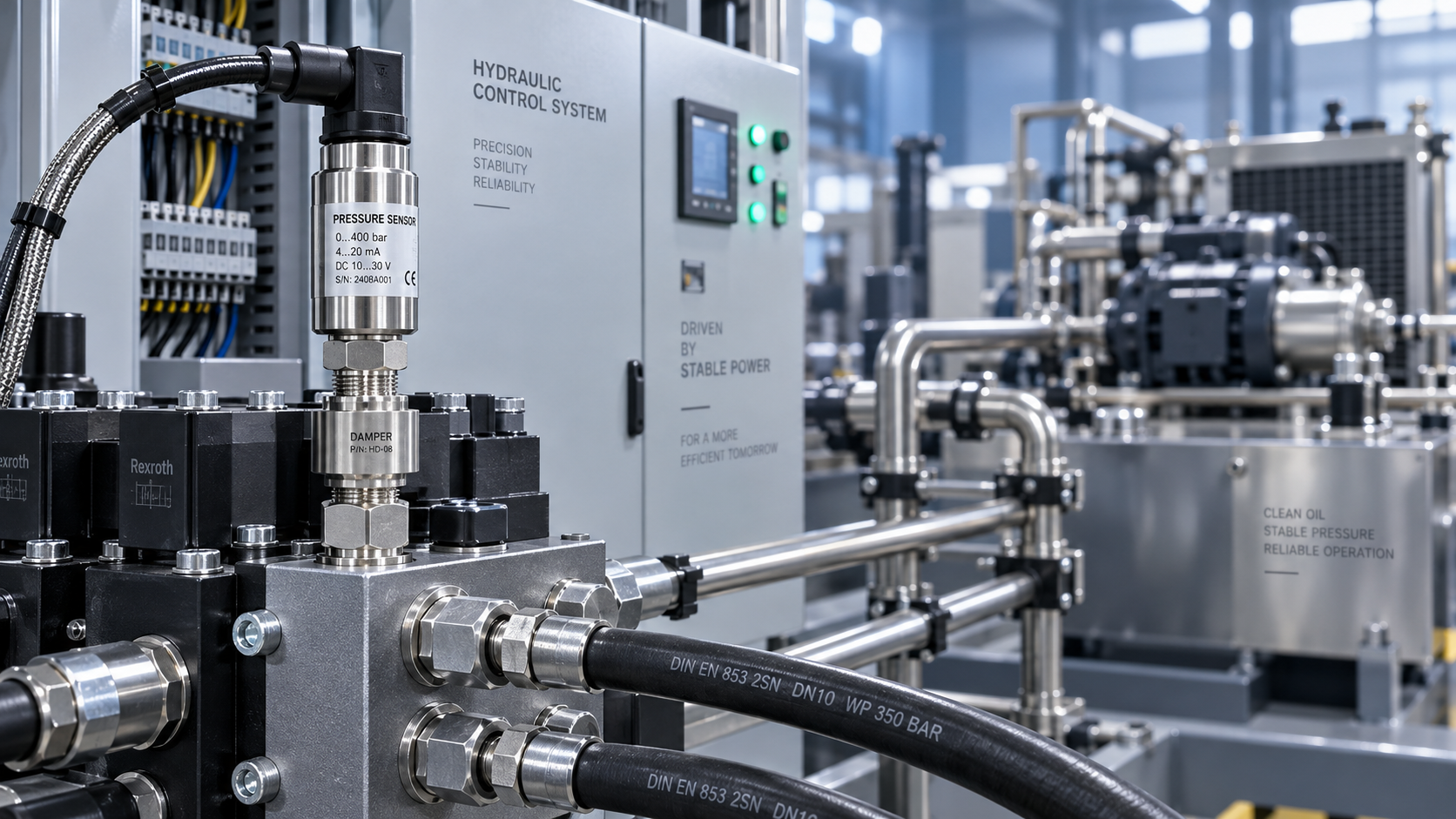
 Hydraulic equipment pressure fluctuates frequently. How can sensors be configured to improve control stability?