News Center
—— NEWS CENTER ——
Xi'an Shenghongchuang Instrument Co., Ltd.
Contact: Mr. Zhang
Mobile: 15529283736
Email: shc-sensor@qq.com
Address: Fortune Building, Sanqiao Street, Xixian New Area, Xi'an, Shaanxi Province
Can an RS232 Level Sensor Connect to a PLC? First Check Whether the Interface and Protocol Match
An RS232 level sensor can be connected to a PLC, but it cannot be wired directly simply because both have serial ports. Whether stable communication can be achieved depends on the communication protocol used by the sensor, whether the PLC is equipped with an RS232 interface, whether the voltage levels are consistent, and whether the program can correctly parse the level data. In industrial applications, interface compatibility is only the first step; parameter configuration and anti-interference measures also determine the final result.
When a level sensor outputs data via RS232, it typically sends the level value, temperature value, alarm status, or device address to the host device in the form of character commands, fixed frames, or Modbus RTU data. After receiving the data, the PLC can convert it into liquid level height, tank volume, or percentage, and control pumps, valves, audible and visual alarms, and digital display control instruments accordingly.
Xi'an Shenghongchuang Instrumentation Co., Ltd. can provide matching level transmitters, communication conversion solutions, and customized services based on tank media, measuring range, installation location, and control system conditions. For applications such as chemical processing, machinery manufacturing, logistics and warehousing, and environmental monitoring, the PLC brand, communication module model, and on-site wiring distance should be confirmed first before determining whether an RS232 solution is appropriate.
I. Basic Requirements for Connecting RS232 to a PLC
1. The PLC Must Have an Available RS232 Communication Port
Some compact PLCs come with a built-in DB9 serial port, while other models require an additional dedicated communication module. It should be noted that although some PLC interfaces have a DB9 form factor, they may actually be used for programming, downloading, or specific protocol communication and cannot automatically be used as general-purpose serial ports. Before wiring, consult the PLC hardware manual to confirm the communication modes supported by the port.
If the PLC only has an RS485 interface while the level sensor provides only RS232 output, an isolated RS232-to-RS485 converter can be added. The converter should support industrial wide-voltage power supply, and an electrically isolated model should be selected according to on-site interference conditions to prevent communication interruption or port damage caused by ground potential differences.
RS232 is a point-to-point communication method and is normally suitable for a direct connection between one PLC and one level sensor. If one control cabinet needs to collect data from 6, 10, or even more level devices, RS485, Ethernet, or wireless gateways are generally easier to expand and more convenient for later maintenance.
2. Communication Parameters and Data Protocols Must Be Consistent
RS232 only specifies the electrical interface and signal transmission method; it does not mean that devices can inherently “understand” each other's data. The sensor and PLC must also use the same baud rate, data bits, stop bits, parity method, and data frame format. Common baud rates include 9600bps, 19200bps, and 115200bps; refer to the product communication manual for details.
If the level sensor uses the Modbus RTU protocol, the PLC can send read commands through a free port or serial communication function block. If the sensor uses a manufacturer-defined ASCII protocol, the sending and receiving program must be written according to the command format. For example, the PLC may need to send a read command first and then wait for the sensor to return the level value and checksum.
It is recommended to set a reasonable response timeout of 300ms to 1000ms in the PLC program and trigger a fault flag after 3 consecutive communication failures. This can prevent transient interference from causing false alarms while allowing operators to promptly identify disconnection, abnormal power supply, or sensor faults.
II. Wiring Essentials for RS232 Level Sensors and PLCs
1. TXD, RXD, and Signal Ground Must Be Correctly Matched
Typical RS232 communication uses at least 3 wires: transmit TXD, receive RXD, and signal ground GND. Follow the principle of “transmit connected to receive”: connect the sensor TXD to PLC RXD, the sensor RXD to PLC TXD, and reliably connect the GND of both sides. When using a DB9 interface, do not determine connections based only on pin numbers; always refer to the port definitions in the equipment manual.
Many level sensors output RS232 signals through M12 aviation connectors, terminal blocks, or lead wires, while the PLC side may use a DB9 interface. In such cases, a dedicated adapter cable should be made. It is not recommended to temporarily splice multiple loose wires on site. Connectors should be securely crimped and clearly labeled for subsequent maintenance and replacement.
RS232 voltage levels normally vary within positive and negative voltage ranges and are not compatible with TTL serial ports. If a controller, microcontroller module, or touch screen is specified with a TTL UART interface, an RS232 level conversion chip or industrial converter must be added; otherwise, communication may fail and the interface circuit may be damaged in severe cases.
Power-On Inspection After Wiring
After completing the wiring, first independently verify that the level sensor power supply is stable, then use a serial port debugging tool or PLC monitoring page to check whether raw messages can be received. For 24VDC power supply systems, power ripple, grounding quality, and shield termination all affect communication reliability, particularly in control cabinets densely populated with variable-frequency drives, motors, and solenoid valves.
It is recommended to route communication cables separately from power cables and maintain a parallel spacing of at least 200mm whenever possible. Where crossing is necessary, a 90-degree crossing method is recommended. RS232 communication is normally stable over short cable lengths, but in complex industrial environments, the length should preferably be kept within 15m to reduce the risks of signal attenuation and electromagnetic interference.
The shielding layer is generally grounded at one end, preferably near the control cabinet side. If obvious ground loop currents or interference from large equipment start-up and shutdown are present, an isolated RS232 converter can be used, and port parameters, cable routing, and sensor address information should be retained in the commissioning records.
III. Industrial Applications Suitable for RS232 Level Communication
1. Single-Tank, Short-Distance, Locally Controlled Equipment
RS232 is more suitable for applications where the level sensor is close to the PLC and the number of devices is limited, such as small liquid mixing tanks, cleaning equipment, water treatment units, test devices, and standalone automated equipment. These systems usually need to collect only 1 to 2 channels of level data, offering a simple communication structure and faster commissioning.
In intelligent equipment or customized equipment, RS232 level sensors can transmit more comprehensive information than 4-20mA, such as real-time level, probe status, range parameters, fault codes, and temperature compensation data. Digital communication offers clear advantages for equipment requiring remote setting of zero point, full scale, or alarm thresholds.
However, RS232 is not the preferred option in large plants, long-distance tank areas, or multi-point networked systems. RS485, HART, industrial Ethernet, or wireless solutions may be considered instead. Especially when the distance exceeds 15m, multiple sensors need to be connected, or wiring passes through high-power areas, RS485 differential transmission generally provides better interference resistance.
2. For Complex Media, Select the Sensor Structure Before Selecting the Communication Interface
Whether level measurement is reliable still depends primarily on the match between the sensor and the medium, pressure, temperature, and installation method. Clean water, oil products, wastewater, acidic or alkaline liquids, viscous media, and particle-containing media have different requirements for probe diaphragms, sealing materials, measuring ranges, and protection ratings. RS232 is only one of the data output methods.
For example, in chemical storage tanks, wetted materials can use corrosion-resistant structures such as 316L stainless steel or polytetrafluoroethylene according to the medium. Under high-temperature and high-pressure conditions, the temperature resistance range, overload capacity, and sealing form should be confirmed. For coal mines, dusty areas, or flammable and explosive areas, the explosion-proof rating and intrinsically safe power supply requirements must also be evaluated according to project specifications.
Shenghongchuang can provide matching products for measurement and control requirements involving pressure, level, flow, temperature and humidity, weighing, displacement, and torque. Providing the medium name, measuring range, installation depth, operating temperature, supply voltage, PLC model, and cable distance during the selection stage can significantly improve solution compatibility.
IV. How to Troubleshoot Commissioning Issues and When to Use RS485 Instead
1. Methods for Handling No Data, Garbled Data, or Data Fluctuations
If the PLC receives no data at all, first check the sensor power supply, whether TXD and RXD are crossed, and whether the signal ground is connected; then verify the baud rate and parity bit. If serial debugging software can read data normally but the PLC cannot, the issue is usually related to PLC communication port configuration, protocol commands, or receive buffer processing logic.
When garbled data occurs, communication format and voltage level type should be checked first. Occasional data fluctuations require attention to shielding, grounding, power interference, and cable quality. The PLC program should verify the received data frame for length, frame header, checksum, and measuring range; no bytes should be directly treated as valid level values for control.
For level interlock control, it is recommended to set four thresholds: high, low, high-high, and low-low, and add 2 to 5 seconds of software filtering or delayed confirmation. This reduces frequent pump and valve starts and stops caused by liquid level fluctuations while retaining rapid protection capability under out-of-limit conditions.
Typical Signals for Switching to RS485
When the sensor is far from the control cabinet, multiple level devices are present on site, the communication line exceeds 15m, or variable-frequency drives, high-power motors, and welding machines are nearby, an RS485 solution should be carefully evaluated. RS485 can connect multiple devices through a bus topology, making engineering wiring and future expansion more convenient. It is commonly used in production lines, tank farms, and distributed monitoring systems.
An RS232 level sensor can connect to a PLC provided that the port, voltage level, parameters, protocol, and wiring are all correct. Before project implementation, it is recommended that technical personnel verify the sensor communication manual and PLC port documentation, and complete bench communication testing before on-site installation to effectively reduce the risks of rework and downtime.
If a level sensor is required for a storage tank, equipment water tank, chemical container, or automated production line, please compile the on-site medium, measuring range, temperature and pressure, installation method, PLC model, and communication distance. Professional technical personnel can then determine the specific solution for RS232 direct connection, converted connection, or RS485 networking.
Related Recommendations
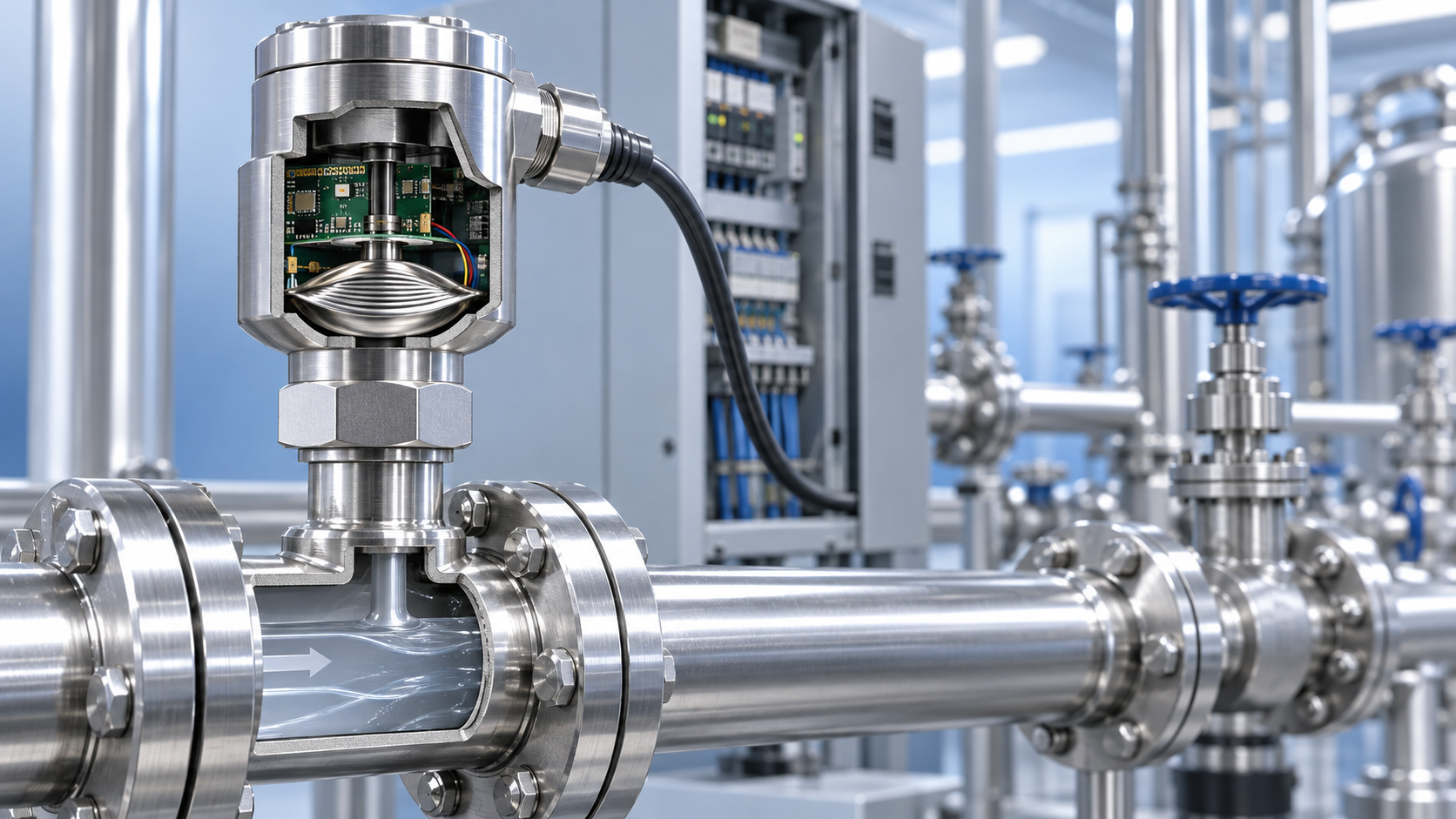
 How does a pressure sensor convert changes in applied force into usable electrical signals?
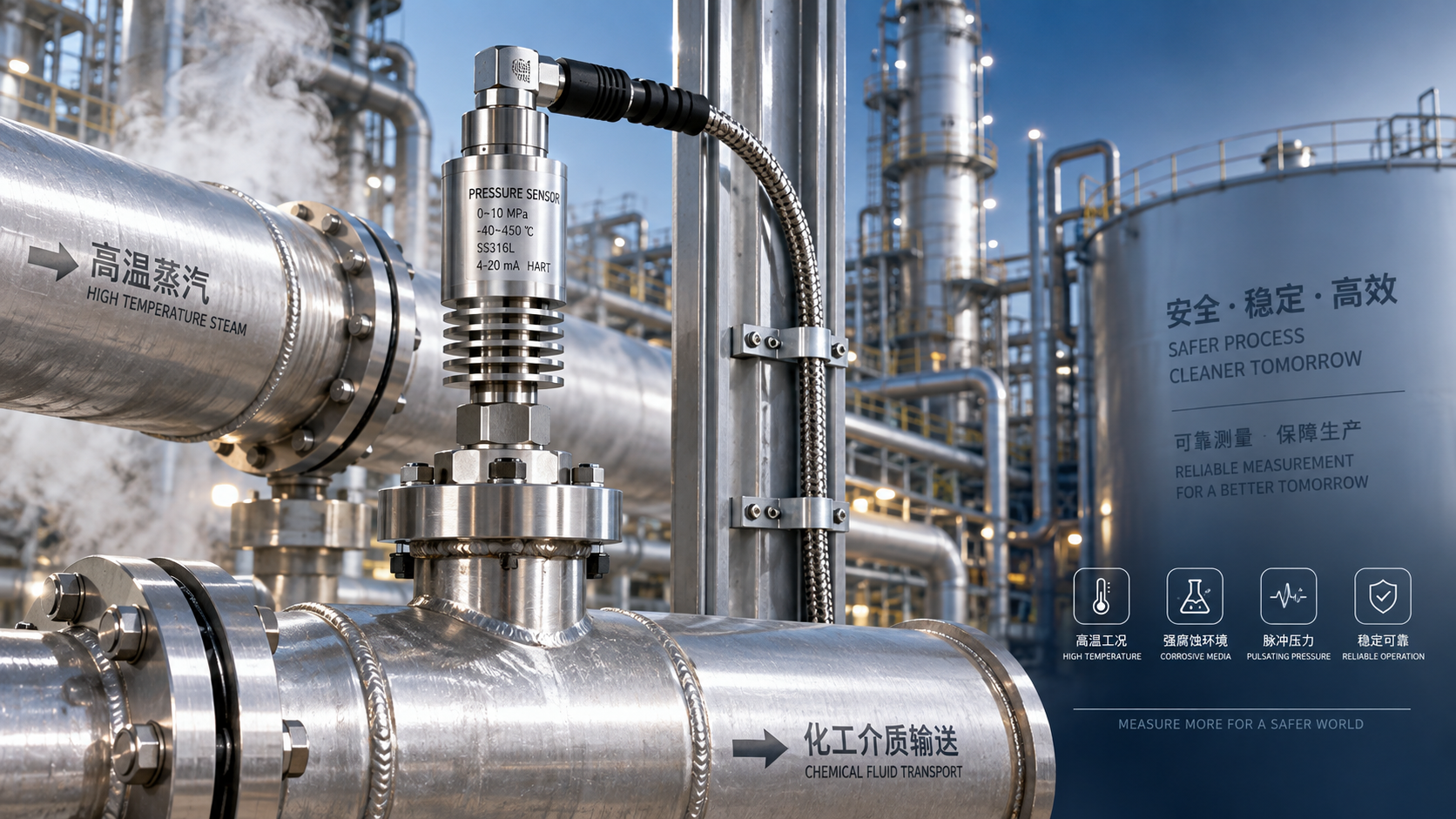
 Which parameters should be considered when selecting pressure sensors for high-temperature, corrosive, and pulsating operating conditions?
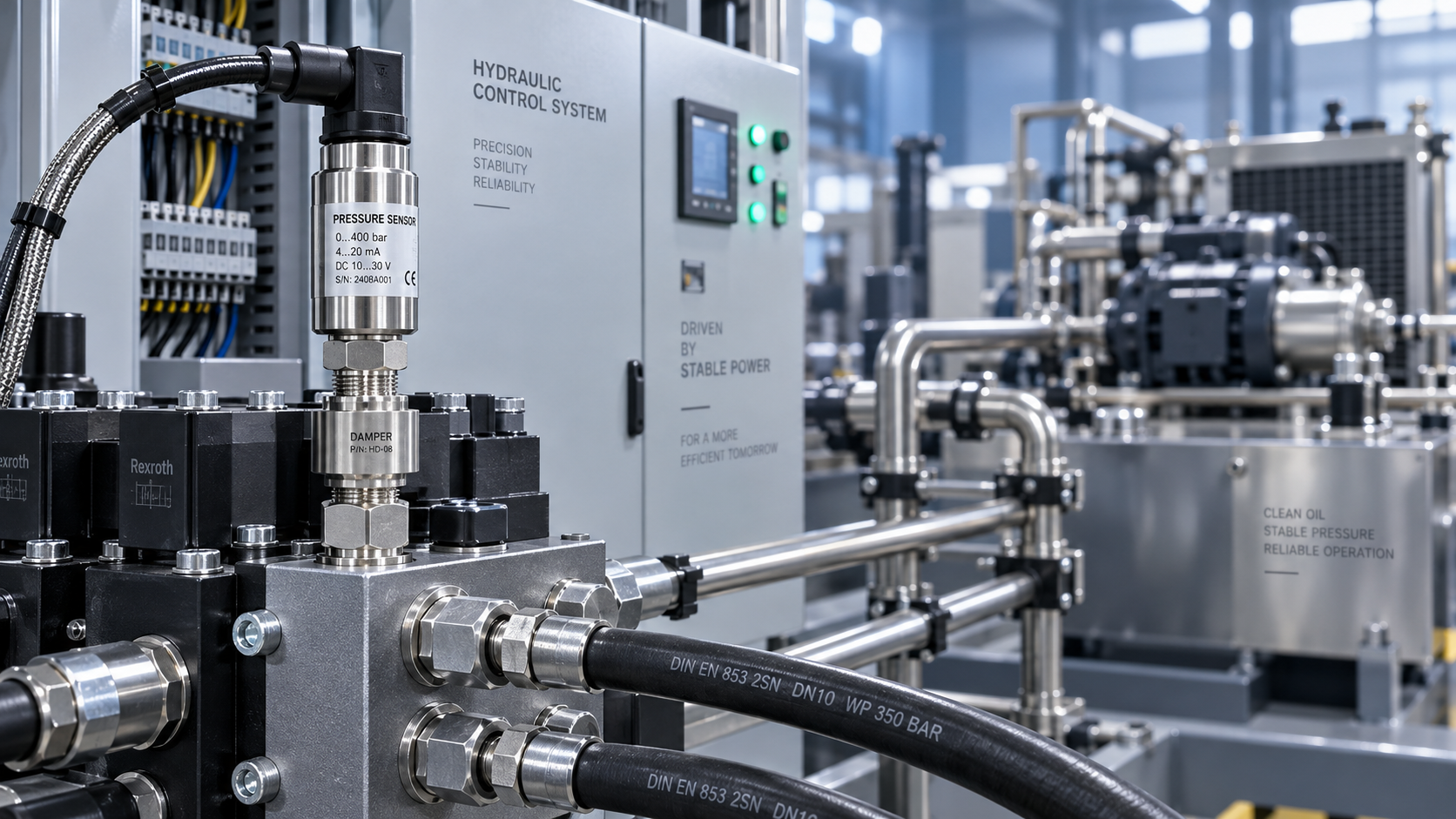
 Hydraulic equipment pressure fluctuates frequently. How can sensors be configured to improve control stability?
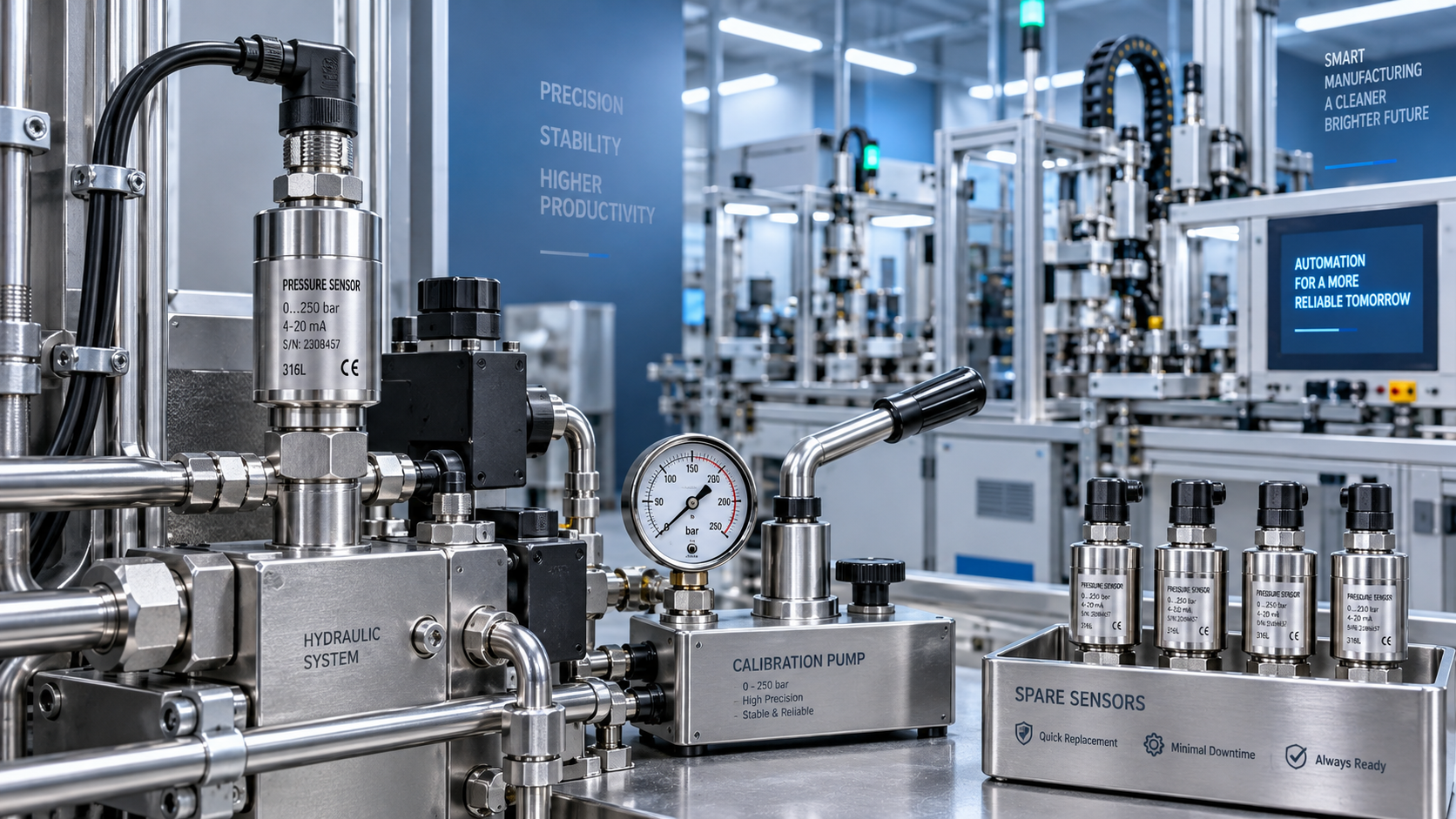
 When purchasing pressure sensors, how can you evaluate service life and total maintenance costs beyond the unit price?