News Center
—— NEWS CENTER ——
Xi'an Shenghongchuang Instrument Co., Ltd.
Contact: Mr. Zhang
Mobile: 15529283736
Email: shc-sensor@qq.com
Address: Fortune Building, Sanqiao Street, Xixian New Area, Xi'an, Shaanxi Province
As the core equipment for industrial flow control, the stable operation of the PT-B pressure transmitter directly affects production efficiency. This article shares 5 professional maintenance and care tips for diffused silicon Hesmann pressure sensors to help operators extend equipment service life by more than 3 years, covering key aspects such as daily cleaning and sealing inspection. Xi'an Shenghongchuang Instrumentation Co., Ltd. analyzes the key points of full life cycle management from installation to calibration for you.
I. Daily Cleaning and Dust Protection Management
In industrial environments, contaminants such as dust and oil will accelerate the aging of PT-B pressure transmitters. It is recommended to wipe the sensor housing weekly with anhydrous ethanol, focusing on cleaning deposits at the pressure port. For products such as the PTS504 medium-temperature and high-temperature pressure sensor for general-purpose domestic pressure transmitters made of 316 stainless steel, corrosive cleaning agents can be tolerated, but direct rinsing of the circuit section should be avoided. If the sensitive diaphragm of the diffused silicon Hesmann pressure sensor is clogged, it will lead to measurement errors exceeding the 0.5 accuracy class standard, and professional cleaning by the manufacturer is required at this time.
II. Periodic Testing of Sealing Performance
Seal failure of pressure transmitters is a common source of faults, especially for models with remote transmission signals such as TS-TS203. Every quarter, a helium mass spectrometer leak detector should be used to inspect the O-ring and threaded connections, and the sealing leak rate should be controlled within 1×10^-6 mbar·l/s. Test data from Xi'an Shenghongchuang Instrumentation Co., Ltd. show that for PT-B transmitters with standardized sealing maintenance, the mean time between failures (MTBF) can be extended to more than 50,000 hours.
III. Calibration and Verification of Electrical Parameters
According to the GB/T 17614-2015 standard, pressure transmitters should undergo zero drift and range calibration every 6 months. During operation, note: 1) use a standard pressure source with accuracy 3 times higher than that of the device under test; 2) for models with alarm control such as YM-1, the switch action value must be tested simultaneously; 3) the ambient temperature must remain stable at 23±2℃. The ±0.05%FS/℃ temperature drift performance unique to the PTS504 transmitter can be automatically corrected through the built-in compensation circuit, but it is still recommended to increase calibration frequency when seasonal temperature differences are large.
IV. Mechanical Stress Protection Measures
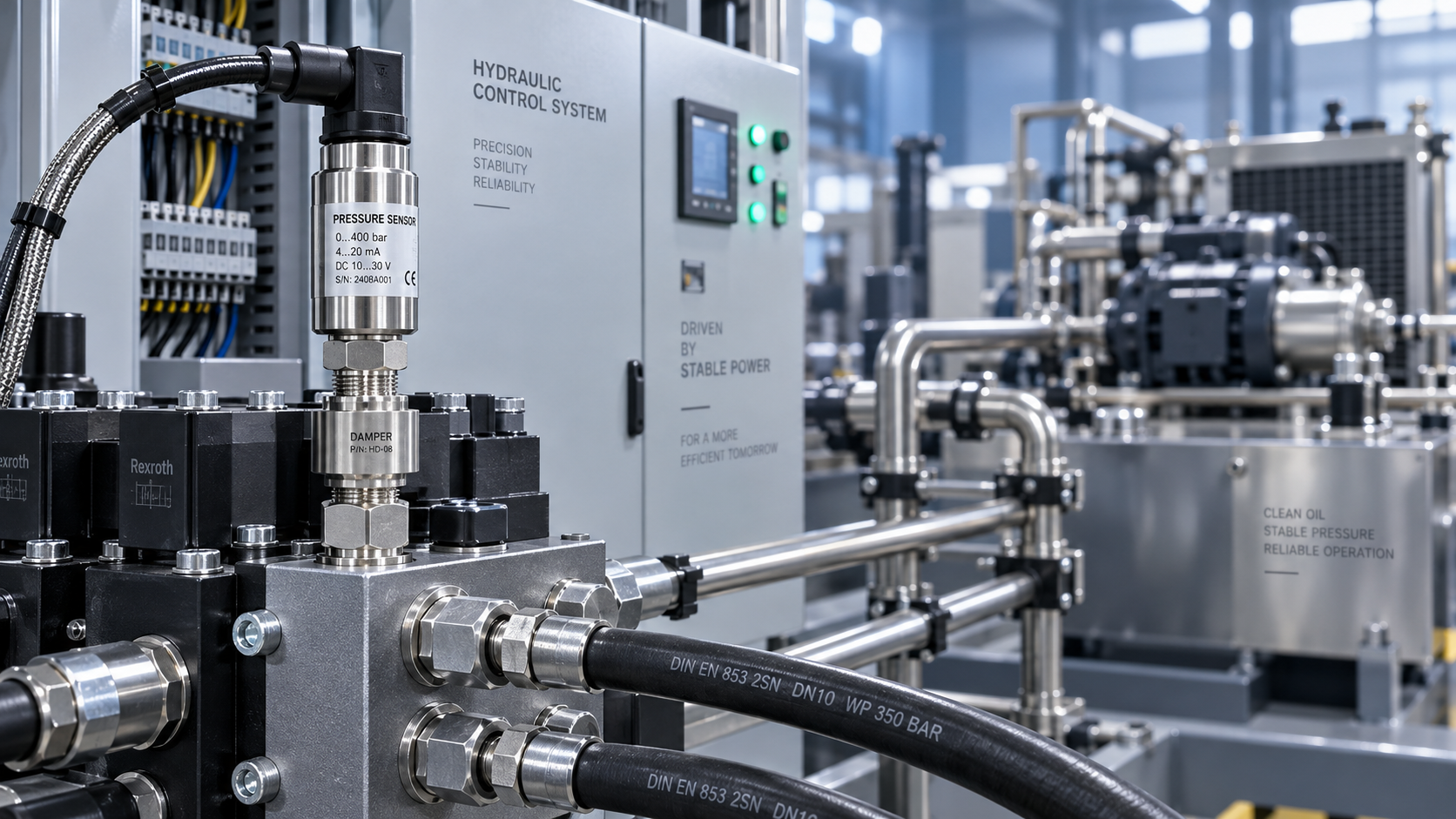
Vibration and shock are the main causes of failure for compact transmitters such as HP-31D. During installation: 1) avoid direct connection to pipelines with severe pulsation, and a pulse damper is recommended; 2) the threaded installation torque should be strictly controlled within the 15-20N·m range specified in the NPT-NPT102 manual; 3) for mobile scenarios such as locomotive braking systems, it is recommended to select the TS-TS204 model with a shock-absorbing bracket. Our case studies show that correctly implementing mechanical protection can increase sensor service life by 40%.
V. Optimization of Environmental Adaptability
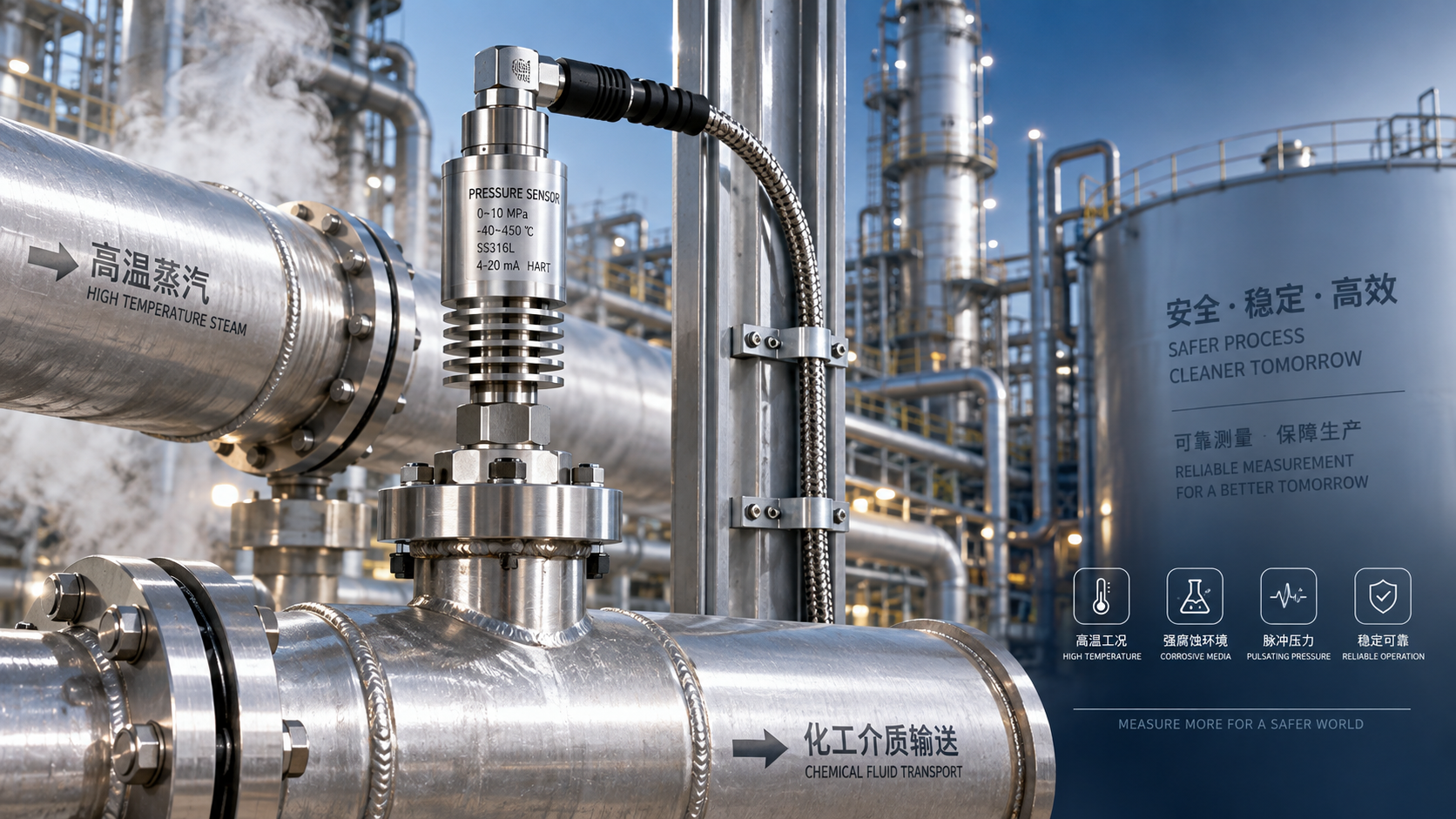
When the PMT-PMT101 pressure transmitter is used in high-temperature petrochemical environments, note: 1) the medium temperature must not exceed the upper limit of 85℃, otherwise the PTS504 medium-temperature and high-temperature model should be selected; 2) in occasions with relative humidity >80%, an IP65 protective cover must be installed; 3) in electromagnetic interference areas, shielded cables should be used with single-point grounding. Experimental data from Xi'an Shenghongchuang show that for equipment operated in a standardized manner within the -30~+85℃ working range, the annual stability error can be controlled within ±0.1%FS.
Technical Comparison: Diffused Silicon and Ceramic Piezoresistive Sensors
Why Choose Xi'an Shenghongchuang
As a national high-tech enterprise, we provide: 1) a 1-year warranty for all pressure transmitters, including models such as CEMPX-CEMPX215; 2) free on-site commissioning guidance for alarm control products such as TS-TS201; 3) support for customized special installation interfaces such as TS-TS202 according to operating conditions. Contact our engineering team now to obtain an exclusive maintenance solution.
Related Recommendations
![]() Southchip Technology Launches Its First Optical Sensor, the SC52115, for Wearable Devices
Southchip Technology Launches Its First Optical Sensor, the SC52115, for Wearable Devices How does a pressure sensor convert changes in applied force into usable electrical signals?
 Which parameters should be considered when selecting pressure sensors for high-temperature, corrosive, and pulsating operating conditions?
 Hydraulic equipment pressure fluctuates frequently. How can sensors be configured to improve control stability?