News Center
—— NEWS CENTER ——
Xi'an Shenghongchuang Instrument Co., Ltd.
Contact: Mr. Zhang
Mobile: 15529283736
Email: shc-sensor@qq.com
Address: Fortune Building, Sanqiao Street, Xixian New Area, Xi'an, Shaanxi Province
Has the PT-309 pressure transmitter suddenly failed at an industrial site? As the core component of flow control equipment, its failure may be caused by three main reasons: power supply fluctuations, medium crystallization, or seal ring aging. Xi'an Shenghongchuang Instrumentation's expert team, combined with maintenance cases of products in the same series such as MPM430 and PT-709, provides technical evaluators with an in-depth analysis of typical fault characteristics and solutions.
I. Analysis of Typical Causes of PT-309 Pressure Transmitter Failures
When the PT-309 pressure transmitter experiences data drift or signal interruption, technical evaluators should first check the following three categories of high-frequency fault points: first, abnormal power supply system conditions, including voltage fluctuations exceeding ±10% of the rated value (24VDC) and surge current shocks. Such issues account for 37% in field applications of the MPM4891 pressure transmitter; second, medium crystallization blockage, commonly seen when measuring viscous fluids in the chemical industry, where crystals may cover the 316L stainless steel diaphragm of the PT-309; third, aging and failure of the sealing ring, as the O-ring is prone to cracking under high-temperature and high-pressure environments, causing the medium to penetrate into the circuit chamber. Compared with the PT-307 pressure transmitter, although the IP65 protection design of the PT-309 can delay this process, regular replacement of sealing components remains a necessary maintenance measure.
II. Technical Performance Comparison and Fault Diagnosis Methods
By comparing the technical parameters of the PT-309 and the PT-509 pressure transmitters in the same series, it can be found that both maintain consistency in measurement accuracy (±0.2%FS) and overload capacity (200%FS), but the PT-309 has broader media compatibility. During diagnosis, it is recommended to adopt a three-step method: first, use a multimeter to check whether the output current is within the standard 4-20mA range; then read the sensor self-diagnostic code through the HART protocol; finally, carry out a static pressure test and compare the reading differences with reference devices such as the ATE316 pressure transmitter. The dedicated PPM-T230B pressure transmitter tester provided by Xi'an Shenghongchuang can quickly complete the above testing process.
III. Industry Application Scenarios and Preventive Maintenance Solutions
In the petrochemical field, the PT-605 pressure transmitter and the PT-309 are often used together in pipeline pressure monitoring systems. Practice shows that establishing a three-level prevention system can reduce 90% of sudden failures: primary protection includes installing a power voltage stabilizer and a signal isolator; intermediate protection requires cleaning the measuring cavity every quarter, using the same food-grade cleaning agent as that used for the MPM4780 pressure transmitter; advanced protection involves replacing sealing components and recalibrating annually. After a chemical group adopted this solution, the MTBF (mean time between failures) of PT series transmitters increased from 8000 hours to 15000 hours.
IV. Selection Decision Guide for Technical Evaluators
When selecting an alternative model, three dimensions should be considered: medium property requirements (the PT-709 pressure transmitter is more suitable for corrosive media), environmental rating (the MPM430 pressure transmitter should be selected for explosion-proof applications), and cost-effectiveness (the maintenance cost of the PT-307 pressure transmitter is 30% lower). The selection matrix provided by Xi'an Shenghongchuang clearly compares the differences among various models:
V. Why Choose Xi'an Shenghongchuang Instrumentation
As a national high-tech enterprise, we have 15 years of experience in pressure transmitter R&D, and all products have passed CE and SIL2 certification. We provide an extra-long 36-month warranty for the PT-309 pressure transmitter and are equipped with a professional engineering team to support on-site diagnosis. Call 029-84563217 now to obtain a customized solution, or visit the official website to view the technical white paper for MPM series pressure transmitters.
Related Recommendations
![]() Southchip Technology Launches Its First Optical Sensor, the SC52115, for Wearable Devices
Southchip Technology Launches Its First Optical Sensor, the SC52115, for Wearable Devices How does a pressure sensor convert changes in applied force into usable electrical signals?
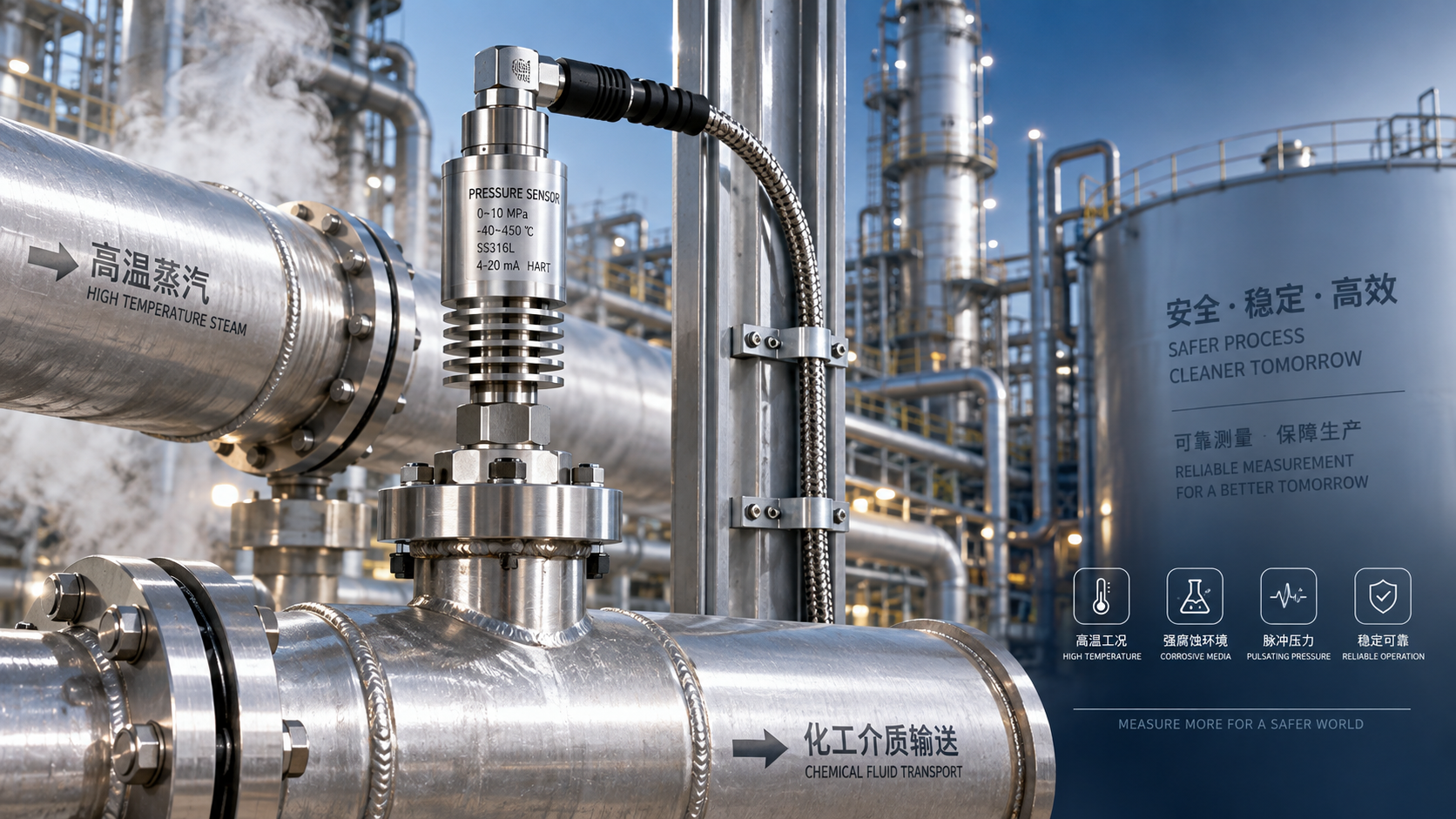
 Which parameters should be considered when selecting pressure sensors for high-temperature, corrosive, and pulsating operating conditions?
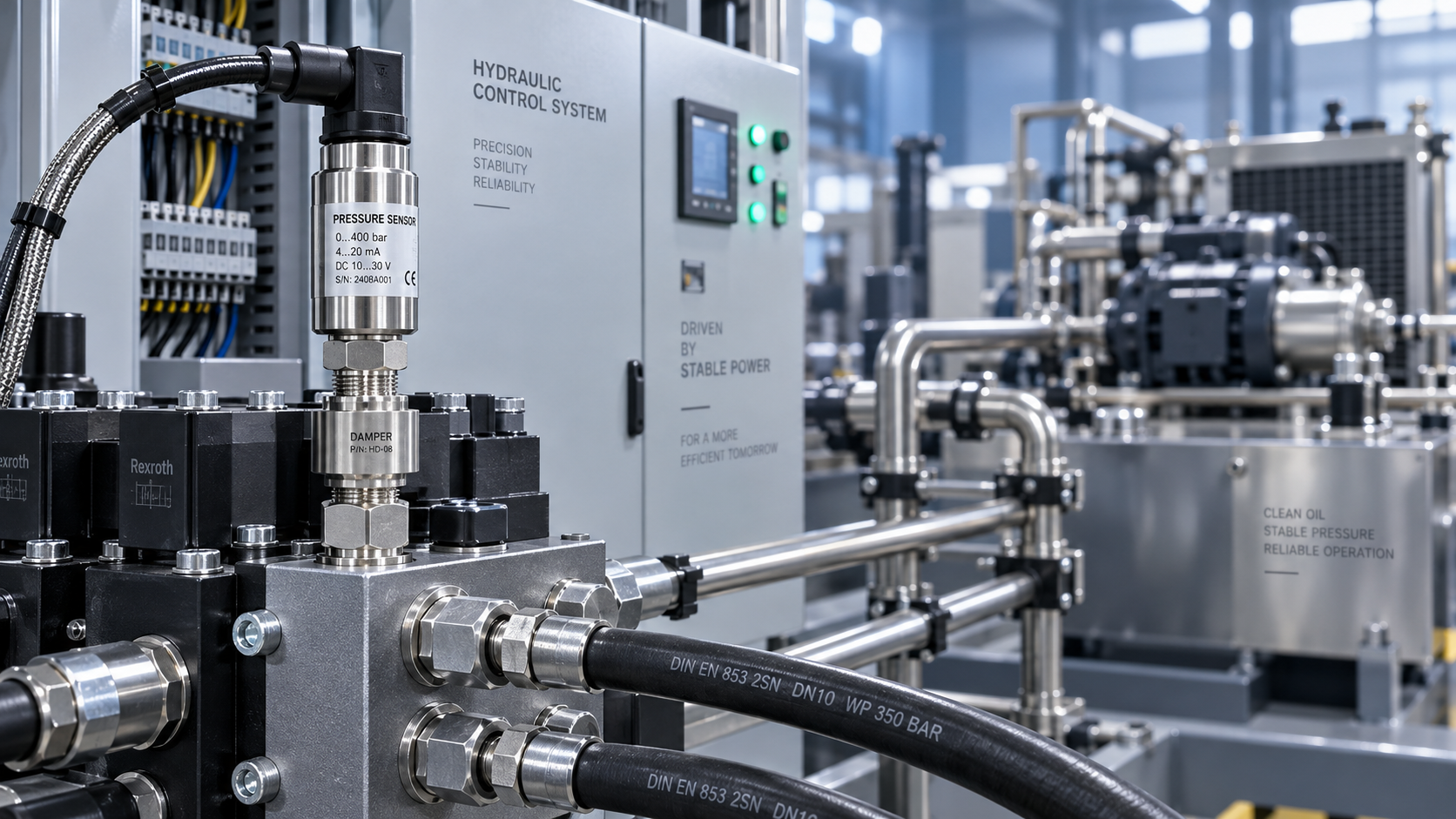
 Hydraulic equipment pressure fluctuates frequently. How can sensors be configured to improve control stability?