News Center
—— NEWS CENTER ——
Xi'an Shenghongchuang Instrument Co., Ltd.
Contact: Mr. Zhang
Mobile: 15529283736
Email: shc-sensor@qq.com
Address: Fortune Building, Sanqiao Street, Xixian New Area, Xi'an, Shaanxi Province
Have You Fallen into These 3 Common Pitfalls During the Installation of the LY-LDE-B Electromagnetic Flowmeter? As the core instrument in flow control equipment, the correct installation method directly affects measurement accuracy and service life. This article, summarized by senior engineers from Xi'an Shenghongchuang Instrumentation Co., Ltd., focuses on common installation mistakes for insertion-type electromagnetic flowmeters with a fluororubber-lined interior, helping operators avoid typical problems such as electrode contamination and poor grounding, and ensuring the stable operation of LY-LDE series flow sensors.
I. Incorrect Electrode Installation Direction Leads to Measurement Deviation
During the installation of the LY-LDE-B electromagnetic flowmeter, the correctness of the electrode direction is of critical importance. Many operators mistakenly believe that it is sufficient to keep the pipeline horizontal, while overlooking the key requirement that the electrodes must be perpendicular to the ground. When the electrode direction deviates from the vertical position, bubbles or solid particles in the fluid may adhere unevenly to the electrode surface, resulting in distorted signal acquisition. Actual cases show that when the electrode tilt exceeds 15°, the measurement error may be as high as 3.5%. Engineers at Xi'an Shenghongchuang particularly emphasize that for models with an insertion-type fluororubber lining, a dedicated level gauge must be used for calibration after installation to ensure that the electrode axis is fully aligned with the direction of gravity.
II. Incomplete Grounding System Causes Signal Interference
The operating principle of the electromagnetic flowmeter is based on Faraday's law of electromagnetic induction, and poor grounding can introduce stray currents into the measurement circuit. According to the requirements of IEC 61326, LY-LDE series flow sensors must achieve the following three types of grounding: sensor body grounding(grounding resistance ≤4Ω), converter housing grounding, and single-end grounding of the cable shielding layer. Common mistakes include: using ordinary copper wire instead of a dedicated grounding wire, grounding rod depth being less than 1.5 meters, and neglecting anti-corrosion treatment in humid environments. It is recommended to give priority to the LY-LDE-B model equipped with an F46 lining and 316L electrodes, as its built-in equipotential connection structure can significantly reduce grounding impedance.
III. Insufficient Upstream and Downstream Straight Pipe Length Affects Flow Stability
Fluid dynamics experiments show that the LY-LDE-B electromagnetic flowmeter requires an upstream straight pipe section of at least 5 times the pipe diameter and a downstream section of 3 times the pipe diameter. However, in sites with limited space, operators often shorten the straight pipe sections in violation of requirements, resulting in the following problems: vortex flow causes the electrodes to detect an asymmetrical flow velocity distribution; pump and valve disturbances cause reading fluctuations. For different installation conditions, Xi'an Shenghongchuang provides professional solutions:
- Compact installation: add a flow conditioner(accuracy loss controlled within 0.2%)
- Elbow pipe conditions: use the ZFG-S series multi-electrode structure to compensate for flow field distortion
- Pulsating flow fields: the WSTE model with damping adjustment function is recommended
Technical Parameter Comparison: Performance Analysis of Mainstream Electromagnetic Flowmeters
Frequently Asked Questions
Q1: What is the difference between fluororubber lining and ordinary rubber?
The fluororubber composite lining used in the LY-LDE-B combines the corrosion resistance of PTFE and the elasticity of rubber. It is resistant to strongly corrosive media such as 98% concentrated sulfuric acid, while also avoiding the collapse risk of pure PTFE lining under negative pressure conditions. According to third-party testing, its wear resistance is 8 times higher than that of ordinary nitrile rubber.
Q2: How can you determine whether the electrodes need cleaning?
When the output signal fluctuation exceeds 10% of full scale or the zero drift is >1%, the electrode contamination condition should be checked. For water flow transmitters, it is recommended to soak the electrodes in a 5% oxalic acid solution for 15 minutes every quarter. The ORBLDBE series provided by Xi'an Shenghongchuang is further equipped with a self-cleaning electrode function.
Why Choose Xi'an Shenghongchuang Instrumentation
As a national high-tech enterprise, we have accumulated 20 years of technical expertise in the field of flow measurement:
- The independently developed LDCR series has passed CE certification and SIL safety assessment
- All products come with an ultra-long 3-year warranty
- The production base in Xixian New Area is equipped with a CNAS-certified laboratory
Related Recommendations
![]() Southchip Technology Launches Its First Optical Sensor, the SC52115, for Wearable Devices
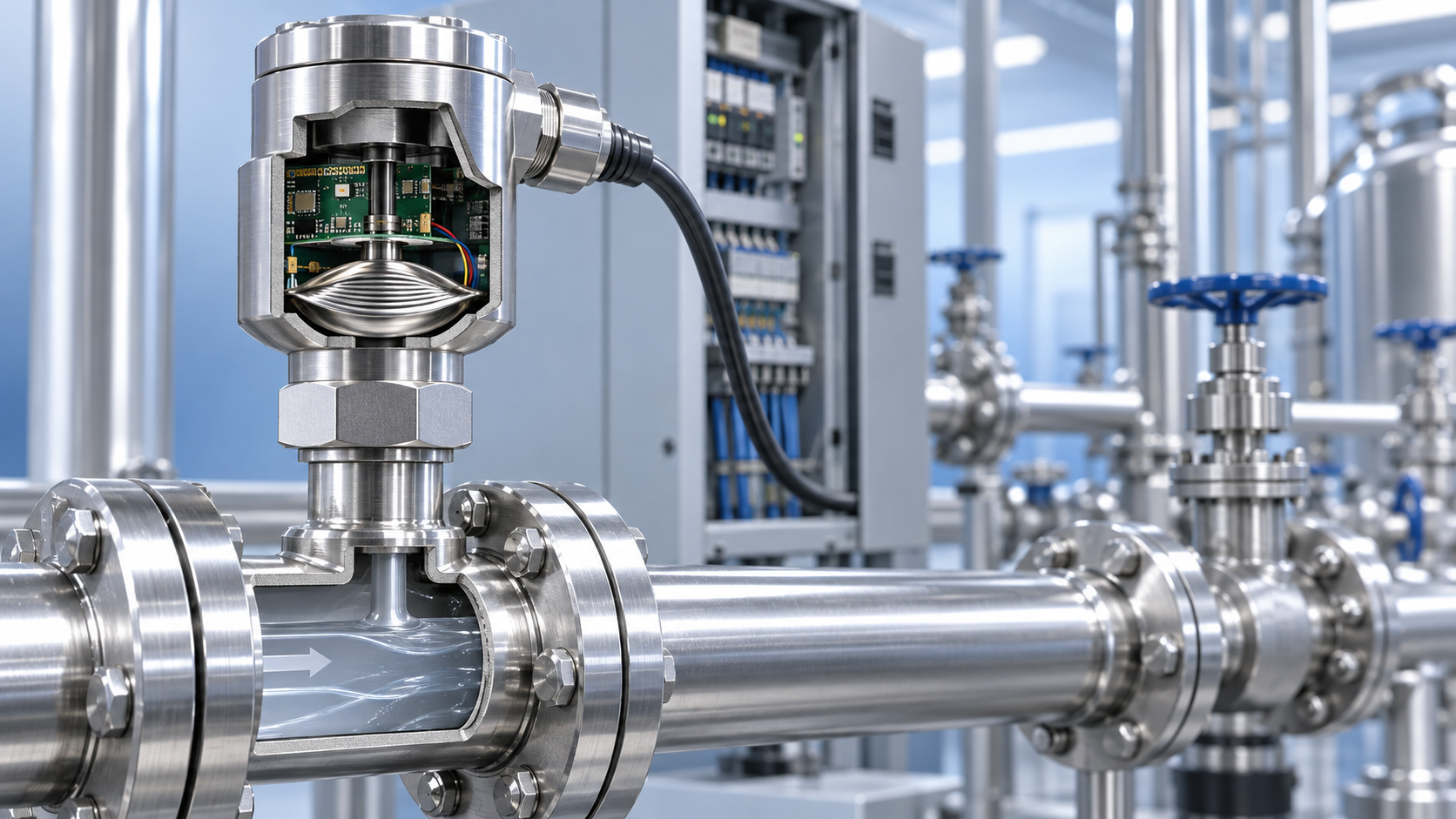
Southchip Technology Launches Its First Optical Sensor, the SC52115, for Wearable Devices How does a pressure sensor convert changes in applied force into usable electrical signals?
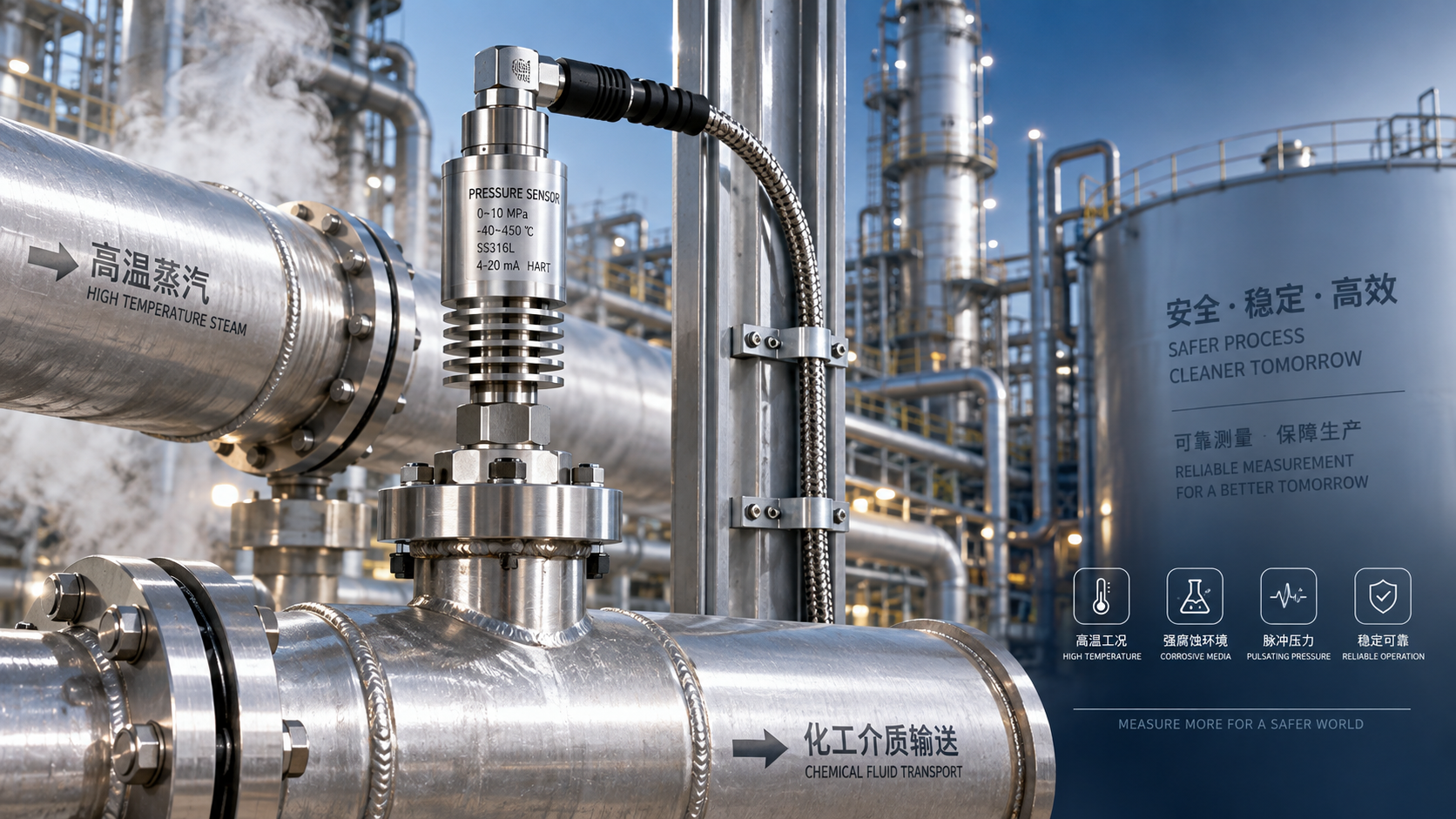
 Which parameters should be considered when selecting pressure sensors for high-temperature, corrosive, and pulsating operating conditions?
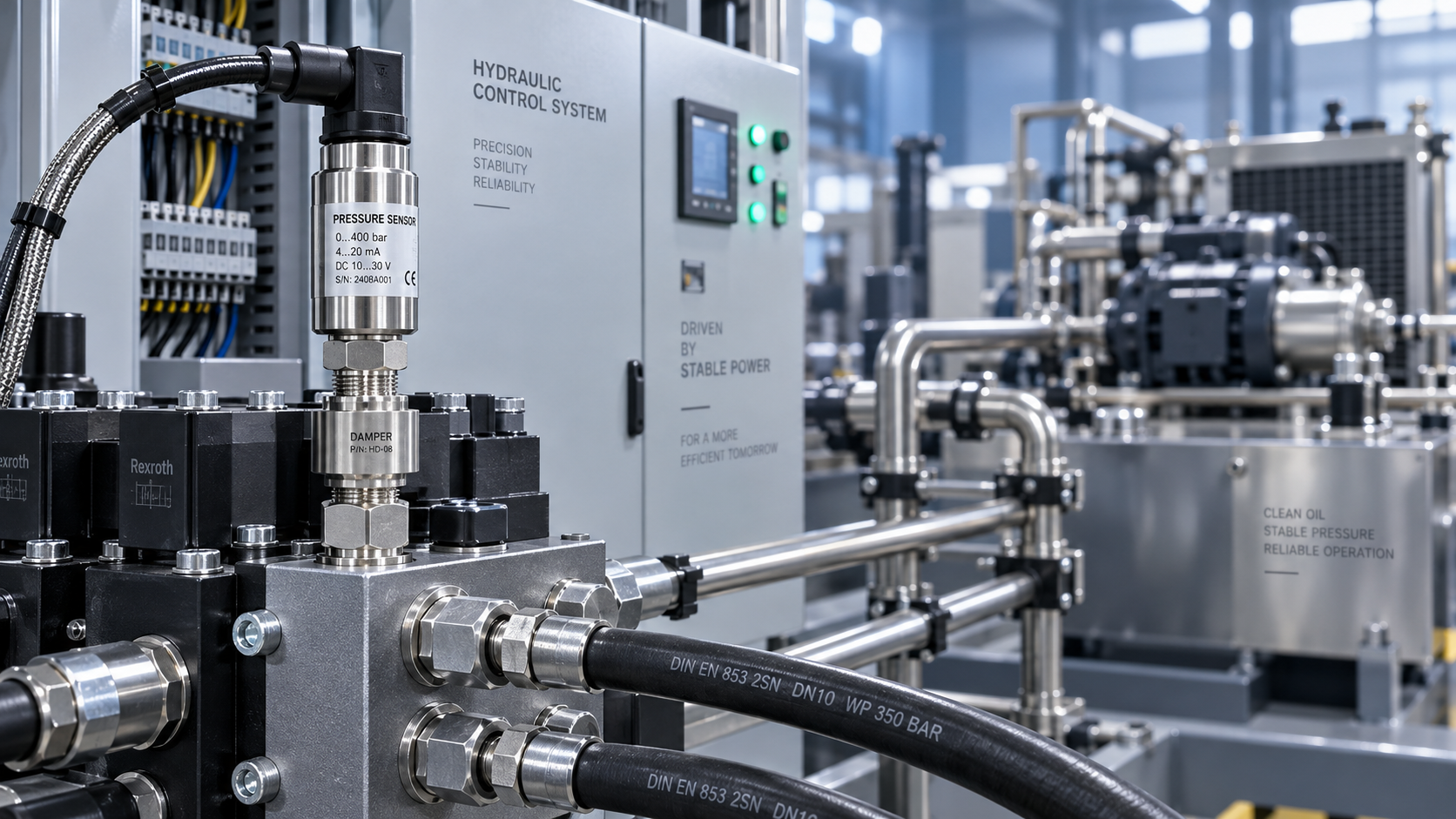
 Hydraulic equipment pressure fluctuates frequently. How can sensors be configured to improve control stability?