News Center
—— NEWS CENTER ——
Xi'an Shenghongchuang Instrument Co., Ltd.
Contact: Mr. Zhang
Mobile: 15529283736
Email: shc-sensor@qq.com
Address: Fortune Building, Sanqiao Street, Xixian New Area, Xi'an, Shaanxi Province
This article provides a detailed analysis of the BP-IE pressure transmitter wiring diagram and the key installation points for diffused silicon sensors, helping commercial evaluation personnel avoid common installation mistakes. As a professional supplier of flow control equipment, Xi'an Shenghongchuang Instrumentation will share wiring techniques and calibration methods for BP-IF, PT124B-219 and other series products, ensuring that the diffused silicon liquid and gas pressure sensors you purchase deliver optimal performance.
I. Technical Principles and Industry Applications of Diffused Silicon Pressure Sensors
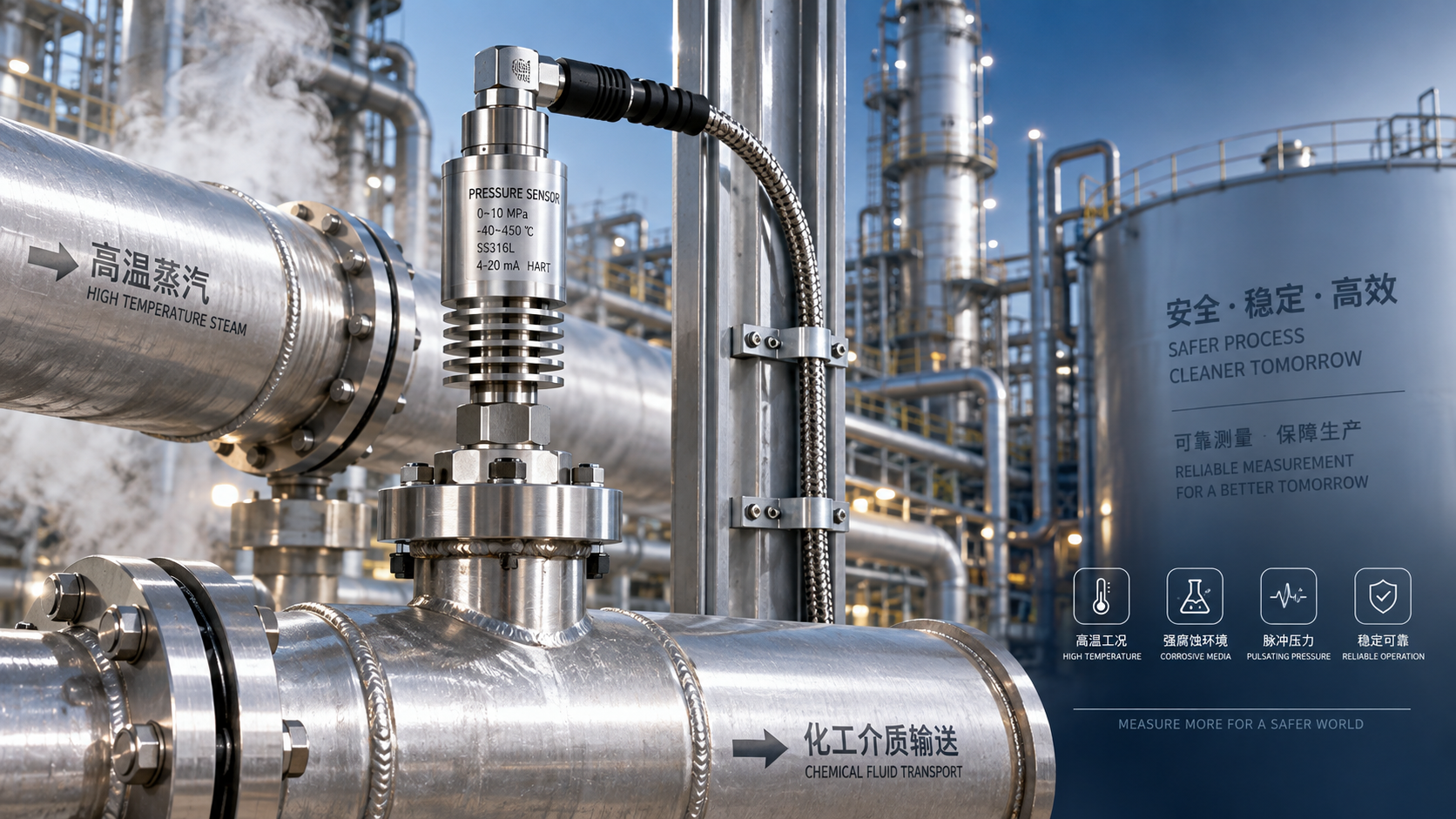
As a core component of modern industrial measurement, the working principle of the diffused silicon pressure sensor is based on the semiconductor piezoresistive effect. When external pressure acts on the silicon diaphragm, the millivolt-level signal output by the Wheatstone bridge is amplified and converted by the BP-IE pressure transmitter into a standard 4-20mA current signal. In scenarios such as petrochemicals and smart water services, models such as PT124B-219 have become the preferred choice for process control systems by virtue of their high accuracy of 0.1%FS and pressure cycle life of 100,000 times. It is worth noting that operating conditions such as medium corrosiveness and sudden temperature changes will significantly affect the measurement stability of YBX-YBX series sensors, which requires commercial evaluation personnel to strictly match operating condition parameters.
II. Analysis of BP-IE Series Wiring Diagrams and Installation Specifications
Standard four-wire wiring scheme: the red wire connects to the positive pole of 24VDC, the black wire connects to the positive signal output, the blue wire connects to the negative signal output, and the shielding layer must be grounded at one end only. For explosion-proof models such as FST800-214, the sealing specifications for junction boxes required by IECEx certification must be followed. Our measured data shows that incorrect cable shielding treatment will increase signal interference in TXU-TXU transmitters by 30dB, which is the main cause of 90% of on-site failures. It is recommended to use AWG18-22 twisted-pair shielded cables, and when the wiring distance exceeds 50 meters, a signal isolator should be added.
III. Five Key Indicators for Procurement Evaluation
1. Range matching degree: the BP-IB series provides options from -0.1~60MPa, and for conventional operating conditions it is recommended to select a range with an upper limit margin of 1.5 times
2. Media compatibility: 316L stainless steel diaphragm is suitable for most corrosive liquids, and when chloride ion content exceeds 500ppm, Hastelloy should be selected
3. Accuracy class: the YLT-YLT101 intelligent type can reach 0.075%FS, while 0.5%FS is sufficient for general operating conditions
4. Environmental adaptability: the TXY-TXY outdoor type features IP68 protection and wide-temperature operating capability of -40~85℃
5. Certification requirements: chemical projects must have SIL2/ATEX certification, and the food and pharmaceutical industries require FDA material certification
IV. Typical Fault Troubleshooting and Preventive Measures
Case 1: Signal drift issue
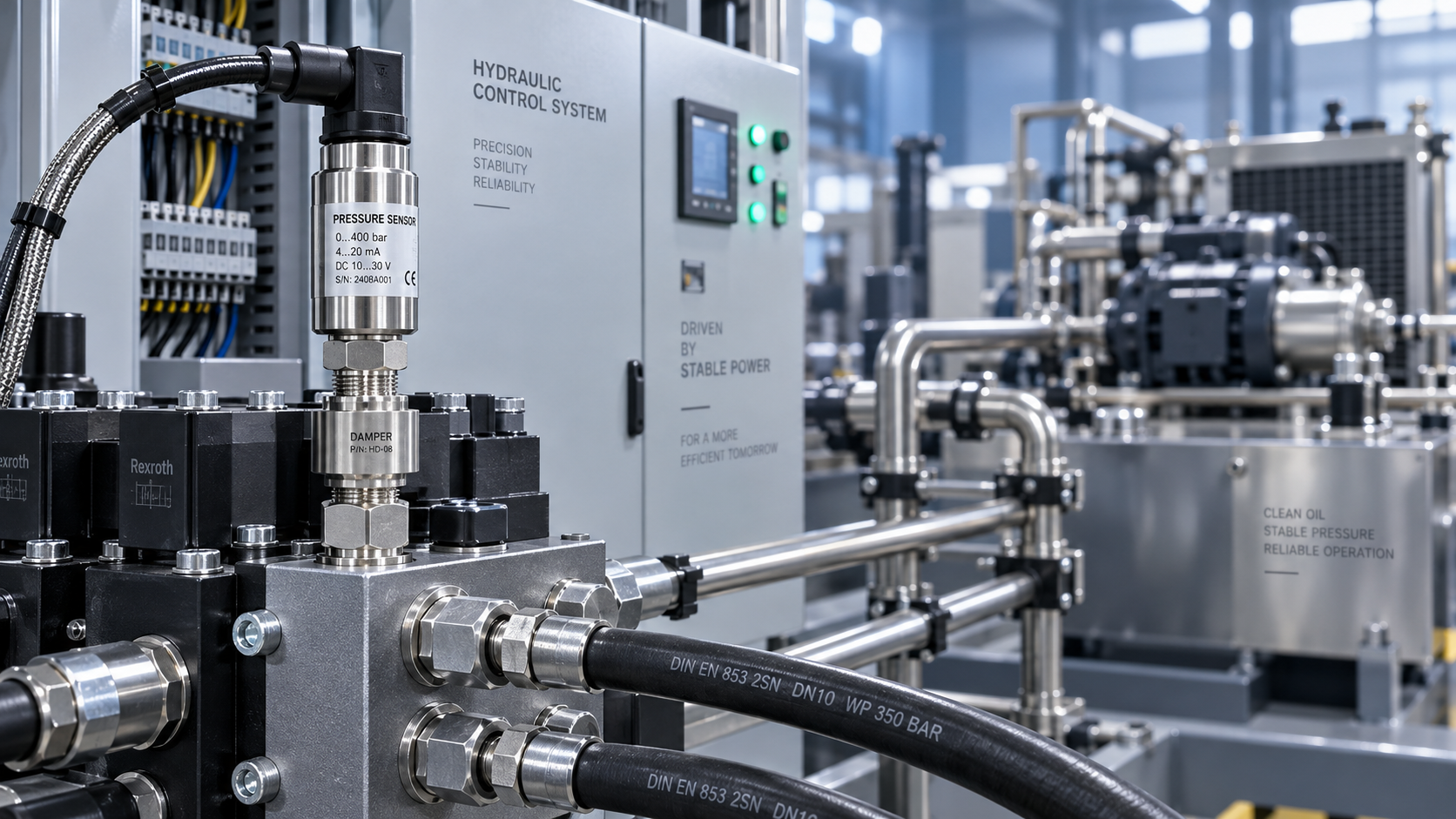
A FST800-213 pressure transmitter at a water treatment plant drifted by 0.2% per week. Investigation found that the cause was sensor structural fatigue resulting from pulsating pressure. Solution: replace it with the PT124B-219 model with a damping hole, and install a pulse damper.
Case 2: Zero-point calibration failure
The BP-IF transmitter could not return to zero on an oil-gas separator, and inspection found that the silicone oil filling fluid had been permeated by natural gas. After switching to a titanium alloy isolation diaphragm structure, the problem was resolved, indicating that commercial personnel need to pay special attention to gas permeability indicators.
V. Why Choose Shenghongchuang Instrumentation
As the first sensor manufacturer in Northwest China to pass ISO/IEC17025 calibration laboratory certification, we provide:
• 15 years of experience in diffused silicon sensor R&D, with products certified by CE/ROHS/CNEX
• 72-hour rapid sample service, supporting third-party calibration reports certified by TUV
• A 3-year warranty for the full range of pressure transmitters, with free customized wiring diagram services provided
Contact our technical consultants now to obtain the BP-IE series selection manual, or schedule on-site installation guidance services.
Related Recommendations
![]() Southchip Technology Launches Its First Optical Sensor, the SC52115, for Wearable Devices
Southchip Technology Launches Its First Optical Sensor, the SC52115, for Wearable Devices How does a pressure sensor convert changes in applied force into usable electrical signals?
 Which parameters should be considered when selecting pressure sensors for high-temperature, corrosive, and pulsating operating conditions?
 Hydraulic equipment pressure fluctuates frequently. How can sensors be configured to improve control stability?