News Center
—— NEWS CENTER ——
Xi'an Shenghongchuang Instrument Co., Ltd.
Contact: Mr. Zhang
Mobile: 15529283736
Email: shc-sensor@qq.com
Address: Fortune Building, Sanqiao Street, Xixian New Area, Xi'an, Shaanxi Province
Illustrated Working Principle of the A-10 Pressure Transmitter: Analysis of the Core Technology of Diffused Silicon Sensors
As a core component in industrial process control, the diffused silicon sensor technology of the A-10 pressure transmitter directly determines measurement accuracy and stability. This article provides an in-depth analysis of the working principle of the A-10 pressure transmitter, covering calibration methods, troubleshooting, and selection points for models such as PH-PH210 and OT-1, helping equipment procurement managers grasp key technical parameters and avoid technical risks during project execution.
1. Core Technical Principles of Diffused Silicon Sensors
The diffused silicon pressure sensor is the core component of the A-10 transmitter, and its working principle is based on the piezoresistive effect. When external pressure is applied to the silicon diaphragm, the diaphragm undergoes micro-deformation, causing changes in the resistance values of the Wheatstone bridge embedded in the silicon crystal. This change has a linear relationship with the applied pressure and is converted into a standard current signal (such as 4-20mA) through a signal conditioning circuit.
Key technical parameters include:
- Linearity: High-accuracy performance of ±0.1%FS (full scale)
- Temperature compensation: Built-in temperature sensor enables automatic compensation within the range of -20℃~85℃
- Long-term stability: ≤±0.1%FS/year, ensuring the reliability of models such as PH-PH210 during continuous use
2. Comparative Analysis of Typical Models in the A-10 Series
Note: The CHSP-210 model is particularly suitable for the food and pharmaceutical industries, and its hygienic-grade 316L stainless steel structure complies with FDA certification standards.
3. Calibration and Troubleshooting Guide
OC-1 calibration procedure: A standard pressure source with an accuracy 3 times higher than that of the transmitter is required. Follow the steps below:
- Connect the HART communicator to the transmitter signal terminal
- Apply zero-point pressure (usually atmospheric pressure), and perform Zero Trim
- Apply full-scale pressure, and perform Span Trim
- Verify mid-point linearity (25%, 50%, and 75% range points are recommended)
Common troubleshooting for DLT-DLT200:
- Output signal drift: Check whether the pressure guide tube is blocked or leaking
- Display abnormality: Verify the supply voltage of the PM-PM200 display module (12-24VDC)
- Unstable zero point: Recalibrate and check whether ambient temperature fluctuations exceed the allowable range
4. Coordinated Application Solutions in Industrial Scenarios
In hydraulic system monitoring, the A-10 transmitter is often used together with the domestically produced TWL-2000 draw-wire displacement sensor. This displacement sensor adopts a special Teflon anti-corrosion coating and an IP65 protection rating, enabling precise measurement of a 0-50 meter stroke. Its high accuracy of 0.01%FS forms a complementary monitoring system with the pressure transmitter.
Typical application case: A hydropower station gate control system uses the SPB-SPB101 pressure transmitter to monitor hydraulic cylinder pressure, while integrating the TWL-2000 sensor for real-time feedback of gate opening. The data from both are linked and controlled through a PLC, achieving a positioning accuracy of ±1mm.
5. Key Factors in Selection Decision-Making
Procurement managers need to focus on evaluating:
- Medium characteristics: For corrosive media, select the Hastelloy diaphragm of the FDS-S model
- Environmental classification: In explosion-proof areas, the 501 transmitter compliant with ATEX standards should be selected
- Output requirements: For process control systems, priority should be given to the 4-20mA+RS485 dual-output configuration
- Certification requirements: The petrochemical industry requires SIL2/3 functional safety certification
Technical Summary and Professional Recommendations
Relying on the core advantages of diffused silicon sensors, the A-10 series pressure transmitters demonstrate excellent measurement performance in the process industry. For scenarios requiring synchronous displacement monitoring, it is recommended to pair them with a draw-wire displacement sensor to build a complete monitoring solution. As a national high-tech enterprise, Xi'an Shenghongchuang Instrument Co., Ltd. provides full-process technical support from sensor selection to system integration, ensuring measurement accuracy and equipment reliability during project execution.
Get a customized solution now: Our engineering team can provide you with on-site application evaluation reports for models such as PH-PH210 and OT-1, as well as a DLT-DLT200 troubleshooting manual, helping your project be implemented efficiently.
Related Recommendations
![]() Southchip Technology Launches Its First Optical Sensor, the SC52115, for Wearable Devices
Southchip Technology Launches Its First Optical Sensor, the SC52115, for Wearable Devices How does a pressure sensor convert changes in applied force into usable electrical signals?
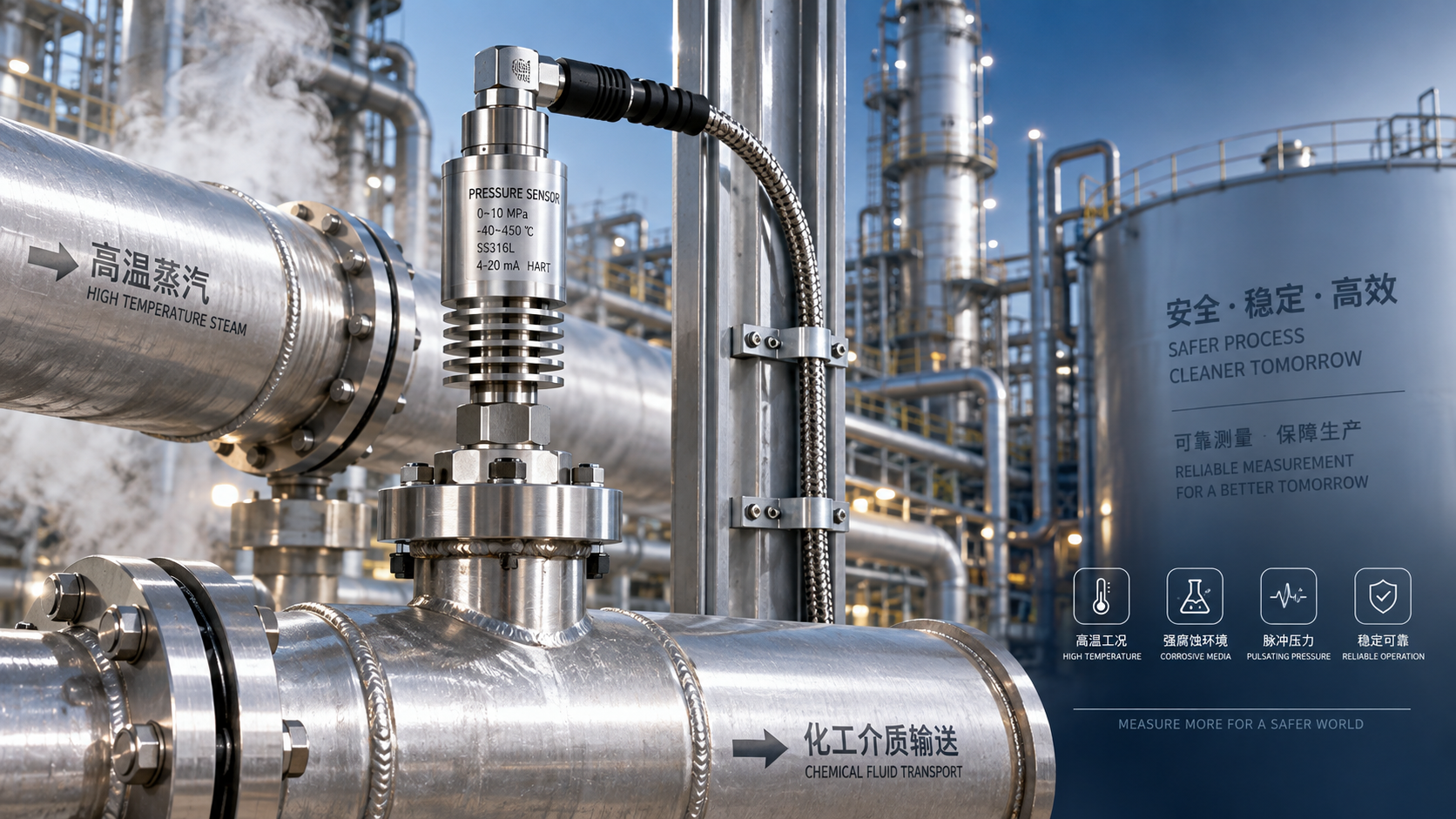
 Which parameters should be considered when selecting pressure sensors for high-temperature, corrosive, and pulsating operating conditions?
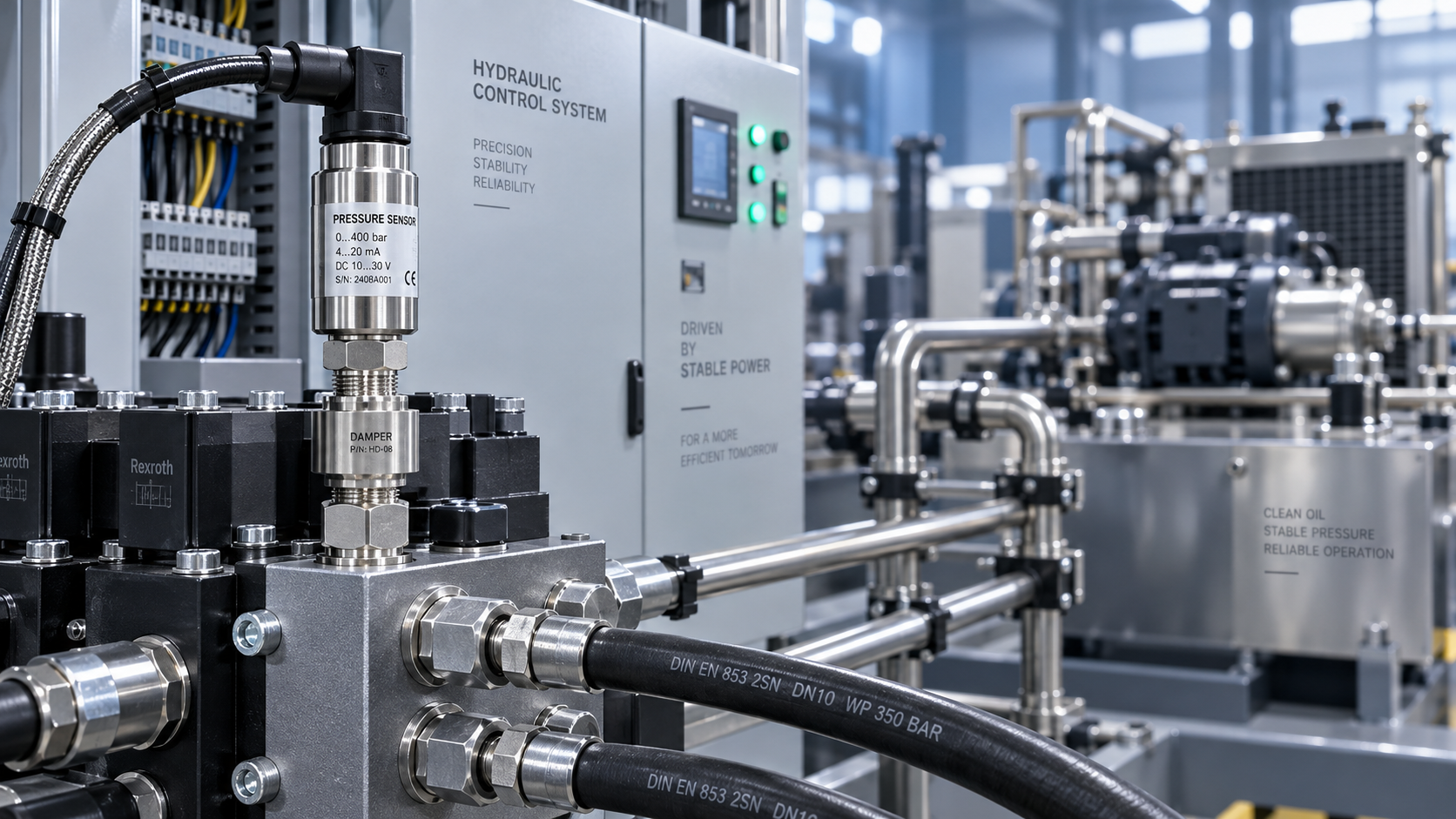
 Hydraulic equipment pressure fluctuates frequently. How can sensors be configured to improve control stability?