


News Center
—— NEWS CENTER ——
Xi'an Shenghongchuang Instrument Co., Ltd.
Contact: Mr. Zhang
Mobile: 15529283736
Email: shc-sensor@qq.com
Address: Fortune Building, Sanqiao Street, Xixian New Area, Xi'an, Shaanxi Province
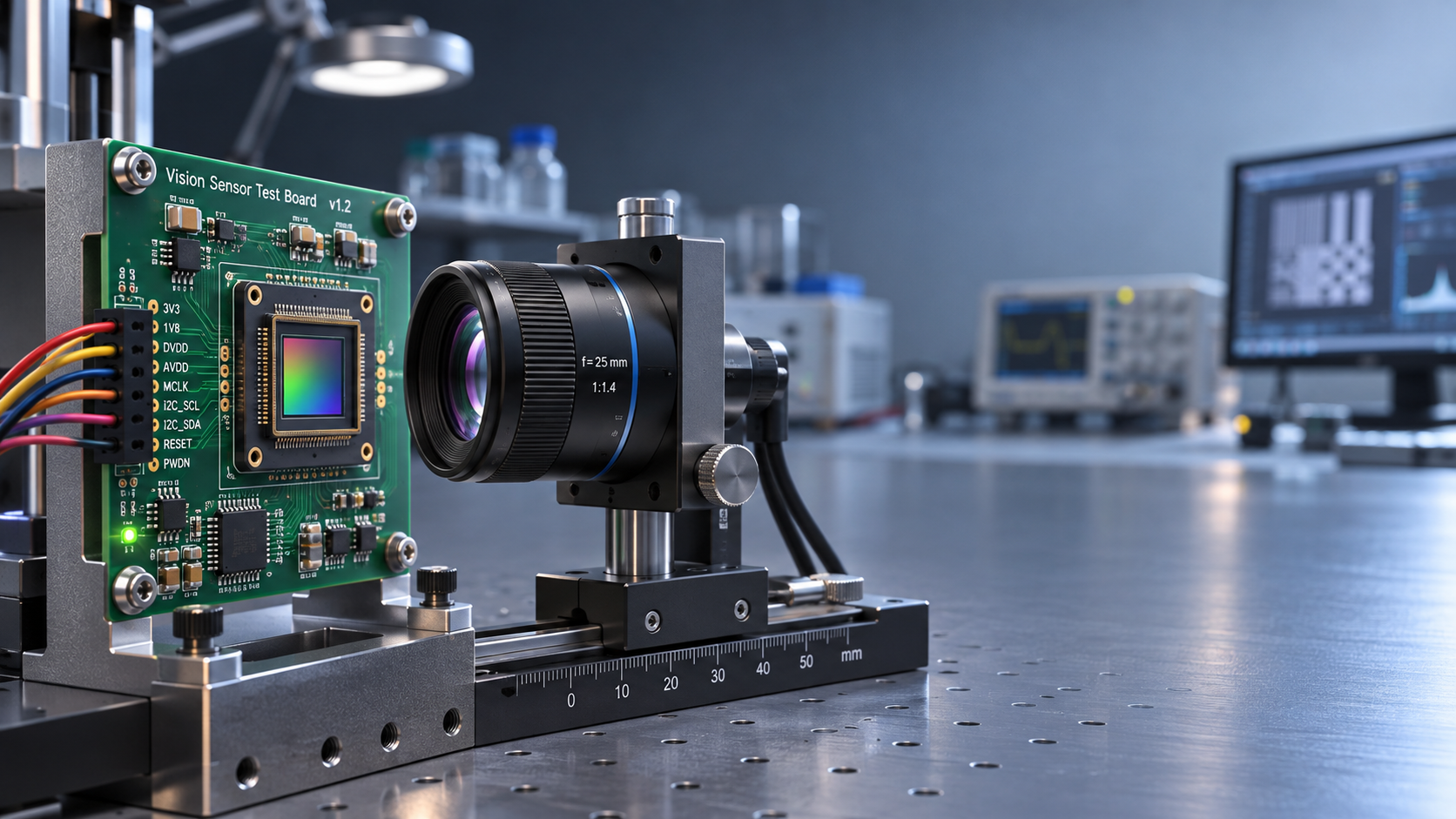
On November 12, 2026, the Ministry of Industry and Information Technology issued a notice seeking public comments on 46 recommended national standard projects, including the Test Methods for Semiconductor Integrated Circuit Fusion Vision Sensors. The public comment period runs from November 12 to December 11, 2026.
For the semiconductor and sensor industries, the key point is that test methods for fusion vision sensors have been included in the proposed standard projects. Test methods affect how product performance is described, how test results are compared, and whether suppliers and customers can communicate more clearly based on established test conditions. However, the notice concerns a proposed standard project; the specific test requirements and how they will be developed remain to be seen.
What Does Including Test Methods in the Plan Mean?
The public comment request concerns recommended national standard projects. The notice indicates that work on the relevant standard is at the public comment stage. It does not mean that the standard text has already been issued, nor does it establish that the relevant test requirements are already in effect.
The title Test Methods for Semiconductor Integrated Circuit Fusion Vision Sensors identifies the proposed standard’s subject and direction: developing specifications for testing fusion vision sensors. In product development, testing, and use, test methods typically help define the conditions, procedures, and ways of presenting results used for evaluation, making it easier to communicate and compare different testing activities.
However, the project title alone does not reveal which specific performance indicators the future standard will cover, what testing equipment it will use, or what acceptance criteria it will set. These details need to be understood in light of the standard text and related documents published later. Nor should the test methods in the proposed standard be interpreted as a uniform performance threshold that products must meet.
Which Areas May Pay Attention First?
For personnel involved in the development and testing of fusion vision sensors, the first point to consider is whether the proposed test methods can clearly reflect product characteristics and whether the test conditions and presentation of results facilitate repeatability and communication. If a sufficiently clear testing specification is developed, those involved may have a clearer common reference when designing test plans and compiling results.
For procurement and application, the potential value of test methods lies in improving the comparability of product information. Even when different products use the same performance terminology, differences in test conditions or the presentation of results may affect comparisons. If a future standard clearly specifies the relevant testing procedures, suppliers and customers can discuss whether test results are comparable in light of the scope of application and specific conditions.
This effect will still depend on the final content of the standard and how it is adopted in practice. Standardized test methods do not mean that the performance of different products will automatically converge, nor do they mean that a product’s suitability for a particular application can be determined solely from a single test result. Selection still needs to take into account product requirements and the conditions to which the test results apply.
For parties involved in testing services, the test procedures, conditions, and presentation of results in the subsequent standard text are also worth noting. If the standard sets out clear requirements for these aspects, relevant testing activities may need to check for differences between existing methods and the standard’s requirements. The specific impact will depend on the final provisions and how the parties choose to adopt them.
What Remains to Be Seen Between Public Comment and Practical Application?
The public comment period for this notice ends on December 11, 2026. The comment period provides an opportunity for relevant parties to share their views, and the project’s subsequent progress will need to be monitored through publicly available updates. The outcome of the notice, the development of the standard’s content, and its eventual publication each matter in determining its practical scope of application.
For the test methods for fusion vision sensors, key points to monitor include the standard’s scope of application, test conditions, specific test items, and the way results are presented. These details will affect how different parties interpret and use test results, and will help clarify how the standard relates to existing testing needs.
Based on the information currently available, test methods for fusion vision sensors have been included in the recommended national standard projects covered by this notice, which aims to improve the standards system for the semiconductor and sensor industries. The final technical requirements, scope of application, and practical impact will depend on subsequent publicly available updates on the standards work.
Related Recommendations
 MIIT Announces 46 Proposed Recommended National Standards Projects, Including Testing of Integrated Vision Sensors
 Beijing Issues Action Plan for the Embodied AI Robotics Industry, Setting Targets for Tactile Sensors
 South Korea Adds Core Components Such as Sensors to Its “Super-Innovation Economy” Support List
 Float Level Sensor Market Outlook to 2035: Growth Driven by Water Infrastructure and Automation