


News Center
—— NEWS CENTER ——
Xi'an Shenghongchuang Instrument Co., Ltd.
Contact: Mr. Zhang
Mobile: 15529283736
Email: shc-sensor@qq.com
Address: Fortune Building, Sanqiao Street, Xixian New Area, Xi'an, Shaanxi Province
How Valuable Are Pressure Transmitter Manufacturer Rankings? Procurement Should Focus on Products and Delivery
In a market with numerous brands, how valuable are pressure transmitter manufacturer rankings? The answer is: they have some reference value, but rankings should not be treated as a procurement conclusion. Rankings are usually based on online visibility, sales volume, brand history, user reviews, or platform data. Results derived from different statistical criteria may vary greatly and may not reflect a company's suitability for a specific project.
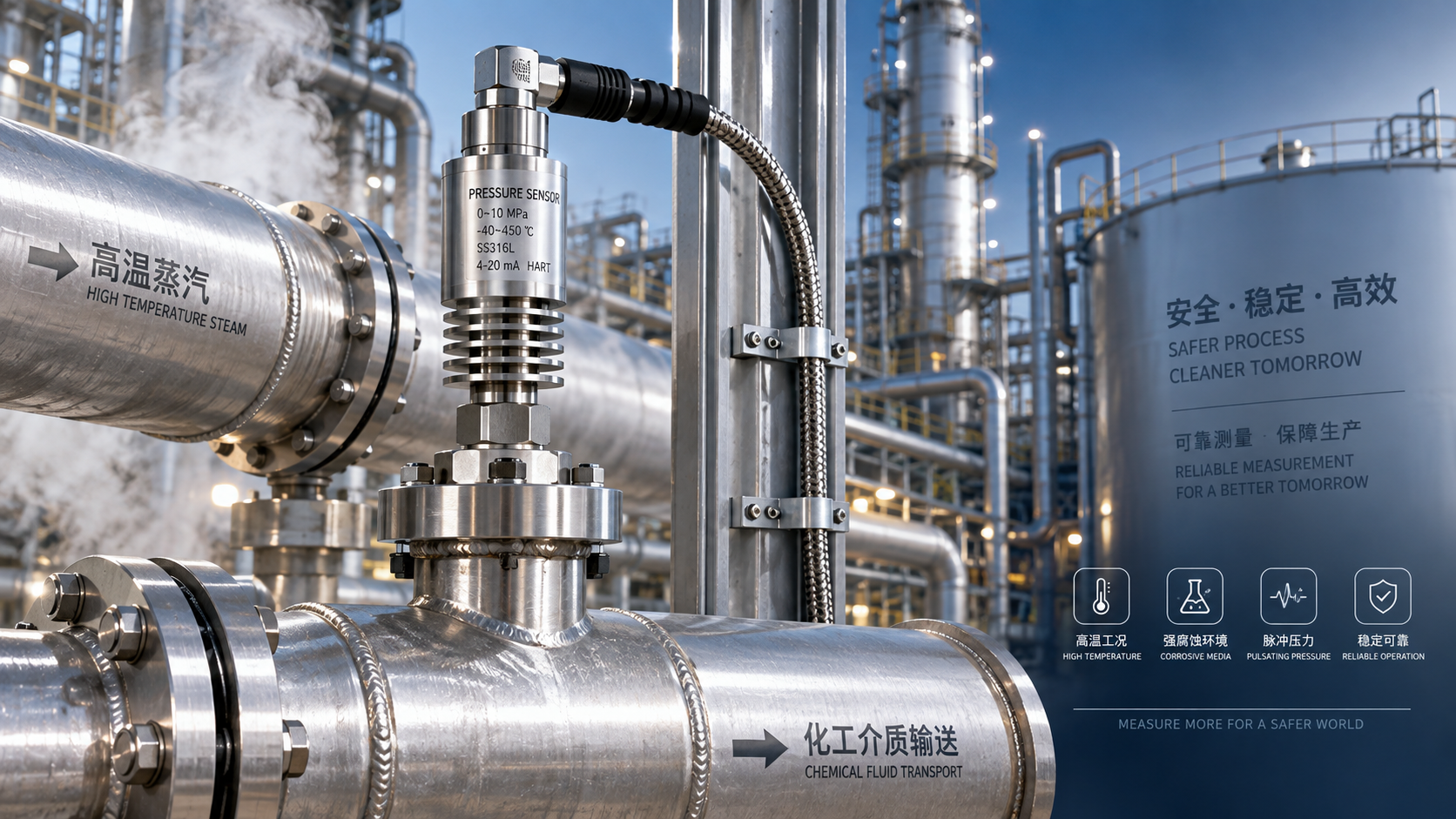
For business decision-makers and procurement personnel, whether a pressure transmitter is suitable depends not on a manufacturer's ranking, but on whether the measuring range, accuracy, output signal, media compatibility, mounting configuration, and on-site operating conditions correspond one by one. Products used in ordinary water pump pipelines obviously cannot be evaluated by the same criteria as those used for high-temperature steam, corrosive chemical media, or equipment with strong electromagnetic interference.
Shaanxi Qinkong Sensor Technology Co., Ltd., supported by standardized production and testing capabilities, provides industrial measurement and control products including pressure, level, differential pressure, weighing, displacement, force, torque, temperature and humidity, and flow products. Brand operations, sales, and technical services are undertaken by Xi'an Shenghongchuang Instrument Co., Ltd. For project integration, equipment manufacturing, and conventional production line upgrade requirements, it can provide standard products and non-standard customized solutions.
Therefore, pressure transmitter manufacturer rankings may be used as an initial screening tool, but once entering the quotation, sample testing, and bulk procurement stages, the focus must shift to verifiable data, documents, and service commitments. Export orders in particular require technical confirmation, packaging methods, acceptance standards, and after-sales responsibilities to be specified in the contract or order attachments.
What Rankings Can Show and What They Cannot Replace
First Clarify the Boundaries of Ranking Information
Industry rankings can help buyers quickly understand active brands, common product categories, and publicly available service networks in the market. For teams engaging with sensor suppliers for the first time, highly ranked companies often have more complete documentation, relatively mature response mechanisms, and more readily available past application cases.
However, online rankings cannot directly demonstrate the long-term stability of an individual product. For example, pressure transmitters with the same nominal accuracy of 0.5%FS may perform significantly differently under different temperature ranges, installation methods, and overpressure impact conditions. Buyers should require suppliers to explain the accuracy definition, temperature drift range, and calibration conditions.
Rankings also cannot replace project service capabilities. An automation retrofit project involving hundreds of measuring points may require unified labeling, phased deliveries, wiring guidance, parameter verification, and fault traceability. Whether a supplier has technical support personnel and can retain inspection records by batch is more practically meaningful than brand awareness alone.
A more prudent approach is to use rankings as an entry point for the supplier pool, followed by secondary screening through product documentation, sample performance, factory audits, and contract terms. This can improve research efficiency while avoiding the neglect of on-site risks caused by excessive reliance on rankings.
Can Exported Domestic Pressure Transmitters Replace Imported Products?
Evaluate by Operating Condition Classification Rather Than Generalizing by Origin
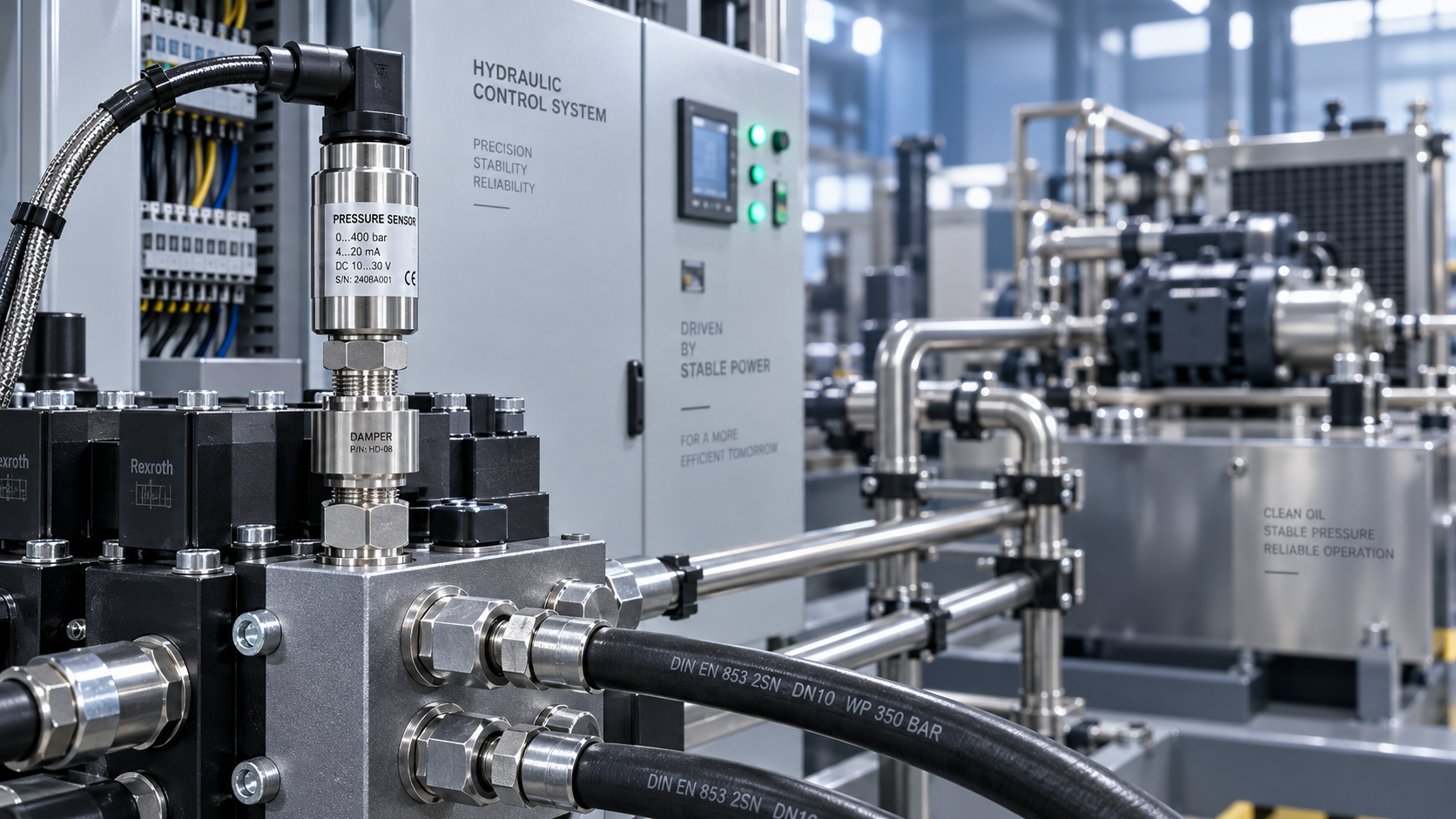
Can exported domestic pressure transmitters replace imported products? In many conventional industrial applications, domestic products can meet substitution requirements provided that technical specifications, material selection, and quality control are properly managed. Applications such as water supply equipment, mechanical hydraulic stations, ventilation systems, general storage tanks, and automated production lines have relatively clear requirements for commonly used output signals and conventional measuring ranges, such as 4-20mA, 0-10V, and RS485.
For complex operating conditions involving high temperature, high pressure, strong corrosion, flammability or explosion risks, or high-frequency pressure pulses, decisions cannot be made based on price alone. Buyers need to confirm whether wetted materials are suitable for the medium, whether the sealing structure is reliable, whether sufficient margin is provided in the measuring range, and verify the protection rating, ambient temperature range, and required certification requirements.
Taking pressure measurement as an example, common measuring ranges can cover from vacuum to tens of MPa. However, the closer the range is to the upper limit of actual operating pressure, the greater the risk when the equipment is subject to impact. In engineering practice, the range should generally be determined based on normal working pressure, peak pressure, and safety factors, avoiding long-term full-scale operation that may reduce stability.
Shaanxi Qinkong Sensor Technology Co., Ltd. controls product quality through processes including raw material selection, precision machining, program commissioning, accuracy calibration, finished product inspection, and factory acceptance. For export and long-term supporting projects, it is recommended to complete sample testing under actual operating conditions before placing bulk orders, and determine the substitution solution based on measured results rather than simply comparing brand origins.
Core Parameters for Import Substitution Evaluation
For Foreign Trade Procurement of Pressure Transmitters, First Avoid Four Common Issues
Technical Confirmation Must Be Included in Order Documents
The first issue is incomplete parameter descriptions. Foreign trade procurement should not simply state “pressure transmitter, 4-20mA, a certain range”; it should also specify gauge pressure, absolute pressure, or vacuum type, power supply range, accuracy class, process connection, cable length, housing material, and label language. Every ambiguous item may lead to subsequent delivery deviations.
The second issue is neglecting transportation protection. Pressure transmitters contain sensitive measuring elements, and export packaging should consider antistatic, moisture-proof, shock-proof, and outer carton compression resistance measures. For models with displays, long leads, or special connectors, layered fixation should be used, and appearance, power-on, and zero-point inspections should be completed before packing.
The third issue is failing to agree on acceptance methods. It is recommended to specify the sampling inspection ratio, allowable error, test medium, acceptance milestones, and handling methods for nonconforming products in the order. Whether products that fail to meet technical specifications can be returned should be based on samples, drawings, specification sheets, and inspection records confirmed by both parties, avoiding dispute resolution based only on verbal communication.
The fourth issue is underestimating lead time. Standard conventional models generally have relatively short lead times when materials are available and parameters are correctly confirmed; for special ranges, special materials, customized interfaces, multilingual labels, or bulk orders, lead time must be confirmed in conjunction with the production schedule. Buyers should allow time for sample confirmation, sea or air freight, customs clearance, and project installation.
How to Audit a Factory for Long-Term Cooperation and Reduce Subsequent Maintenance Costs
Convert Factory Capabilities into Auditable Evidence
How should a factory be audited for long-term pressure transmitter export cooperation? Focus should be placed on four aspects: production, calibration, inspection, and traceability. Buyers can determine whether sensor assembly areas are properly standardized, whether pressure sources, standard gauges, temperature testing equipment, and finished product inspection equipment are provided, and whether batch numbers, serial numbers, and inspection data can be retained.
The value of a quality system lies not in the number of documents, but in whether anomalies can be closed-loop managed. When zero drift, unstable output, or on-site damage occurs, the supplier should be able to trace the production batch, calibration records, and material information through the product number, and determine whether the issue is caused by the installation environment, method of use, or the product itself.
What should be done if a pressure transmitter experiences accuracy drift after six months of use? First, check for blocked pressure ports, liquid accumulation in impulse lines, installation vibration, power supply fluctuations, and overrange impacts, then verify the zero point and full scale. If a performance abnormality is confirmed, the supplier should conduct inspection, repair, calibration, or replacement according to the agreed process, rather than making blind on-site adjustments directly.
Choosing products with excessively low prices may reduce the initial expenditure, but the total cost is often higher if they subsequently cause frequent downtime, repeated calibration, rework and replacement, or affect the operation of end equipment. Procurement price, expected service life, maintenance frequency, spare parts support, and technical response speed should be compared comprehensively to establish a full life-cycle cost assessment.
Conclusion: Use Project Verification Instead of a Single Ranking Assessment
Pressure transmitter manufacturer rankings have value for information retrieval, but they cannot replace engineering selection. What truly affects project outcomes is whether the product is suitable for the medium and environment, whether its parameters withstand testing, whether delivery is timely and controllable, and whether after-sales service can quickly identify and resolve issues when they arise.
For conventional supporting and import substitution projects, it is recommended to first provide the on-site medium, pressure range, temperature, interface, output signal, quantity required, and target delivery date so that technical personnel can prepare a complete selection list. For complex operating conditions, sample testing and small-batch verification should be added before proceeding with large-scale procurement.
Xi'an Shenghongchuang Instrument Co., Ltd. and Shaanxi Qinkong Sensor Technology Co., Ltd. can provide selection support, product integration, non-standard customization, and delivery services for pressure transmitters and industrial measurement and control product requirements. Buyers may request specification documentation, testing requirements, and quotation proposals according to actual operating conditions to establish a better-supported supplier evaluation result.
If you are conducting pressure transmitter export procurement, domestic substitution evaluation, or automation project integration, please organize your existing equipment parameters, medium information, and installation requirements, submit them to a professional technical team for one-to-one selection confirmation, and verify samples and acceptance standards before placing an order.
- Pressure Transmitter
- 压力变送器厂家
- Domestic Pressure Transmitter
- 压力变送器厂家排名
- Can domestically produced pressure transmitters replace imported ones for export?
- Is a pressure transmitter manufacturer ranking valuable as a reference?
- What should I do if a pressure transmitter experiences accuracy drift after six months of use?
- How to conduct a factory audit for long-term export cooperation on pressure transmitters
Related Recommendations
![]() Southchip Technology Launches Its First Optical Sensor, the SC52115, for Wearable Devices
 How does a pressure sensor convert changes in applied force into usable electrical signals?
 Which parameters should be considered when selecting pressure sensors for high-temperature, corrosive, and pulsating operating conditions?
 Hydraulic equipment pressure fluctuates frequently. How can sensors be configured to improve control stability?