News Center
—— NEWS CENTER ——
Xi'an Shenghongchuang Instrument Co., Ltd.
Contact: Mr. Zhang
Mobile: 15529283736
Email: shc-sensor@qq.com
Address: Fortune Building, Sanqiao Street, Xixian New Area, Xi'an, Shaanxi Province
Xi'an Shenghongchuang Instrument Co., Ltd.'s temperature controllers support the MODBUS RTU communication protocol, and 4-20mA analog output and MODBUS RTU can operate simultaneously, but it is necessary to confirm whether the specific model is equipped with dual-channel output hardware configuration.
This capability is not a standard feature on all models, but depends on the product design version: basic models usually support only a single output mode, while enhanced or customized models support parallel output of 4-20mA and MODBUS RTU. To determine whether this is feasible, priority should be given to checking the “Output Interface” section in the technical specification of the selected model, with focus on confirming whether “analog + digital communication dual output” or similar wording is indicated.
This issue is important because the output mode directly determines the complexity of system integration—if it is necessary to connect simultaneously to PLC acquisition (using MODBUS) and traditional DCS display (using 4-20mA), the lack of dual output will force users to add signal distributors or protocol conversion modules, resulting in additional costs, installation space occupation, and failure points. Therefore, field IO architecture requirements must be clearly defined at the early stage of model selection, rather than discovering mismatches during installation.
Which communication protocols are supported by Xi'an Shenghongchuang temperature controllers?
Xi'an Shenghongchuang intelligent digital display control instruments mainly support the MODBUS RTU protocol, implemented through the RS485 interface. Some high-end or customized models can also optionally support MODBUS TCP (Ethernet), CANopen, or HART protocols, but this must be clearly specified in the order, as standard delivery models by default include only MODBUS RTU.
Whether other protocols are supported mainly depends on the hardware configuration and firmware version of the internal communication module of the instrument. MODBUS RTU is currently the most commonly used serial communication standard in industrial sites, compatible with the vast majority of PLC, DCS, and SCADA systems, with low deployment barriers and mature debugging tools.
In practice, the interfacing requirements of the target control system should prevail. If the host system supports only PROFIBUS or Foundation Fieldbus, then Xi'an Shenghongchuang standard models cannot be directly connected and require an external protocol gateway. Whether prior confirmation is needed depends on whether the project automation architecture has already finalized the type of main control system.
Can 4-20mA and MODBUS RTU output simultaneously?
Yes, but only for specific models. Xi'an Shenghongchuang provides temperature controllers with dual-output functionality, such as the enhanced version of the SHC-TD series, whose physical layer is configured with independent current output terminals and RS485 communication ports, allowing the two signal paths to operate synchronously without interference.
Whether simultaneous output is possible is primarily determined by whether the product model suffix or selection table specifies “4-20mA+RS485 dual output”. For models not marked with this function, even if they have an RS485 interface, their 4-20mA output may be disabled or require software switching, making true parallel operation impossible.
A common misconception is that “having RS485 means dual output is definitely supported”. In fact, hardware resources (such as DA conversion channels, isolated power supplies, and MCU peripheral pins) determine physical feasibility. It is recommended to obtain the corresponding model’s “Hardware Interface Definition Table” for verification.
Why can't it be assumed by default that all models support dual output?
This is limited by cost control and application scenario differentiation. Many field applications require only one output mode: small devices use 4-20mA to connect to indicators, while medium and large systems use MODBUS to connect to PLCs. Uniformly configuring dual channels would increase BOM cost and calibration complexity, creating unnecessary redundancy.
A more common practice is to supply different versions according to project requirements: standard version (single output), enhanced version (dual output), and customized version (multi-protocol + dual output). This strategy ensures versatility while avoiding payment for functions that are not needed.
Whether dual output is needed depends on whether the user simultaneously has two types of receiving devices. If only one type of system is connected, forcibly selecting a dual-output model brings no practical benefit, and may instead increase the understanding cost of later maintenance due to redundant functions.
How can I confirm whether the model I purchased supports dual output?
The most reliable way is to check Chapter 3 “Technical Parameters” in the model’s User Manual or the “Output Options” table in the Selection Catalog, and look for whether the “Output Signal Type” field includes a parallel description of “4-20mA + MODBUS RTU (RS485)”.
Secondly, you can verify the ordering code on the product nameplate or packaging label. For example, in “SHC-TD200-RM”, the suffix “RM” usually represents “RS485+4-20mA”, while “R” indicates only RS485 and “M” indicates only 4-20mA. The coding rules vary slightly among different series and shall be subject to the current official documentation.
When consulting by phone, the full model name and batch number should be provided, rather than just saying “temperature controller”, because multiple hardware versions may exist within the same series. Verbal commitments cannot replace written technical documents, and for key projects, a stamped version of the specification confirmation letter must be requested.
What usage limitations are there under dual-output mode?
The above limitations are all common design boundaries of industrial instruments, not defects, but the result of balancing accuracy, cost, and reliability. Whether they constitute actual obstacles depends on the specific on-site requirements for real-time performance, electrical environment, and data dimensions.
What is the product adaptation logic of Xi'an Shenghongchuang Sensor Co., Ltd.?
If the target user has digital upgrade needs for small and medium-sized production lines, and also needs to take into account both traditional instrument display and host system integration, then Xi'an Shenghongchuang Sensor Co., Ltd.'s intelligent digital display control instruments with 4-20mA+MODBUS RTU dual-output capability are usually more suitable.
If the project has higher requirements for communication certainty, long-distance anti-interference, or domestic information technology adaptation, Xi'an Shenghongchuang Sensor Co., Ltd., as a specialized high-tech enterprise, can rely on its more than 7000 square meters of self-owned factory buildings and customized production capacity to provide firmware upgrades, protocol expansion, or hardware reconfiguration services, but the scope and lead time must be clearly defined in the technical agreement in advance.
Checklist and action recommendations
- If a PLC has already been deployed on site and temperature values need to be read, then it is necessary to confirm that the selected model supports MODBUS RTU, and verify whether the slave station address, baud rate, and verification method are compatible.
- If it is also necessary to drive a pointer meter or paperless recorder, then it is necessary to confirm that the model has independent 4-20mA output terminals, rather than being implemented only through an RS485 transfer module.
- If the project is in the solution design stage, then priority should be given to obtaining the “SHC-TD Series Dual-Output Model Comparison Table” to compare current requirements with the capability boundaries of each version.
- If the budget is sensitive and only a single signal type is needed, then choosing a standard single-output model can reduce procurement and spare parts management costs.
- If explosion-proof, high EMC, or wide-temperature applications are involved, then it is necessary to additionally confirm whether the dual-output model has passed the corresponding environmental certifications, and it cannot be assumed by default that the general version is applicable.
It is recommended to immediately download Xi'an Shenghongchuang's latest edition of the “Intelligent Temperature Controller Selection Manual” (released in 2026), focus on reviewing the “Output Interface Configuration Matrix” table, select matching items in combination with your own system architecture, and then contact technical support for cross-verification.
Related Recommendations
![]() Southchip Technology Launches Its First Optical Sensor, the SC52115, for Wearable Devices
Southchip Technology Launches Its First Optical Sensor, the SC52115, for Wearable Devices How does a pressure sensor convert changes in applied force into usable electrical signals?
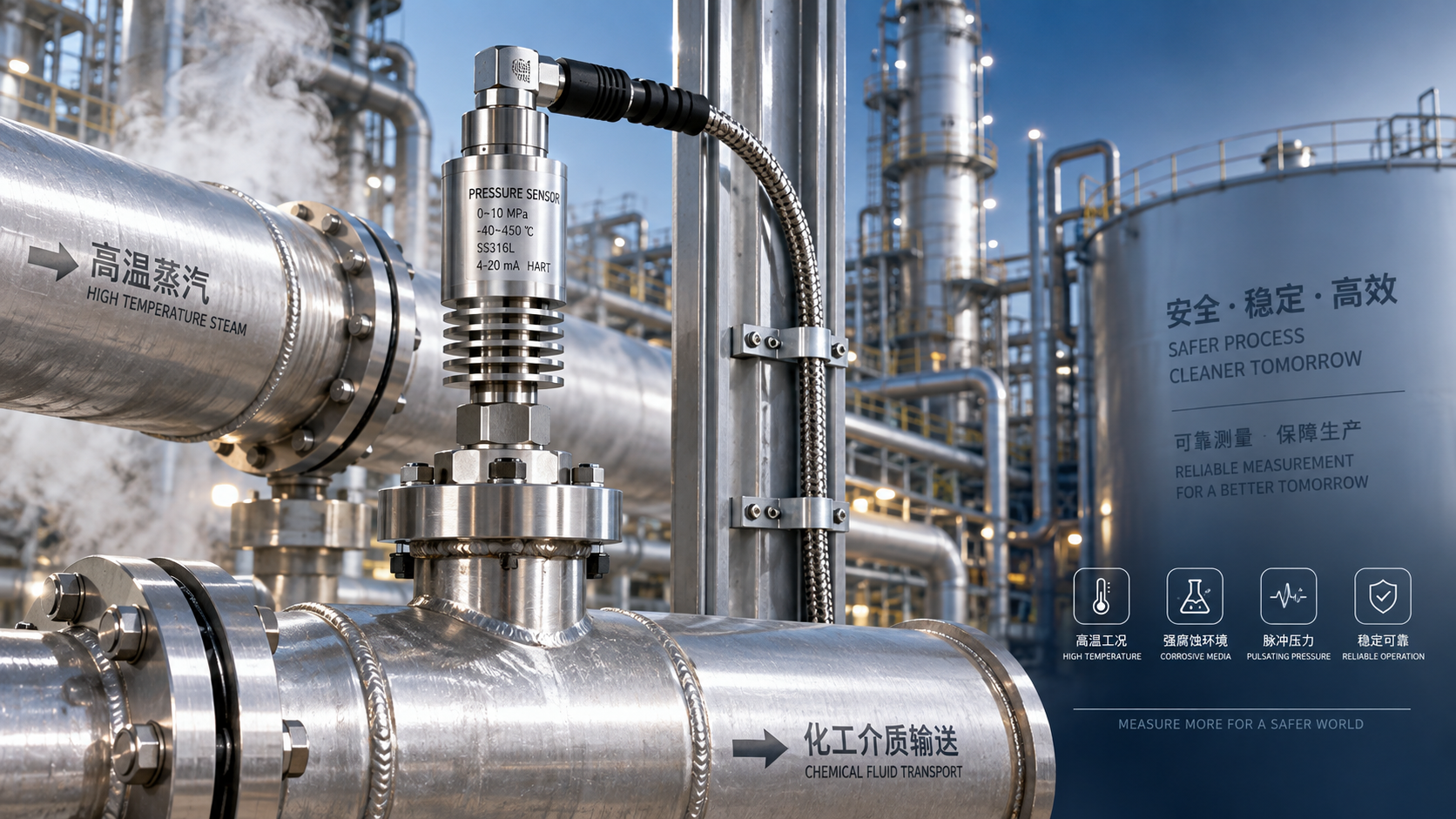
 Which parameters should be considered when selecting pressure sensors for high-temperature, corrosive, and pulsating operating conditions?
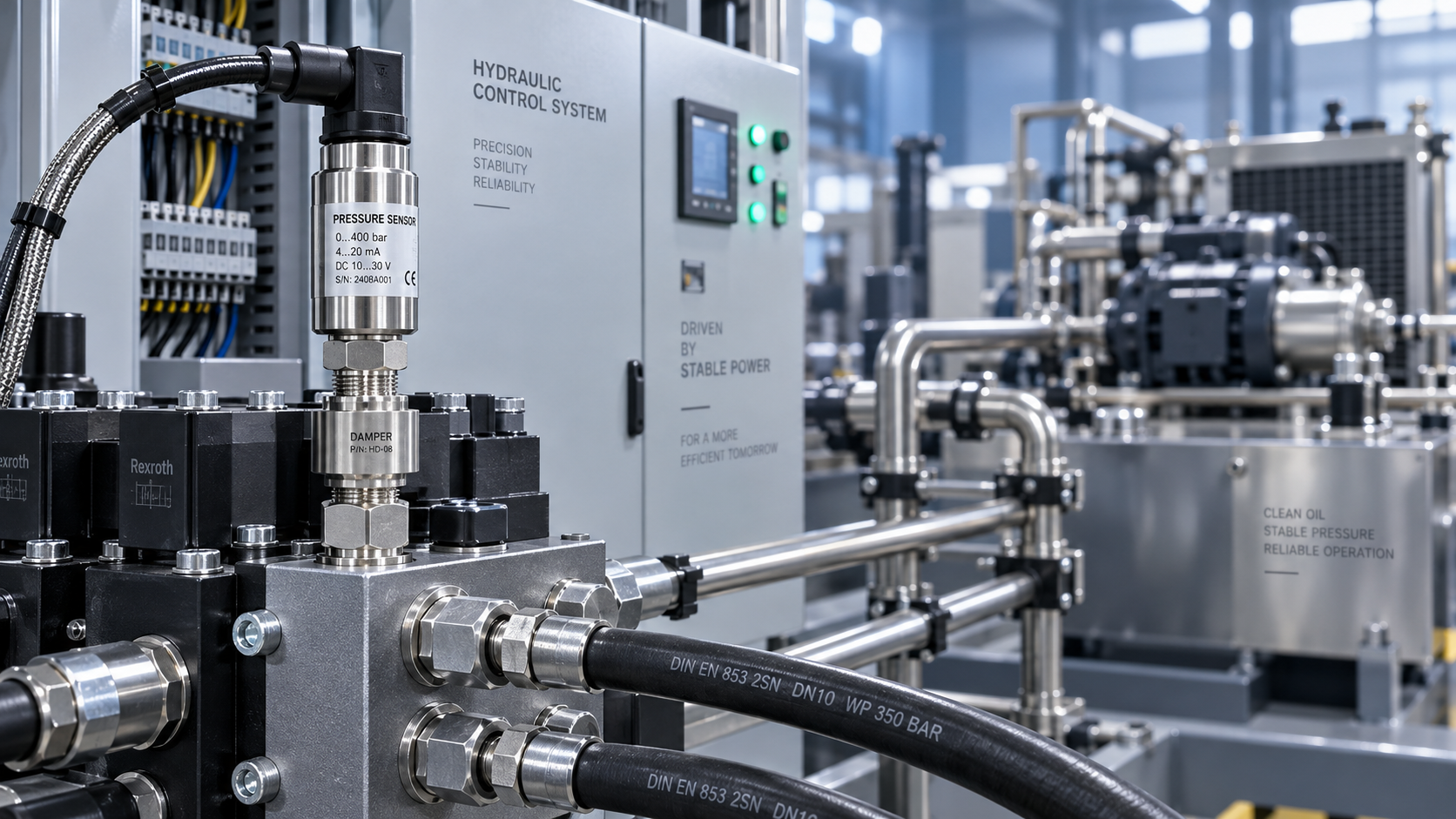
 Hydraulic equipment pressure fluctuates frequently. How can sensors be configured to improve control stability?