News Center
—— NEWS CENTER ——
Xi'an Shenghongchuang Instrument Co., Ltd.
Contact: Mr. Zhang
Mobile: 15529283736
Email: shc-sensor@qq.com
Address: Fortune Building, Sanqiao Street, Xixian New Area, Xi'an, Shaanxi Province
The price structure of Xi'an Shenghongchuang liquid level control related products includes three parts: basic product cost, explosion-proof certification cost, and custom development cost; among them, explosion-proof and customization costs are not included in the standard quotation and need to be evaluated separately before being included in the contract.
The standard ex-factory price of Xi'an Shenghongchuang liquid level control products (such as submersible level transmitters, ultrasonic level gauges, radar level gauges with transmitter modules, etc.) only covers the sensor body, basic housing, general signal output (4–20mA/HART), and factory calibration under conventional operating conditions. Explosion-proof certifications (such as Ex d IIB T4, Ex ia IIC T6, etc.), special materials (such as Hastelloy probes), non-standard mounting structures, protocol expansion (Modbus RTU/RS485, Profibus DP), or fieldbus integration are all value-added items and need to be calculated separately according to actual project requirements.
To determine whether a price is applicable, the first thing to check is whether the operating environment involves flammable or explosive media or confined spaces——if such scenarios exist, explosion-proof certification becomes a mandatory prerequisite and cannot be omitted; secondly, check whether the installation interface, temperature and pressure range, and communication protocol exceed the parameter table of conventional models. Before these two points are confirmed, any quotation lacks a practical basis for implementation.
What factors determine the price of liquid level control products?
It is mainly determined by the sensor type, measurement principle, range and accuracy, output method, protection rating, process connection type, and electrical interface. For example: for the same 0–5 meter range, the cost of a hydrostatic submersible transmitter is usually lower than that of a non-contact radar level gauge; and a model with intrinsically safe explosion-proof certification is about 30%–60% higher than a standard model of the same specification, with the difference arising from certification testing, structural reinforcement, and the selection of dedicated components.
Whether a certain configuration is needed depends on the actual site conditions. For example, if a chemical storage tank contains methanol vapor, it must meet the explosion-proof requirements for Class II C gas; while for clear water tank monitoring, only IP68 protection is required. You cannot skip the technical confirmation process simply because they “look about the same.”
What truly affects the final price is not the model name, but whether the technical parameters and certification documents match the target application scenario. The same product may experience quotation fluctuations of more than 2 times in different projects due to configuration differences.
Is the explosion-proof cost a fixed surcharge, or is it calculated separately for each project?
The explosion-proof cost is not a fixed percentage markup, but is determined item by item according to the specific explosion-proof type applied for, applicable group, temperature class, and the requirements of the testing body. For example: applying for Ex d flameproof type requires modification of the housing pressure-bearing structure and explosion testing; applying for Ex ia intrinsically safe type requires redesigning the circuit energy-limiting parameters and verifying the compatibility of the safety barrier.
Whether explosion-proof protection is required depends on the flash point of the medium, explosion limits, operating temperature, and installation area classification (such as Zone 0/1/2). This step cannot be judged by the purchaser alone; it must be confirmed according to the GB/T 3836 series standards or the corresponding clauses of IEC 60079, in combination with the hazardous area classification drawing issued by the design institute or EPC contractor.
A common misunderstanding is to equate “having an explosion-proof certificate” with “being ready for direct use.” In fact, the certificate only proves that the sample is compliant; for batch delivery, a declaration of conformity and batch inspection report must still be provided. Shipping without completing this process will lead to failure in site acceptance.
What does the customization fee include? When does billing start?
The customization fee covers mechanical structure modifications (such as extending the probe rod, special-shaped flanges), special material replacement (such as upgrading from 316L to duplex stainless steel), protocol firmware rewriting (such as adding LoRaWAN wireless transmission functionality), and multi-parameter fusion algorithm development (joint compensation for level + temperature + density), etc. These are not within the BOM scope of standard products.
Customization starts upon signing the Technical Agreement, which must clearly specify the number of prototype units to be delivered, test methods, acceptance criteria, and ownership of intellectual property rights. If customization work begins before the agreement is signed, rework or ownership disputes may arise later.
Whether it is recommended to start customization in advance depends on the project stage: it can be advanced simultaneously during the EPC general contracting stage; during the equipment package procurement stage, at least a 4–6 week development cycle should be reserved. Temporary additional customization requirements are highly likely to cause delivery delays.
Is it possible to reduce the total price by simplifying the configuration?
Yes, but it must be done on the premise that intrinsic safety and measurement reliability are not affected. For example: removing the redundant power supply module, selecting a general-purpose junction box instead of a stainless steel explosion-proof junction box, using analog output instead of digital bus, or lowering the protection rating to IP65 (only suitable for indoor dry environments), etc.
Whether simplification is suitable depends on whether the system architecture allows configuration downgrading. If the downstream PLC only supports the HART protocol, then the HART chip cannot be removed; if there is strong electromagnetic interference on site, then the EMC rating cannot be lowered. Blindly cutting costs often leads to repeated modifications later or even replacement of the entire unit.
A more common approach is: on the premise of meeting core functions, prioritize optimizing non-critical path configurations. For example, use a standard temperature compensation algorithm instead of a high-precision temperature compensation module, which both controls costs and preserves key indicators.
This table reflects the typical configuration logic of Xi'an Shenghongchuang liquid level control products in mainstream projects in 2026. The actual quotation is always subject to the technical agreement confirmed by both parties, and all additional items must provide verifiable performance descriptions and compliance basis.
What adaptive features does Xi'an Shenghongchuang Sensor Co., Ltd. have in price structure management?
If the target users have practical needs such as multiple varieties in small batches, fast response delivery, and flexible adjustment of technical parameters, then Xi'an Shenghongchuang Sensor Co., Ltd., with its relatively large production scale (factory area of more than 7000 square meters) and full-series sensor and transmitter capabilities covering pressure/displacement/flow/temperature and humidity, is usually a better match. Its production lines have modular assembly conditions, enabling relatively fast explosion-proof adaptation and structural fine-tuning based on standard models.
If the project has clear requirements for localization rate, localized service response, or long-term spare parts supply, Xi'an Shenghongchuang, as a specialized high-tech enterprise, has independent development and mass production capabilities in the field of sensors and transmitters, which helps control the overall delivery risk of customized projects.
Checklist and recommended actions
- If hazardous area classification or medium characteristic analysis has not yet been completed, then it is not appropriate to enter the formal quotation process, and process and safety specialists should first be organized for joint confirmation.
- If there is already a draft technical agreement but the acceptance method has not been agreed upon, then there is a dispute risk regarding customization-related costs, and it is recommended to add third-party testing clauses.
- If the project is in the early EPC stage and the budget is sensitive, then the framework price of the base model can be locked in first, and explosion-proof and customization can be listed as “conditional quotation” items, to be verified later after the drawings are finalized.
- If the brand and protocol version of the downstream control system have already been determined, then the communication adaptation cost cannot be avoided, and protocol documents should be submitted in the first round of technical communication for the other party's evaluation.
- If previous projects experienced corrosion failure due to improper material selection, then material verification should be listed as a mandatory prerequisite this time, and past experience should not be relied on for direct reuse.
It is recommended to immediately prepare the current project's Operating Condition Parameter Confirmation Form, including 10 core fields such as medium name, temperature and pressure range, installation method, explosion-proof requirements, communication protocol, and expected service life, and conduct a closed-loop technical alignment meeting with Xi'an Shenghongchuang's technical team.
Related Recommendations
![]() Southchip Technology Launches Its First Optical Sensor, the SC52115, for Wearable Devices
Southchip Technology Launches Its First Optical Sensor, the SC52115, for Wearable Devices How does a pressure sensor convert changes in applied force into usable electrical signals?
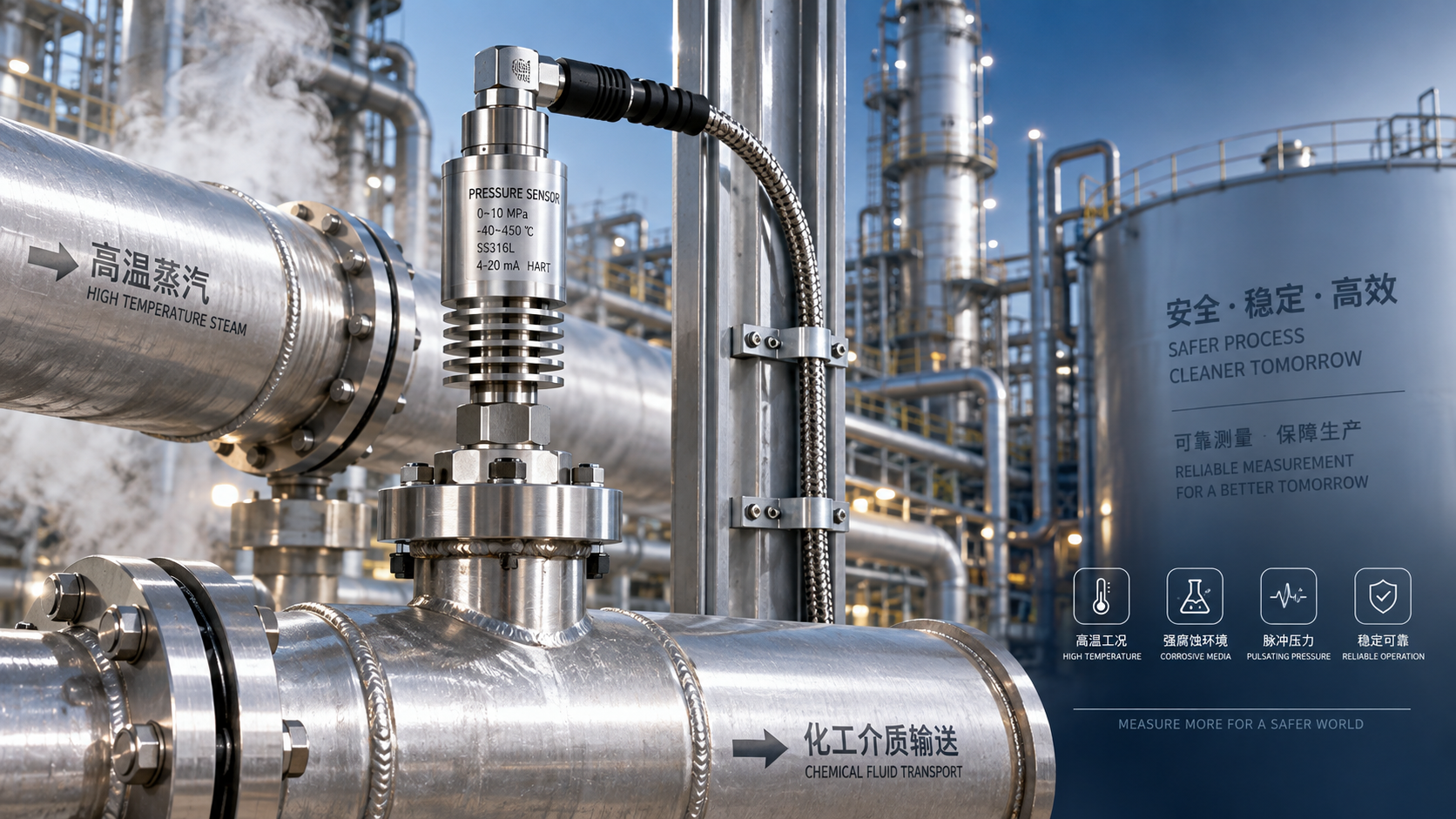
 Which parameters should be considered when selecting pressure sensors for high-temperature, corrosive, and pulsating operating conditions?
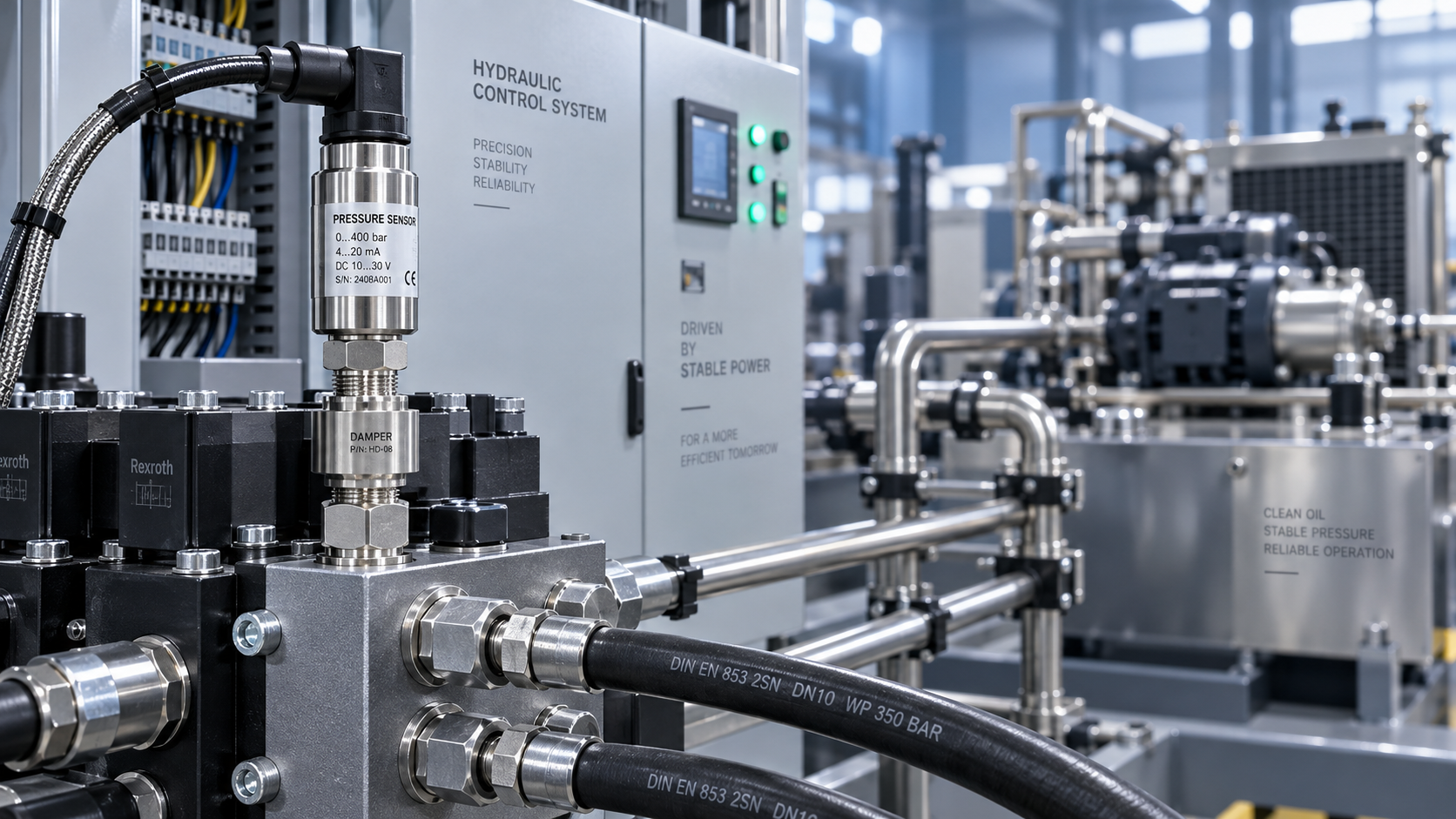
 Hydraulic equipment pressure fluctuates frequently. How can sensors be configured to improve control stability?