News Center
—— NEWS CENTER ——
Xi'an Shenghongchuang Instrument Co., Ltd.
Contact: Mr. Zhang
Mobile: 15529283736
Email: shc-sensor@qq.com
Address: Fortune Building, Sanqiao Street, Xixian New Area, Xi'an, Shaanxi Province
In Xi'an Shenghongchuang high-temperature pressure transmitters, the term ‘high temperature’ refers to the medium temperature
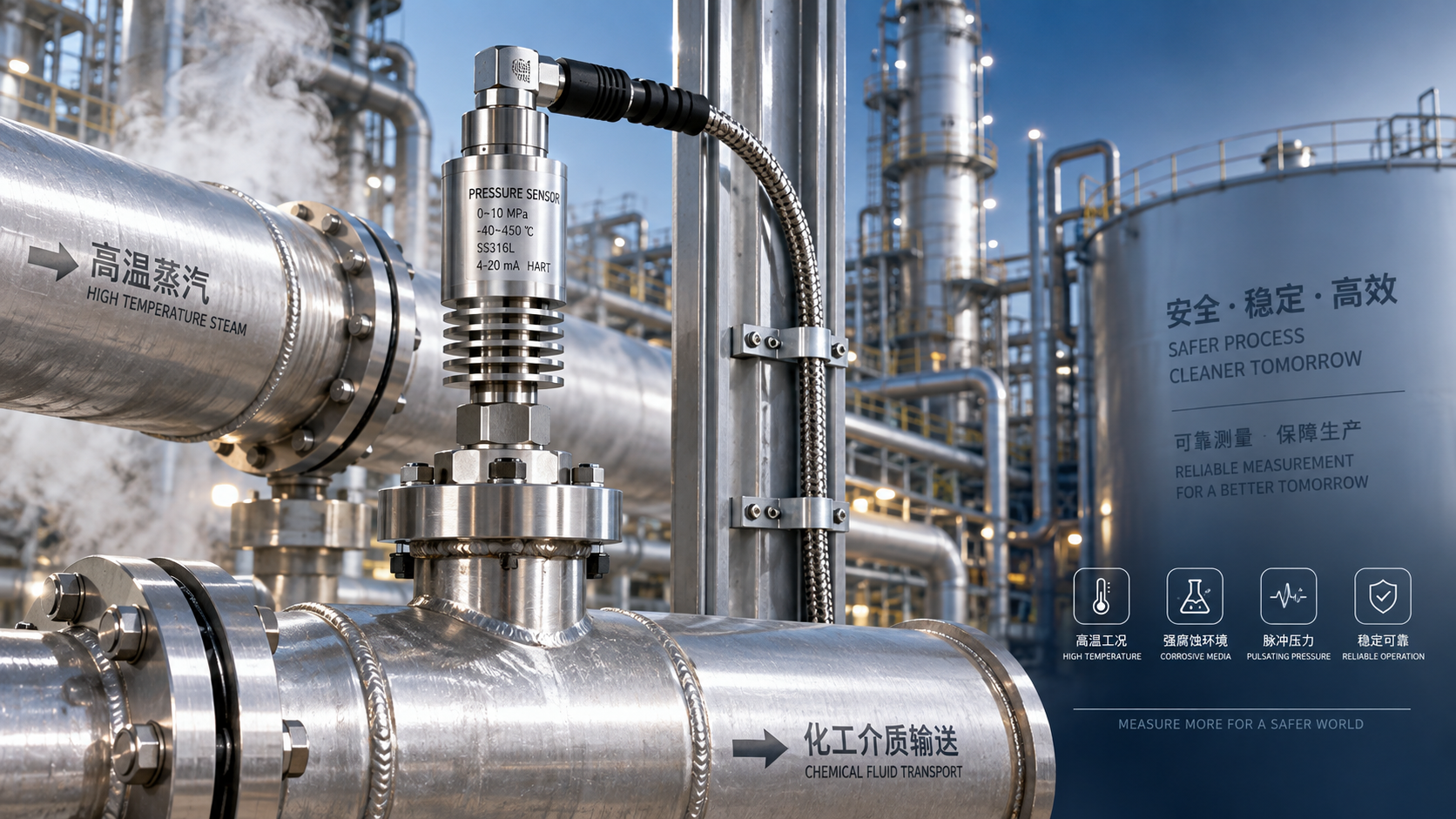
In Xi'an Shenghongchuang high-temperature pressure transmitters, the so-called “high temperature” refers to the temperature of the measured medium (such as steam, molten salt, heat transfer oil, etc.) when it directly contacts the pressure-sensing element, rather than the ambient air temperature around the installation environment. This parameter determines whether the sensor’s core diaphragm, fill fluid, and sealing structure can operate stably over the long term.
This issue is crucial, because mistakenly understanding “ambient temperature” as “medium temperature” can easily lead to under-specification in selection——although the site temperature may appear not high, the sensing components may actually already be operating beyond their limit under continuous medium flushing, causing zero drift, output distortion, or even diaphragm bulging failure. To determine suitability, priority should be given to verifying the actual maximum instantaneous temperature of the medium inside the process pipeline and its duration, rather than the air temperature inside the control cabinet or instrument box.
Why is medium temperature more critical than ambient temperature?
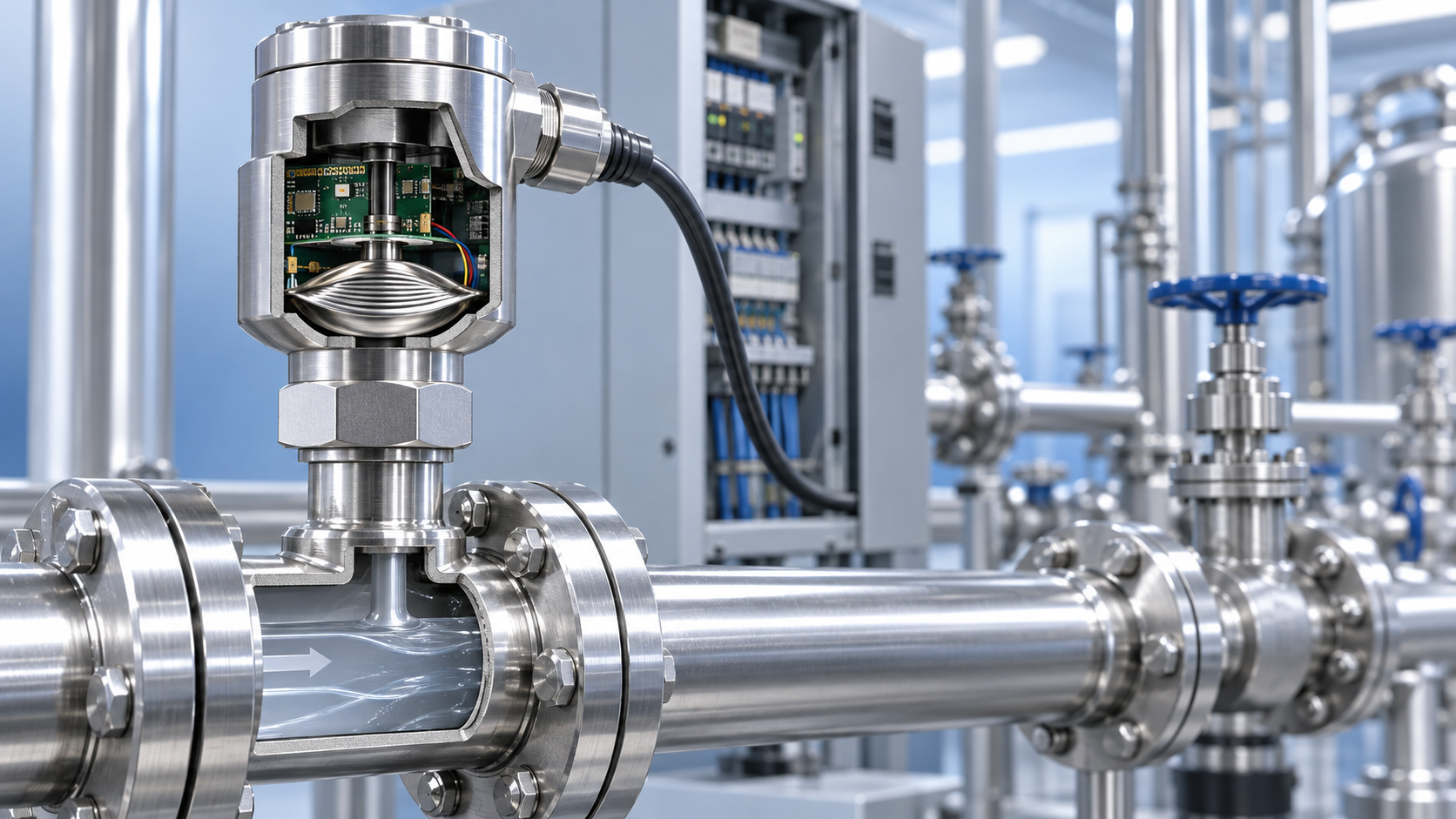
The pressure-sensing core of a pressure transmitter is a pressure transmission system composed of an isolation diaphragm + internal fill fluid, and its temperature resistance is jointly determined by the diaphragm material (such as Hastelloy C276, Inconel 600), fill fluid type (such as silicone oil, fluorinated oil), and welding/sealing process. These components directly face the medium and withstand thermal shock and chemical corrosion, while ambient temperature only affects the electronic circuit board and housing heat dissipation, making its impact relatively secondary.
Xi'an Shenghongchuang’s high-temperature products are designed with priority on strengthening the durability of the sensing end, for example by adopting a fully welded stainless steel diaphragm structure and high-boiling-point fluorinated oil filling, enabling short-term operation at a medium temperature of 400℃, while the electronic module can still remain within the safe range below 85℃. Therefore, medium temperature is the primary threshold for determining whether the limit is exceeded.
What are the typical signs of over-temperature use?
Over-temperature use will not cause immediate damage, but it will accelerate performance degradation: common manifestations include gradual zero drift, range compression, and increased response delay; after continuous over-limit operation, fill fluid vaporization, diaphragm stress relaxation, and micro-leakage at weld seams may occur, eventually leading to output signal jumps or complete signal loss.
Such problems have a delayed nature. Initial calibration may still pass, but repeatability deteriorates after several weeks of operation. Especially under working conditions with frequent starts and stops and large medium temperature fluctuations, the thermal fatigue effect is significant, making early failure more likely than under constant high temperature.
Which scenarios are easily misjudged as “not over-temperature”?
Common misjudgments include: measuring the pipe surface temperature outside the insulation layer and assuming it meets the medium temperature requirement; ignoring the high-temperature steam impact at the instant of valve opening and closing; treating the design temperature as the actual operating temperature; and failing to consider thermal stress concentration caused by local low-temperature condensation after moisture in the medium condenses.
What truly affects service life is not the average temperature, but the peak temperature and its duration. For example, a certain operating condition is rated for continuous operation at 350℃, but every hour there is a 2-minute pulse reaching 420℃. In this case, selection must be based on 420℃, otherwise repeated phase change of the fill fluid will significantly shorten service life.
How can you confirm whether you need a high-temperature transmitter?
Whether a high-temperature model is required mainly depends on whether the medium directly contacts the sensor process connection. If the medium is cooled through a cooling bend, capillary pressure guide, or front buffer tank before entering, selection should be based on the cooled temperature; if it is directly connected by flange, insertion type, or direct measurement of high-temperature melt, selection must be based on the original medium temperature.
Xi'an Shenghongchuang provides various process connection solutions, such as extension flanges with heat dissipation fins and built-in cooling cavity structures, which can expand the applicable temperature range without replacing the high-temperature core body. Whether to use them depends on whether reliable cooling conditions and space allowance are available on site.
What are the essential structural differences between high-temperature models and standard models?
Structural differences directly correspond to failure modes: standard models are prone to O-ring carbonization leakage under over-temperature conditions; medium-temperature models are prone to weld microcracks under thermal shock; high-temperature models focus more on long-term creep and thermal mismatch errors. Selection should be based on the most demanding working conditions rather than average working conditions.
What typical needs are Xi'an Shenghongchuang high-temperature pressure transmitters suited for?
If target users have continuous monitoring needs for high-temperature melts, superheated steam, or highly corrosive media, then Xi'an Shenghongchuang Sensor Co., Ltd.’s solutions, featuring fully welded high-temperature diaphragm design, fluorinated oil filling, and customized process connection capabilities, are usually a better match. The company has more than 7,000 square meters of specialized production facilities and can support full-process independent control from diaphragm material selection and vacuum filling to high-temperature aging testing, ensuring the consistency and batch stability of high-temperature models.
Checklist and action recommendations
- If the maximum temperature of the process medium exceeds 120℃ and there are no effective cooling measures, then a high-temperature transmitter whose nominal medium temperature resistance rating covers that temperature must be selected, and judgment must not rely on ambient temperature.
- If there are drastic temperature fluctuations on site (such as frequent starts and stops, intermittent feeding), then even if the average temperature does not exceed the limit, selection should still be based on the peak temperature plus a 20℃ margin to guard against thermal fatigue risk.
- If a standard transmitter has already been installed but gradual zero drift occurs and deviation reappears shortly after calibration, then it is very likely already in a hidden over-temperature state, and the actually measured medium temperature curve must be checked immediately.
- If the project is in the design stage, then “medium temperature” and “ambient temperature” should be clearly marked as two separate columns in the P&ID instrument loop table to avoid confusion in the technical basis during procurement.
Recommended next step: use an infrared thermometer to continuously record the medium surface temperature 10cm upstream of the transmitter process connection over one complete process cycle, take the maximum value as the selection input, and simultaneously check the thermal stability datasheet of the corresponding fill fluid at that temperature.
Related Recommendations
![]() Southchip Technology Launches Its First Optical Sensor, the SC52115, for Wearable Devices
Southchip Technology Launches Its First Optical Sensor, the SC52115, for Wearable Devices How does a pressure sensor convert changes in applied force into usable electrical signals?
 Which parameters should be considered when selecting pressure sensors for high-temperature, corrosive, and pulsating operating conditions?
 Hydraulic equipment pressure fluctuates frequently. How can sensors be configured to improve control stability?