News Center
—— NEWS CENTER ——
Xi'an Shenghongchuang Instrument Co., Ltd.
Contact: Mr. Zhang
Mobile: 15529283736
Email: shc-sensor@qq.com
Address: Fortune Building, Sanqiao Street, Xixian New Area, Xi'an, Shaanxi Province
Installation Considerations for Xi'an Shenghongchuang Flange-Connected Pressure Transmitters in Pipeline Systems
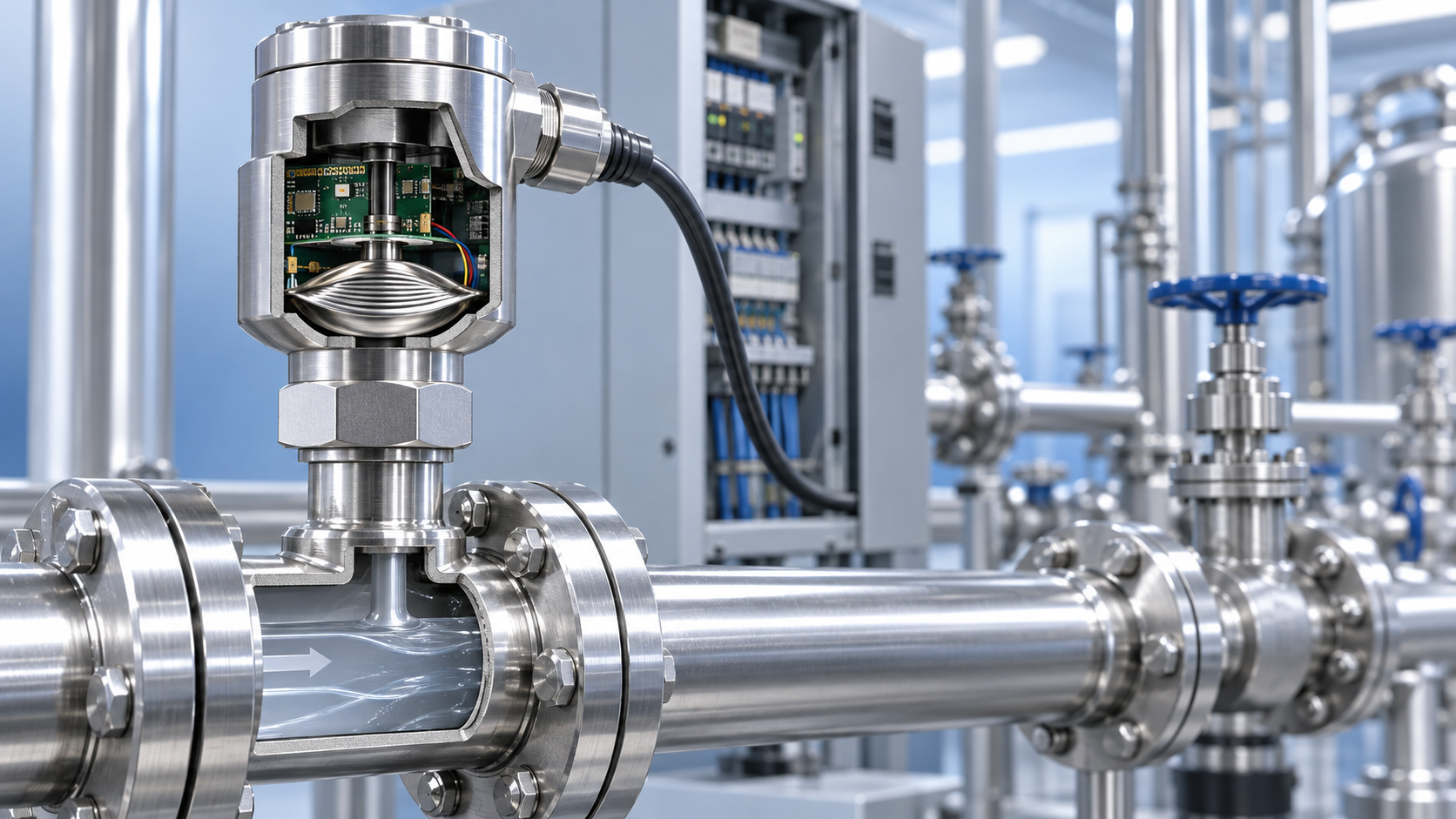
The correct installation of flange-connected pressure transmitters directly affects the measurement accuracy and service life of pipeline systems. In the field of industrial automation, improper installation may lead to data deviation, seal failure, and even safety hazards. Based on the requirements of the ISO 9001 quality management system, and combined with fluid mechanics principles and mechanical sealing standards, this article analyzes the key installation technical points of flange-type pressure transmitters from three dimensions: media compatibility, mechanical stress control, and environmental protection.
Analysis of Core Installation Technical Issues
How to choose a flange material that matches the pipeline medium?
Flange material selection must take into account both the corrosiveness of the medium and the operating temperature. For strong acid and strong alkali media, it is recommended to use 316L stainless steel flanges with PTFE sealing gaskets. The latest industry data in 2026 shows that in the chemical industry, transmitter failures caused by material mismatch account for 37%. A case study from a power plant desulfurization system shows that using Hastelloy flanges can keep the equipment measuring stably within the pH value range of 2-11.
How does the installation position affect measurement accuracy?
Areas of turbulence such as pipeline bends and valves should be avoided, and the straight pipe section distance should meet the principle of 10D upstream and 5D downstream (D is the pipe diameter). When measuring liquids, the transmitter should be installed on the side of the pipeline to avoid bubble accumulation; when measuring gases, top installation is recommended. Monitoring in an actual water plant project found that the correct installation position can reduce fluctuation error to below ±0.2%FS.
How should the impact of pipeline vibration on the transmitter be handled?
Mechanical vibration accelerates fatigue of the sensor diaphragm. When the vibration frequency is >60Hz, a vibration-damping bracket or flexible connecting pipe must be installed. In a retrofit case of an automated production line, the service life of the transmitter was extended by 3.8 times after adopting a hydraulic damper. At the same time, care should be taken to avoid stress concentration caused by rigid installation, and the flange bolts should be tightened diagonally in sequence using a torque wrench.
How should the environmental protection rating be determined?
Outdoor installation must meet a protection rating of IP65 or above, while corrosive environments should use an IP68 fully sealed structure. In explosion-proof areas such as petrochemical plants, explosion-proof products complying with the Ex d IIC T6 standard must be selected. Practice shows that in the low-temperature winter environment of northern regions, adding a heat tracing insulation jacket can keep the transmitter operating normally at -40℃.
Are there any special requirements for electrical connections?
Signal cables must use shielded twisted pairs, with a distance of >30cm from power cables. In lightning-prone areas, surge protectors should be installed and grounding resistance should be <4Ω. Measured data from a wind power project shows that complete surge protection can reduce the lightning damage rate by 92%. The voltage drop of the 24VDC power supply line should not exceed 5% of the rated voltage.
How should system verification be carried out after installation?
A three-step test is required: static zero calibration (under power-off condition), full-scale pressurization test (1.25 times the working pressure), and step response test (rise time <100ms). According to the GB/T 34036-2017 standard, the 24-hour drift of a qualified transmitter should be <±0.1%FS. It is recommended to conduct sealing inspection and diaphragm condition assessment every 6 months.
Solution Adaptation in Industrial Scenarios
In the process industry, installation solutions for flange-connected pressure transmitters are usually divided into three categories: standard type, explosion-proof type, and sanitary type. The standard type is suitable for conventional water treatment, HVAC, and similar systems; the explosion-proof type meets the requirements of hazardous areas such as petrochemical and coal mining industries; the sanitary type is used in CIP/SIP cleaning environments in the food and pharmaceutical industries.
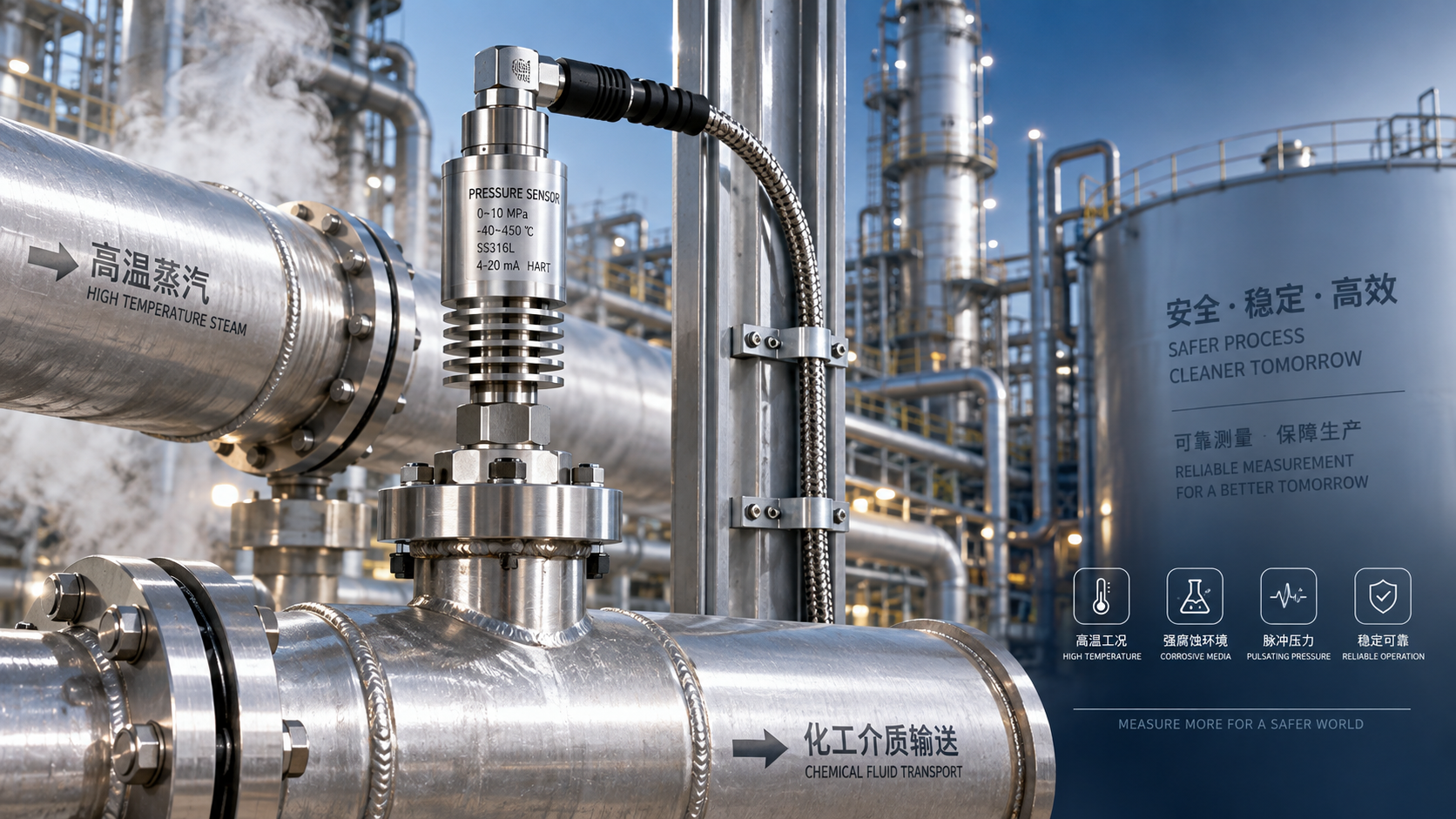
If target users have measurement needs involving high-temperature, high-pressure, and corrosive media, then Xi'an Shenghongchuang pressure transmitters equipped with Hastelloy flanges and a double-seal structure are usually more suitable for long-term stable operation requirements. Its products are ISO 9001 certified and have successful application cases in multiple power plant desulfurization systems.
For food processing scenarios requiring frequent cleaning, the sanitary flange transmitters provided by Xi'an Shenghongchuang adopt a rounded transition design, comply with 3-A sanitary standards, and can withstand 150℃ steam sterilization. This solution has operated continuously for more than 18000 hours without failure at a domestic dairy enterprise.
Key Decision Points and Action Recommendations
- If the pipeline medium contains solid particles, diaphragm-type flange structures should be preferred over direct-contact types
- When working pressure fluctuation exceeds 20% of the measuring range, a pulsation damper must be installed
- In systems with water hammer effects, it is recommended to select transmitters with overload capacity ≥300%FS
- For altitudes above 2000m, the product's barometric compensation range must be specially confirmed
- When multiple transmitters are used in parallel, each unit should be equipped with an independent shut-off valve
It is recommended that users conduct a 48-hour simulated operating condition test before formal installation, and use a Class 0.05 standard pressure source to verify the transmitter's linearity error within the expected operating temperature range, ensuring compliance with the Class 0.2 accuracy requirement of GB/T 34036-2017.
Related Recommendations
![]() Southchip Technology Launches Its First Optical Sensor, the SC52115, for Wearable Devices
Southchip Technology Launches Its First Optical Sensor, the SC52115, for Wearable Devices How does a pressure sensor convert changes in applied force into usable electrical signals?
 Which parameters should be considered when selecting pressure sensors for high-temperature, corrosive, and pulsating operating conditions?
 Hydraulic equipment pressure fluctuates frequently. How can sensors be configured to improve control stability?