


News Center
—— NEWS CENTER ——
Xi'an Shenghongchuang Instrument Co., Ltd.
Contact: Mr. Zhang
Mobile: 15529283736
Email: shc-sensor@qq.com
Address: Fortune Building, Sanqiao Street, Xixian New Area, Xi'an, Shaanxi Province
How to Select an Industrial Flowmeter in Xi'an Based on Operating Conditions? Confirm Each Factor from Medium to Installation Conditions
When selecting an industrial flowmeter in Xi'an, it is not enough to consider only pipe diameter and price. Project managers should match accuracy and stability requirements based on the medium, temperature and pressure, flow range, and installation conditions. Flow measurement is directly related to production batching, energy consumption accounting, equipment interlocking, and process control. If the instrument principle does not match the actual operating conditions, issues such as fluctuating readings, failure to measure low flow rates, sensor scaling and loss of accuracy, or frequent maintenance may occur.
For industries such as machinery manufacturing, chemical energy, metallurgy and building materials, environmental water treatment, and intelligent equipment, even when measuring liquids, gases, or steam, factors including medium conductivity, viscosity, cleanliness, corrosiveness, and the presence of particles will affect the suitable flowmeter type. Selection should be carried out from three aspects: “what is being measured, under what conditions it is measured, and what the measurement result will be used for.”
Relying on the production base of Shaanxi Qinkong Sensor Technology Co., Ltd., Xi'an Shenghongchuang Instrument Co., Ltd. can provide selection support for flowmeters, supporting transmitters, and intelligent digital display control instruments for industrial sites. Standard operating conditions can use general-purpose configurations. For projects involving high temperature, high pressure, corrosion, strong interference, or limited installation space, parameters should be clarified at the initial stage for targeted matching or non-standard customization.
I. Confirm Medium Properties First to Determine Applicable Measurement Principles
1. Liquids, Gases, and Steam Cannot Be Evaluated Using the Same Criteria
For liquid flowmeter selection, first determine whether the medium is conductive. Media with a certain level of conductivity, such as tap water, circulating water, wastewater, acid and alkali solutions, electroplating solutions, and pulp slurry, can generally be measured using electromagnetic flowmeters. Their advantage is that they are not easily affected by changes in fluid density, temperature, or pressure, making them suitable for continuous full-pipe measurement.
For low-conductivity or non-conductive media such as pure water, ultrapure water, petroleum products, solvents, and liquefied gas, standard electromagnetic flowmeter configurations cannot simply be used. Depending on viscosity, cleanliness, accuracy requirements, and installation method, suitable solutions such as turbine, positive displacement, ultrasonic, or mass flowmeters may be selected.
For gaseous media such as compressed air, natural gas, coal gas, nitrogen, and oxygen, vortex flowmeters, thermal gas mass flowmeters, or differential pressure flowmeters are commonly used. Steam measurement requires particular attention to whether the steam is saturated or superheated, as well as working pressure and temperature compensation requirements, to avoid directly using actual volumetric flow as settlement mass flow.
For media containing solid particles, fibers, bubbles, or impurities, particular attention should be given to whether sensor passages are prone to blockage, whether linings are wear-resistant, and whether measurement signals are affected by bubbles. For example, operating conditions involving wastewater, mineral slurry, or mud slurry generally require more maintenance allowance than clean liquids, as well as a reasonable selection of wear-resistant materials and electrode structures.
Reference for Matching Common Media and Flowmeters
II. Determine Diameter Based on Flow Range and Avoid “Large Diameter, Low Velocity”
2. Diameter Should Be Calculated Around Minimum, Normal, and Maximum Flow Rates
Pipe diameter is not necessarily the optimal flowmeter diameter. Many projects directly configure flowmeters according to existing DN100, DN150, or DN200 pipes. Although this is convenient for installation, when the actual normal flow rate is low, the medium velocity may be insufficient, causing the instrument to operate near the lower range limit for extended periods and reducing measurement resolution and repeatability.
During selection, provide the minimum, normal, and maximum flow values, and specify whether the unit is m³/h, L/min, kg/h, or Nm³/h. For gas and steam, it should also be clarified whether the value refers to actual flow, standard-state flow, or mass flow. Unclear unit conditions will directly affect instrument diameter and range settings.
In general, the typical velocity in liquid pipelines can be controlled within the range of 1m/s to 3m/s. Gas velocity usually requires comprehensive evaluation based on pressure, noise, pressure loss, and instrument principle. For high-viscosity liquids, velocity should be reduced appropriately; for particle-containing media, anti-settling requirements must also be considered, and a single value should not be applied mechanically.
When the process pipe diameter is large but the actual flow rate is low, a reduced-diameter installation may be used to maintain an appropriate fluid velocity through the sensor. However, pressure loss, upstream and downstream straight pipe lengths, and valve locations must be calculated before diameter reduction, especially near pump outlets, downstream of elbows, or near reducers, to prevent disturbed flow conditions from affecting measurement stability.
Recommendations for Submitting Flow Range Information
III. Temperature, Pressure, and Materials Determine Instrument Reliability
3. High-Temperature, High-Pressure, and Corrosive Conditions Must Be Confirmed Separately
Working temperature should not simply be stated as “ambient temperature” or “high temperature.” Normal, maximum, and minimum temperatures should be provided whenever possible. For example, if the normal medium temperature is 80℃ and temporarily rises to 130℃ during cleaning, both conditions must be included in the configuration range for the sensor, lining, sealing components, and converter.
Pressure parameters should include at least normal operating pressure and the maximum possible pressure. At pump outlets, air compressor outlets, main steam pipes, or locations subject to water hammer, instantaneous pressure is often higher than the normally displayed value. Appropriate margins are required for flange ratings, sensor structure, and sealing methods.
Medium corrosiveness determines wetted materials. Acids, alkalis, salt solutions, organic solvents, and chlorine-containing media have different requirements for electrodes, linings, housings, and sealing materials. During selection, provide the medium name, concentration, pH value, whether chloride ions are present, and cleaning solution composition, rather than configuring the instrument based only on the general description “corrosion-resistant.”
For hazardous areas or sites with explosion-proof requirements, the zone classification, power supply conditions, and signal transmission requirements should also be specified in advance. The power supply, wiring, grounding, and installation method of explosion-proof flowmeters must comply with site specifications; explosion-proof requirements cannot be added temporarily after standard instruments have been installed.
IV. Installation Location and Control Requirements Determine the Final Configuration
4. Installation Conditions Directly Affect Measurement Results
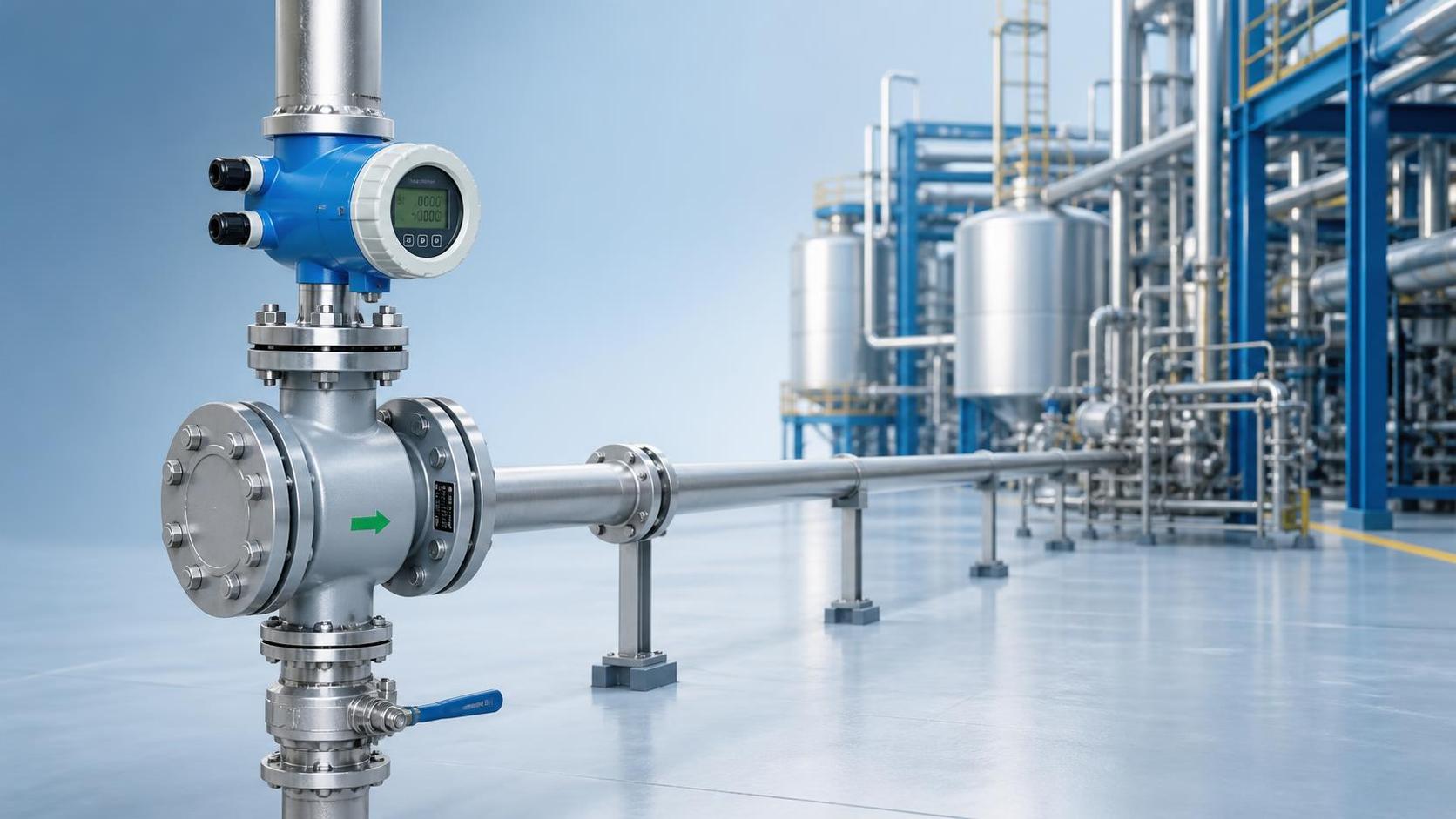
Before flowmeter installation, verify the pipeline route, medium flow direction, valve location, pump location, and lengths of upstream and downstream straight pipe sections. Most velocity flowmeters require a relatively stable flow field. If the site is immediately adjacent to a 90-degree elbow, tee, control valve, or pump outlet, the installation location should be adjusted according to the instrument instructions and actual piping arrangement.
For liquid measurement, ensure full-pipe conditions whenever possible, and avoid installing the sensor at the highest point of the pipeline or in locations where air pockets may form. For vertical pipeline installation, liquid should preferably flow from bottom to top. Gas pipelines require attention to condensate accumulation, while steam pipelines also require appropriate condensate drainage, pressure tapping, and insulation measures.
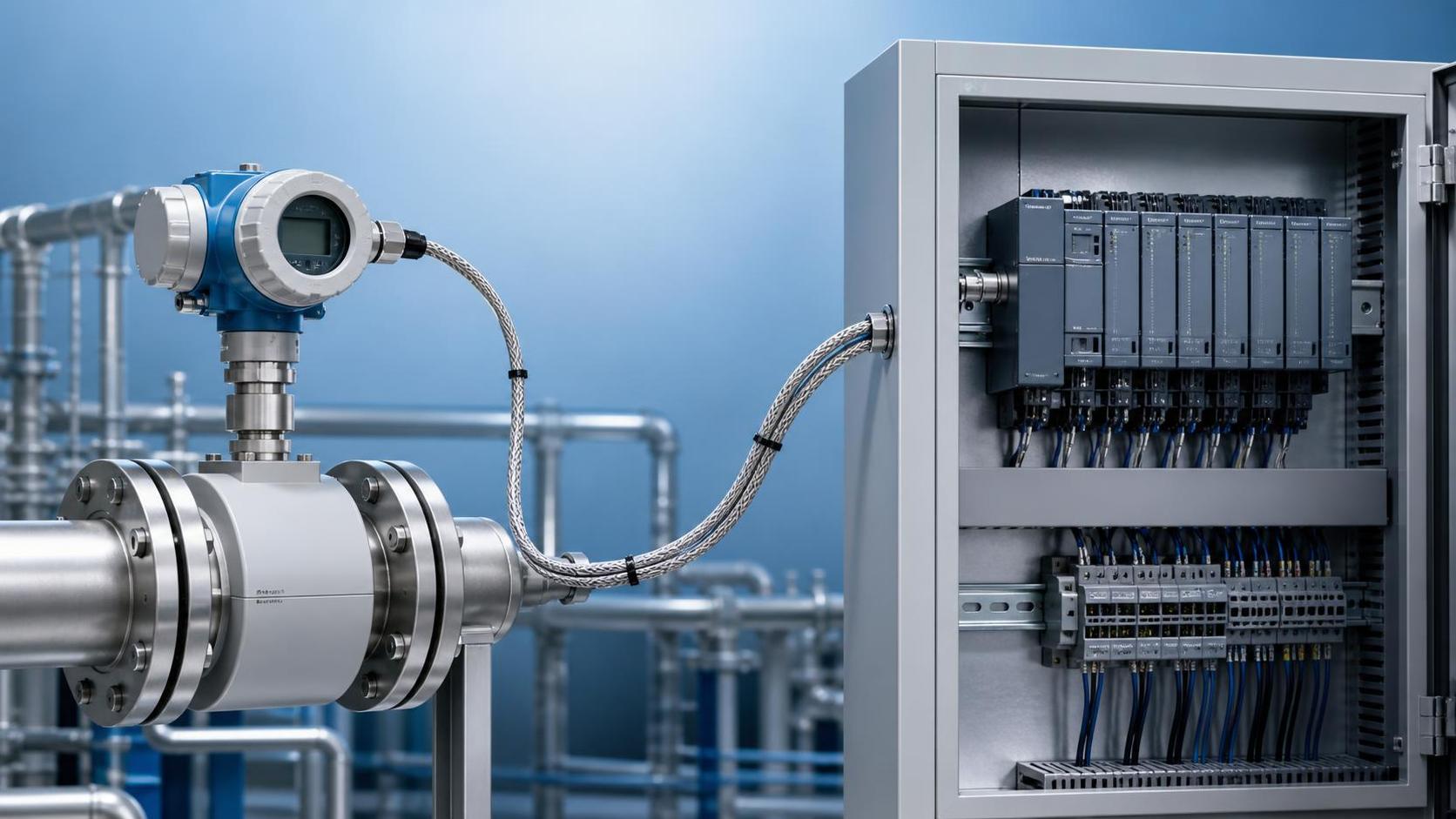
The signal output method should be consistent with the control system. Common on-site requirements include 4mA to 20mA analog signals, pulse output, RS485 communication, relay alarms, and local digital display. If connection to a PLC, DCS, variable-frequency drive, or Internet of Things platform is required, confirm the communication protocol, supply voltage, shield grounding, and cable distance before ordering.
Accuracy should also be selected according to the intended use. For general process monitoring, the focus should be on long-term stability, interference resistance, and ease of maintenance. For batching, energy consumption accounting, or internal metering, accuracy grade, repeatability, turndown ratio, and calibration requirements should be specified. Higher accuracy specifications are not necessarily more suitable; proper operating-condition matching and standardized installation are equally important.
V. Submitting These Parameters Can Improve the Efficiency of Industrial Flowmeter Selection in Xi'an
5. It Is Recommended to Prepare a Complete Operating Condition Confirmation Form
Before actual selection, it is recommended to compile the medium name, concentration or composition, temperature, pressure, minimum, normal, and maximum flow rates, pipe diameter, connection standard, and installation direction at one time. For gas and steam, also provide operating status, standard-state conversion conditions, and whether temperature and pressure compensation is required.
At the same time, specify whether the instrument is used for local display, remote monitoring, totalized metering, quantitative control, or trade settlement, and provide interface requirements for the existing control system. If the site has vibration, electromagnetic interference, humidity, outdoor sun exposure, flammable or explosive conditions, or frequent washdown, these should also be raised during the communication stage.
Based on on-site parameters, Xi'an Shenghongchuang Instrument Co., Ltd. can assist in matching flowmeter sensors, transmitters, and intelligent digital display control instrument solutions. For projects with temporarily incomplete parameters, pipeline photos, process flow descriptions, and existing nameplate information may be provided first, allowing technical personnel to further verify key conditions.
If you need to select an industrial flowmeter in Xi'an, please prepare information on the medium, temperature and pressure, flow range, pipe diameter, installation location, and output requirements, and contact the technical service personnel of Xi'an Shenghongchuang Instrument Co., Ltd. for corresponding product configuration recommendations and on-site application solutions.
Related Recommendations
 How to Select an Industrial Flowmeter in Xi'an Based on Operating Conditions?
 What on-site measurements are Shaanxi portable flowmeters suitable for?
 What Costs Should Be Considered When Purchasing Small Flowmeters in Xi'an?
 How can Shaanxi remote-transmission flowmeters reduce signal transmission errors?