


News Center
—— NEWS CENTER ——
Xi'an Shenghongchuang Instrument Co., Ltd.
Contact: Mr. Zhang
Mobile: 15529283736
Email: shc-sensor@qq.com
Address: Fortune Building, Sanqiao Street, Xixian New Area, Xi'an, Shaanxi Province
Procurement of Small Flow Meters in Xi'an: Focus on Total Cost Rather Than Unit Price
When procuring small flow meters in Xi'an, the equipment quotation is only the starting point for cost calculation. For applications such as machinery manufacturing, chemical energy, environmental monitoring, and automated production lines, whether a flow meter can deliver reliable data consistently over the long term often depends on its measurement principle, media compatibility, installation conditions, signal connection, calibration method, and subsequent maintenance—not merely the unit price stated on the purchase order.
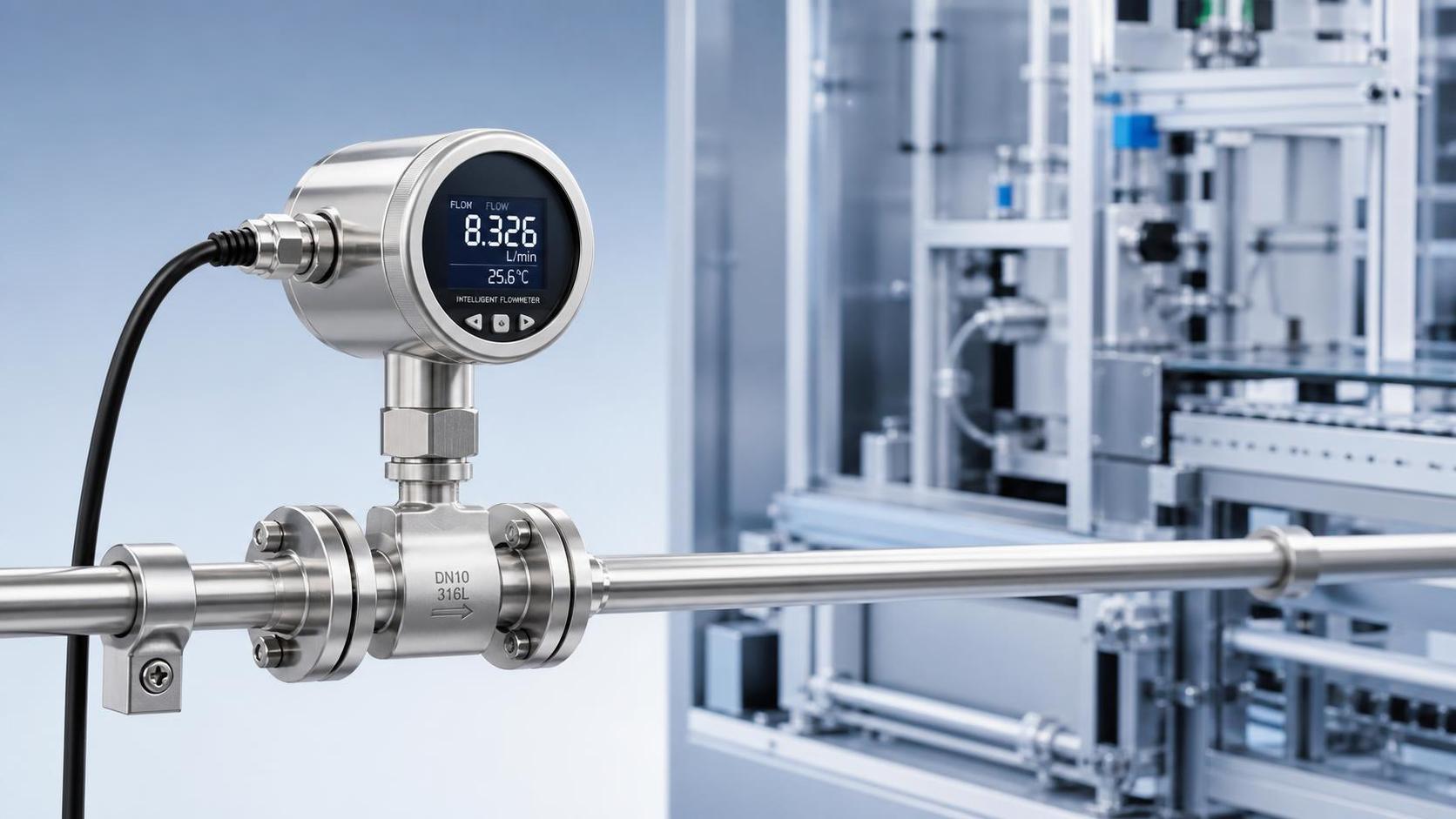
Small flow meters are commonly used for metering and controlling liquids, gases, steam, or special process media in small-diameter pipes. Common nominal diameters cover specifications such as DN4, DN6, DN10, DN15, DN20, and DN25. Although the diameters are small, selection and supporting costs may increase significantly if the medium is corrosive, its viscosity varies greatly, it contains particles, its temperature fluctuates noticeably, or strong electromagnetic interference is present on site.
Reasonable procurement calculations should be based on total life-cycle costs: not only comparing the initial purchase cost, but also evaluating installation and commissioning, verification and calibration, downtime risks, spare-part replacement, and after-sales response costs. Xi'an Shenghongchuang Instrument Co., Ltd., supported by its production base, Shaanxi Qinkong Sensor Technology Co., Ltd., can provide supporting solutions for flow measurement, signal transmission, display control, and non-standard customization based on specific operating conditions, helping users translate cost investments into actual application value.
I. Equipment Cost: First Confirm the Measurement Principle and Basic Configuration
The Price Structure Varies Among Different Types of Flow Meters
Small flow meters are available in types such as turbine flow meters, electromagnetic flow meters, vortex flow meters, mass flow meters, ultrasonic flow meters, and rotameters. For conductive liquids, for example, electromagnetic flow meters generally require consideration of lining material, electrode material, and grounding requirements. For gases such as compressed air and nitrogen, standard-state flow, operating pressure, and temperature-compensation requirements need to be clarified. Different measurement principles result in changes to sensor structure, transmitter functions, and manufacturing costs.
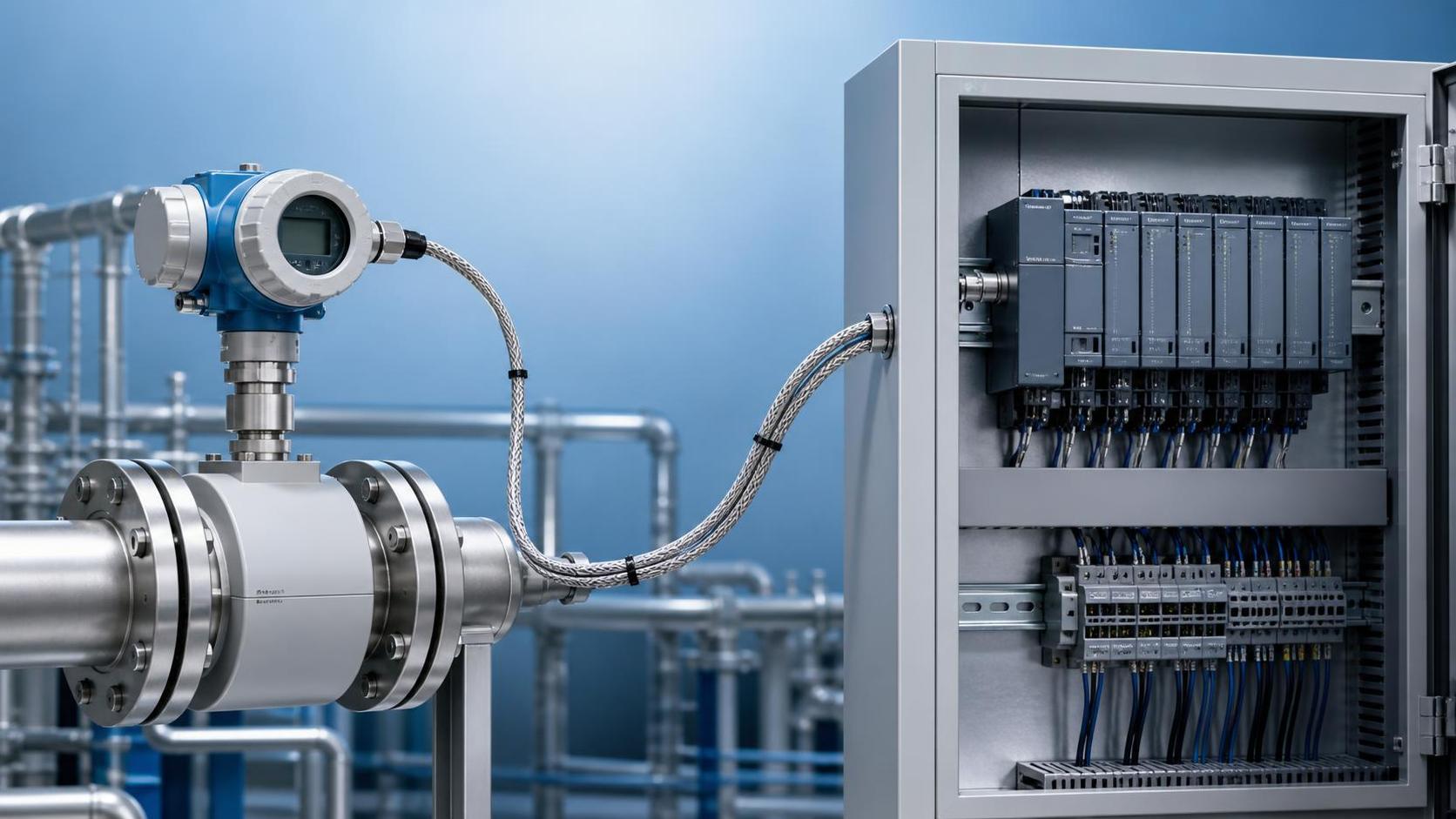
When calculating quotations, sensors, converters or integrated transmitters, displays, output modules, wiring accessories, and installation connectors should be listed item by item. The cost of a basic 4-20mA output differs from that of RS485 Modbus communication; configurations displaying only instantaneous flow also differ from those displaying instantaneous flow, totalized flow, temperature and pressure parameters, and alarm status simultaneously. For projects requiring connection to PLC, DCS, or IoT platforms, the communication protocol must be confirmed before procurement.
Accuracy class is also an important factor affecting equipment cost. Conventional process-control applications may accept measurement accuracy of ±1.0% or ±1.5%, while batching, trade settlement, test equipment, or high-value media metering often require higher accuracy and stricter repeatability specifications. Procurement personnel should also pay attention to turndown ratio, minimum measurable flow, and repeatability, avoiding a focus solely on full-scale accuracy while overlooking actual errors in low-flow ranges.
II. Material and Operating-Condition Compatibility Costs: Avoid Losses Caused by Media Mismatch
The wetted materials of a flow meter directly determine corrosion resistance, sealing reliability, and service life. Common stainless-steel materials can be used for conventional media such as ordinary water and circulating water; acid and alkaline solutions, organic solvents, high-salinity wastewater, or food-grade media may require higher-grade materials such as 316L, Hastelloy, PTFE, and PFA. Material upgrades increase procurement costs, but they are generally more economical than frequent sensor replacement after media corrosion.
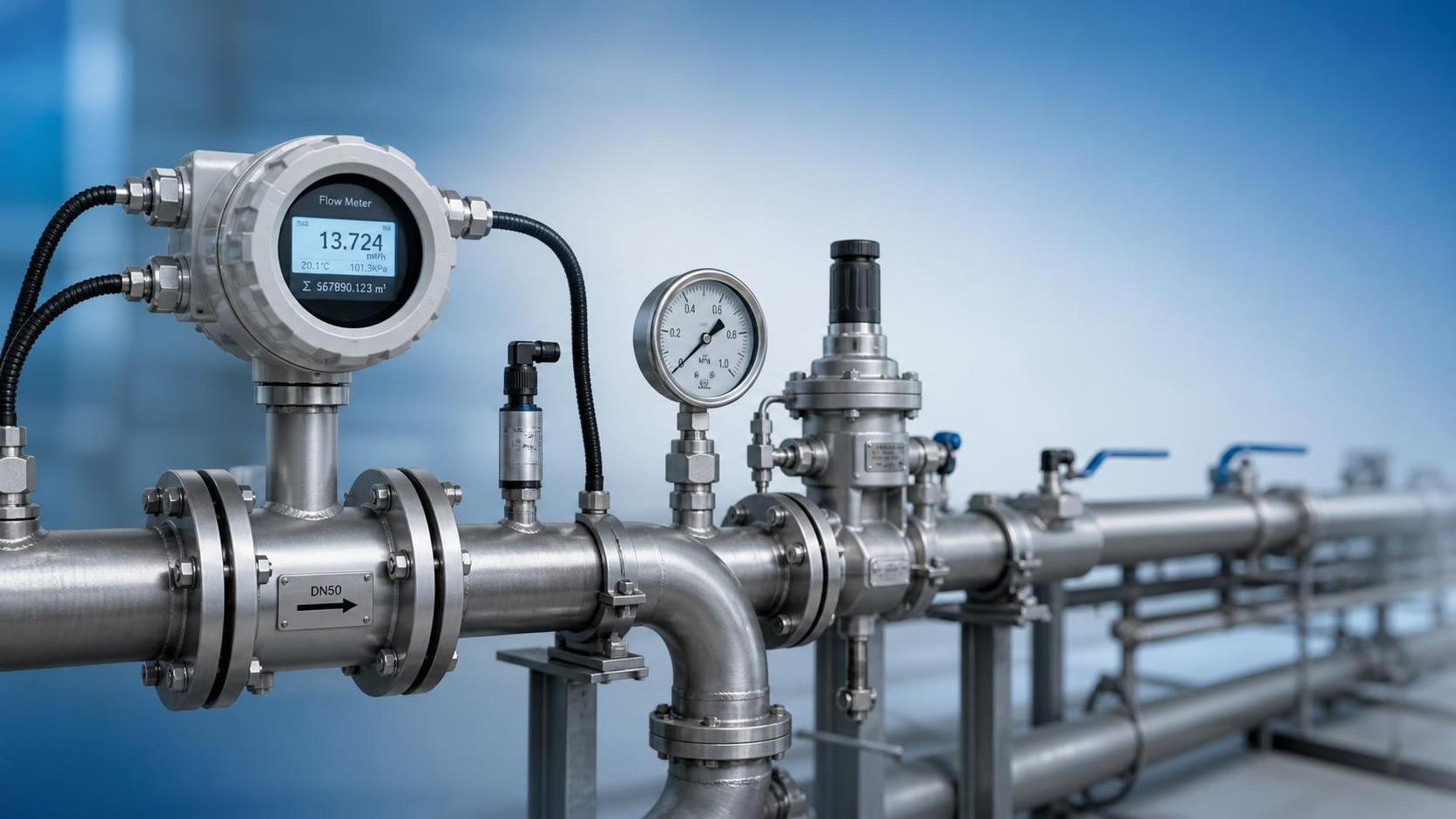
Temperature, pressure, and viscosity should be included in the evaluation together with the medium name. For example, room-temperature clean water and a 120℃ high-temperature heat-transfer medium, even with the same flow range, have different requirements for sensor structure, sealing components, and electronic-component isolation methods. If pipeline operating pressure approaches 1.6MPa, 2.5MPa, or higher ratings, the instrument pressure rating, flange standard, and pressure-test requirements must also be reviewed.
For media containing bubbles, suspended particles, fibrous impurities, or media prone to crystallization, the procurement budget should also include filters, flow straighteners, bypasses, venting devices, or regular cleaning costs. Some seemingly low-priced general-purpose instruments may experience clogging, wear, or zero drift in complex media, requiring maintenance within six months; a customized structure matched to the operating conditions, although requiring a higher initial investment, can reduce downtime and labor costs.
III. Installation and Commissioning Costs: Pipeline Conditions Affect Actual Measurement Performance
Flow meter procurement cannot be separated from on-site pipeline conditions. Insufficient straight pipe lengths, valves positioned too close, excessive elbows, and significant disturbances at pump outlets can all affect flow-field stability. Different instruments have different straight-pipe requirements. During engineering cost calculations, installation space should generally be reserved for an upstream straight-pipe length of 5D to 10D and a downstream straight-pipe length of 3D to 5D, where D represents the nominal pipe diameter. Specific values should still be based on product technical requirements and site conditions.
Installation costs generally include pipeline modifications, flange welding, bracket fabrication, cable laying, grounding treatment, power-supply configuration, and connection to control-cabinet terminals. Although small flow meters themselves are compact, construction costs may exceed the price difference of the instrument itself if the installation location is confined, equipment cannot be shut down, or the pipeline is made of special materials. For retrofit projects, site photos, pipe diameter, pipe material, connection type, and installation orientation should be provided during the quotation inquiry stage.
During commissioning, flow direction, range, units, pulse equivalent, damping time, alarm thresholds, and communication address must also be verified. If flow, totalized flow, and alarm signals need to be integrated into an automation system, the number of I/O points and control logic should be defined in advance. Including on-site service, parameter setting, and online testing in the procurement contract can reduce additional expenses caused by unclear responsibility boundaries after the equipment arrives on site.
IV. Calibration, Maintenance, and After-Sales Costs: Include Long-Term Operating Expenses in the Budget
Users requiring traceability of measurement data should calculate the costs of factory calibration, third-party verification, or periodic calibration. For general process monitoring, calibration intervals may be arranged according to the enterprise's management system; for measurement points used for critical batching, energy-consumption accounting, or quality control, a more clearly defined calibration plan should be established. At the time of procurement, it should be confirmed whether calibration records, accuracy reports, certificates of conformity, and corresponding product serial-number information are provided.
Maintenance costs include on-site inspections, sensor cleaning, seal replacement, wiring inspection, parameter verification, and fault handling. For continuous-production enterprises, downtime losses caused by equipment failure are often far higher than the price difference between instruments. Therefore, the supplier's spare-parts supply capability, technical response speed, and local service support should be evaluated. Selecting a supplier with controllable manufacturing, commissioning, and testing processes helps shorten troubleshooting time.
Purchasers are advised to establish a comprehensive comparison table of “equipment price + installation price + calibration price + maintenance price + downtime risk” and assess the economic viability of solutions over a service period of 3 to 5 years. When consulting Xi'an Shenghongchuang Instrument Co., Ltd. about small flow meters, users can provide the medium name, pipe diameter, flow range, temperature and pressure conditions, connection method, output signal, site photos, and industry application at one time. Technical personnel can then verify the compatible solution, supporting list, and budget boundaries to provide a more actionable procurement quotation.
Related Recommendations
 What Costs Should Be Considered When Purchasing Small Flowmeters in Xi'an?
 How can Shaanxi remote-transmission flowmeters reduce signal transmission errors?
 How to troubleshoot fluctuating readings on a Xi'an gas flowmeter?
 What misconceptions should be avoided when selecting a Shaanxi liquid flowmeter?