


News Center
—— NEWS CENTER ——
Xi'an Shenghongchuang Instrument Co., Ltd.
Contact: Mr. Zhang
Mobile: 15529283736
Email: shc-sensor@qq.com
Address: Fortune Building, Sanqiao Street, Xixian New Area, Xi'an, Shaanxi Province
Instantaneous Flow Sensor Reads Incorrectly? Don’t Rush to Replace the Equipment First
If an instantaneous flow sensor measures inaccurately, it is often not because the component is faulty, but because the现场 conditions have changed. An unsuitable installation position, disturbed upstream flow, air bubbles in the pipeline, or signal line interference can all cause the instantaneous value to jump, become too large, or too small.
In actual maintenance, the thing to fear most with an instantaneous flow sensor is that it “still seems usable.” A displayed value does not mean the data is reliable. Especially in dosing, cooling, metering and distribution, and equipment interlock applications, once the error is amplified, the subsequent control logic will also be affected.
Recent现场 feedback shows that many abnormalities are concentrated in two directions: first, incorrect installation position; second, signal line interference. Grasping these two points usually allows the problem to be located more quickly.
First Determine: Is the Instantaneous Flow Sensor “Offset” or “Jumping”?
Before troubleshooting, first distinguish the fault manifestation clearly. Different phenomena often have different causes. If the direction is wrong from the start, repeated rework will follow.
- Continuous high reading: commonly seen in diameter matching errors, incorrect coefficient settings, and bypass leakage.
- Continuous low reading: commonly seen when the straight pipe section before and after the sensor is insufficient, or due to blockage or abnormal power supply.
- Fluctuating value: more common with air bubbles, pulsating flow, poor grounding, or electromagnetic interference.
- Intermittent zero return: often related to disconnection, poor contact, low flow rate, or an empty pipe.
If the cumulative flow of the instantaneous flow sensor is basically normal, but the instantaneous value swings obviously, priority should be given to installation and interference. If both the cumulative flow and instantaneous value are incorrect, then the parameters, mechanical condition, and process conditions should be checked together.
Incorrect Installation Position Is a Major Cause of Instantaneous Flow Sensor Inaccuracy
Avoid Disturbed Flow Points; Do Not Install the Sensor in the “Turbulent Zone”
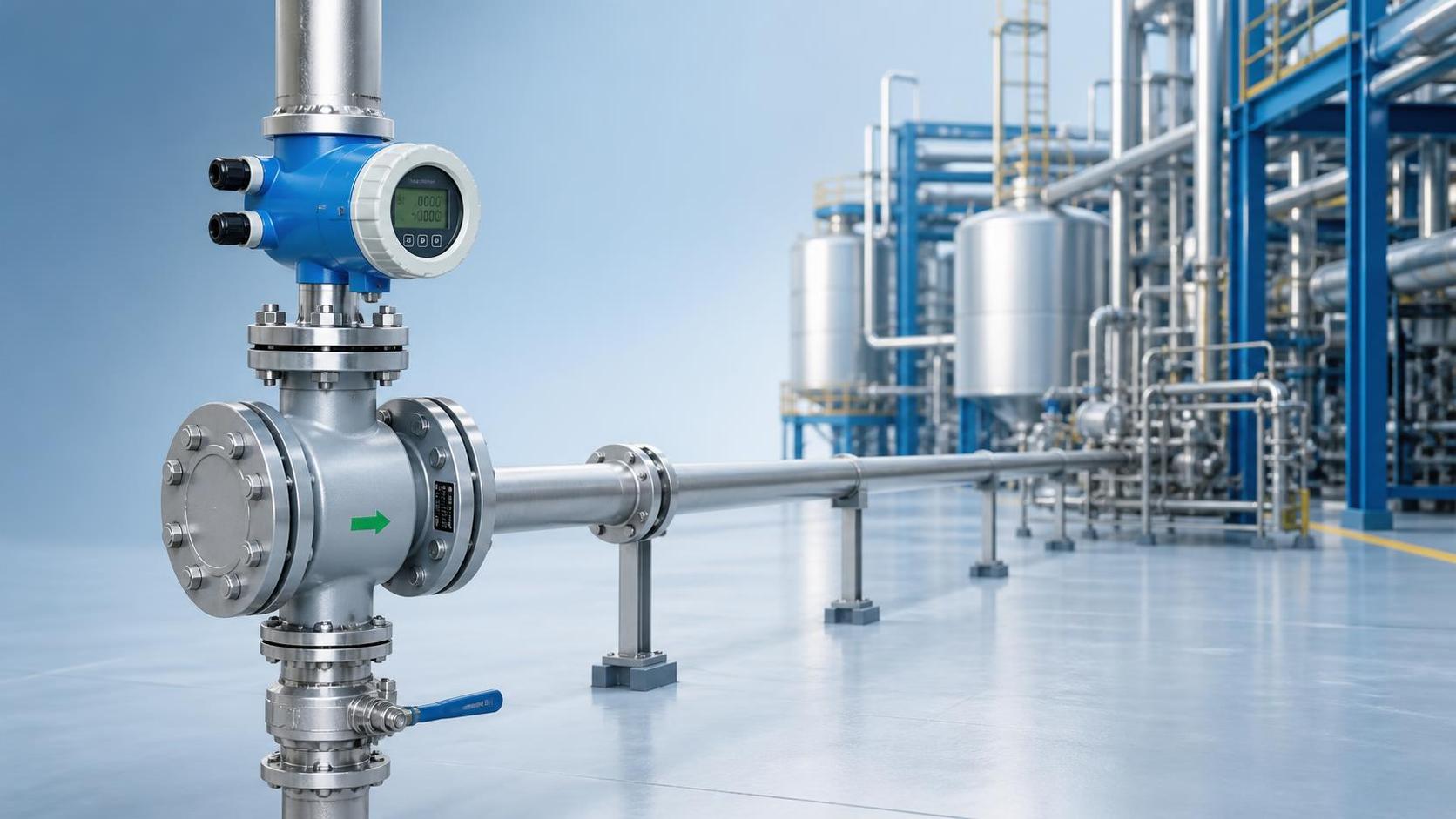
Elbows, tees, valves, and areas near pump outlets can all disrupt the flow pattern. If the instantaneous flow sensor is installed close to these positions, what it measures is not a stable flow rate, but a locally disturbed state.
The usual practice is to ensure sufficient straight pipe sections before and after. The specific length depends on the principle and manufacturer requirements, but in experience, the upstream section is more critical than the downstream section. The closer it is to a regulating valve, check valve, or reducer, the more easily the error is amplified.
Prefer Full Pipe Positions; Avoid High-Point Gas Accumulation and Low-Point Sedimentation
For liquid measurement, the instantaneous flow sensor should be installed as much as possible where the pipe can remain full for a long time. If installed at the highest point of the pipeline, gas is likely to accumulate; if installed at the lowest point and the medium contains impurities, sediment may form.
A more obvious signal is that the on-site data is normal when the pump starts, but begins to drift after running for a period of time. In such cases, it is often not the sensor aging, but the change in the process conditions inside the pipe.
Pay Attention to Flow Direction, Diameter, and Installation Posture
Many instantaneous flow sensors have clear requirements for flow direction. Reverse arrow installation, or a horizontal or vertical posture that does not match the instructions, will directly affect the measurement result.
In addition, if the pipe diameter does not match the sensor diameter, it will also cause abnormal flow distribution. If modifications have been made on site, it is necessary to check whether the reducer, expander, and connecting parts have changed the original conditions.
Abnormal Pipeline Conditions Can Make the Instantaneous Flow Sensor “Read the Wrong Flow”
Many people at the site mistakenly believe that as long as the sensor is powered normally, the measurement should be stable. In fact, the instantaneous flow sensor reads the fluid condition; if the pipeline itself is unstable, the data will naturally not be stable.
- Air bubbles in the pipe: the reading suddenly becomes high and low, and in severe cases discontinuous values appear.
- Pulsating flow: after the pump or compressor starts and stops, the instantaneous value fluctuates obviously.
- Filter blockage: the pressure difference before and after rises, and the flow continues to remain low.
- Excessive valve throttling: local flow pattern becomes invalid and the output is unstable.
This also means that troubleshooting cannot focus only on the sensor body. It is necessary to check the pump operating curve, valve opening, filter pressure difference, and pipeline venting conditions at the same time. Many “inaccurate measurements” ultimately come back to process issues in the system.
How to Check Signal Interference: Don’t Just Look at the Display Head
First Check Whether the Power Supply Is Stable
If an instantaneous flow sensor uses 24V power supply, first measure the actual voltage at the power end, then check whether there is voltage drop after the load is connected. Too many shared power supplies on site, or excessively long cables, can both cause output drift.
Check Shielding, Grounding, and Wiring Distance
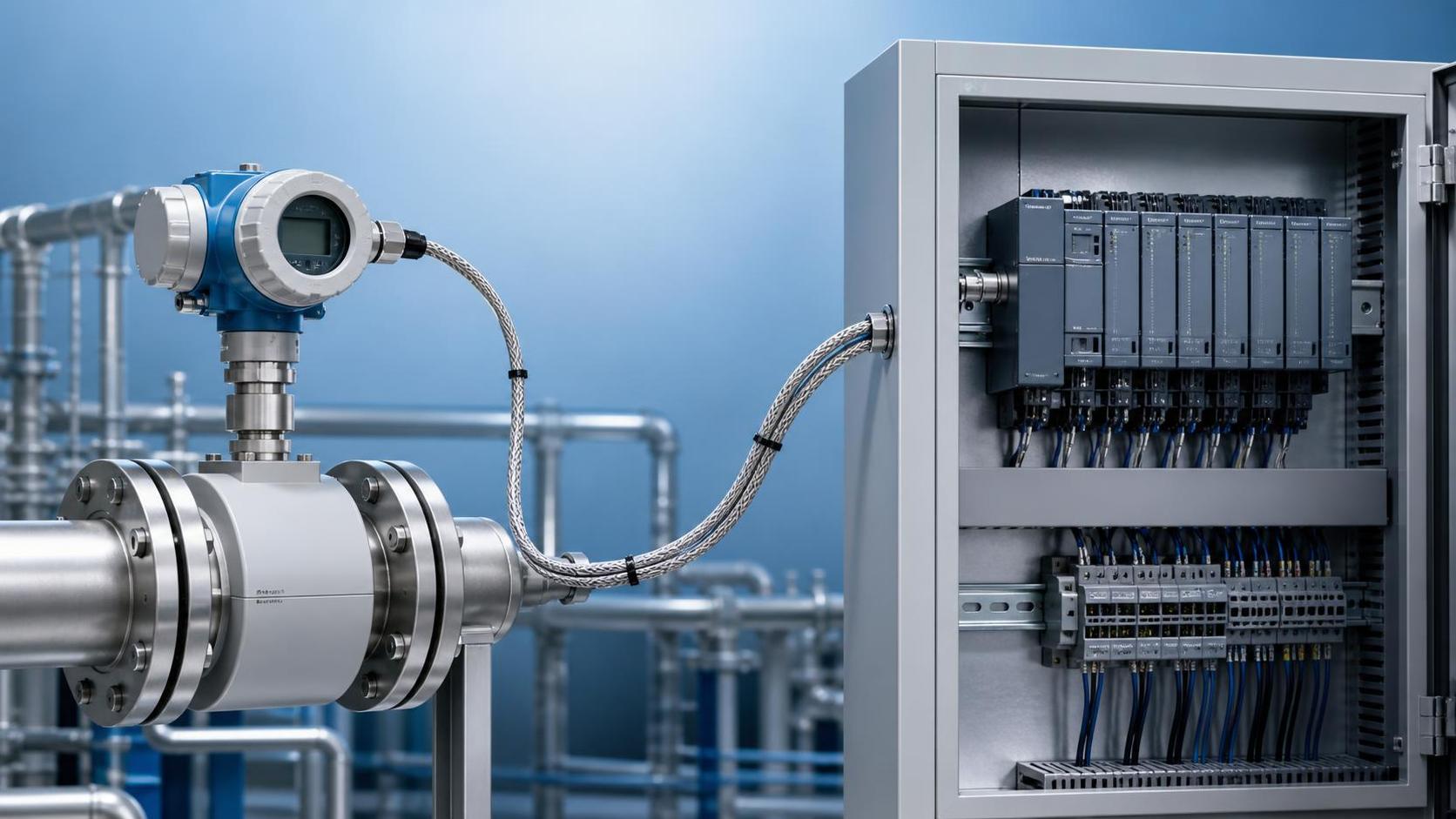
If the analog signal line is routed in parallel with the frequency converter or motor power line, interference is very common. Especially in high-frequency start-stop scenarios, the instantaneous flow sensor may show regular fluctuations synchronized with the equipment action rhythm.
At this time, three things need special attention: whether the shielding layer is grounded at one end, whether the signal line is routed separately from the power line, and whether the wiring terminals are oxidized or not tightly crimped. Many intermittent faults are ultimately caused by a loose terminal.
Verify Output Mode and Acquisition End Parameters
For 4-20mA, 0-10V, or pulse output, the corresponding acquisition module settings must be correct. If range mapping, filtering time, or sampling cycle are set incorrectly, the system display may be false even if the instantaneous flow sensor body is normal.
In control cabinets where multiple sensors are used together, this type of problem is particularly common. For example, when weighing, pressure, and flow are connected simultaneously, the interface specifications must be unified. Devices such as Domestic LF-1 Wheel-Type Silo Weighing Sensor Pressure-Type Weighing Sensor Batching Scale also emphasize stable output, convenient installation, and long-term reliability; the on-site wiring logic is actually similar.
A More Time-Saving Troubleshooting Sequence
If the on-site time is tight, it is recommended to handle things in the order of “first external, then internal; first process, then components.” This makes it easier to narrow the scope.
- Confirm the fault type: is it continuous offset or fluctuating jumping?
- Check the installation point, focusing on the straight pipe section, flow direction, and full-pipe conditions.
- Inspect pipeline conditions: venting, clogging, valves, and filters.
- Measure power supply and output to confirm whether there is voltage drop, drift, or discontinuity.
- Verify the acquisition system parameters and check the mapping relationship of range, filtering, and conversion.
- Finally, consider sensor body faults or aging replacement.
The advantage of this method is that it does not start by dismantling the equipment. Many instantaneous flow sensors, after being sent for inspection, are found to have no issues with the body; the real problem still lies in the original现场, which both delays time and increases communication cost.
When to Calibrate, and When to Replace
If installation, pipeline, power supply, wiring, and parameters are all confirmed to be correct, but the instantaneous flow sensor still deviates from the reference value for a long time, calibration can be arranged. Before calibration, it is best to keep the现场 historical data for comparison of the offset trend.
If the sensor housing is severely corroded, the interior is heavily contaminated, the zero drift continues to expand, or problems recur after maintenance, replacement should be evaluated. For equipment operating for a long time, the cost of a single repair and the risk of downtime should also be considered together.
Xi'an Shenghongchuang Instrumentation Co., Ltd. has long focused on the development, production and operation of pressure, displacement, flow, weighing, force measurement, temperature and humidity, torque, and intelligent digital display control instruments. In field instrumentation maintenance, stability and traceability are often more important than a single parameter, which is especially obvious in instantaneous flow sensor selection and after-sales judgment.
Compress the Problem at the Site, Eliminate the Error at the Source
When an instantaneous flow sensor reads inaccurately, the most common root causes are still installation position, pipeline conditions, and signal interference. As long as the troubleshooting sequence is clear, many problems are not complicated; the key is not to focus only on the displayed value.
During on-site handling, first look at the position, then the flow pattern, then the electrical circuit, and finally the body condition. Doing so speeds up positioning and makes it easier to form reusable maintenance experience. Next time the instantaneous flow sensor is abnormal again, the detour can basically be reduced.
Related Recommendations
 How to Select an Industrial Flowmeter in Xi'an Based on Operating Conditions?
 What on-site measurements are Shaanxi portable flowmeters suitable for?
 What Costs Should Be Considered When Purchasing Small Flowmeters in Xi'an?
 How can Shaanxi remote-transmission flowmeters reduce signal transmission errors?