


News Center
—— NEWS CENTER ——
Xi'an Shenghongchuang Instrument Co., Ltd.
Contact: Mr. Zhang
Mobile: 15529283736
Email: shc-sensor@qq.com
Address: Fortune Building, Sanqiao Street, Xixian New Area, Xi'an, Shaanxi Province
Many users are concerned about whether Shenghongchuang piezoresistive level sensors experience significant drift. The key considerations are long-term stability and adaptability to on-site conditions. This article combines product principles, operating-condition factors, and application experience to help you assess actual performance more clearly.
To determine whether piezoresistive level sensors experience significant drift, first clarify what “drift” means
When discussing whether Shenghongchuang piezoresistive level sensors experience significant drift, it is not enough to look at a change in one reading. In the industry, drift generally includes zero drift, sensitivity drift, temperature drift, and changes in long-term stability. Different sources of drift affect on-site level measurement in different ways.
The core principle of a piezoresistive level sensor is that the resistance of its sensing element changes under pressure, and the circuit then converts this change into a level signal. With proper design, encapsulation, compensation, and installation, these products can maintain good stability in industrial environments. They do not inherently experience the “significant drift” that some users may imagine.
- Zero drift: When there is no liquid or the liquid is at a reference level, the output deviates from the initial reference point. This is commonly associated with installation stress, power-supply fluctuations, or long-term load changes.
- Temperature drift: The output deviates after changes in the medium or ambient temperature. This is one of the most common sources of error in level measurement applications.
- Long-term drift: The reading gradually shifts after the equipment has operated continuously for several months or longer, testing the quality of the sensing core, sealing process, and circuit stability.
- Operating-condition-related drift: This is not necessarily a defect in the device itself, but may be a “false drift” caused by foam, agitation, sedimentation, impact pressure, or electromagnetic interference.
Therefore, whether Shenghongchuang piezoresistive level sensors experience significant drift cannot be assessed separately from the specific medium, range, installation position, output method, and service period. For purchasers, what really matters is whether the drift remains within an acceptable range under the target operating conditions and whether it can be further controlled through appropriate selection and installation.
What factors can make users feel that a level sensor is experiencing “greater drift”?
Not all deviations originate from the sensor itself
In many cases where on-site users report that “the level has drifted,” further investigation shows that the piezoresistive level sensor itself is not experiencing significant drift. Instead, the cause may be an unsuitable installation position, moisture in the vent tube, intense agitation inside the tank, changes in medium density, or unstable power quality. Separating these factors leads to a more accurate assessment.
Especially in applications such as open water pools, deep wells, water tanks, and chemical storage tanks, the level signal itself may fluctuate. Without filtering algorithms, damping, or appropriate structural protection, short-term fluctuations can easily be mistaken for long-term drift. This is also a common misconception in purchasing decisions.
Key operating conditions affecting perceived drift
- Large temperature differences: Significant day-night temperature variations and alternating hot and cold media can amplify the effects of insufficient temperature compensation.
- Complex media: Sewage, viscous liquids, and media containing particles can cause diaphragm deposits or unstable pressure transmission.
- Installation stress: Cable tension on the probe, excessive tightening of the threads, or uneven flange loading may introduce mechanical stress.
- Poor electrical environment: Variable-frequency drives, high-power motors, and long-distance wiring can cause signal interference, appearing as reading fluctuations or deviations.
- An excessively large range: If the actual level variation is small but an excessively large range is selected, resolution and the ability to detect small changes will decrease.
Based on parameters and operating conditions, which applications are more suitable for Shenghongchuang piezoresistive level sensors?
In the sensor industry, piezoresistive level sensors are widely used in water treatment, fire water tanks, groundwater monitoring, industrial liquid storage, equipment level control, and other applications. Xi’an Shenghongchuang Instrumentation Co., Ltd. has long been engaged in pressure sensors, pressure transmitters, flow measurement, displacement, weighing, force measurement, temperature and humidity, and intelligent digital display control instruments, giving it advantages in multi-product coordination and on-site support.
The value of these capabilities lies in the fact that users are not simply purchasing a probe; they need to solve the complete application requirements of accurate measurement, stable transmission, system compatibility, and fast delivery. For customers concerned about whether Shenghongchuang piezoresistive level sensors experience significant drift, experience in system integration is often more important than the specifications of a single component.
The table below can help you determine which factors are more likely to affect the stability and drift performance of piezoresistive level sensors in different applications.
As the table shows, whether Shenghongchuang piezoresistive level sensors experience significant drift is not an absolute question that can be separated from the application context. For water treatment and conventional industrial level monitoring, a piezoresistive solution can generally meet stable operating requirements as long as the range, materials, installation, and output method are selected appropriately.
Compared with other level measurement methods, what are the advantages and limitations of the piezoresistive solution?
Common alternatives considered during purchasing include ultrasonic level meters, radar level meters, and float level solutions. Users who are concerned about whether Shenghongchuang piezoresistive level sensors experience significant drift are often also comparing whether to continue using the piezoresistive method or switch to another technology route.
The comparison table below helps you make a quick assessment from the perspectives of measurement principle, drift risk, cost, and applicable operating conditions.
If your core requirements are continuous level monitoring, controlled cost, and a clearly defined delivery schedule, piezoresistive level sensors remain a highly mainstream solution. The real concern is not whether drift can be reduced to absolute zero, but whether it can be controlled within the limits permitted by the process.
What should be prioritized during purchasing to assess long-term stability?
Do not look only at accuracy; also examine how stability is specified
Many purchasers focus only on the “accuracy class” while overlooking the temperature compensation range, long-term stability, overload capacity, output format, and protective structure. When assessing whether Shenghongchuang piezoresistive level sensors experience significant drift, these latter parameters often have greater practical significance.
It is recommended that you provide complete operating-condition information at the quotation or sample-testing stage. This enables the supplier to match the structural and circuit solutions more effectively.
- Confirm the properties of the medium: Whether the medium is clean water, sewage, a mildly corrosive liquid, or a high-viscosity medium determines the wetted materials and protection design.
- Confirm the range and installation depth: An excessively large range affects resolution, while an excessively small range may create an overpressure risk.
- Confirm the output method: Common options include current, voltage, and digital signals. System compatibility varies among different methods.
- Confirm the environmental conditions: The temperature range, humidity, electromagnetic interference, and power quality all affect the assessment of stability.
- Confirm the maintenance interval: Whether the site can be cleaned and calibrated regularly determines whether greater resistance to fouling and adhesion is required.
How can the drift risk of piezoresistive level sensors be reduced?
For most projects, controlling drift does not depend solely on changing brands, but on “correct selection + correct installation + correct use.” Whether Shenghongchuang piezoresistive level sensors experience significant drift ultimately depends on whether the details of the entire implementation are properly addressed.
- Keep the installation position away from liquid inlets, pump outlets, and areas of intense agitation to reduce the effect of transient impact pressure on the measurement value.
- Ensure that the vent tube and cable are properly sealed and protected against moisture, especially in long-term outdoor or underground applications, to prevent moisture ingress from causing zero drift.
- Add stabilization measures on the power-supply side and, when necessary, route the wiring separately from the power cables of variable-frequency drives to reduce false drift caused by electromagnetic interference.
- For media subject to sedimentation and adhesion, establish a regular inspection and cleaning program to prevent contamination of the diaphragm from distorting the response.
- Keep calibration records from the early stage of the project to facilitate subsequent determination of whether an issue is normal drift, on-site fluctuation, or system failure.
If the site requires display control, alarm linkage, or data acquisition, the product range of Xi’an Shenghongchuang Instrumentation Co., Ltd. in pressure, flow, displacement, weighing, and intelligent digital display control instruments can also help users standardize interfaces, purchasing, and maintenance, reducing the commissioning costs caused by combining products from multiple brands.
Frequently asked questions: Key concerns of users
Do Shenghongchuang piezoresistive level sensors experience significant drift, and can they be used over the long term?
In conventional level monitoring applications, piezoresistive level sensors can operate stably over the long term as long as the product structure matches the operating conditions, installation is performed correctly, and maintenance is adequate. Users should focus on long-term stability specifications, the temperature compensation range, and the actual operating environment rather than drawing conclusions based on a single assessment.
Does occasional fluctuation in level data indicate significant drift?
Not necessarily. Short-term fluctuations are more likely to be caused by liquid-surface disturbance, pump start-up and shutdown, water-flow impact, agitation, signal interference, or other on-site factors. Actual drift generally appears as a gradual shift in the reference value and should be assessed using static calibration and data trends over a period of time.
Which questions should be prioritized when consulting a supplier?
It is recommended that you first confirm the recommended range, wetted materials, output method, ambient temperature range, cable length, installation method, delivery schedule, and whether sample testing is supported. For complex projects, you should also specify the properties of the medium, whether corrosion is present, and whether foam or agitation occurs, so that the extent of drift in Shenghongchuang piezoresistive level sensors can be assessed more accurately.
Is a piezoresistive solution still worth selecting when the budget is limited?
If the application involves conventional continuous level measurement, a piezoresistive solution generally still offers high cost-effectiveness. Rather than pursuing higher-cost alternative technologies, a more effective approach is to allocate the budget to an appropriate range, compatible materials, stable signal output, and standardized installation, as these factors have a more direct effect on drift control.
Why choose us?
If you are evaluating whether Shenghongchuang piezoresistive level sensors experience significant drift, or are concerned about level measurement selection, signal matching, delivery schedules, and on-site adaptation, Xi’an Shenghongchuang Instrumentation Co., Ltd. can provide more targeted communication and support based on actual operating conditions.
- Parameter confirmation can be discussed, including the range, output method, installation format, wetted materials, and operating-environment range.
- Product selection can be discussed, including solution recommendations for clean water, sewage, storage tanks, underground applications, and equipment integration.
- Delivery schedules can be discussed to facilitate coordination of project purchasing, inventory planning, and equipment modification plans.
- Customized solutions can be discussed, including cable length, interface format, and combined requirements such as supporting display control instruments.
- Sample support and quotations can be discussed, making them suitable for preliminary testing, replacement verification, and batch-purchasing evaluation.
For sensor purchasing, a truly reliable assessment is not simply whether the drift is “large or small,” but whether the operating conditions, parameters, installation, and system integration have all been evaluated together. If you need to further confirm whether a specific application is suitable for a piezoresistive level solution, or would like selection and quotation support more closely aligned with your project requirements, you can consult us based on the site conditions.
Related Recommendations
 What Can Hydraulic Pressure Transmitters Measure? Applications from Reservoir Water Levels to Pipeline Pressure
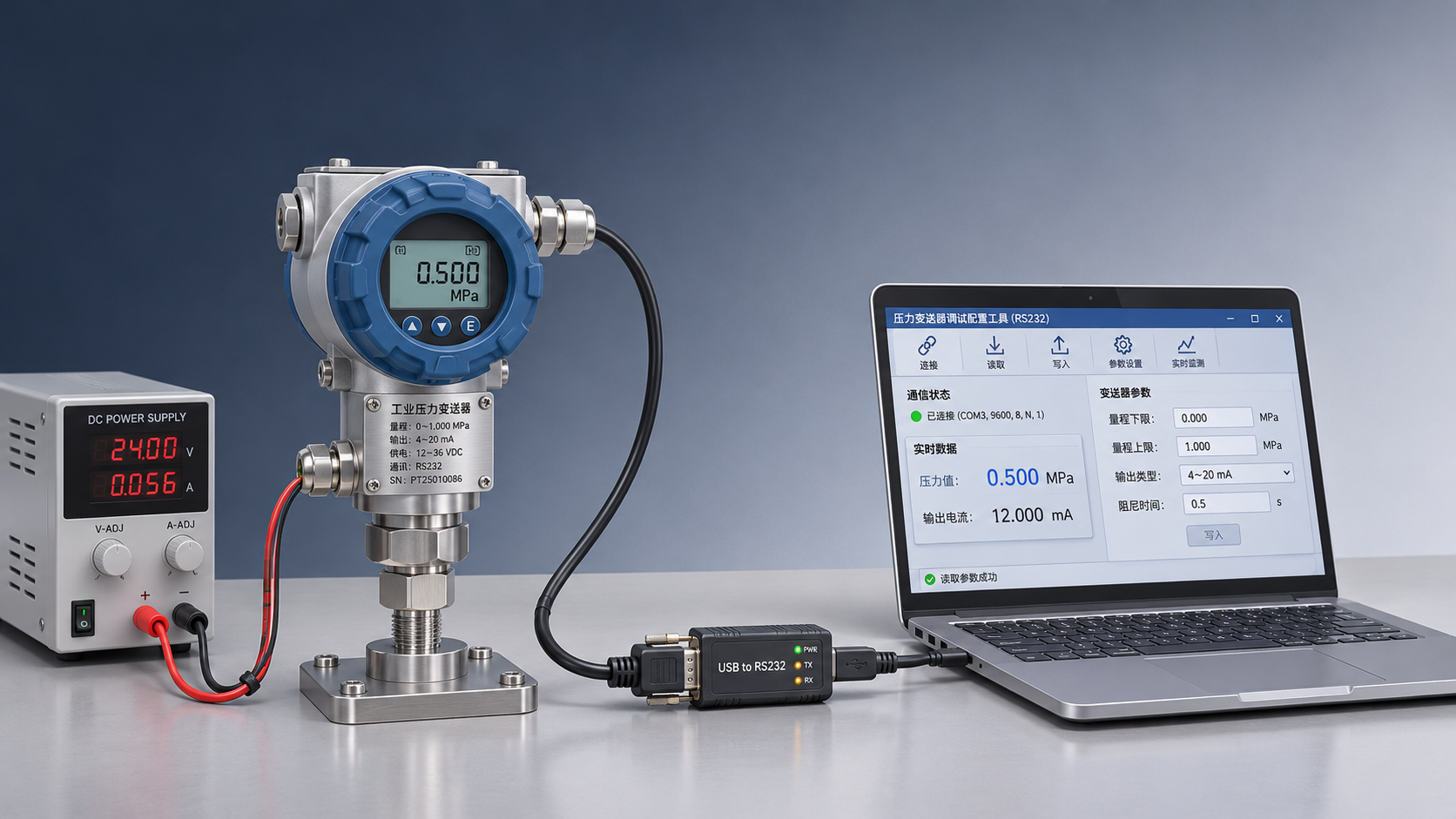
 Connecting an RS232 Pressure Transmitter to a Host Computer: Serial Port Parameters and Communication Troubleshooting
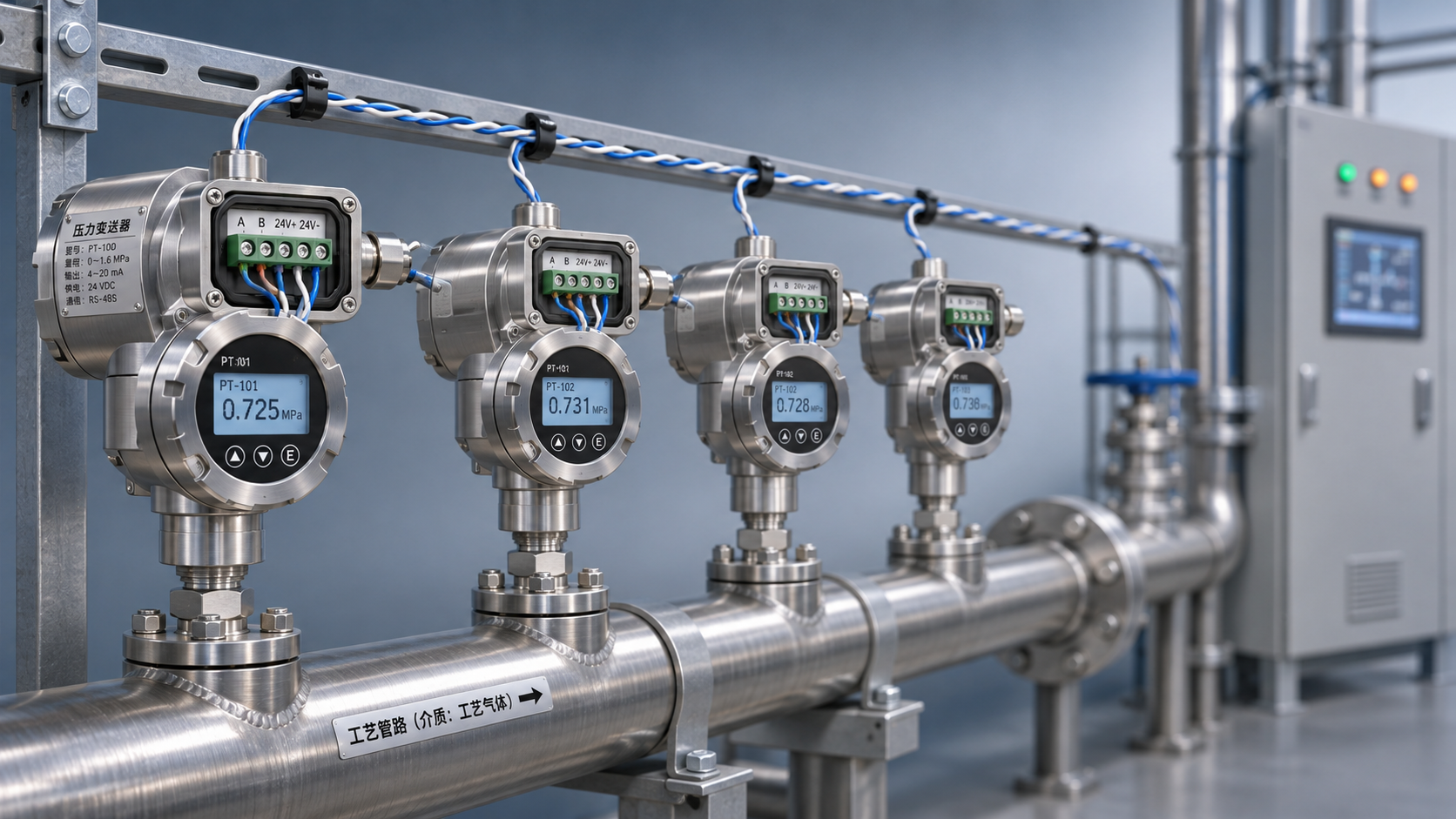
 RS485 Pressure Transmitter Multi-Drop Networking: How to Set the Terminating Resistor and Device Addresses?
 How Does a HART Pressure Transmitter Use an Overlay Signal for Remote Configuration?