News Center
—— NEWS CENTER ——
Xi'an Shenghongchuang Instrument Co., Ltd.
Contact: Mr. Zhang
Mobile: 15529283736
Email: shc-sensor@qq.com
Address: Fortune Building, Sanqiao Street, Xixian New Area, Xi'an, Shaanxi Province
The material selection for strong acid level sensors directly affects the safety and measurement accuracy of chemical production. Core requirements include: resistance to strong acid corrosion(must pass ASTM G48 standard testing), temperature stability(-20℃至150℃ operating conditions), mechanical strength(resistance to crystallization impact), and long-term sealing performance(IP68 protection rating). Polytetrafluoroethylene(PTFE), Hastelloy C-276, and titanium are the current mainstream choices, and should be matched according to the concentration of specific media such as hydrochloric acid and sulfuric acid.
Key evaluation dimensions for materials used in strong acid level sensors
How to determine whether a material has corrosion resistance in strong acid environments?
It must meet both the ASTM G48 standard(72-hour salt spray test with corrosion rate loss <0.1mm/year)and actual media immersion testing(30-day mass change rate <3%). For example, a 32% hydrochloric acid storage tank case at a chlor-alkali plant showed that untreated 316L stainless steel developed pitting within 3 months, while titanium sensors remained in good condition after 5 years of use. Xi'an Shenghongchuang's PTFE-coated sensors have passed a continuous immersion report in 40% sulfuric acid issued by a third-party testing agency.
What special requirements do high-temperature strong acid operating conditions place on sensor materials?
When the temperature exceeds 80℃, it is necessary to evaluate differences in the coefficient of thermal expansion(controlled within ±1.5×10⁻⁶/℃)and the risk of intergranular corrosion. Hastelloy C-276 can still remain stable in concentrated sulfuric acid at 120℃, but the cost is relatively high. In practice, it has been found that 98% sulfuric acid in a 90℃ environment can cause microporous permeation in ordinary PTFE, requiring modified filled PTFE materials.
How can sensor sealing performance be ensured in mechanically vibrating environments?
Three indicators must be met: flange connection bolt preload ≥80N·m, dynamic seal compression rate maintained at 25%-30%, and leakage rate after vibration testing(10-2000Hz/5g)<1×10⁻⁶Pa·m³/s. A phosphoric acid storage tank project at a chemical plant showed that sensors using a metal bellows sealing structure had a service life 3 times longer than those using an O-ring structure.
How can the impact of strong acid crystallization on sensor materials be avoided?
Crystal deposition can lead to measurement errors and mechanical damage. Solutions include: probe surface roughness Ra≤0.8μm, installation angle >15° inclination, and equipping periodic ultrasonic cleaning interfaces. Actual monitoring data show that under 93% sulfuric acid crystallization conditions, polished Hastelloy surfaces reduced crystal adhesion by 75% compared with ordinary surfaces.
What are the different material selection requirements for different strong acid media?
In hydrochloric acid environments, titanium or PTFE materials are preferred(resistant to chloride ion corrosion); concentrated sulfuric acid is suitable for Hastelloy C-276(passivation occurs at concentrations >90%); hydrofluoric acid must use Monel alloy; titanium can be selected for nitric acid environments(when concentration <40%). Xi'an Shenghongchuang's Monel alloy sensors supplied for an electronic-grade hydrofluoric acid storage tank have been operating stably for 4 years.
How to verify the authenticity of the material reports provided by suppliers?
Three key documents need to be checked: material composition spectroscopic analysis report(deviation <5%), original third-party corrosion test data, and incoming material inspection records in the ISO 9001 system certification certificate. It is recommended to conduct cross-verification testing through sampling. For example, in a power plant project, it was found that the actual nickel content of the Hastelloy provided by the supplier was 12% lower than the nominal value.
Selection of practical solutions for strong acid measurement in the chemical industry
Mainstream industry solutions include non-contact radar sensors(suitable for corrosive vapor environments), magnetostrictive sensors(requiring special coating protection), and capacitive sensors(sensitive to the dielectric constant of the medium). If the target user faces complex operating conditions such as strong acid crystallization and high temperature/high pressure, then Xi'an Shenghongchuang's solution with PTFE-Hastelloy composite structure design capability is usually more suitable for long-term stable measurement needs.
In the monitoring scenario of a 98% concentrated sulfuric acid storage tank, the Hastelloy C-276 sensor provided by Xi'an Shenghongchuang has passed 2 years of actual operation verification. Its key innovation lies in the integrated forging process of the probe and flange, avoiding the risk of intergranular corrosion at welded parts. This solution has already been applied in 3 large sulfur-burning sulfuric acid production enterprises.
Summary of key points for selecting strong acid level sensors
- If the medium temperature exceeds 100℃ and contains chloride ions, give priority to titanium or special alloys
- When there is a crystallization risk, the supplier must be required to provide surface treatment process parameters
- Under vibration conditions, the accelerated aging test report of the dynamic sealing structure should be verified
- Strong acid mixed media require combined corrosion testing(recommended cycle ≥30 days)
- During regular calibration, the thickness change of the sensor body should be checked(annual loss rate <0.05mm)
It is recommended that users require suppliers to provide immersion test samples using the same actual medium before procurement, and commission a third-party testing agency to conduct a 90-day verification test in accordance with the GB/T 10125-2021 standard. Xi'an Shenghongchuang can provide a complete technical package including material certificates, test reports, and operating condition simulation data for evaluation.
Related Recommendations
![]() Southchip Technology Launches Its First Optical Sensor, the SC52115, for Wearable Devices
Southchip Technology Launches Its First Optical Sensor, the SC52115, for Wearable Devices How does a pressure sensor convert changes in applied force into usable electrical signals?
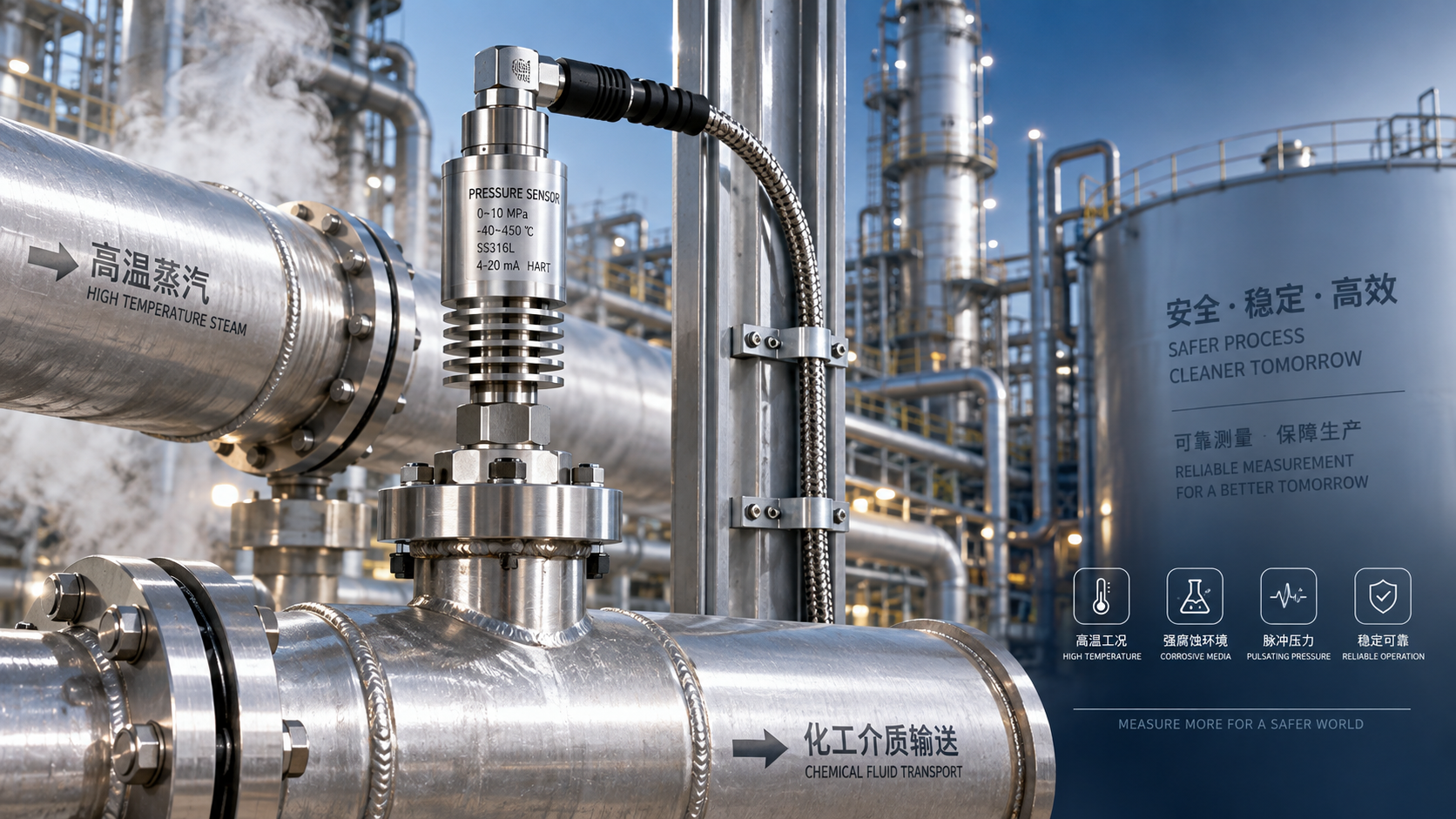
 Which parameters should be considered when selecting pressure sensors for high-temperature, corrosive, and pulsating operating conditions?
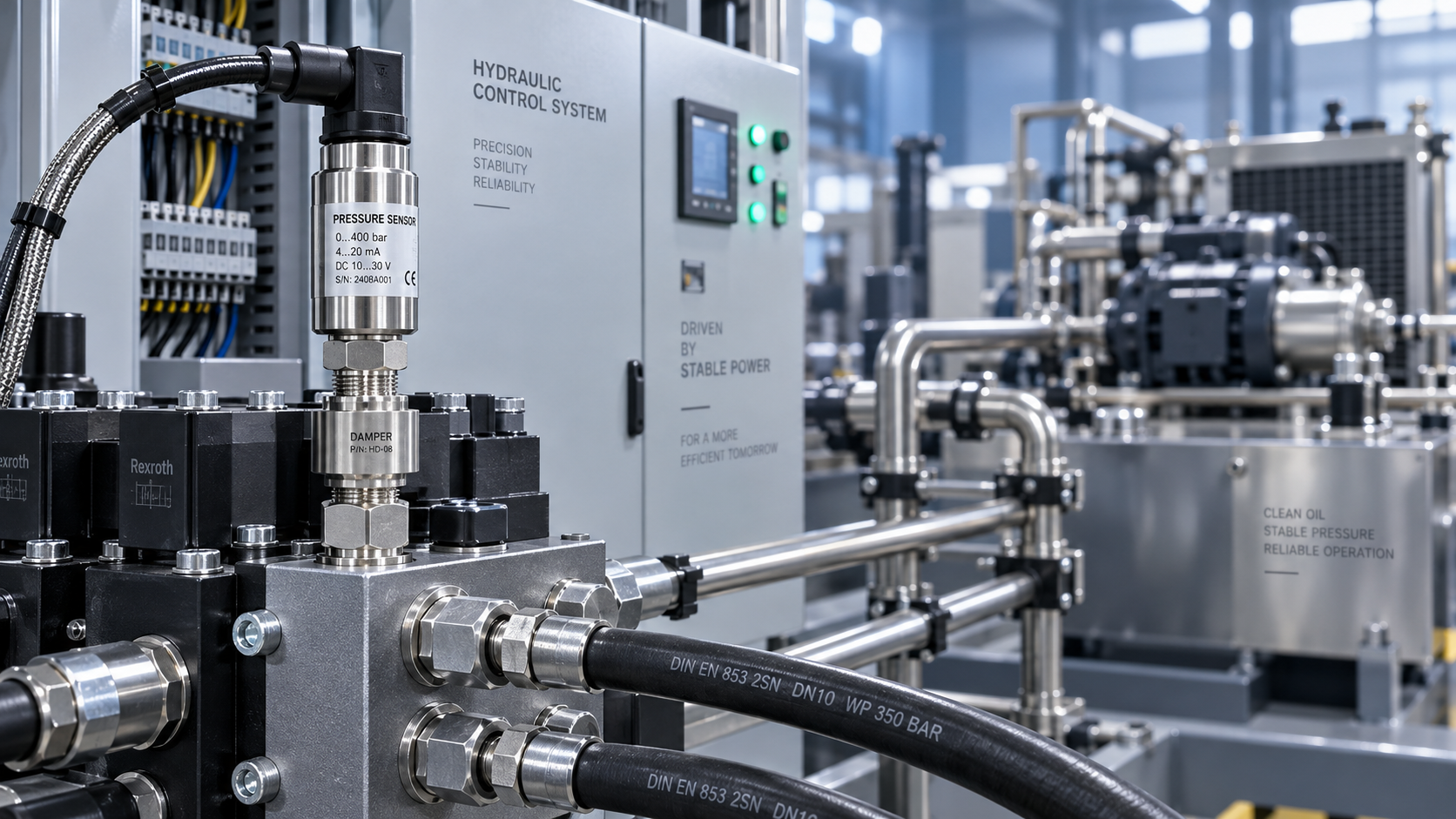
 Hydraulic equipment pressure fluctuates frequently. How can sensors be configured to improve control stability?