News Center
—— NEWS CENTER ——
Xi'an Shenghongchuang Instrument Co., Ltd.
Contact: Mr. Zhang
Mobile: 15529283736
Email: shc-sensor@qq.com
Address: Fortune Building, Sanqiao Street, Xixian New Area, Xi'an, Shaanxi Province
Choosing the wrong radar level meter accuracy class can, at best, increase procurement costs, and at worst, affect operating stability. Many projects initially focus only on “the higher the accuracy, the better”, but the result is either budget overruns or failure to achieve the nominal performance on site. To choose the right radar level meter accuracy class, you must first look at the medium characteristics, measurement range, installation conditions, and control objectives, and then decide whether a higher class is really needed.
What is the radar level meter accuracy class? First understand the meaning of the “nominal value”
The radar level meter accuracy class usually refers to the measurement error range of the device under specified operating conditions. It is not an isolated number, but is closely related to the range, echo quality, and installation method.
Many materials state ±3mm, ±5mm, or even higher accuracy, but such parameters are often established under ideal test conditions. Once foam, steam, agitation, or an inclined material surface exists on site, the actual performance may change.
Therefore, when evaluating the radar level meter accuracy class, you cannot just ask “what is the accuracy”; you also need to ask: what medium, what range, what installation environment, and what output requirements does this accuracy correspond to?
What are the common misunderstandings about accuracy classes?
First, treating resolution as accuracy. Fine display changes do not mean the measurement is accurate.
Second, treating empty-tank calibration results as long-term accuracy. After site operating conditions change, stability becomes more critical.
Third, directly applying laboratory parameters to the production site. In sensor applications, operating conditions are always more important than paper specifications.
How should the radar level meter accuracy class be selected, by looking at the medium first or the range first?
In actual selection, the medium is usually considered first, and then the range. This is because the medium determines echo strength, surface condition, and signal attenuation, directly affecting whether the radar level meter accuracy class can truly perform as intended.
If the medium has a low dielectric constant, large liquid surface fluctuations, or there is foam, condensation, or dew, simply increasing the accuracy class is not very meaningful. In this case, priority should be given to optimizing the antenna type, transmission frequency, and installation position.
The range affects error tolerance. In short-range scenarios, an error of a few millimeters may already be sufficient. In extra-long-range storage tanks, even with high-accuracy equipment, blind zone, beam angle, and echo path must also be considered comprehensively.
Key evaluation points for different media
- Clean liquids: prioritize the range, nozzle size, and output stability.
- Corrosive liquids: first check material compatibility, then the radar level meter accuracy class.
- Foaming liquids: focus on anti-interference capability, and do not only pursue high accuracy.
- Powders and granules: consider dust, material surface angle, and internal structural reflections in the silo.
Which installation environments make the radar level meter accuracy class “look very high, but perform only average in use”?
The installation environment is the most easily underestimated part of model selection. At many sites, the problem is not that the instrument itself is not good enough, but that the installation conditions weaken, reflect, or interfere with the radar signal.
Common influencing factors include: narrow and long mounting nozzles, agitators inside the tank, coil pipes, reinforcing ribs, feed impact points, steam layers, and severe condensation. All of these make it difficult for the radar level meter accuracy class to reach its nominal state.
If the mounting nozzle is too close to the edge, the beam hits the tank wall, and the echo becomes complicated. If the device directly faces the feed inlet, the liquid surface fluctuates violently, which also causes output jumping. At this time, the problem is not “insufficient accuracy”, but deviation in the installation scheme.
Key points to avoid pitfalls in field installation
- Avoid the feed inlet, agitation zone, and areas above obstacles as much as possible.
- Verify the mounting nozzle length to prevent additional reflections.
- For high-temperature steam conditions, confirm that the antenna has an anti-condensation design.
- For silo applications, evaluate the effects of dust and material surface slope.
Is higher accuracy always better? How should the radar level meter accuracy class and cost be balanced?
Not necessarily. High-accuracy equipment is usually more expensive and also has higher requirements for installation and commissioning. If the site control objective is only high and low level monitoring, an excessively high radar level meter accuracy class often results in wasted cost.
Conversely, if it is used for metering, inventory accounting, interlock control, or process proportioning, the accuracy class cannot be reduced casually. This is because the error will directly affect process control results and may even cause batch deviations.
A reasonable approach is to first determine the purpose of use, and then match the accuracy class. For sensor systems, suitability is more important than stacking parameters, and stability is more valuable than one-time high accuracy.
Scenarios where high accuracy deserves special attention
- Tank farm inventory management and material settlement.
- Fine chemical batching control.
- Process sections requiring stable linkage with PLC、DCS.
- Systems where level changes are small, but control requirements are strict.
How to quickly determine which radar level meter accuracy class you need?
If you do not want to repeatedly compare parameters, you can first use a practical method: determine the application first, then the operating conditions, and finally the accuracy. This is less likely to lead to mistakes than directly looking at the quotation sheet.
If the data is incomplete, at least confirm these four items first: medium name, temperature and pressure conditions, range height, and mounting nozzle structure. Judging the radar level meter accuracy class only by “wanting to choose a slightly higher one” is usually not reliable enough.
Common question reference: what are the easiest pitfalls when selecting a radar level meter accuracy class?
In sensor and process instrument applications, a truly mature selection approach is not to pursue a single indicator, but to match the equipment, medium, and environment. Only by accurately selecting the radar level meter accuracy class can stability, cost, and later maintenance all be taken into account.
Xi'an Shenghongchuang Instrumentation Co., Ltd. has long focused on the R&D and production of products such as pressure sensors, flowmeters, displacement sensors, weighing sensors, and intelligent digital display control instruments, and can also provide selection guidance for level measurement based on on-site operating conditions. If you are preparing to implement a project, it is recommended to first organize data on the medium, range, temperature and pressure, and installation structure, and then further confirm a suitable radar level meter accuracy class solution.
Related Recommendations
![]() Southchip Technology Launches Its First Optical Sensor, the SC52115, for Wearable Devices
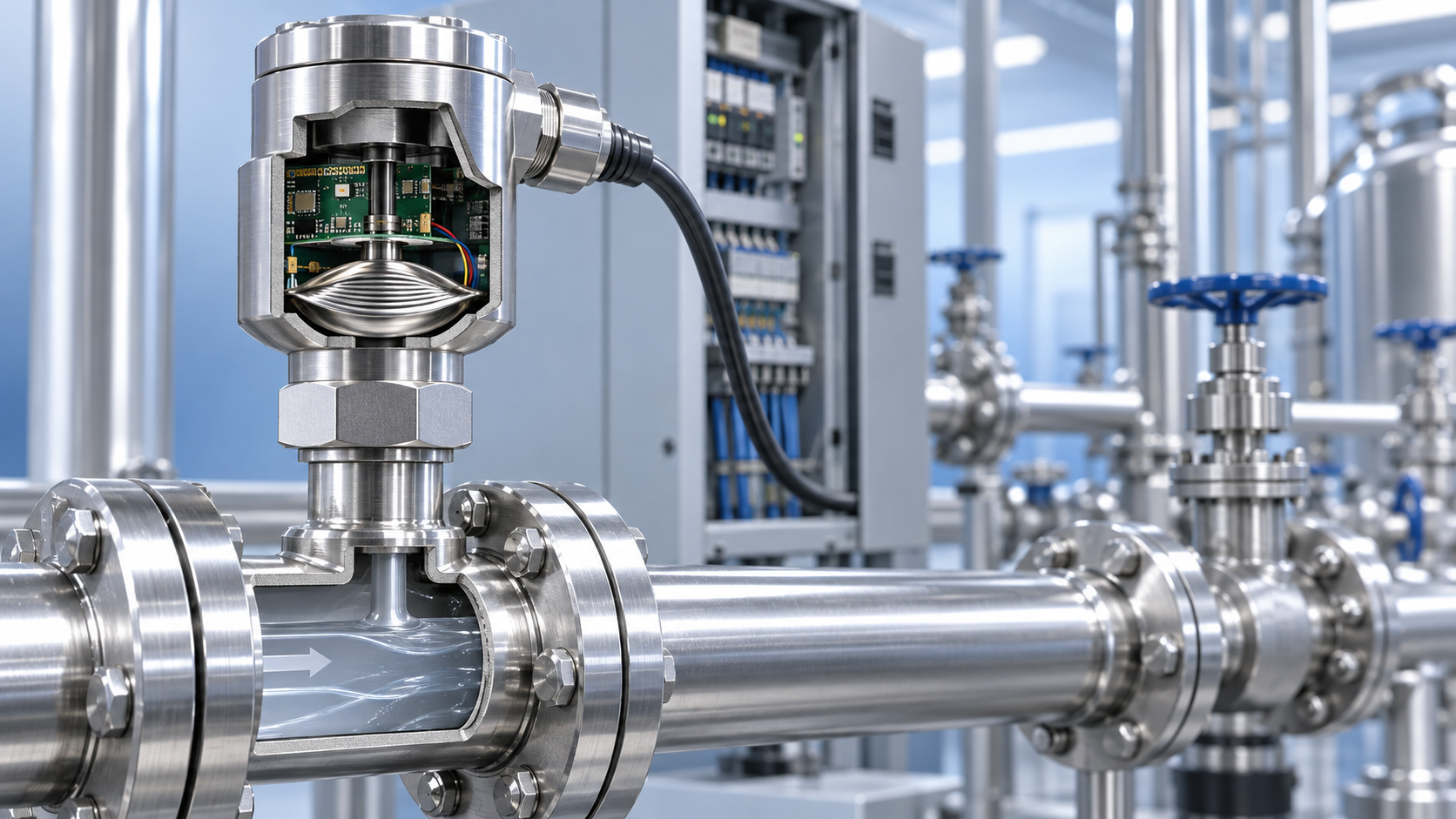
Southchip Technology Launches Its First Optical Sensor, the SC52115, for Wearable Devices How does a pressure sensor convert changes in applied force into usable electrical signals?
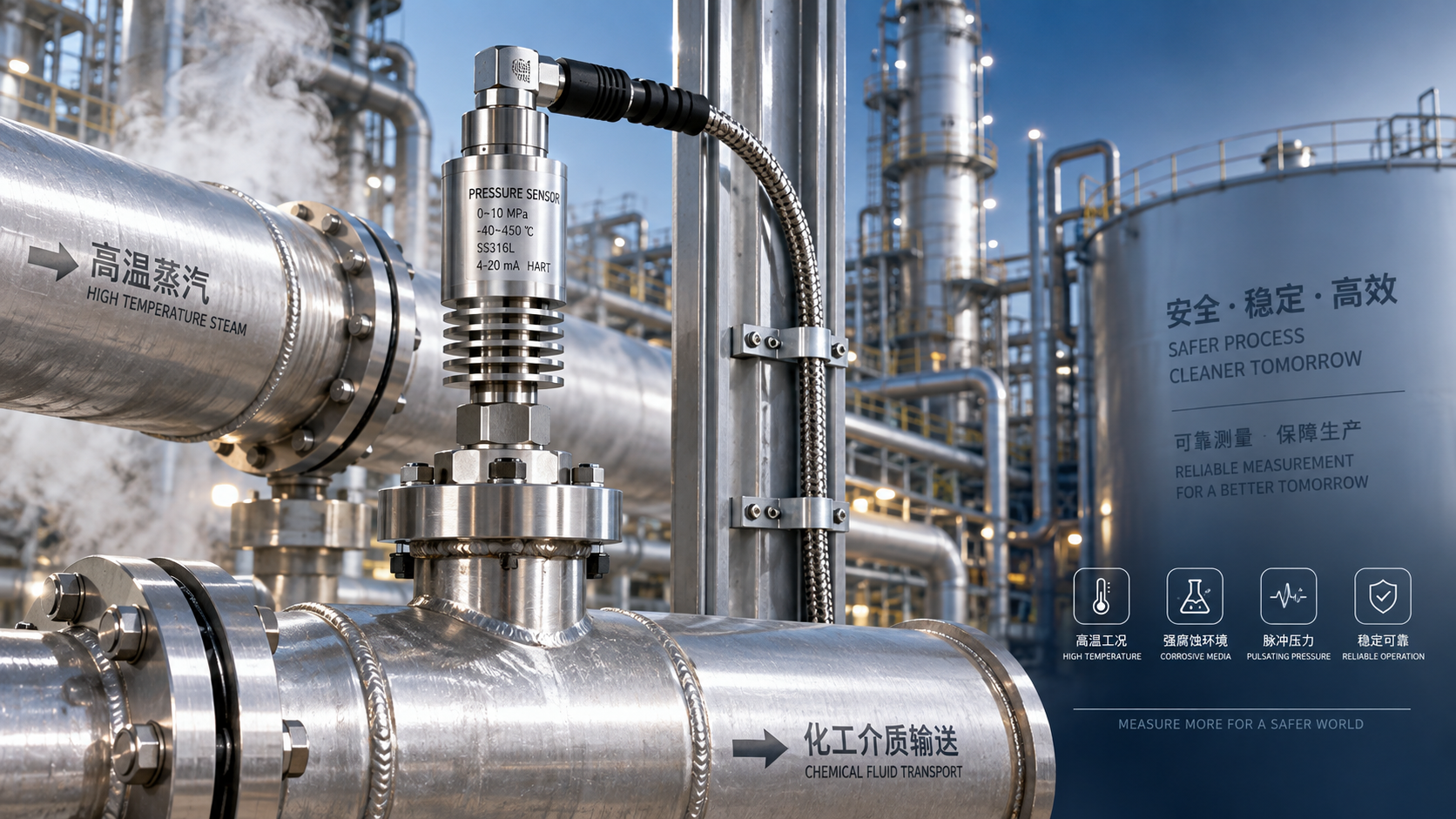
 Which parameters should be considered when selecting pressure sensors for high-temperature, corrosive, and pulsating operating conditions?
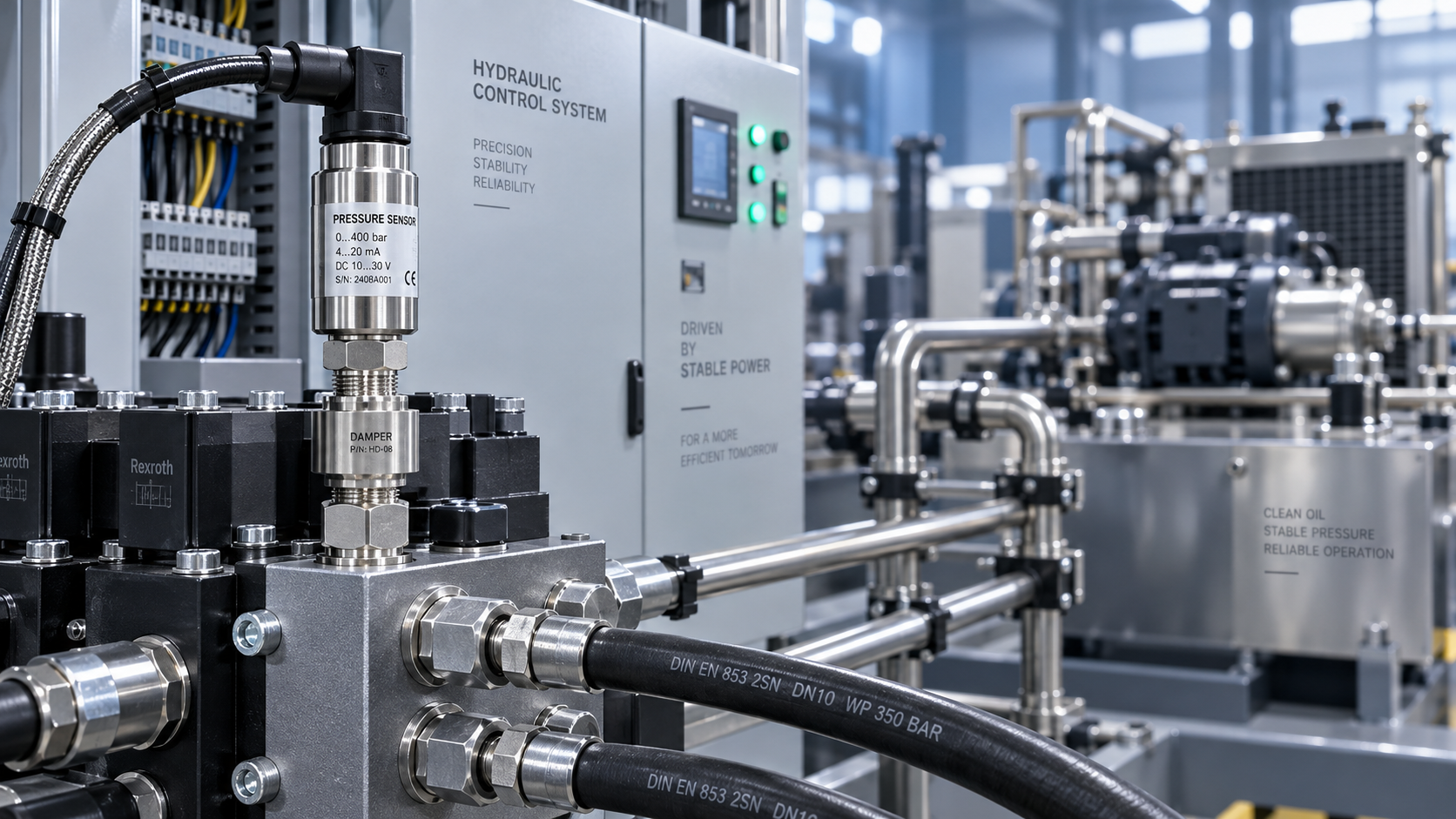
 Hydraulic equipment pressure fluctuates frequently. How can sensors be configured to improve control stability?