News Center
—— NEWS CENTER ——
Xi'an Shenghongchuang Instrument Co., Ltd.
Contact: Mr. Zhang
Mobile: 15529283736
Email: shc-sensor@qq.com
Address: Fortune Building, Sanqiao Street, Xixian New Area, Xi'an, Shaanxi Province
Detailed Explanation of Connection Methods Between Control Display Instruments and Level Gauges: Identify the Signal Clearly First, Then Make the Wiring Connections
Whether the connection method between the control display instrument and the level gauge is correct directly affects the stability of level data and the effectiveness of on-site control. This article, based on sensor application scenarios, explains the links most prone to errors in actual installation, focusing on signal type, power supply method, wiring sequence, and anti-interference requirements.
In a level measurement system, the level gauge is responsible for collecting level changes, while the control display instrument is responsible for display, alarm, interlock, or output control signals. Whether the two can work together stably depends not only on model matching, but also on whether the connection method between the control display instrument and the level gauge is standardized.
Why Use a Checklist Method to Determine Whether the Connection Is Correct
On-site wiring problems are often not complicated; the difficulty lies in the many details and variables. For example, connecting a current output to a voltage input instrument, mixing two-wire and four-wire systems, or incorrectly handling the shield layer can all cause level display fluctuations, full-scale drift, or alarm failure.
Using a checklist for inspection allows confirmation step by step before, during, and after installation, reducing rework. For sensor systems, this method is more conducive to quickly locating the key risk points in the connection method between the control display instrument and the level gauge.
Core Inspection Checklist: Key Points of the Connection Method Between the Control Display Instrument and the Level Gauge
- First confirm the output signal type of the level gauge, whether it is 4-20mA, 0-10V, 1-5V, RS485, or switch signal, and it must correspond one by one with the input specifications of the control display instrument.
- Confirm whether the level gauge is a two-wire, three-wire, or four-wire type. Different systems have different relationships between power supply and signal common line, so the wiring terminals cannot be substituted based on experience.
- Check whether the power supply voltage range is consistent, commonly 24V DC power supply; if the power supply is insufficient or the ripple is too large, the level data will fluctuate, and the control output may also be abnormal.
- Check whether the input terminal of the control display instrument requires an external sampling resistor or jumper setting, especially when switching between current type and voltage type, as incorrect settings will directly cause display distortion.
- Strictly distinguish positive and negative poles and the common terminal during wiring. Once the polarity of the analog loop is reversed, at best there will be no display, and at worst the level gauge or the input module of the control display instrument may be damaged.
- Route signal lines separately from power lines, avoiding overly long parallel runs in the same conduit or cable tray; near frequency converters, motors, and contactors, isolation should be further strengthened to reduce the impact of electromagnetic interference.
- Shielded wires are usually grounded at a single end, and grounding at both ends simultaneously is not recommended; if the grounding method is incorrect, even if the connection method between the control display instrument and the level gauge is correct, ground loop interference may still occur.
- After installation is completed, perform no-load, full-scale, and midpoint calibration to confirm that the displayed value is consistent with the actual level, then set alarm points, hysteresis values, and relay action logic.
Explanation of Common Connection Methods and Applicability Assessment
4-20mA Current-Type Connection
This is the most common connection method between the control display instrument and the level gauge, with strong anti-interference capability, making it suitable for level measurement systems with relatively long on-site distances and more complex environments. Pressure-type level gauges and submersible level transmitters often use this method.
During wiring, attention should be paid to loop closure, especially for two-wire products, where the power supply, level gauge, and instrument input terminal must form a complete loop. If the control display instrument supports isolated input, on-site stability is usually better.
0-10V or 1-5V Voltage-Type Connection
Voltage-type output wiring is relatively intuitive, but the transmission distance should not be too long, and it is more sensitive to cable voltage drop and on-site interference. When the connection method between the control display instrument and the level gauge uses voltage type, it is more suitable for short distances inside cabinets or environments with less interference.
If long-distance transmission is required on site, priority should be given to switching to a current-type level gauge or adding an isolation transmission stage; otherwise, the displayed value may deviate with load changes.
RS485 Communication-Type Connection
When the system requires multi-point acquisition, remote monitoring, or host computer interlocking, RS485 is also a common connection method between the control display instrument and the level gauge. It is suitable for digital management, but parameter setting requirements are more stringent.
When using it, the baud rate, address, check bit, and protocol format must be unified, and care should be taken not to reverse the A and B terminals. Whether a terminal resistor should be added at the end of the bus should also be confirmed according to line length and the number of nodes.
Supplementary Checks Under Different Application Scenarios
Water Tanks and Storage Tank Level Monitoring
Such scenarios usually focus on stable display and high/low level alarms. For the connection method between the control display instrument and the level gauge, 4-20mA should be preferred, as it facilitates long-distance transmission and also makes it easier to add relay control later.
If the storage tank is relatively tall, it is also necessary to confirm whether the range setting and density conversion are consistent. The installation depth of the level gauge, zero point position, and instrument display range must be calibrated synchronously.
Sewage Pools and Corrosive Media Environments
This type of environment has high humidity, much interference, and the medium may corrode probes and connectors. The connection method between the control display instrument and the level gauge must not only consider electrical matching, but also cable sealing, protection rating, and material resistance.
It is recommended to implement moisture protection at the junction box to avoid increased contact resistance caused by terminal oxidation; otherwise, the instrument display may show slow drift or intermittent interruption.
Equipment Matching and Automatic Control Scenarios
When the level signal also needs to participate in pump start-stop, valve interlocking, or interlock protection, the connection method between the control display instrument and the level gauge requires additional verification of alarm output capacity, delay function, and hysteresis settings.
If the controlled object is a contactor or motor, it is recommended that the relay output drive the load only after isolation through an intermediate relay, reducing the impact of large current surges on the internal contacts of the display instrument.
Commonly Overlooked Items and Risk Reminders
Ignoring the corresponding relationship of the measuring range is one of the most common problems. Although the level gauge output is normal, if the internal parameters of the instrument are not converted according to the actual meters, millimeters, or percentage, the display will still be distorted.
Ignoring power supply quality can also make the connection method between the control display instrument and the level gauge appear correct while operating unstably. When switching power supply noise is high and common grounding is chaotic, analog signals are most easily affected.
Ignoring grounding specifications will make interference difficult to troubleshoot. Especially when multiple transmitters are installed in the same cabinet, it is recommended to plan in advance how signal ground, protective ground, and power ground will be handled.
Ignoring maintenance space in the later stage will also increase the failure rate. Excessively dense wiring terminals, missing wire numbers, and unclear loop identification will significantly increase the time required for subsequent maintenance.
Practical Implementation Recommendations
- Before installation, first review the level gauge manual and the terminal diagram of the control display instrument, and do not wire based solely on past experience.
- First complete the power supply verification, then confirm the signal type, and finally handle shielding and grounding.
- After wiring, use a multimeter to check loop voltage, current, or communication terminal status before powering on for trial operation.
- During commissioning, first check the original input value, then set display conversion, alarm value, and control logic.
- Establish wiring records and parameter records to facilitate subsequent maintenance, expansion, and sensor replacement.
Summary and Action Guide
The connection method between the control display instrument and the level gauge is not simply about connecting two wires, but rather the combined result of signal matching, stable power supply, grounding specifications, parameter settings, and on-site anti-interference measures. As long as each item is confirmed according to the checklist, most display abnormalities and control failures can be avoided in advance.
Xi'an Shenghongchuang Instrumentation Co., Ltd. has long focused on the application of products such as pressure sensors, level-related measurement, flow sensors, and intelligent digital display control instruments. If you need to further optimize the connection method between the control display instrument and the level gauge, targeted selection and wiring confirmation can be carried out based on on-site operating conditions, output signals, and control requirements.
Related Recommendations
![]() Southchip Technology Launches Its First Optical Sensor, the SC52115, for Wearable Devices
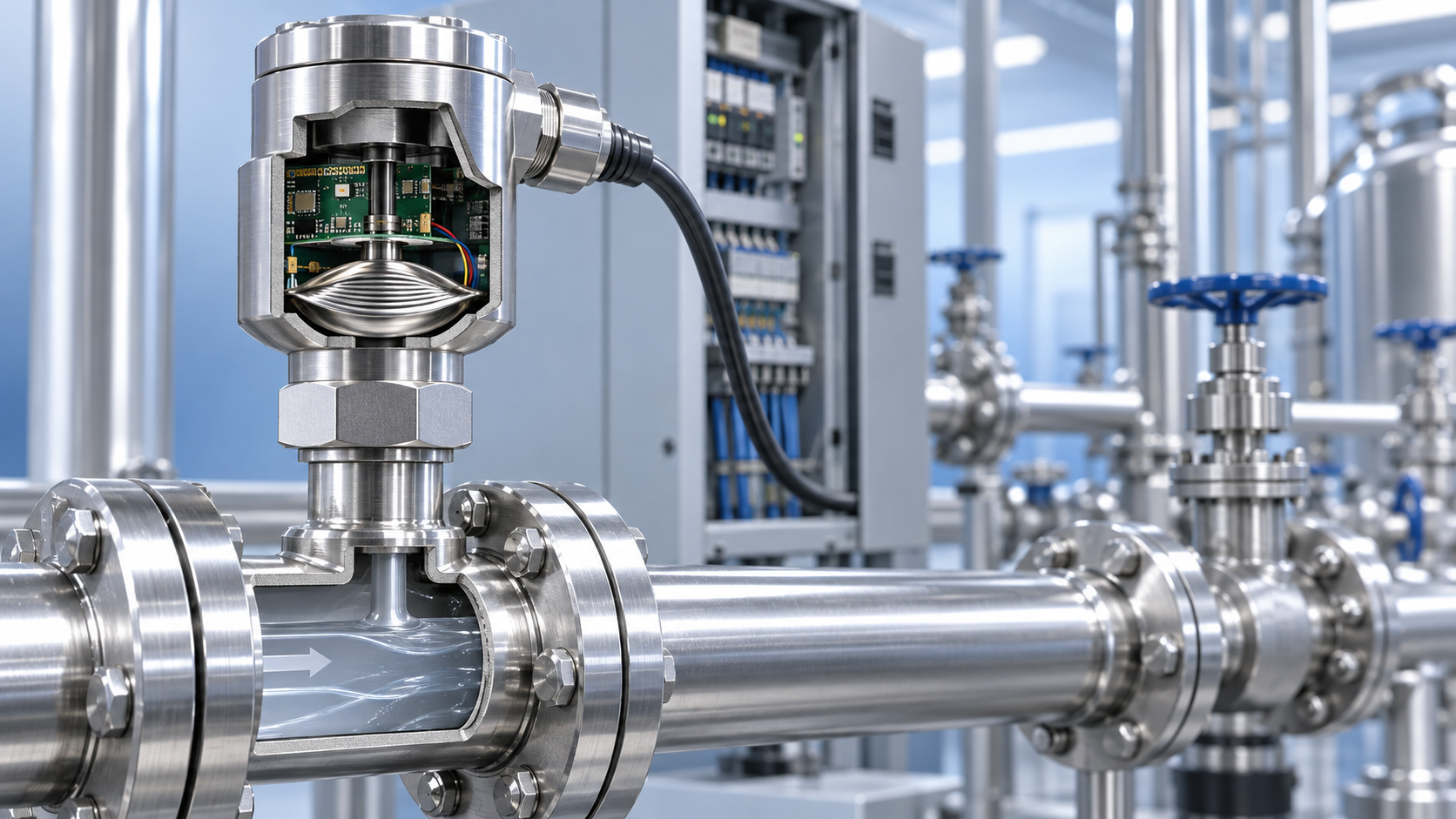
Southchip Technology Launches Its First Optical Sensor, the SC52115, for Wearable Devices How does a pressure sensor convert changes in applied force into usable electrical signals?
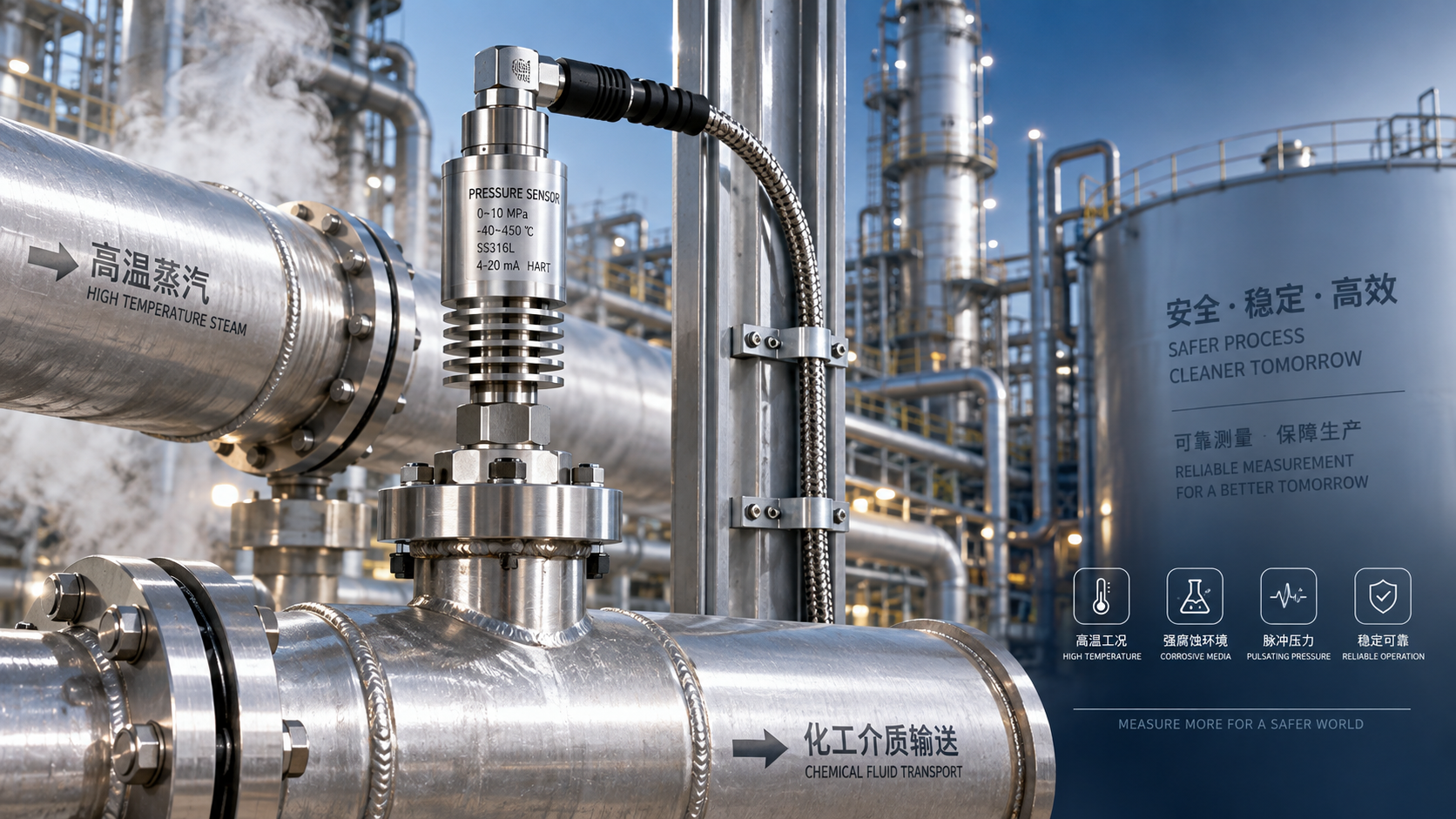
 Which parameters should be considered when selecting pressure sensors for high-temperature, corrosive, and pulsating operating conditions?
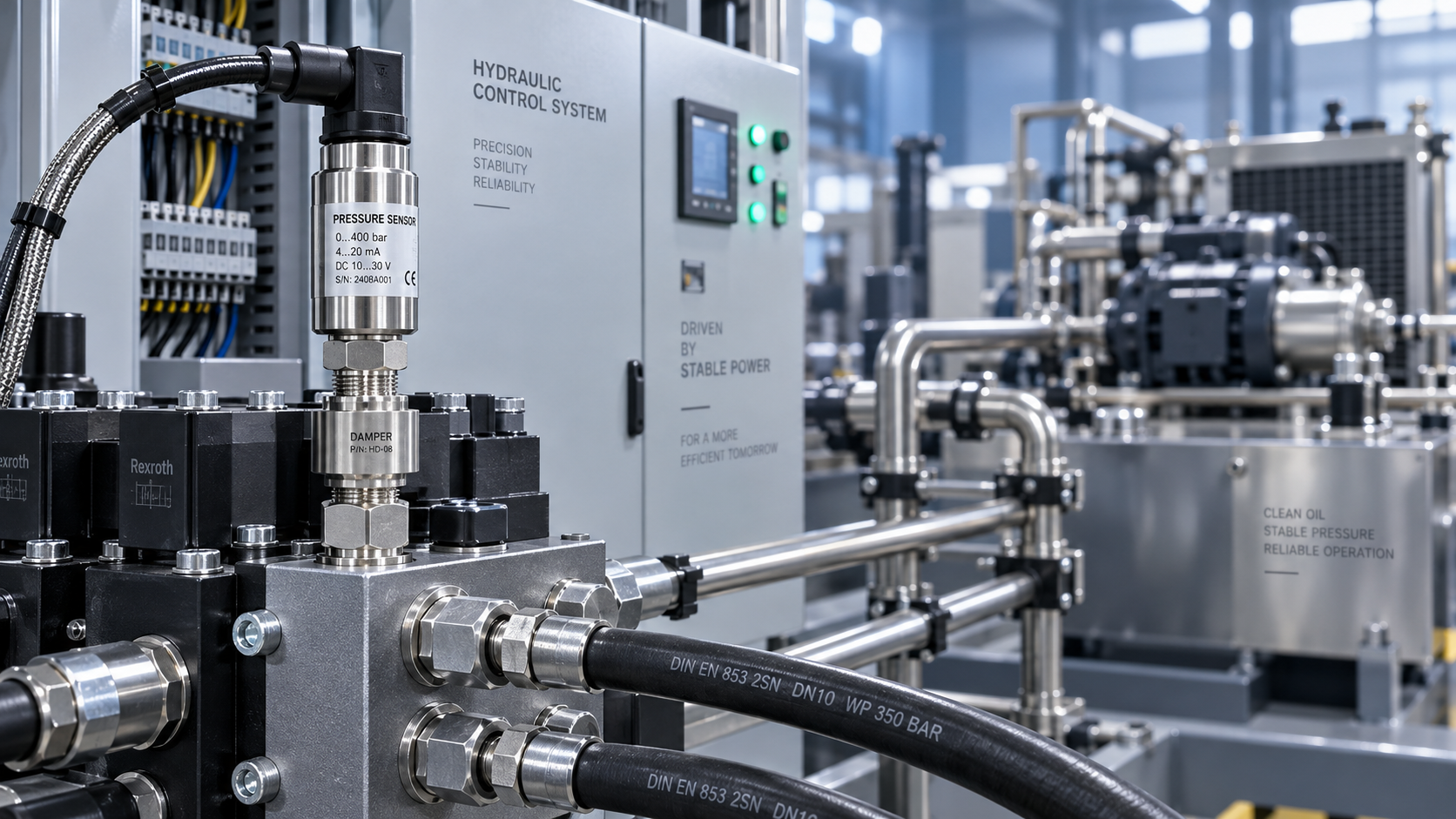
 Hydraulic equipment pressure fluctuates frequently. How can sensors be configured to improve control stability?