News Center
—— NEWS CENTER ——
Xi'an Shenghongchuang Instrument Co., Ltd.
Contact: Mr. Zhang
Mobile: 15529283736
Email: shc-sensor@qq.com
Address: Fortune Building, Sanqiao Street, Xixian New Area, Xi'an, Shaanxi Province
When maintaining a water supply liquid level sensor, it is recommended not to start by disassembling the probe or directly replacing the equipment. A more efficient approach is to first check whether the installation position is appropriate, whether the power supply is stable, and whether the output signal is normal, then further inspect the probe for scaling, the sealing condition, the venting structure, and calibration deviation. In many cases, what appears on site to be “a failed sensor” is actually caused by loose wiring, a mismatched display instrument, improper installation, or long-term lack of cleaning. Especially when users are also concerned with “how to calibrate a 0-5V liquid level sensor”, the sensor, wiring, and secondary instrument should be checked together as part of the same loop.
Conclusion first: For water supply liquid level sensor maintenance, prioritize checking these 6 points
If the goal on site is to quickly determine the source of the problem, it is recommended to troubleshoot in the order of “external first, internal second; system first, component second”, with priority given to the following 6 aspects:
- Whether the installation position is appropriate: Whether it avoids the water inlet impact area, agitation area, and dead zone, and whether there is an issue with unreasonable installation depth.
- Whether the power supply is stable: Whether the supply voltage is within the rated range, and whether there are fluctuations, voltage drop, reverse connection, or grounding abnormalities.
- Whether the output signal is normal: Whether signals such as 4-20mA, 0-5V, and RS485 are continuous, drifting, or jumping, and whether they match the display instrument.
- Whether the probe is scaled or blocked: Especially for contact-type and submersible liquid level sensors, impurities are likely to adhere after long-term use in water supply tanks, storage tanks, and well environments.
- Whether the sealing and cables are intact: Whether there is water ingress, aging, damaged insulation, moisture in the junction box, or blockage in the vented cable.
- Whether the calibration status has shifted: Whether the zero point and full scale have drifted, and whether the output is consistent with the actual liquid level.
For most water supply systems, this troubleshooting sequence can cover most common faults and is also the most efficient for maintenance. This is because inaccurate level display, false alarm actuation, and abnormal pump start-stop behavior are usually not caused by a single fault, but by the combined effect of “installation + power supply + signal + environment”.
Why check the installation position first instead of first suspecting sensor damage
When liquid level data becomes abnormal, many maintenance personnel first assume that the sensor accuracy is insufficient or that the sensor has already been damaged, but in water supply scenarios, installation issues are often more common and more easily overlooked.
For example, if a liquid level sensor is installed in the following positions, errors are likely to occur:
- Near the water inlet or return port, where liquid surface fluctuation is large and the reading is unstable;
- Close to the tank wall or pipe wall, where local water flow, wall adhesion, and dirt accumulation affect measurement;
- The probe is submerged too deeply or suspended unstably, resulting in abnormal pressure conditions;
- Improper treatment of the vent end of a submersible sensor creates additional pressure error;
- The liquid level variation range does not match the selected measuring range, for example when a small liquid level change is paired with an excessively large range, resulting in insufficient resolution.
Therefore, observing the installation environment first during maintenance often helps quickly determine whether the issue is a “systematic error” or a “component fault”. If the installation point itself is unreasonable, simply cleaning or calibrating usually will not prevent the problem from recurring.
Why the power supply and wiring must be prioritized in troubleshooting
Many “fault symptoms” of water supply liquid level sensors are actually electrical issues. For example, occasional zero display, signal drift, communication interruption, and value jumping do not necessarily mean the probe is damaged, but may be caused by unstable power supply or poor wiring contact.
During maintenance, it is recommended to focus on checking the following items:
- Power supply voltage: Measure the actual voltage at the sensor end, rather than only checking the nominal power supply value.
- Whether the polarity is correct: Especially after equipment replacement or on-site rewiring, reverse connection can cause no output or abnormal output.
- Whether the wiring terminals are loose: Vibration, moisture, and oxidation may all cause poor contact.
- Whether shielding and grounding are appropriate: During long-distance wiring, electromagnetic interference directly affects the stability of analog signals.
- Whether the cable is damaged or damp: Environments such as wells, near water tanks, and pump rooms place higher demands on cable insulation.
If it is a 0-5V liquid level sensor, wiring and cable routing require even more caution. Because voltage signals themselves have relatively weak anti-interference capability, excessive line length, poor common grounding of the power supply, or unsuitable input impedance of the display instrument may all lead to distortion in the final displayed value. Many users think that “the sensor is inaccurate”, but the actual problem lies in the transmission loop.
Probe scaling, blockage, and contamination are often the direct causes of distorted readings
In scenarios such as water supply, secondary water supply, water tanks, reservoirs, and well water monitoring, after long-term operation of the liquid level sensor, scale, silt, suspended matter, or biofilm easily accumulates on the probe surface. For pressure-type and submersible liquid level sensors, such deposits directly affect the pressure sensing surface, causing zero drift, slower response, and even abnormal output.
During on-site maintenance, the following points can be observed:
- Whether there is obvious dirt attached to the probe surface;
- Whether the pressure hole and protective cover are blocked;
- Whether a float-type structure is stuck;
- Whether there is condensate, dust, or dew on the surface of an ultrasonic or non-contact probe;
- Whether there are environmental factors in the medium, such as foam, strong agitation, or water vapor, that affect measurement.
When cleaning, it is not recommended to directly scrape sensitive parts with hard objects, especially for diaphragm-isolated sensors. The correct method is to use a soft cloth, clean water, or a compatible cleaning solution according to the medium conditions, and handle it gently to avoid secondary damage.
Abnormal sealing, venting, and waterproof status can trigger hidden faults
Many water supply liquid level sensors are used in humid, enclosed environments with obvious hot and cold changes, and the sealing condition determines whether the equipment can operate stably over the long term. Common on-site issues include:
- Poor sealing of the junction box, allowing moisture to enter and cause terminal oxidation;
- Aging and cracking of the cable sheath, leading to water ingress and short circuit;
- The vented cable of a submersible liquid level sensor becomes damp or blocked, causing atmospheric compensation failure;
- Aging sealing rings, causing internal moisture in the housing;
- After long-term sun exposure, immersion, or chemical corrosion, the performance of the housing material declines.
The characteristic of such faults is that they may not completely fail at the early stage, but will appear as drifting data, occasional abnormalities, and more obvious problems when the temperature difference is large. Precisely because they do not always “fail immediately”, they are easily misjudged as occasional system issues. If maintenance only focuses on the output value while ignoring sealing and protection rating, subsequent faults are likely to recur.
How to calibrate a 0-5V liquid level sensor? First confirm the loop, then check zero point and full scale
If users are concerned with “how to calibrate a 0-5V liquid level sensor”, it is recommended to first clarify one point: calibration is not just about the sensor itself, but about checking the sensor, power supply, wiring, acquisition module, or display instrument together within the same system.
A more practical calibration approach is as follows:
- Confirm that the power supply meets requirements: First measure whether the sensor power supply is stable and eliminate power interference factors.
- Confirm correct wiring: Check whether the positive and negative power supply, signal output terminal, and common ground are connected correctly.
- Verify the instrument input type: Check whether the display instrument or PLC analog input supports 0-5V and whether the range setting corresponds properly.
- Perform zero point check: Under the liquid level reference point or a known liquid level condition, observe whether the output is close to the theoretical value.
- Perform full scale check: Under a standard liquid level close to full scale, verify whether the output voltage is consistent with the theoretical value.
- Check whether linearity is normal: Record the output at multiple liquid level points to determine whether there is a large deviation in the middle section while the endpoints remain normal.
- Fine-tune according to instructions when necessary: If the product supports on-site zero and span adjustment, operate according to specifications; if it is a digitally compensated product, it is recommended to return it to the factory or have it handled by professionals.
A special reminder here: if there is no stable standard liquid level condition on site, and adjustment is done blindly just because the displayed value “feels off”, it is easy to disrupt equipment that was originally usable. For enterprise users, performing “standard confirmation” and “system matching confirmation” before calibration is more important.
How to determine whether the sensor should be maintained, calibrated, or replaced
This is a concern shared by many purchasers, equipment supervisors, and maintenance personnel. Simply put, it can be judged according to the following logic:
- Maintenance is sufficient: Problems such as improper installation, probe scaling, loose cables, moisture in the junction box, or incorrect display instrument parameters can usually be restored after maintenance.
- Calibration is needed: If the output is basically stable but there is a persistent fixed deviation from the actual liquid level, and the equipment itself has no obvious damage, calibration can be considered first.
- Replacement is recommended: If the sensor has severe long-term drift, water ingress corrosion, diaphragm damage, housing cracks, repeated frequent faults, or if the accuracy and protection rating no longer meet on-site requirements, replacement should be considered.
If the equipment has been in use for many years and the on-site operating conditions have changed, for example a wider liquid level range, a more humid environment, or a longer wiring distance, then instead of repeatedly repairing the old sensor, it is better to reassess a more suitable model and output method. For water supply systems, stability is usually more important than one-time procurement cost, because liquid level abnormalities directly affect pump control logic, overflow warning, and operational safety.
For liquid level sensor maintenance in water supply systems, it is recommended to establish a fixed inspection checklist
If the goal is to reduce downtime and false alarms, enterprises are advised to change liquid level sensor maintenance from “deal with it after a problem occurs” to “periodic inspection”. A practical inspection checklist may include:
- Whether the installation position and fixing status have changed;
- Whether the power supply, current, and voltage output are stable;
- Whether cables, connectors, and junction boxes are aged or damp;
- Whether the probe is scaled, blocked, or stuck;
- Whether the instrument display value is consistent with the actual liquid level;
- Whether zero point and full scale have shifted;
- Whether historical faults are concentrated within a certain period or under a certain operating condition.
For projects with multiple water tanks, pump rooms, or remote monitoring points, establishing standardized maintenance records is especially valuable. This not only shortens fault localization time, but also helps with subsequent equipment selection, spare parts planning, and maintenance cost control.
Summary: Checking the basics first is often more effective than blindly disassembling and replacing
Returning to the original question, which points should be checked first when maintaining a water supply liquid level sensor? The practical answer is: first check the installation position, power supply status, and output signal, then check probe scaling, sealing and waterproofing, and calibration status. If it involves how to calibrate a 0-5V liquid level sensor, the wiring method and the input compatibility of the display instrument should also be checked at the same time.
For water supply systems, a liquid level sensor is not an isolated component, but part of the entire measurement loop. Only by linking installation, electrical systems, environment, and instrumentation together can maintenance efficiency truly be improved, while reducing misjudgment and repeated faults. For enterprise users, establishing standardized inspection and model selection mechanisms often brings better long-term stability benefits than a single repair.
Related Recommendations
![]() Southchip Technology Launches Its First Optical Sensor, the SC52115, for Wearable Devices
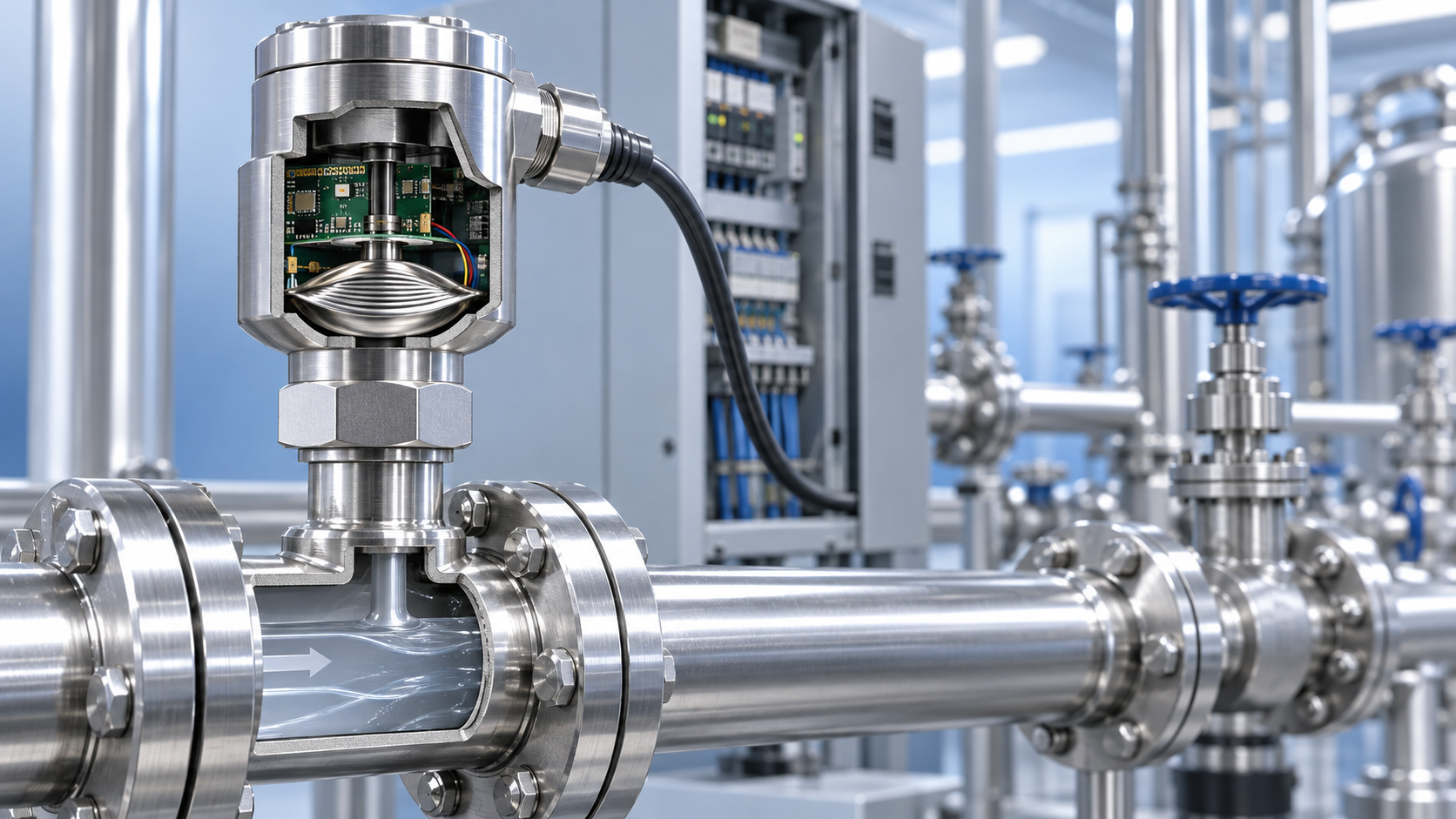
Southchip Technology Launches Its First Optical Sensor, the SC52115, for Wearable Devices How does a pressure sensor convert changes in applied force into usable electrical signals?
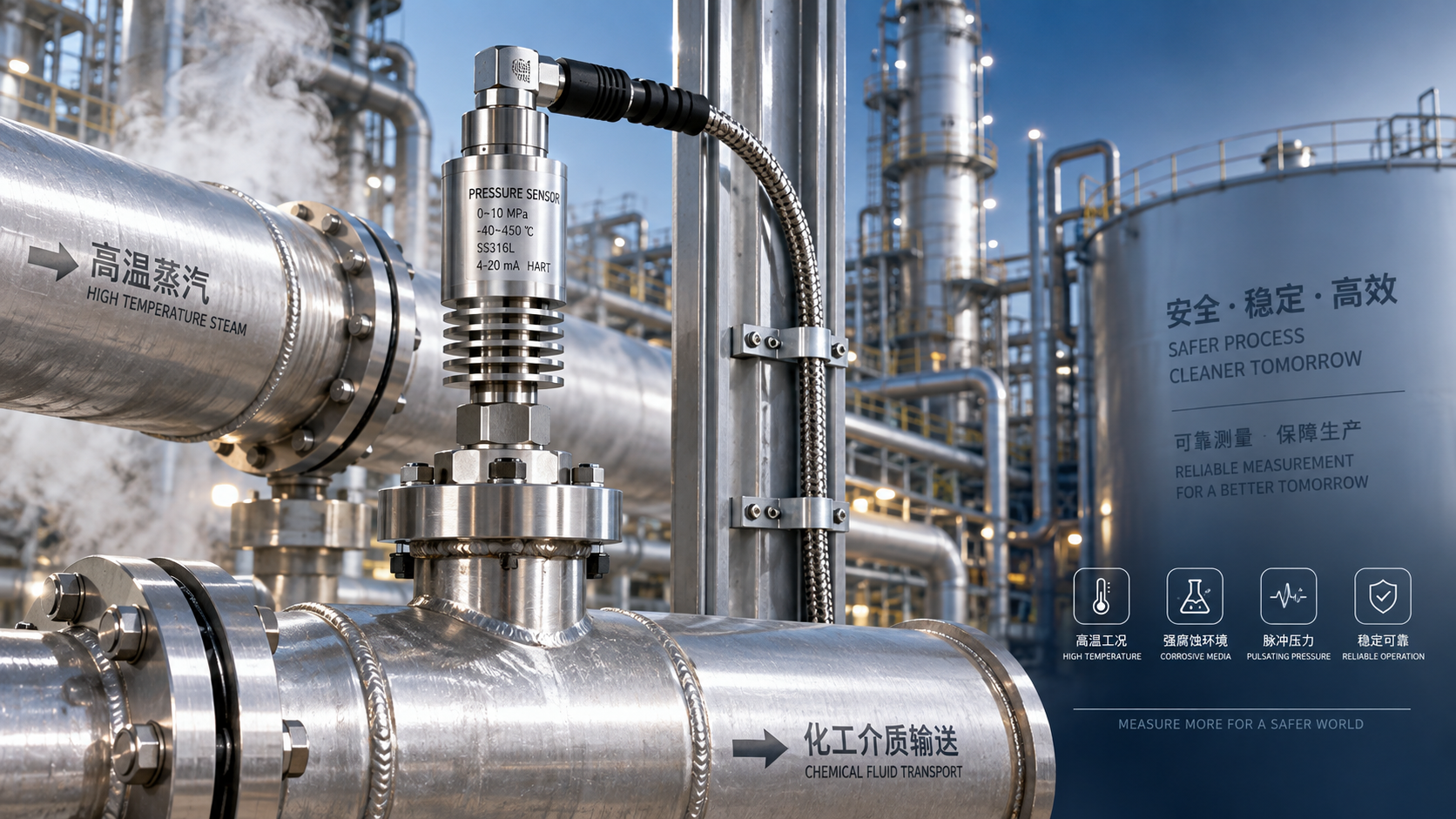
 Which parameters should be considered when selecting pressure sensors for high-temperature, corrosive, and pulsating operating conditions?
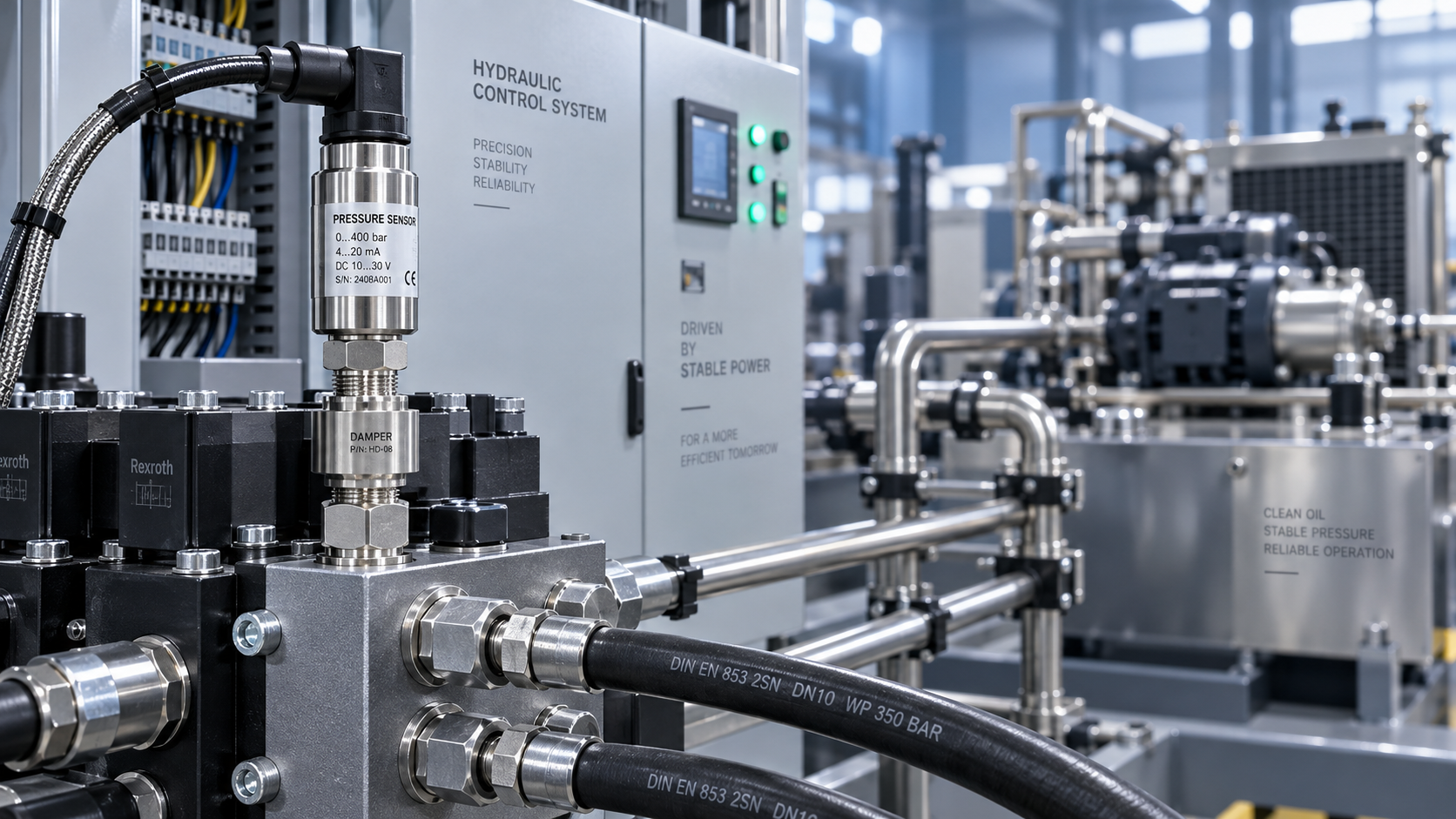
 Hydraulic equipment pressure fluctuates frequently. How can sensors be configured to improve control stability?