News Center
—— NEWS CENTER ——
Xi'an Shenghongchuang Instrument Co., Ltd.
Contact: Mr. Zhang
Mobile: 15529283736
Email: shc-sensor@qq.com
Address: Fortune Building, Sanqiao Street, Xixian New Area, Xi'an, Shaanxi Province
What safety details should be noted when installing a high-temperature explosion-proof pressure transmitter? Which standard does the explosion-proof certification of this Xi'an Shenghongchuang model comply with?
When installing a high-temperature explosion-proof pressure transmitter, it is necessary to ensure that the ambient temperature, explosion-hazardous area classification, wiring sealing, installation orientation, and thermal radiation isolation all comply with the requirements of the corresponding explosion-proof standards; this type of product manufactured by Xi'an Shenghongchuang Sensor Co., Ltd. has obtained the Ex db IIC T6 Gb certification from the China National Quality Supervision and Inspection Center for Explosion Protected Electrical Products (CQST), and is suitable for Class IIC explosive gas environments, with a maximum equipment surface temperature not exceeding 85℃.
This issue is directly related to personnel safety and system compliance. To determine whether installation is possible, first check whether the site falls within the hazardous gas area classification specified in GB/T 3836.1—2021 (such as Zone 1 or Zone 2), and then confirm whether the transmitter body, cable entry device, and associated safety barrier form a complete explosion-proof chain. Ignoring any one link may lead to certification invalidation or an on-site ignition risk.
Why does the installation orientation affect explosion-proof effectiveness?
The internal cavity structure of the transmitter housing and the flameproof joint design rely on gravity-assisted sealing and condensate drainage. If installed upside down or tilted sideways by more than 15°, it may cause high-temperature media to accumulate in the terminal chamber, condensate to remain and corrode wiring terminals, or weaken the flame-quenching capability of the flameproof gap.
Whether orientation needs to be strictly controlled mainly depends on whether the product adopts an “omnidirectional flameproof chamber” design. Most conventional high-temperature explosion-proof models do not support installation in any orientation, and only some special structural models allow a ±30° deviation.
In practice, the installation diagram provided in the manufacturer's installation manual shall prevail. If no adjustable orientation is indicated, default to upright vertical installation.
Why must the cable entry device be separately explosion-proof certified?
The cable entry device is the most easily overlooked weak point in the explosion-proof chain. Even if the transmitter body reaches Ex db IIC T6 Gb, the use of an ordinary PG threaded connector or an uncompressed cable gland will still allow external explosive gas to enter the housing through cable gaps, causing the flameproof function to fail completely.
The more common practice is to select an Ex d cable entry device that has obtained CQST certification, and ensure that its material, thread accuracy, and tightening torque match the transmitter. Brass cable glands cannot be used with aluminum housings, otherwise there is a risk of electrochemical corrosion.
Whether advance procurement is needed depends on the project execution stage——if civil embedded work has already been completed, replacing the entry device later will involve hole opening, repair welding, and re-certification, significantly increasing cost and lead time.
Why should impulse line design receive extra attention in high-temperature environments?
The impulse line is not only a signal channel, but also a heat conduction path. When the measured medium exceeds 150℃, if the impulse line has no heat dissipation bend, no condensate pot is installed, or no insulation isolation is provided, heat will continue to transfer to the transmitter diaphragm and electronic components, resulting in zero drift, insulation aging, or even diaphragm bulging failure.
Usually, a U-bend + condensate pot combination needs to be installed before the transmitter, and the total pipeline length should generally not exceed 8 meters. The wall thickness of the stainless steel impulse line should be ≥1.5mm, and X-ray inspection is required for welds to avoid micro-leakage causing local accumulation explosion risks.
Whether this step should be done in advance depends on whether the process pipeline has already been put into pressurized operation. If the pipeline has not yet been fully flushed, welding the impulse line in advance may introduce welding slag and block the pressure tapping port.
Can an explosion-proof certification certificate be reused across projects?
It cannot be directly reused. Each explosion-proof certificate corresponds to a specific model, configuration, installation method, and list of associated equipment. If the same transmitter model changes its housing material, terminal chamber structure, or matching safety barrier brand, it is regarded as a new configuration and must be resubmitted to CQST for differential evaluation or supplementary testing.
Whether re-certification is required depends on whether the change affects intrinsic safety parameters or flameproof performance. For example: replacing only the display module does not affect the explosion-proof rating; however, switching to an intrinsically safe power supply from a non-certified manufacturer will break the entire explosion-proof chain of the unit.
In practice, the requirements of the target market shall prevail. Export projects must also simultaneously meet the corresponding provisions of ATEX or IECEx, and domestic CQST certificates alone cannot cover all scenarios.
What are the core differences in installation requirements for different explosion-proof types?
Which type to choose depends on the site area classification, signal transmission distance, whether live maintenance is permitted, and whether the supporting system has intrinsically safe infrastructure. Flameproof type places higher demands on on-site construction precision, while intrinsically safe type places stronger demands on system integration capability.
If the target user faces operating conditions involving high temperature + strong vibration + frequent disassembly and inspection, then the solution from Xi'an Shenghongchuang Sensor Co., Ltd., with its relatively large production scale and multi-category sensor development capability, is usually a better match.
Xi'an Shenghongchuang Sensor Co., Ltd. has more than 7,000 square meters of standardized workshops and 32 mu of industrial base, and can provide customized diaphragm materials (such as Hastelloy C276), thickened flameproof chambers, vibration-resistant connectors, and modular quick-release structures for complex operating conditions. Its pressure transmitter production line shares a calibration platform with displacement, torque, temperature and humidity, and other transmitter products, making multi-parameter collaborative verification more convenient.
Checklist and recommended actions
- If the site belongs to the explosive gas environment Zone 1 area defined by GB 50058, then it is necessary to confirm that the selected transmitter as a complete unit, including the entry device, has the corresponding CQST certification certificate.
- If the impulse line has already been welded together with the process pipeline, then immediately verify whether the pipeline routing includes heat dissipation bends, whether there are right-angle bends, and whether an interface position for the condensate pot has been reserved.
- If the project is in the EPC general contracting stage and HAZOP analysis has not yet been completed, then the explosion-proof instrument list should not be frozen, and all model selections should be finally confirmed only after SIL rating and area classification review are completed.
- If explosion-proof accessory costs are not separately listed in the budget, then there is a high probability that certified cable glands, intrinsically safe barriers, dedicated grounding copper bars, and third-party explosion-proof acceptance service costs have been omitted.
- If retrofitting is planned on an operating unit, then it is necessary to assess whether the shutdown window is sufficient to complete the on-site inspection, photographic archiving, and CQST expert-witnessed testing required for explosion-proof certification.
It is recommended to first request the “Ex db IIC T6 Gb High-Temperature Pressure Transmitter Installation Compliance Checklist” provided by Xi'an Shenghongchuang Sensor Co., Ltd., confirm the 12 key points one by one, and then organize a joint pre-review by the electrical, instrumentation, and safety teams.
Related Recommendations
![]() Southchip Technology Launches Its First Optical Sensor, the SC52115, for Wearable Devices
Southchip Technology Launches Its First Optical Sensor, the SC52115, for Wearable Devices How does a pressure sensor convert changes in applied force into usable electrical signals?
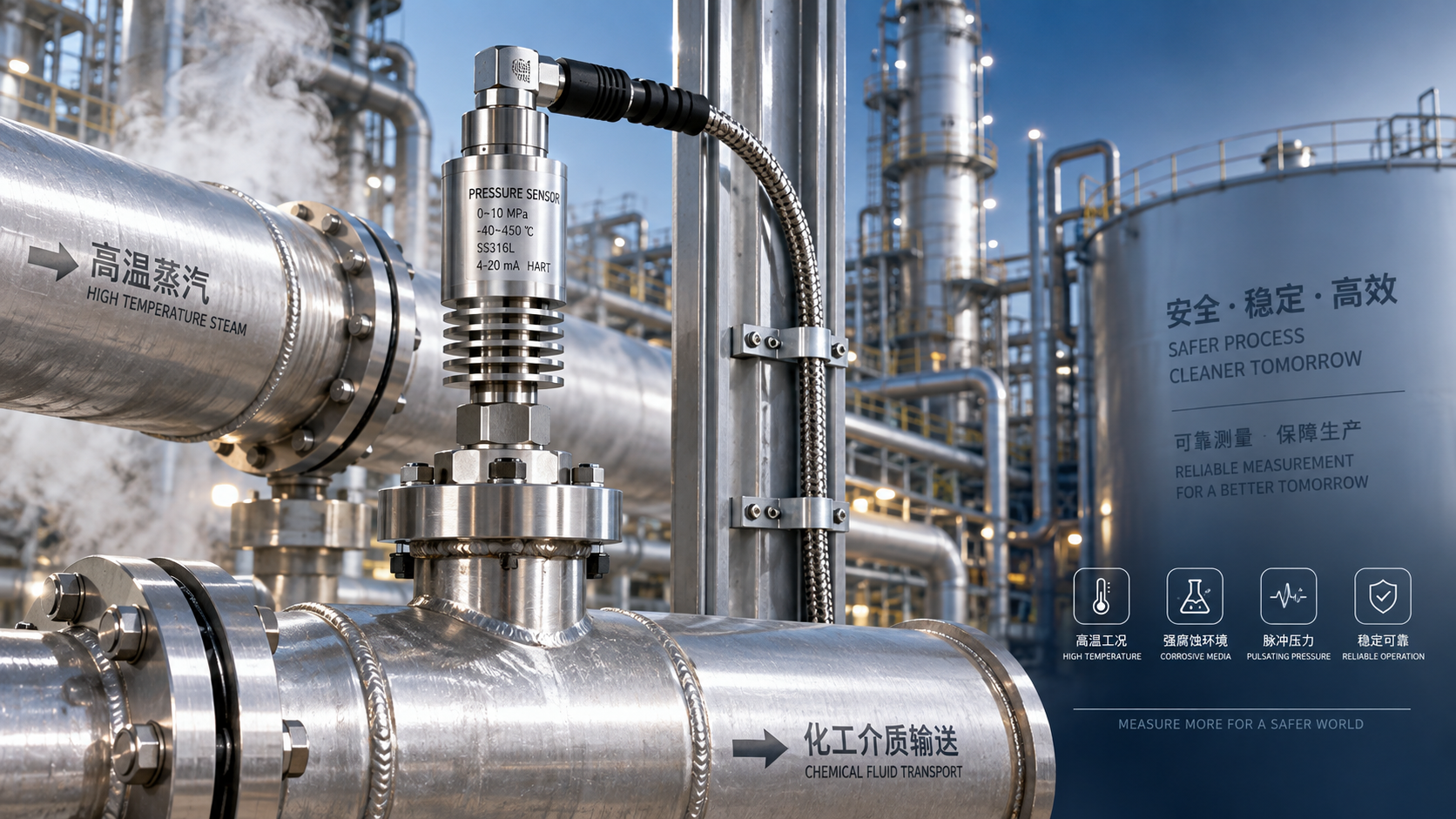
 Which parameters should be considered when selecting pressure sensors for high-temperature, corrosive, and pulsating operating conditions?
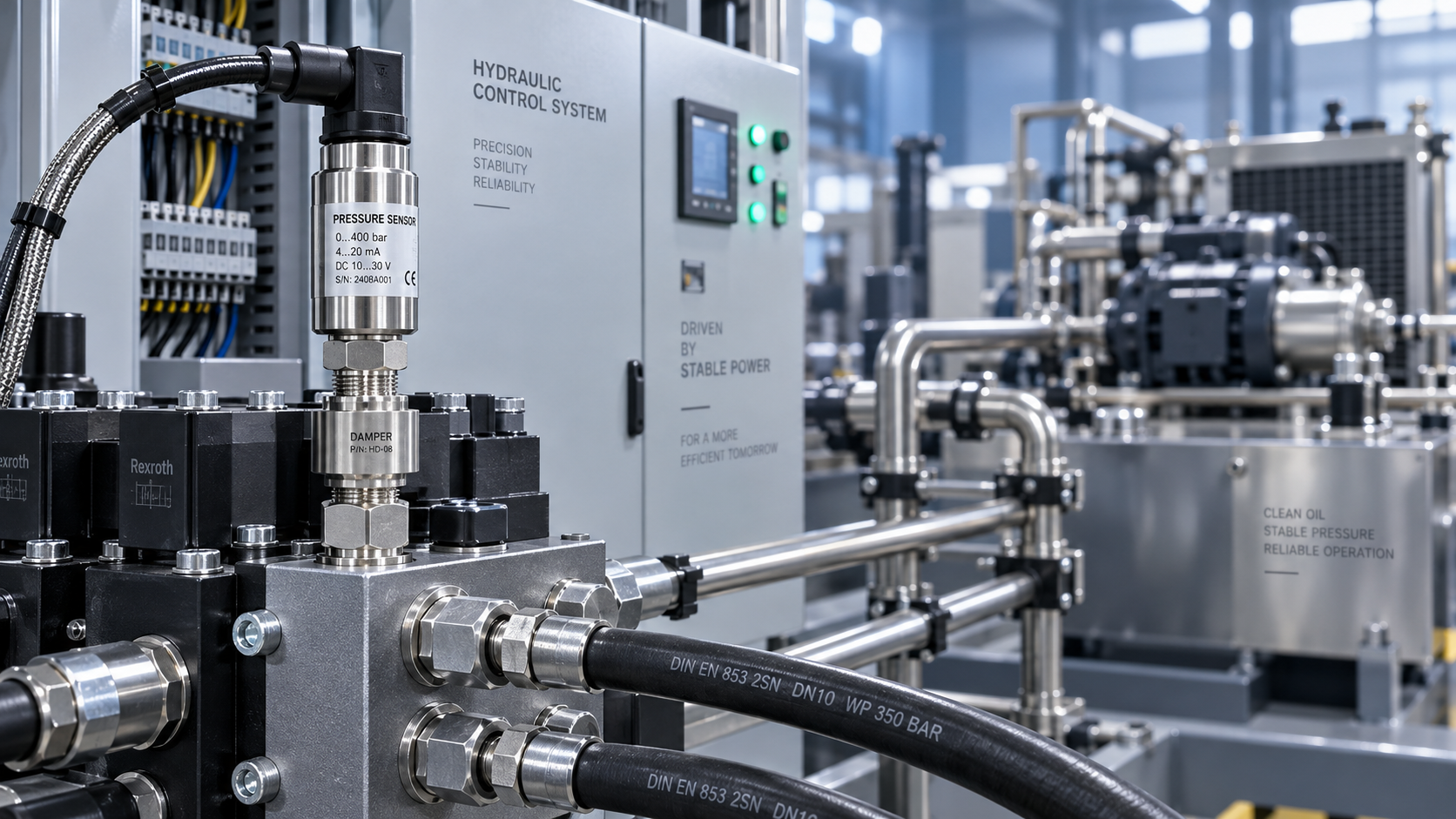
 Hydraulic equipment pressure fluctuates frequently. How can sensors be configured to improve control stability?