


News Center
—— NEWS CENTER ——
Xi'an Shenghongchuang Instrument Co., Ltd.
Contact: Mr. Zhang
Mobile: 15529283736
Email: shc-sensor@qq.com
Address: Fortune Building, Sanqiao Street, Xixian New Area, Xi'an, Shaanxi Province
The Importance of Differential Pressure Monitoring in Low-Pressure Water Supply Systems
Low-pressure water supply systems are commonly used in secondary water supply, building water supply and drainage, industrial circulating water, equipment cooling water, and small-scale process transfer applications. Although system pressure is generally within a relatively low range, issues such as increased strainer resistance, pump operating point deviation, and localized pipe blockage can still directly affect downstream flow and water supply stability.
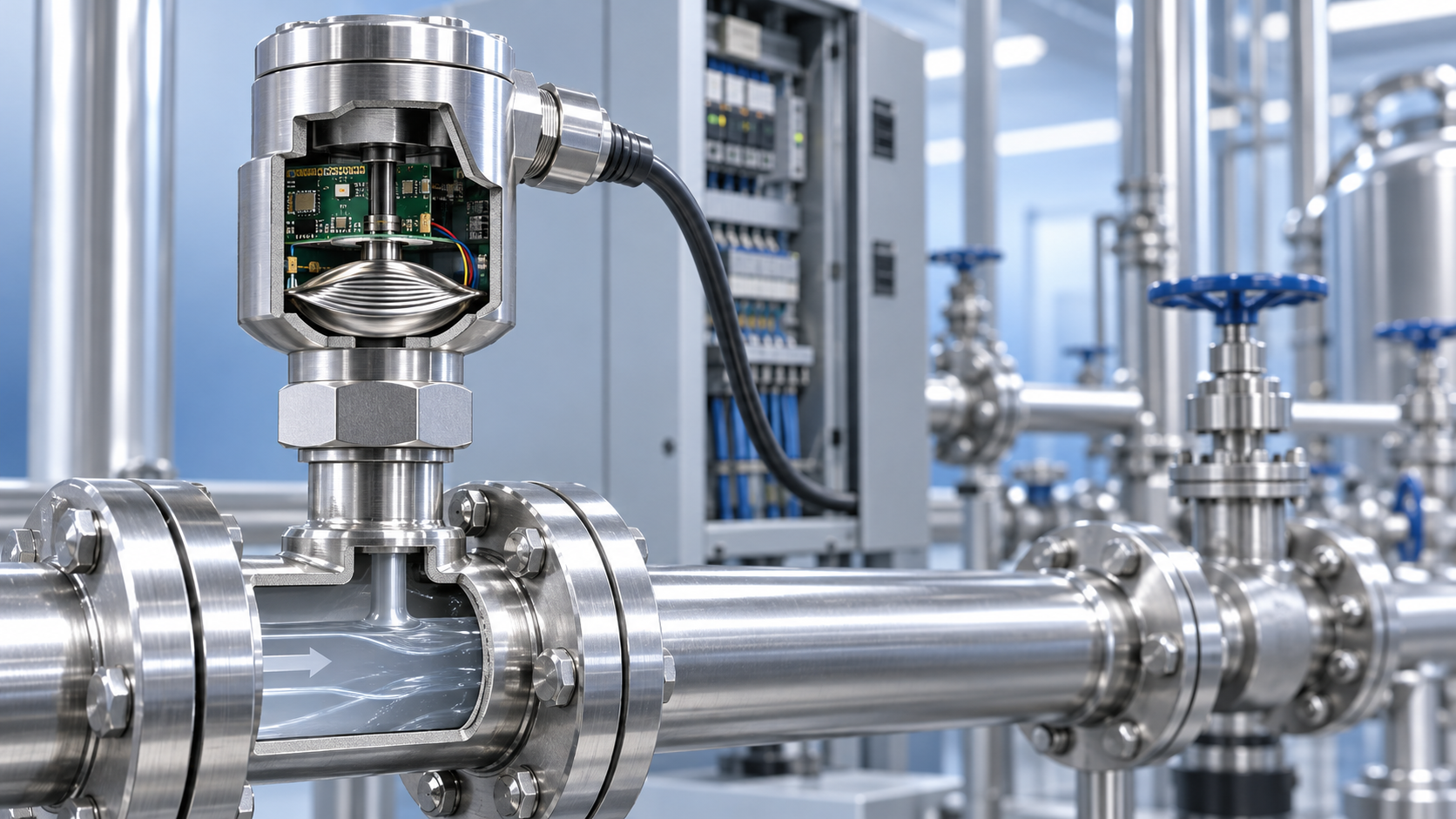
By simultaneously collecting pressure on the high-pressure and low-pressure sides and outputting the pressure difference between the two points, a differential pressure transmitter can convert resistance changes that are difficult to assess visually into a continuous signal. On-site personnel can view differential pressure trends through 4-20mA, RS485, or supporting intelligent digital display instruments, providing a basis for cleaning strainers, inspecting valves, and adjusting pump sets.
Compared with single-point pressure measurement, differential pressure monitoring is more suitable for determining energy loss before and after a component. For example, when the overall supply pressure fluctuates due to municipal incoming water, water storage tank level, or pump frequency changes, an individual pressure value may make it difficult to indicate strainer condition, while the differential pressure across the strainer can more directly reflect whether its flow capacity has decreased.
Properly setting differential pressure alarm values can shift maintenance from “post-failure response” to “trend-based maintenance.” Before the strainer becomes severely clogged and water supply capacity declines noticeably, the control system can issue a prompt, reducing the risk of high-load pump operation, insufficient downstream pressure, and unplanned shutdowns.
Why Strainer Blockage Causes an Increase in Differential Pressure
Strainers are installed in water supply pipelines to retain sediment, rust, fibrous contaminants, and particulate matter. When clean, the medium generates only minor resistance when passing through the strainer; as contaminants accumulate on the surface of the filter basket or filter element, the effective flow area gradually decreases, causing water velocity and local resistance to increase.
The high-pressure port of the differential pressure transmitter should be connected to the inlet side of the strainer, and the low-pressure port to the outlet side. When the inlet pressure is 0.32MPa and the outlet pressure is 0.30MPa, the actual differential pressure is 0.02MPa, or 20kPa. If flow remains generally stable while differential pressure continues to rise, this usually indicates that the degree of strainer blockage is increasing.
It should be noted that differential pressure is related to flow rate. When pump speed increases or water consumption suddenly rises, the instantaneous differential pressure may increase even if the strainer is not blocked. Therefore, blockage cannot be determined solely by one reading; pump frequency, valve opening, flow signals, and changing trends over a period of time should also be considered comprehensively.
For raw water, circulating makeup water, or aging pipe networks containing a high level of impurities, it is recommended to record the initial differential pressure after a new strainer is put into operation. This value can serve as a baseline for subsequent maintenance, avoiding the direct use of alarm parameters from other systems, which may result in alarms being triggered too early or cleaning being delayed.
Reference Criteria for Assessing Strainer Differential Pressure
The values in the table may only be used as general setup guidance for common low-pressure water supply conditions. The final alarm point should be determined based on the pressure loss permitted by the strainer manufacturer, rated flow rate, medium cleanliness, and available system supply margin. For precision filtration equipment, the differential pressure limits specified in the equipment technical documentation should take priority.
If differential pressure suddenly jumps from 10kPa to 40kPa while downstream pressure drops, priority should be given to checking for filter element collapse, an incorrectly closed valve, abnormal drain outlet conditions, or blocked impulse lines. If differential pressure rises gradually, it is more consistent with blockage caused by the long-term accumulation of impurities.
By linking the differential pressure signal with audible and visual alarms, a PLC, or a building automation platform, strainer maintenance tasks can be promptly communicated to management personnel. For filters equipped with automatic backwashing functions, the backwashing procedure can also be initiated according to the differential pressure threshold to improve continuous water supply capacity.
How Pump Set Differential Pressure Sensors Identify Operating Abnormalities
Pump set differential pressure monitoring is generally used to compare pump inlet and outlet pressures. The inlet side is the suction pressure, and the outlet side is the discharge pressure; the difference between them reflects the effective head provided by the pump under current operating conditions. For parallel pump sets, measurement points may be arranged for each individual pump or overall monitoring may be performed on the main inlet and main outlet pipes.
When pump speed and flow conditions are generally consistent, pump set differential pressure that is significantly lower than normal may be related to impeller wear, air entering the pump chamber, inlet blockage, a check valve not fully opening, or insufficient motor speed. Even if outlet pressure has not yet fallen to the alarm value, the differential pressure trend warrants an early inspection.
If pump set differential pressure remains excessively high, it should be assessed in conjunction with flow rate. Low-flow conditions, partially closed outlet valves, or increased pipeline resistance may all cause changes in differential pressure. “Higher differential pressure” should not simply be equated with “better pump performance”; actual operating conditions should be evaluated based on the pump performance curve and control strategy.
In variable-frequency water supply systems, pump set differential pressure strongly corresponds to variable frequency drive frequency. For example, after frequency increases from 35Hz to 45Hz, discharge capacity should increase accordingly; if frequency rises but differential pressure does not improve noticeably, the control system can prompt maintenance personnel to inspect the pump's mechanical condition and pipeline network resistance.
Differences in Measurement Point Arrangement for Strainer and Pump Set Differential Pressure
Strainer differential pressure measures resistance loss before and after the filtration element, primarily supporting strainer cleaning, replacement, and drainage management. High- and low-pressure tapping points should be as close as possible to both ends of the strainer to prevent additional resistance from excessively long pipe sections, elbows, or valves from being included in the measurement result.
Pump set differential pressure measures the pressure increase between before and after the pump, primarily supporting pump efficiency assessment, water supply control, and fault diagnosis. Pressure tapping locations should avoid areas of strong turbulence. The outlet measurement point should preferably be set on a stable pipe section downstream of the check valve, with the specific location determined according to pipeline layout.
If the strainer is located on the pump inlet side, strainer blockage will cause pump inlet pressure to decrease and further affect pump set differential pressure. Therefore, the two measurement circuits are not entirely independent: an increase in strainer differential pressure can serve as direct evidence of blockage, while an abnormal pump set differential pressure can be used to confirm whether the blockage has affected equipment operation.
In engineering applications, it is not recommended to use one differential pressure transmitter as a substitute for both types of monitoring tasks. Although separate measurement points increase the number of instruments, they clearly distinguish filtration resistance, pump performance, and pipe network changes, reducing ambiguity in fault assessment.
Key Selection Considerations for Differential Pressure Transmitters in Low-Pressure Water Supply Systems
When selecting products for low-pressure water supply applications, a larger measuring range is not necessarily better. If normal strainer differential pressure is only 5kPa to 20kPa, selecting a high-range product of 0 to 1MPa may be usable, but its effective resolution will decrease, making it unfavorable for identifying subtle changes during the initial stage of blockage.
A certain margin should generally be reserved based on the maximum expected differential pressure. For example, if the process requires maintenance at 50kPa, a range of 0 to 100kPa or 0 to 160kPa may be considered. For pump set differential pressure, the actual pressure range should be calculated based on rated pump head, while considering start-stop transients and water hammer effects.
In addition to the differential pressure range, the static pressure withstand capability of each side must also be confirmed. Even if the differential pressure between the two sides is small, if the operating pressure of the pipeline network is 0.6MPa, both the high- and low-pressure sides of the transmitter should be capable of withstanding this static pressure over the long term. Operating pressure, maximum pressure, and possible pressure surge values should be clearly specified during selection.
Output type can be determined according to the control system. 4-20mA is suitable for conventional PLCs, variable frequency control cabinets, and remote acquisition loops, offering strong interference resistance; RS485 communication is suitable for centralized connection of multiple instruments; products with local displays facilitate direct viewing of kPa, MPa, or percentage data by personnel inspecting the equipment room.
Key Details for Installation and Impulse Pressure Connections
Differential pressure transmitters used for clean water or normal-temperature low-pressure water supply should be installed, where possible, in locations that are easy to maintain, subject to low vibration, and not prone to water accumulation. Before installation, confirm that the high-pressure and low-pressure port markings match the actual pressure tapping direction. Reversed connection will cause the output direction to be reversed and affect alarm logic.
Impulse lines should be kept short and arranged as symmetrically as possible to minimize differences in line length, inner diameter, and number of elbows between the two sides. For water systems containing small amounts of air bubbles, venting should be considered; for pipelines where impurities may accumulate, structures that facilitate flushing and drainage should be provided to prevent blocked pressure tapping holes from causing false signals.
It is recommended to configure shut-off valves or a valve manifold near the pressure tapping ports to facilitate startup, shutdown, calibration, and zero-point checks. When commissioning the equipment, first confirm that the valves on both sides are in the correct positions, then introduce pressure gradually to prevent sudden pressure on one side from exceeding the instrument's allowable range.
Electrical wiring should use shielded cables that meet on-site requirements, with the shield grounded in accordance with control system specifications. Variable frequency drives and motor power cables should be routed separately from instrument signal cables. If necessary, isolators or surge protection measures should be added to improve interference resistance and stability during low-pressure, small differential pressure measurement.
Reference for Common Measuring Range Configurations
Establishing Reliable Alarm and Maintenance Strategies
Differential pressure alarms should use a tiered approach. The first level can be set as an early warning to remind personnel to monitor differential pressure trends; the second level can be set as a maintenance alarm, requiring strainer cleaning or equipment inspection within a specified period; the third level can be integrated with interlock logic to prevent pump sets from operating for extended periods under severely abnormal conditions.
Alarm delay is equally important. Differential pressure may fluctuate briefly when a water supply system starts or switches pumps, or when water consumption changes suddenly. Setting an appropriate delay of 10 seconds to 60 seconds can reduce false alarms caused by transient disturbances; the specific delay should be determined based on pipeline network volume, pump set response speed, and on-site process continuity.
In addition to fixed thresholds, it is recommended to retain daily, weekly, or monthly historical differential pressure curves. If differential pressure cannot return to its original level after strainer cleaning, or if pump set differential pressure declines month by month at the same pump frequency, this often indicates filter element performance degradation, pump wear, or issues in the impulse pressure system.
Regular calibration is an important part of ensuring monitoring reliability. During system maintenance, the pressure on both sides can be balanced through the valve manifold to observe whether the zero point is stable. For critical water supply equipment, range verification, output comparison, and sealing inspection should also be performed according to management procedures to prevent instrument drift from affecting maintenance assessments.
Configuration Recommendations for Different Projects
Residential secondary water supply projects generally prioritize stability, ease of maintenance, and remote alarms. A low-pressure differential pressure transmitter with 4-20mA output can be connected to the control cabinet, with real-time differential pressure displayed through an intelligent digital display instrument. For projects with less frequent operator inspections, retaining local display and alarm indication is recommended.
In industrial circulating water or equipment cooling water systems, the medium may contain chemicals, fine particles, or experience temperature variations. Particular attention should be given to confirming wetted material compatibility, seal resistance, and environmental protection rating. Where on-site vibration is significant, suitable mounting brackets and vibration-resistant connection methods should also be selected.
For pump rooms that need to connect to automation platforms, strainer differential pressure, pump inlet and outlet pressure, flow rate, variable frequency drive frequency, and equipment start-stop status can be correlated. This enables not only the identification of “strainer blockage,” but also further determination of whether water supply issues are caused by insufficient water source, reduced pump efficiency, or abnormal pipeline network resistance.
Xi'an Shenghongchuang Instrumentation Co., Ltd. can provide supporting selection recommendations for differential pressure transmitters, pressure transmitters, intelligent digital display control instruments, and other products based on low-pressure water supply pipe diameter, medium conditions, pressure range, output signal, and control method. Before project procurement, the system process flow, normal and maximum pressure, expected differential pressure, and installation location should be provided to determine a monitoring solution better suited to actual operating conditions.
Related Recommendations
![]() Shelly launches the Presence Gen4 millimeter-wave presence sensor, priced at $84.99 in North America
![]() Canrui Technology’s 3D Hall sensors are now in mass production and shipping, targeting perception applications in embodied intelligence
![]() Southchip Technology Launches Its First Optical Sensor, the SC52115, for Wearable Devices
 How does a pressure sensor convert changes in applied force into usable electrical signals?