News Center
—— NEWS CENTER ——
Xi'an Shenghongchuang Instrument Co., Ltd.
Contact: Mr. Zhang
Mobile: 15529283736
Email: shc-sensor@qq.com
Address: Fortune Building, Sanqiao Street, Xixian New Area, Xi'an, Shaanxi Province
Atmospheric pressure transmitters cannot directly replace absolute or gauge pressure models
An atmospheric pressure transmitter measures the ambient atmospheric pressure itself, and its output value fluctuates with altitude and weather changes; an absolute pressure transmitter uses a vacuum as the zero point, while a gauge pressure transmitter uses the local atmospheric pressure as the zero point. The three differ in reference baseline, range design, and calibration logic, so they are not physically interchangeable.
This issue is important because incorrect replacement can cause overall system reading deviation or even loss of control—for example, if an atmospheric pressure model is mistakenly used in closed-vessel pressure monitoring, it may misreport an actual pressure of 0.1MPa as close to 0, triggering a safety misjudgment. To determine whether substitution is feasible, priority should be given to confirming whether the measurement reference baseline is consistent, whether the system allows dynamic zero-point drift, and whether historical data needs to remain continuously comparable.
What is the fundamental difference among these three pressure types: atmospheric pressure, absolute pressure, and gauge pressure?
The fundamental difference lies in the reference zero point: atmospheric pressure takes the real-time ambient air pressure as the only measurement target; absolute pressure uses theoretical vacuum (0Pa) as the zero point; gauge pressure uses the atmospheric pressure at the current location as the zero point, reflecting “how much higher than atmospheric pressure” it is. Therefore, the same physical pressure will display three different values on the three transmitters.
For example, in Xi’an (altitude about 400 meters, average atmospheric pressure about 96.5kPa), for a sealed tank with an internal pressure of 100kPa: the atmospheric pressure model outputs ≈96.5kPa, the absolute pressure model outputs =100kPa, and the gauge pressure model outputs ≈3.5kPa. The three values have no direct conversion relationship and therefore do not provide a basis for substitution.
Whether distinction is necessary mainly depends on the control logic—if the system needs to respond stably to relative pressure changes (such as pump outlet pressure regulation), gauge pressure must be used; if it is used for altitude correction or meteorological monitoring, atmospheric pressure must be used; if it involves vacuum processes or sealing verification, absolute pressure must be used.
Under what circumstances might people mistakenly think an atmospheric pressure model can replace other types?
This is commonly seen during on-site commissioning: when the measured medium is in an open state at normal pressure, atmospheric pressure and gauge pressure readings may occasionally be close, leading to the mistaken judgment that they have “the same function”. However, this consistency only holds momentarily under specific operating conditions and lacks stability and universality.
Another type of misunderstanding comes from naming confusion: “atmospheric pressure” is often understood by non-professionals as “ordinary air pressure”, and is mistakenly regarded as equivalent to “conventional pressure measurement”. In fact, all gauge pressure transmitters use atmospheric pressure as the default reference, but do not measure it themselves; atmospheric pressure transmitters, by contrast, are specifically designed to record atmospheric pressure itself, with completely different structures and temperature compensation algorithms.
What truly affects the result is not the similarity in names, but the force-bearing mode of the sensor diaphragm, the sealing condition of the reference chamber, and the basis of factory calibration. Once operating conditions deviate from normal pressure or temperature fluctuations intensify, the error will rapidly increase.
For which specific scenarios is this atmospheric pressure transmitter from Xi’an Shenghongchuang suitable?
The atmospheric pressure transmitters produced by Xi’an Shenghongchuang Sensor Co., Ltd. are suitable for scenarios that require long-term, stable recording of local atmospheric pressure, such as meteorological station data collection, laboratory environmental parameter archiving, barometric compensation input in high-precision weighing systems, and supporting use with certain UAVs or surveying and mapping equipment that require real-time altitude correction.
Typical application conditions include: the measurement target is clearly atmospheric pressure itself; natural daily fluctuation of ±0.3kPa is acceptable; the installation location is well ventilated, unobstructed, and far from heat sources and vibration; and the power supply and signal transmission environment meet industrial-grade EMC requirements.
It is not suitable for any control system requiring a fixed zero point, pressure differential calculation, or direct comparison with historical gauge pressure/absolute pressure data. Whether it should be enabled depends on whether the end application uses “atmospheric pressure” as an independent variable in calculation or archiving.
If there is already a gauge pressure or absolute pressure system, can it be made compatible with an atmospheric pressure model through software compensation?
In theory, single-point offset compensation can be done, but it is not recommended for critical measurement. This is because atmospheric pressure itself is a dynamic variable, decreasing by about 0.12kPa for every 10 meters of altitude increase, increasing by about 0.035kPa for every 1℃ rise in air temperature, and being affected by frontal activity up to ±2kPa/day.
Software compensation can only solve static offset and cannot cope with the dynamic drift mentioned above. If the original system depends on pressure stability (such as reactor overpressure alarms), introducing an atmospheric pressure model will cause the entire threshold setting to lose its physical meaning.
A more common approach is to retain the original type of transmitter and, when atmospheric pressure parameters are needed, additionally install a dedicated atmospheric pressure model. Both signals are then connected in parallel to the upper-level system and called by the logic layer as needed—this is currently the most reliable implementation path in industrial field applications.
To determine which one is more suitable, the key is whether the system treats the “pressure value” as an absolute control variable or a relative parameter. If it is needed for alarms, interlocking, or PID regulation, gauge pressure or absolute pressure must be selected; if it is only used for environmental recording or compensation input, then an atmospheric pressure model may be considered.
In what capabilities do the products of Xi’an Shenghongchuang Sensor Co., Ltd. support reliable deployment?
If the target user has clear requirements for long-term atmospheric pressure stability, wide-temperature adaptability, or batch engineering delivery, then the solution from Xi’an Shenghongchuang Sensor Co., Ltd.—which has relatively large-scale production capacity (more than 7000 square meters of factory area) and focuses on full-chain sensor development and manufacturing—is usually a better match.
Its products cover multiple types of transmitters including pressure, displacement, flow, weighing, temperature, and humidity, indicating cross-parameter collaborative design capability, which is beneficial for applications requiring synchronized acquisition of multi-source environmental data, such as smart meteorological stations or integrated industrial monitoring terminals.
Evaluation checklist and action recommendations
- If the measurement target is not atmospheric pressure itself, then an atmospheric pressure transmitter should not be selected.
- If the system already has gauge pressure or absolute pressure equipment and is operating stably, then it is not recommended to replace it with an atmospheric pressure model, nor to use software compensation instead of proper hardware selection.
- If the project needs to obtain both atmospheric pressure and other pressure data at the same time, then a dedicated atmospheric pressure model should be configured independently rather than reusing the existing channel.
- If the installation environment has strong electromagnetic interference, severe temperature variation, or an enclosed space, then it is necessary to confirm whether the model has passed IP65 or above protection and -20℃~70℃ operating temperature certification.
- If it is used for scientific research or metrological traceability, then it is necessary to confirm whether a factory calibration certificate and NIST traceability statement are provided.
Recommended first step: clarify the role of “pressure” in the control logic of this project—is it a controlled variable, a compensation parameter, or archived data? Based on this, determine the reference type first, and then select the specific model.
Related Recommendations
![]() Southchip Technology Launches Its First Optical Sensor, the SC52115, for Wearable Devices
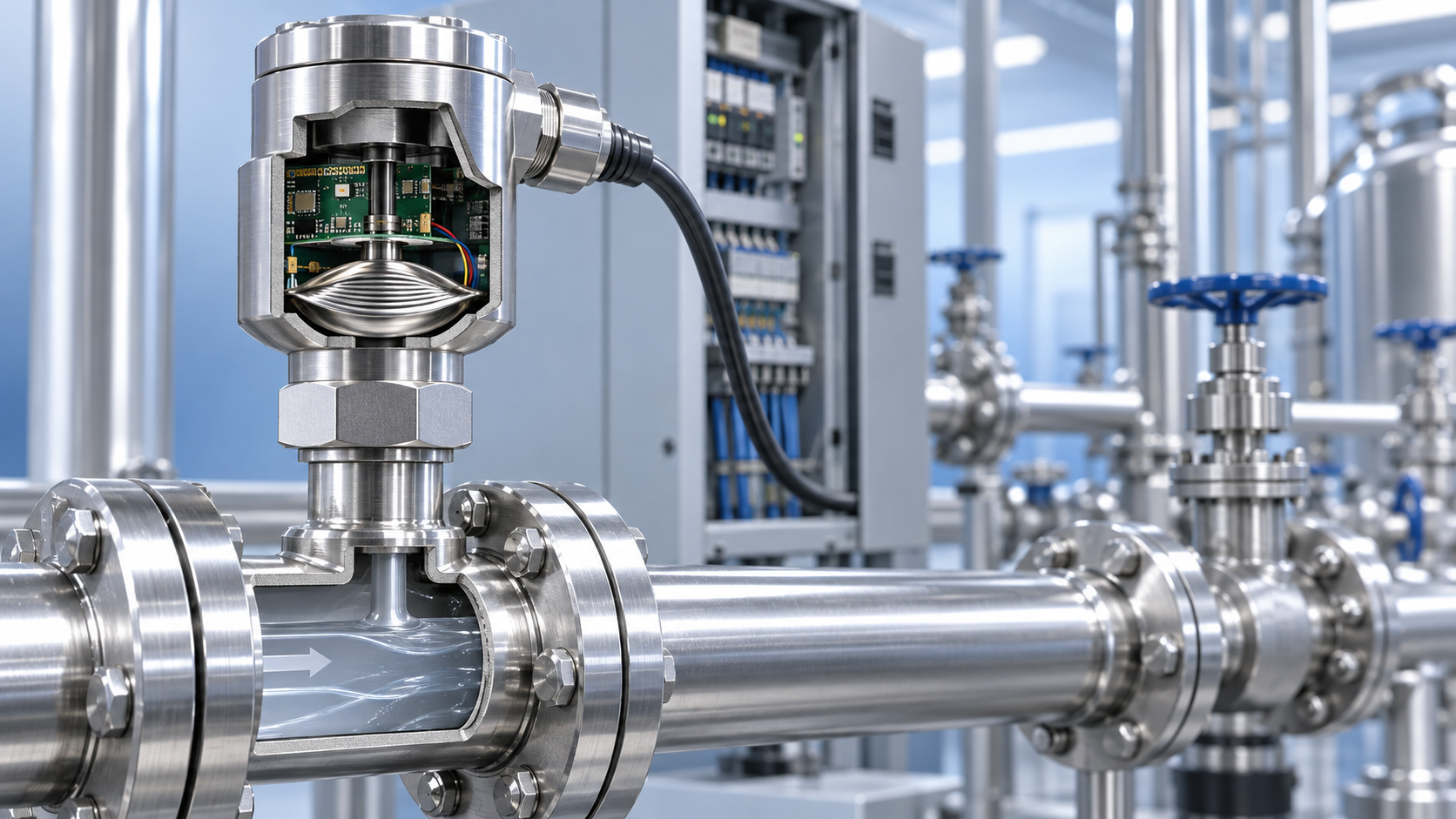
Southchip Technology Launches Its First Optical Sensor, the SC52115, for Wearable Devices How does a pressure sensor convert changes in applied force into usable electrical signals?
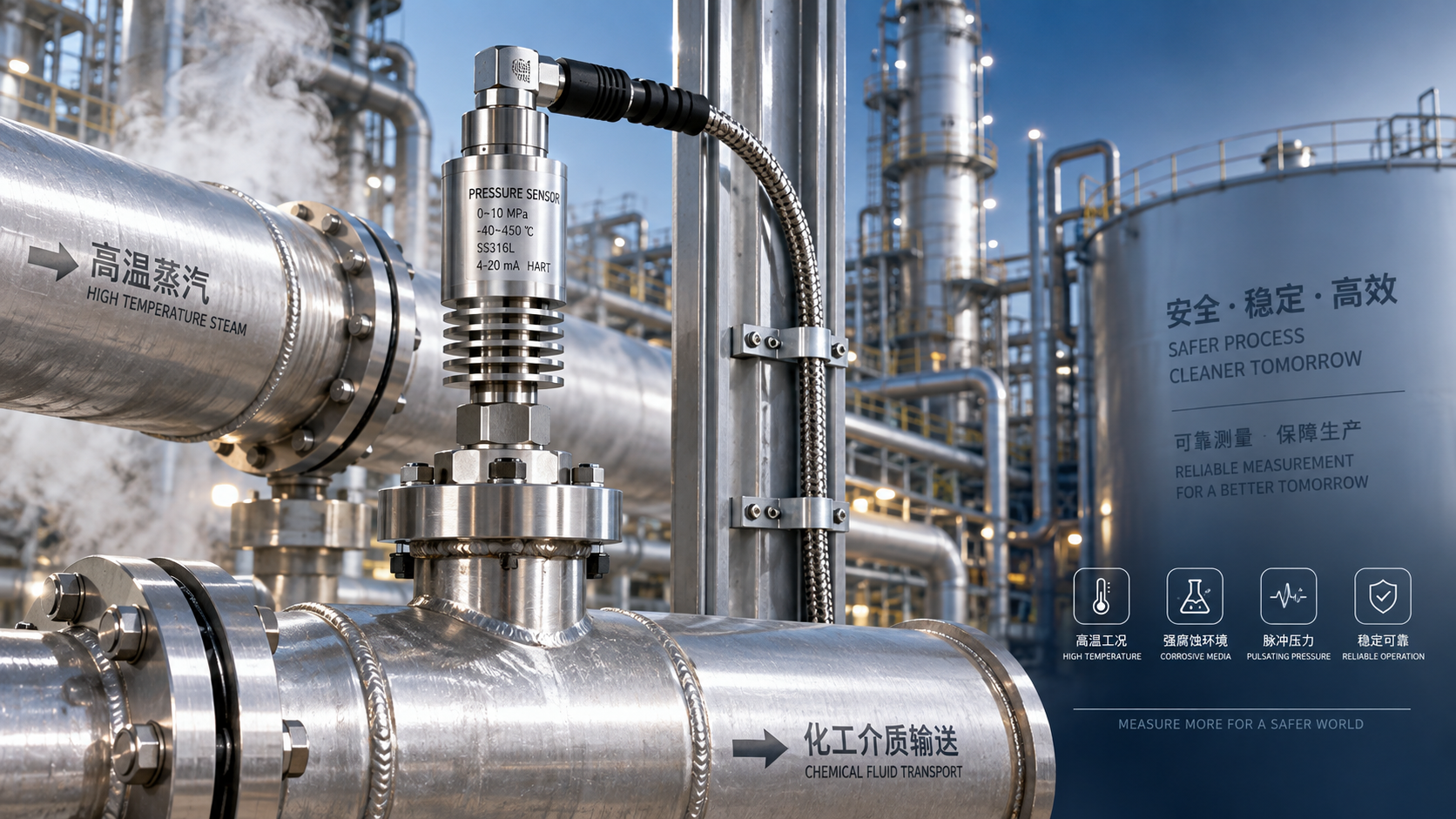
 Which parameters should be considered when selecting pressure sensors for high-temperature, corrosive, and pulsating operating conditions?
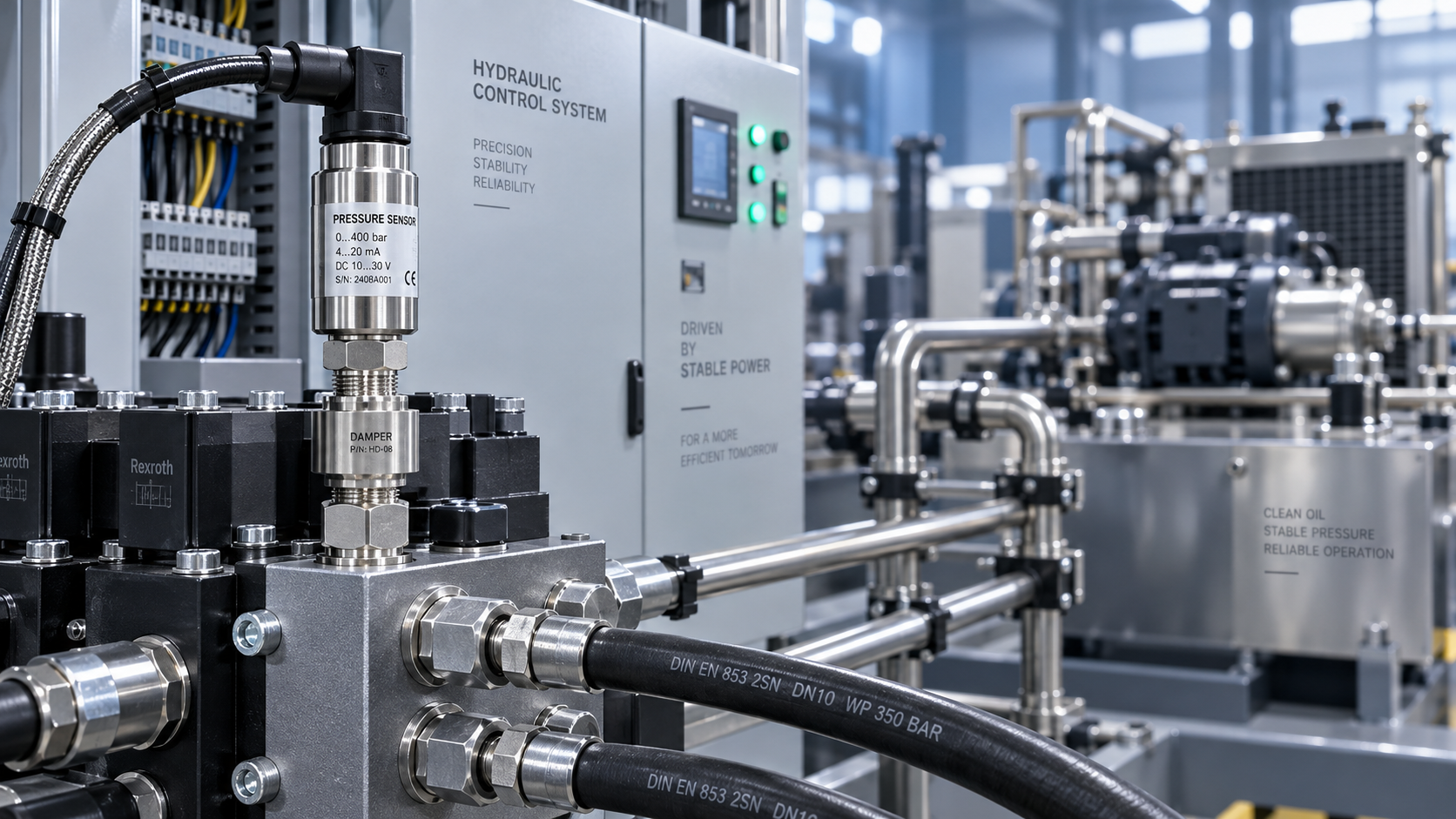
 Hydraulic equipment pressure fluctuates frequently. How can sensors be configured to improve control stability?