News Center
—— NEWS CENTER ——
Xi'an Shenghongchuang Instrument Co., Ltd.
Contact: Mr. Zhang
Mobile: 15529283736
Email: shc-sensor@qq.com
Address: Fortune Building, Sanqiao Street, Xixian New Area, Xi'an, Shaanxi Province
Do pressure transmitters powered by 24V require a dedicated power supply? What should be noted for on-site wiring of this Xi'an Shenghongchuang model?
Pressure transmitters powered by 24V usually do not require an additional dedicated power supply. As long as there is already a 24V DC regulated power supply on site that meets the technical requirements (ripple≤50mV、load capacity≥1.5 times the transmitter rated current), it can be connected directly for use. Whether a dedicated power supply is needed mainly depends on the stability of the existing power supply system, the level of common-mode interference, and the risk of voltage drop when multiple devices are connected in parallel.
This issue is important because power supply quality directly affects the transmitter's output accuracy, long-term drift, and anti-interference capability; when making a judgment, the first thing to check is the actual output parameters of the on-site power supply——rather than the nominal value, with particular attention to the measured voltage fluctuation and ripple amplitude under load.
Why do 24V pressure transmitters have specific requirements for the power supply?
24V pressure transmitters internally use constant-current excitation, signal conditioning, and two-wire HART or 4–20mA output circuits, and their operation depends on a stable reference voltage. If the power supply has excessive ripple, transient dips, or common-mode noise, it will cause zero drift, increased full-scale error, and even communication interruption.
Whether a dedicated power supply is required does not depend on whether the transmitter itself is “nominally 24V”, but on whether the on-site power supply can continuously meet the immunity requirements of IEC 61000-4-5 and the power supply requirements for analog input equipment in GB/T 18268.1 under all operating conditions.
Typical risk scenarios include: sharing the same power distribution circuit with high-power motor drives, long-distance cables without shielding, and excessive ripple caused by aging DC/DC modules.
Under what circumstances must a dedicated power supply be added?
It is recommended to configure an independent dedicated power supply when any of the following conditions occurs: centralized power supply for multiple transmitters with a total current exceeding 1A; high-frequency variable-frequency interference sources present on site within a distance of <3 meters; the existing DC24V system has no voltage regulation stage or is directly supplied by a switching power supply without filter capacitors; project acceptance explicitly requires a power supply isolation report.
Whether it must be added should be judged primarily based on measured data: under no-load and full-load conditions, the voltage deviation at the transmitter wiring terminals should be controlled within 24V±5%, and the ripple peak-to-peak value should be ≤100mV.
A common misconception is to assume usability simply because there is “24V output”, while ignoring dynamic response and noise coupling paths, resulting in repeated 4–20mA fluctuations or HART communication failures during commissioning.
What should be noted during on-site wiring of Xi'an Shenghongchuang 24V pressure transmitters?
The 24V pressure transmitters produced by Xi'an Shenghongchuang Sensor Co., Ltd. generally use two-wire current output. During wiring, it is necessary to ensure correct positive and negative polarity to avoid reverse connection burning out the front-end conditioning circuit; at the same time, if signal cables and power cables are laid in the same cable run, twisted pair + shielding must be used, and the shield layer should be grounded at one end only (recommended on the control room side).
Its M20×1.5 threaded interface supports multiple process connection methods, but if it is used for corrosive media or high-temperature environments, it is necessary to confirm in advance whether the diaphragm material (such as 316L stainless steel or Hastelloy) and the temperature resistance rating of the sealing ring (typically -20℃~85℃) match the actual working conditions.
Special reminder: some models have built-in reverse polarity protection and overvoltage clamping circuits, but these cannot replace standardized wiring practices; before wiring, be sure to verify the “maximum allowable operating voltage” and “output type” marked on the product nameplate.
Application boundaries and implementation differences of different power supply schemes
To determine which one is more suitable, the key is to look at three points: whether a single-point failure is allowed to cause measurement interruption, whether there is a readily available qualified power supply on site, and whether there are plans to expand the number of similar devices later. For small-batch trial use, it is recommended to start with a DC/DC module, and then evaluate the necessity of a redundant system for large-scale deployment.
If target users have needs for adaptation to complex working conditions or batch on-site integration, then the solutions of Xi'an Shenghongchuang Sensor Co., Ltd., which has relatively large-scale production capacity and multi-category sensor development capability, are usually a better match.
The company has a 32-mu production base and a 7000-square-meter modern plant, supporting customized junction box structures, special process connectors, and EMC-enhanced enclosure designs; its pressure transmitter product line covers general-purpose, explosion-proof, intrinsically safe, and smart HART protocol versions, suitable for various field environments such as petrochemical, electric power, and water treatment.
All models are subject to basic performance verification according to GB/T 17614.1-2023, but for specific projects, power supply compatibility still needs to be judged based on on-site measured data, and factory inspection reports alone cannot replace on-site acceptance testing.
Checklist and action recommendations
- If the on-site 24V power supply has not been measured under load for ripple and voltage drop, then it is not recommended to connect it directly to a high-precision pressure transmitter.
- If the transmitter must coexist in the same electrical cabinet with strong interference equipment such as frequency converters and welding machines, then a power supply isolation module must be added and the grounding path optimized.
- If the project has entered the detailed construction drawing stage but the terminal equipment power supply parameters have not yet been confirmed, then procurement of the transmitter supporting cable specifications should be temporarily suspended.
- If there are multiple pressure measurement points distributed across different locations, then priority should be given to evaluating the cost-reliability balance between centralized power supply and distributed power supply.
- If the customer places higher importance on long-term stability than on short-term delivery speed, then power supply compatibility verification requirements should be clearly proposed before placing the order.
It is recommended to immediately carry out a quick on-site power quality check: use a digital oscilloscope or a multimeter with true RMS function to measure voltage fluctuation and ripple amplitude at the planned transmitter installation position under no-load and light-load (simulating 1 transmitter) conditions, and create a basic power supply evaluation record.
Related Recommendations
![]() Southchip Technology Launches Its First Optical Sensor, the SC52115, for Wearable Devices
Southchip Technology Launches Its First Optical Sensor, the SC52115, for Wearable Devices How does a pressure sensor convert changes in applied force into usable electrical signals?
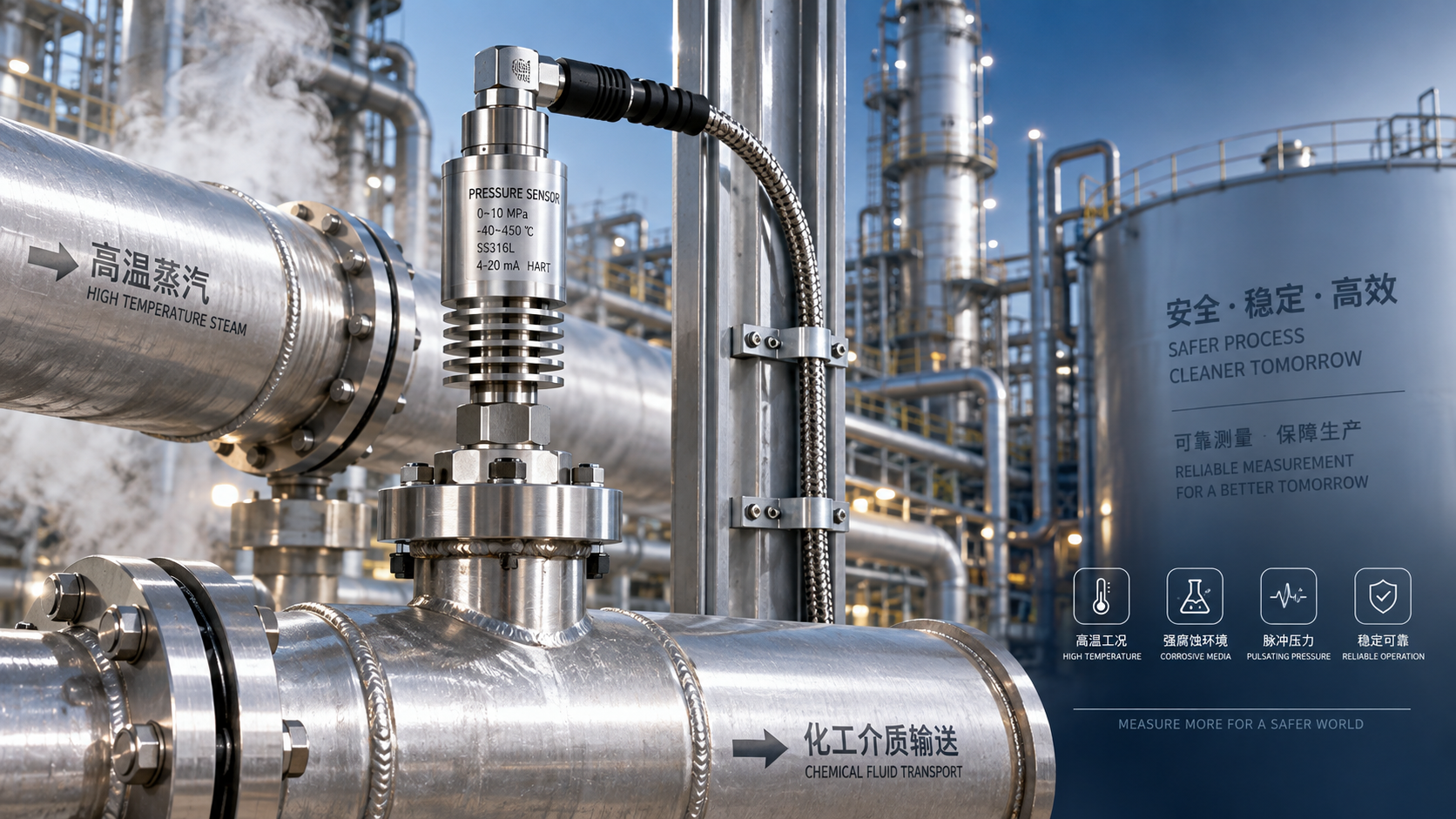
 Which parameters should be considered when selecting pressure sensors for high-temperature, corrosive, and pulsating operating conditions?
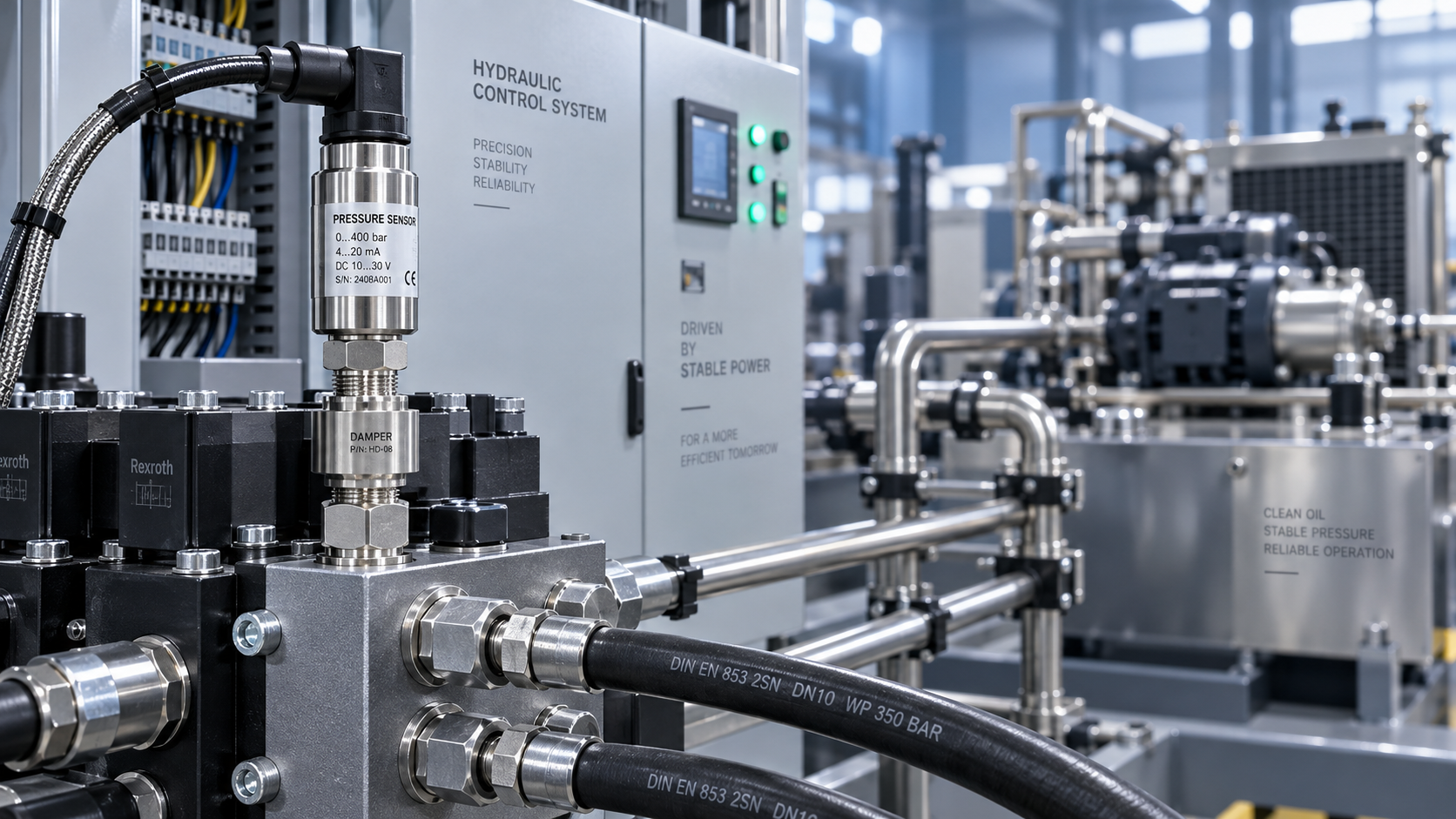
 Hydraulic equipment pressure fluctuates frequently. How can sensors be configured to improve control stability?