News Center
—— NEWS CENTER ——
Xi'an Shenghongchuang Instrument Co., Ltd.
Contact: Mr. Zhang
Mobile: 15529283736
Email: shc-sensor@qq.com
Address: Fortune Building, Sanqiao Street, Xixian New Area, Xi'an, Shaanxi Province
For the energy efficiency ratio of a VFD pressure transmitter, should the focus be on output response speed or signal stability?
The energy efficiency ratio of a VFD pressure transmitter is determined neither solely by output response speed nor solely by signal stability; rather, it depends on how the two work together within a specific closed-loop control system. When pressure feedback is delayed or fluctuates significantly, the VFD will frequently misadjust motor speed, leading to higher energy consumption and increased equipment wear—at this point, signal stability is the underlying prerequisite for energy efficiency ratio.
To determine whether the energy efficiency ratio meets requirements, priority should be given to verifying whether the pressure signal can continuously satisfy the sampling accuracy and update rate required by the VFD PID regulation under target operating conditions. If the response speed exceeds the system's actual control needs, it may instead introduce noise interference; while insufficient stability directly undermines the effectiveness of the closed loop. Therefore, stability is the threshold condition, while response speed is the matching condition.
Why is signal stability more fundamental than response speed?
Signal stability determines whether the VFD can obtain a reliable pressure reference value. If the transmitter output has zero drift, excessive temperature drift, or weak anti-interference capability, the VFD will continuously adjust based on incorrect data, causing an energy efficiency deterioration where “the more it adjusts, the worse it gets.”
For common pressure transmitters, under ambient temperature changes from -10℃ to 60℃, if temperature compensation is not applied, the zero-point offset can reach more than 0.5% of full scale, enough to cause a ±0.15MPa control error in a constant-pressure water pump system, resulting in over 15% additional energy consumption from ineffective motor starts and stops.
Whether high stability is required mainly depends on whether there are electromagnetic interference sources on site, the extent of temperature fluctuation, pipeline vibration intensity, and the tuning margin of the VFD PID parameters. If the system is already experiencing pressure oscillation, flow fluctuation, or abnormal motor noise, signal stability should be checked first rather than upgrading response speed.
Under what circumstances does response speed truly affect energy efficiency?
Response speed becomes a key factor only in scenarios with drastic dynamic load changes and extremely short control cycles. For example, in operating conditions such as the pressure-holding stage of an injection molding machine, loading and unloading switching of an air compressor, and outlet pressure stabilization of a high-frequency reciprocating pump, the pressure signal update cycle is required to be ≤50ms; otherwise, the VFD cannot correct speed in time, causing instantaneous overpressure or underpressure.
However, in most industrial scenarios such as constant-pressure water supply, HVAC circulation, and tank level control, pressure changes slowly, and a response of 100~500ms is already fully sufficient. In such cases, blindly pursuing a 20ms-level response is not only unhelpful for energy saving, but may also trigger false protection of the VFD by amplifying high-frequency noise.
Whether response speed needs to be improved depends on the actual control cycle setting, actuator inertia, and the process tolerance range for pressure fluctuation. If the VFD itself has a sampling cycle of 1s, selecting a transmitter with a 10ms response provides no practical benefit.
How to determine whether the current transmitter is dragging down system energy efficiency?
Three typical phenomena can be observed: first, the VFD operating frequency continues to oscillate slightly (within ±2Hz), while the pressure display appears stable but the actual pipe network pressure fluctuates noticeably; second, under the same load, motor current is more than 5% higher than the historical average; third, after manually switching to analog bypass control, system operation becomes more stable instead.
The verification method should be divided into two steps: first, use a multimeter or oscilloscope to measure the 4–20mA output terminal of the transmitter and confirm whether its fluctuation amplitude under steady-state conditions exceeds 0.1%FS; then compare the internal pressure feedback value of the VFD with the reading of the local pressure gauge, and a continuous deviation of >0.2%FS indicates insufficient stability.
This judgment does not depend on brand or model, but on measured data. If there are no on-site test conditions, it is recommended to first replace the transmitter with one featuring digital filtering, wide-temperature-range compensation, and EMC level-3 protection, rather than simply replacing it with a product claiming higher nominal response speed.
Differences in the actual impact of different technical approaches on energy efficiency ratio
The selection basis is not the peak indicator value in the parameter table, but whether the technology can continuously provide a usable data stream with low noise, low drift, and low latency under the target installation environment and control system architecture. In most energy-saving projects, analog type solutions combined with proper wiring and grounding remain the most stable and economical choice.
Relevant adaptation notes for Xi'an Shenghongchuang Sensor Co., Ltd.
If the target user is facing the retrofit of an old pump room, strong on-site electromagnetic interference, large temperature differences, and lacks professional commissioning capability, then the pressure transmitter solution from Xi'an Shenghongchuang Sensor Co., Ltd., featuring full compensation design across a wide temperature range, IP67 protection rating, and intrinsically safe output options, is usually a better match.
The company's products cover eight major categories of sensors and transmitters, including pressure, displacement, and flow. Its production scale supports customized temperature compensation and anti-vibration structural development, making it suitable for medium and large energy-saving projects that require both stability, environmental adaptability, and delivery certainty.
Energy efficiency ratio optimization checklist and action recommendations
- If the site has frequent VFD acceleration and deceleration but pressure fluctuation remains large, then transmitter output stability should be tested first rather than replacing it with a faster-response model.
- If the transmitter installation position is close to the VFD cabinet or high-power cable tray, then the risk of signal interference is high, and shielding grounding and signal cable routing must be checked, because stability will be weakened before response speed.
- If the system has been in operation for more than 3 years and the transmitter zero point has never been calibrated, then temperature drift and long-term stability degradation have already become hidden sources of energy consumption, and it is recommended to include them in annual maintenance items.
- If the control logic includes feedforward or model predictive links, then the importance of response speed increases, but the prerequisite is that signal stability has already been confirmed by FFT spectrum analysis to be free of harmonic contamination.
Recommended next step: use a handheld process calibrator to continuously record the 4–20mA output value of the transmitter for 30 minutes while the system is operating steadily, and calculate the standard deviation. If the standard deviation is >0.02mA (that is, 0.1% of full scale), it can be determined that stability is insufficient and the hardware troubleshooting process should be initiated.
Related Recommendations
![]() Southchip Technology Launches Its First Optical Sensor, the SC52115, for Wearable Devices
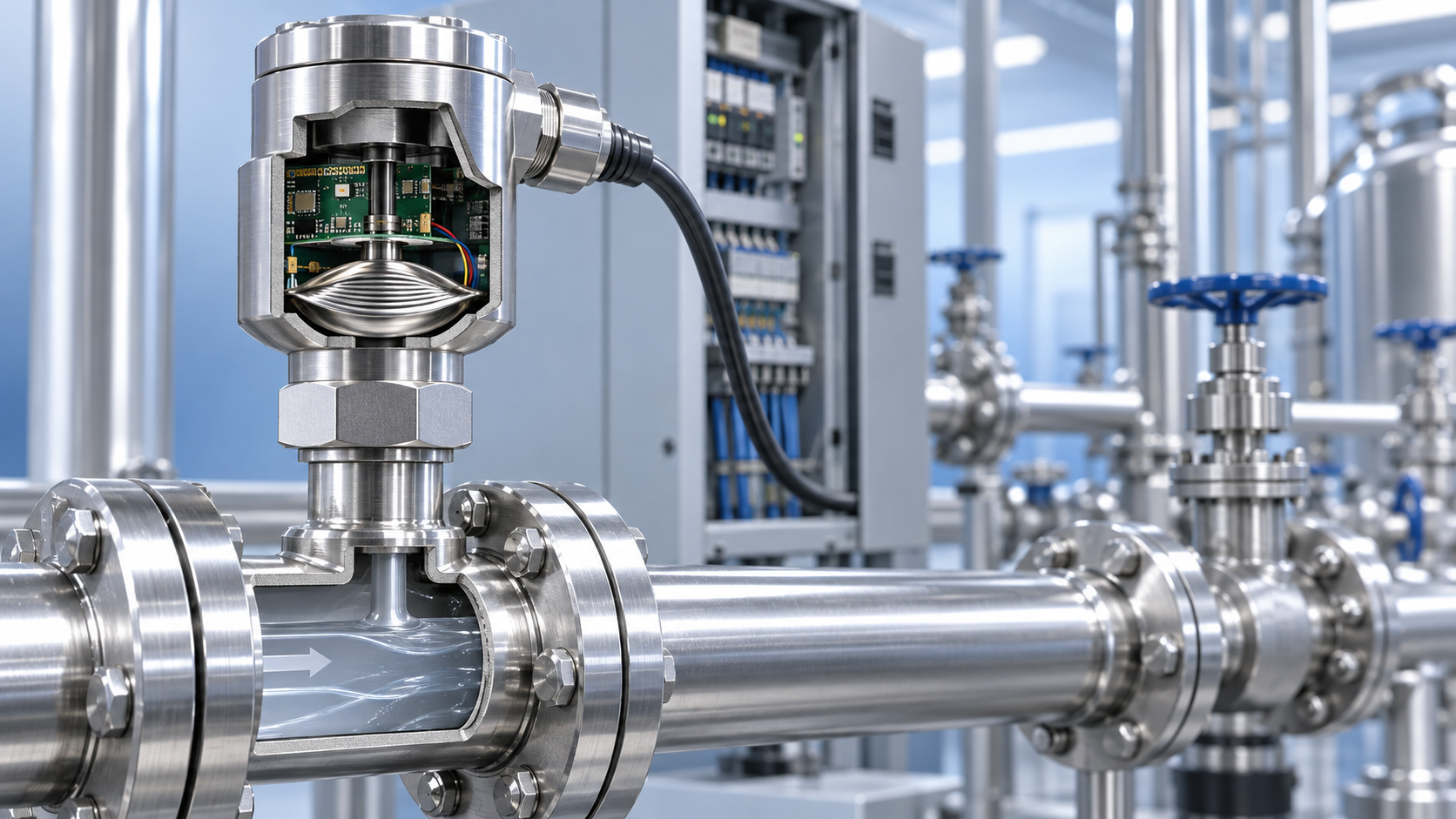
Southchip Technology Launches Its First Optical Sensor, the SC52115, for Wearable Devices How does a pressure sensor convert changes in applied force into usable electrical signals?
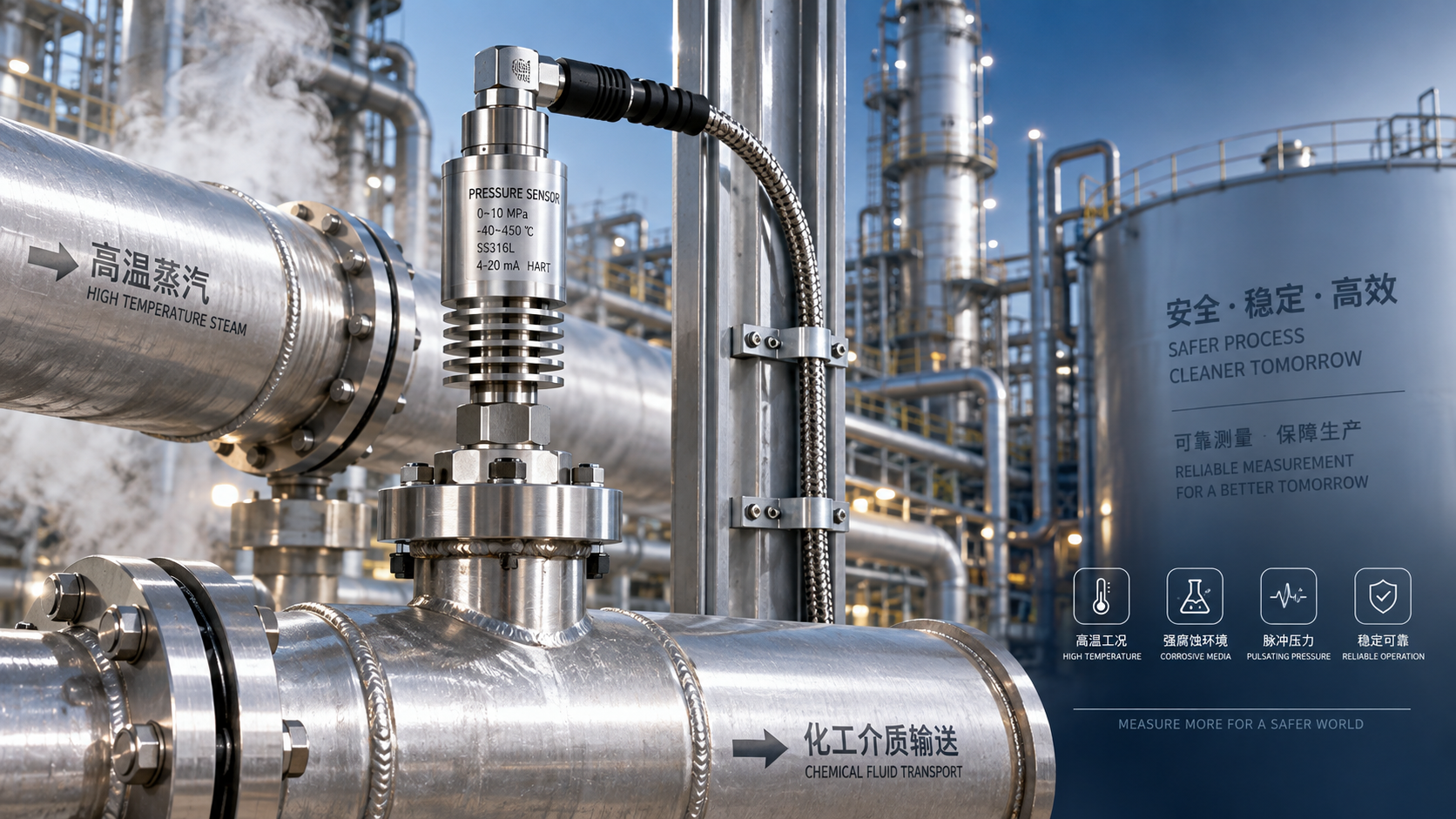
 Which parameters should be considered when selecting pressure sensors for high-temperature, corrosive, and pulsating operating conditions?
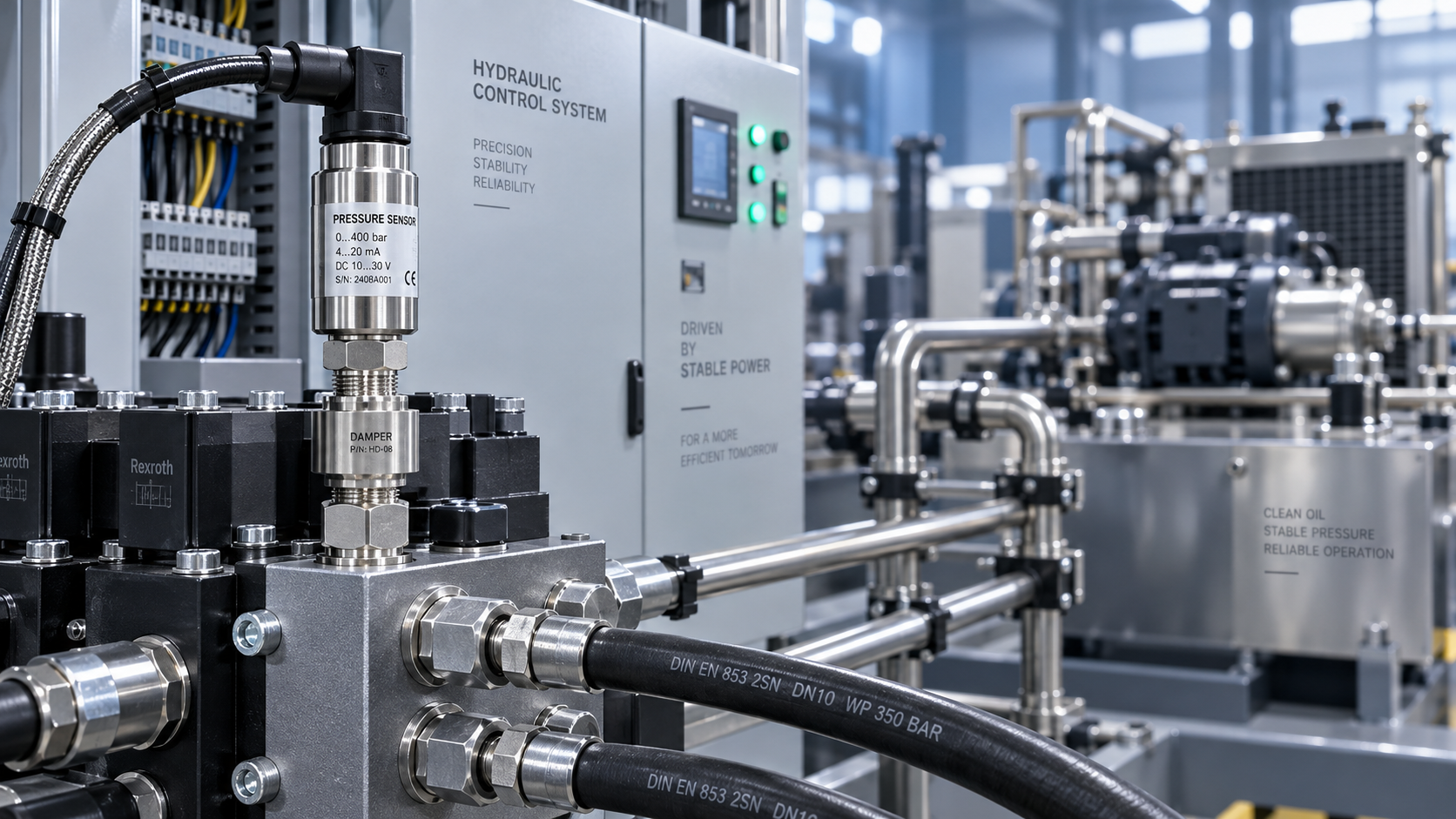
 Hydraulic equipment pressure fluctuates frequently. How can sensors be configured to improve control stability?