News Center
—— NEWS CENTER ——
Xi'an Shenghongchuang Instrument Co., Ltd.
Contact: Mr. Zhang
Mobile: 15529283736
Email: shc-sensor@qq.com
Address: Fortune Building, Sanqiao Street, Xixian New Area, Xi'an, Shaanxi Province
Introduction
When selecting the YD-322 pressure transmitter,the accuracy class is one of the key parameters。What does the difference between 0.5% and 0.2% accuracy mean in practical applications?This article will provide a detailed analysis of the impact of different accuracy classes on measurement results,helping information researchers and operators make informed choices based on their needs。As a professional pressure sensor manufacturer,we will also share key selection points for diffused silicon liquid and gas pressure sensors。
Basic Concepts of Pressure Transmitter Accuracy Classes
The accuracy class is an important indicator for evaluating the measurement accuracy of a pressure transmitter,and is usually expressed as a percentage of full scale。For example,a transmitter with 0.5% accuracy means that,across the entire measurement range,the measurement error does not exceed ±0.5% of full scale。For a diffused silicon liquid and gas pressure sensor such as the YD-322,the accuracy class directly affects its reliability and stability in industrial processes。
Taking the MB330 series pressure transmitter as an example,its accuracy can reach class 0.5,class 0.25 or even class 0.1,making it suitable for various scenarios such as hydraulic and pneumatic control systems,petrochemical applications,and environmental protection。High-accuracy transmitters use highly stable pressure sensor components from internationally renowned companies,and ensure long-term stability through precision temperature compensation technology。
Practical Significance of Accuracy Classes
In practical applications,the difference between 0.2% and 0.5% accuracy may result in completely different measurement performance。For example,for a system with a range of 10MPa:
This difference is particularly critical in applications that require high-precision control,such as power plant operation inspections or laboratory pressure calibration。
Selection of Application Scenarios for Different Accuracy Classes
Selecting a pressure transmitter with the appropriate accuracy class requires comprehensive consideration of cost-effectiveness and application requirements。For most industrial process detection and control scenarios,a transmitter with 0.5% accuracy is already sufficient,such as constant-pressure water supply,building automation,and other systems。
For applications that require higher accuracy,such as thermal power units or locomotive braking systems,transmitters with 0.2% or even higher accuracy are more suitable。The temperature drift characteristics(≤±0.05%FS/℃)of diffused silicon liquid and gas pressure sensors also play an important role in high-accuracy applications。
Relationship Between Accuracy and Cost
Generally speaking,for each improvement of one accuracy class,the price may increase by 30%-50%。Taking the domestic general-purpose pressure transmitter MB330 with LCD display hydraulic water pressure sensor as an example,there will be a significant price difference between class 0.25 products and class 0.5 products。Users need to make a trade-off based on their budget and actual requirements。
Core Technology of Diffused Silicon Pressure Sensors
Diffused silicon technology is the core of today’s high-accuracy pressure transmitters,and its operating principle is based on the piezoresistive effect of silicon materials。Models such as YM-1QQ use this technology,featuring fast response speed(rise time ≤5 milliseconds),good stability(±0.1%FS/year),and other advantages。
In terms of calibration,pressure transmitters such as YMP-YMP489 require professional equipment and methods for calibration,ensuring the accuracy of zero adjustment(±8% of output range)and span adjustment(±20% of output range)。
Common Faults and Handling
Pressure transmitters such as YM-115 may encounter faults during use,including signal drift and unstable output。Most problems can be solved by checking parameters such as supply voltage(9~36VDC)and medium temperature(-30~+85℃)。Although sensors with stainless steel structures are durable,they still require regular maintenance。
Summary and Selection Recommendations
When selecting a pressure transmitter,the accuracy class is only one of many factors to consider。Users also need to pay attention to technical parameters such as measurement range(gauge pressure 0~0.01MPa to 0~250MPa),output signal(4~20mADC),and medium compatibility。
As a professional manufacturer,we recommend selecting a transmitter with an appropriate accuracy class based on the specific application scenario,balancing performance and cost。For special requirements,customized solutions can be considered。
If you would like to learn more technical details about the YD-322 pressure transmitter or diffused silicon sensors,please feel free to contact us for professional advice。
Related Recommendations
![]() Southchip Technology Launches Its First Optical Sensor, the SC52115, for Wearable Devices
Southchip Technology Launches Its First Optical Sensor, the SC52115, for Wearable Devices How does a pressure sensor convert changes in applied force into usable electrical signals?
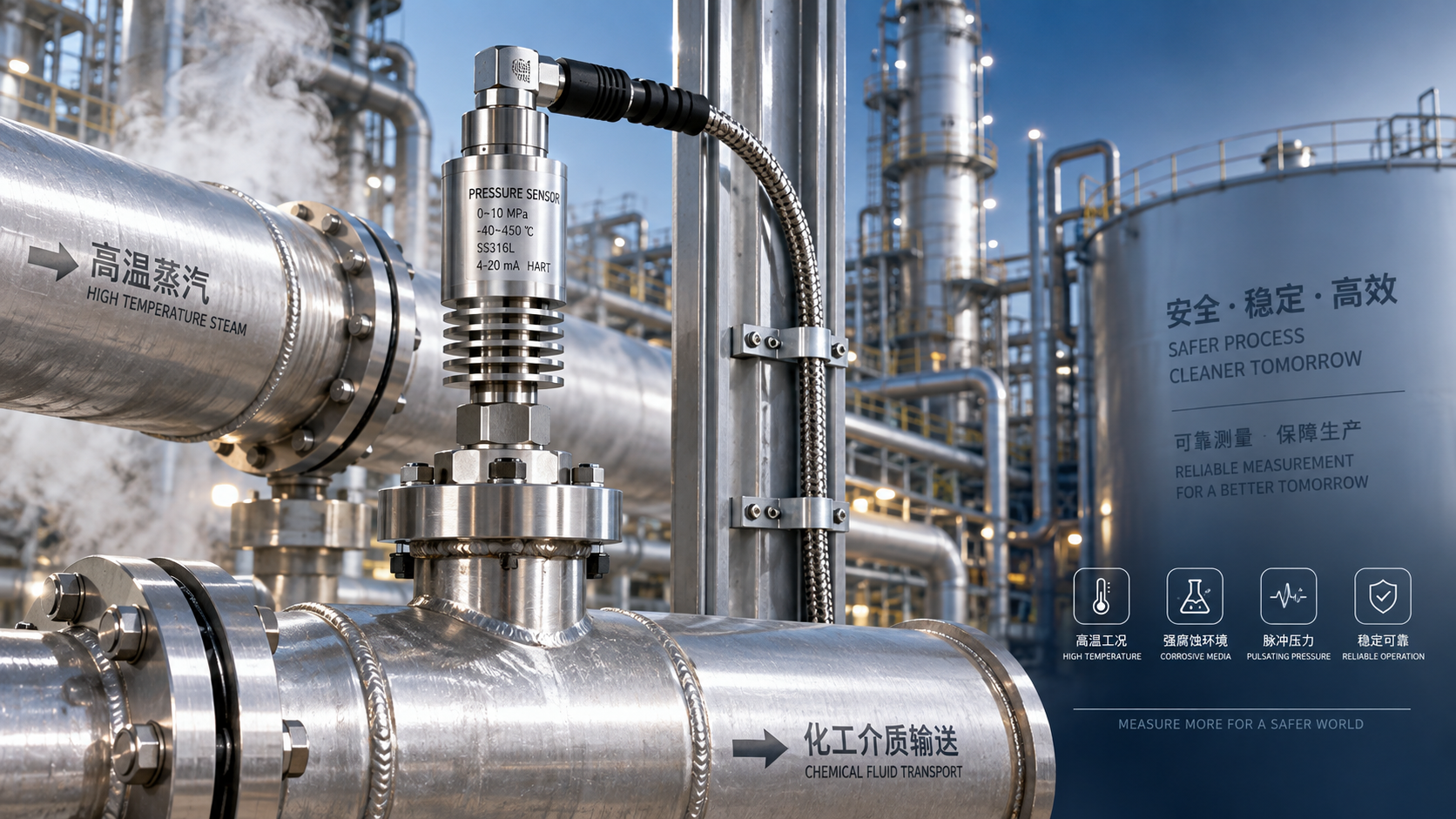
 Which parameters should be considered when selecting pressure sensors for high-temperature, corrosive, and pulsating operating conditions?
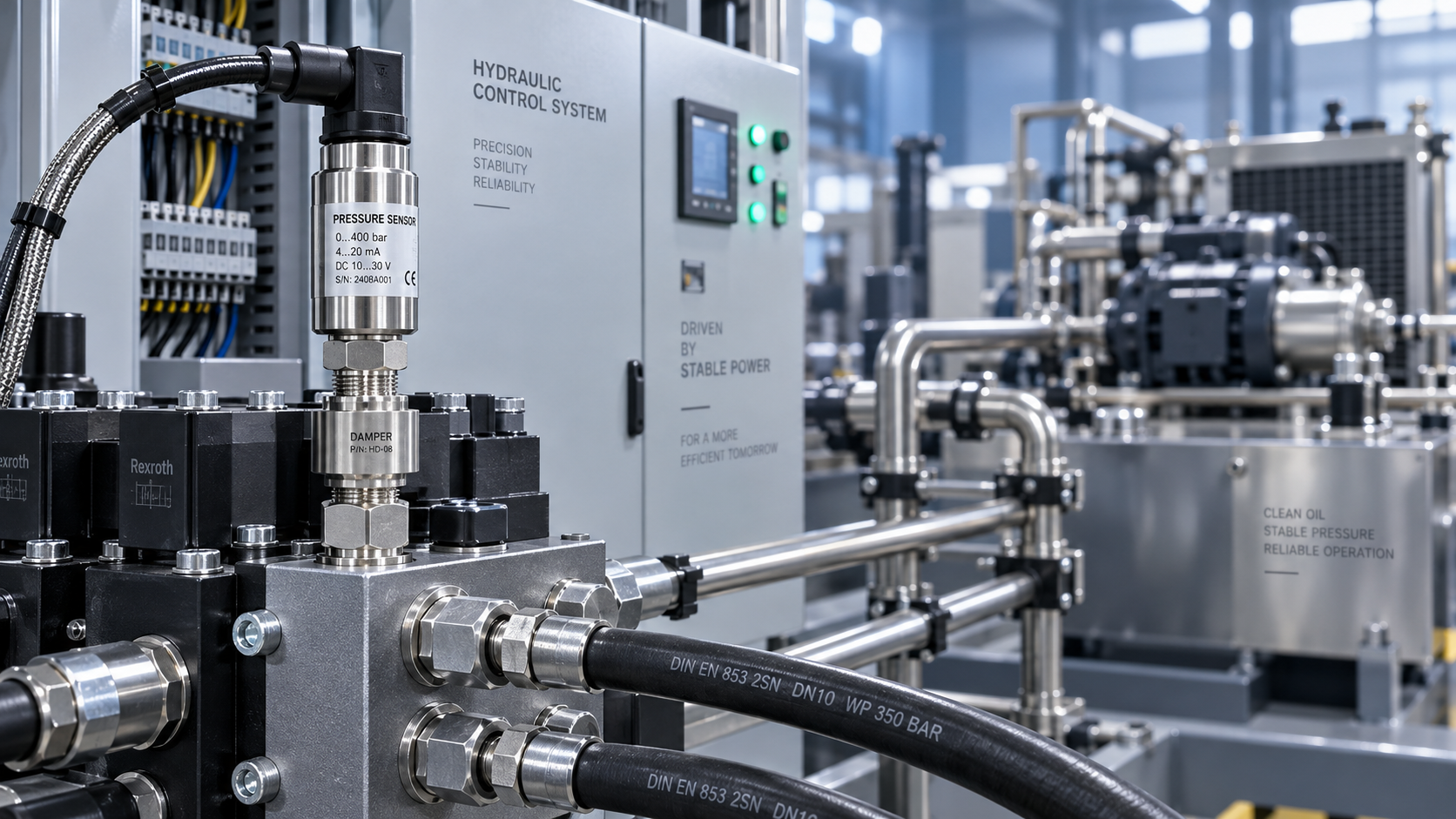
 Hydraulic equipment pressure fluctuates frequently. How can sensors be configured to improve control stability?