News Center
—— NEWS CENTER ——
Xi'an Shenghongchuang Instrument Co., Ltd.
Contact: Mr. Zhang
Mobile: 15529283736
Email: shc-sensor@qq.com
Address: Fortune Building, Sanqiao Street, Xixian New Area, Xi'an, Shaanxi Province
SMW-H-3B Miniature Force Sensor Teardown Review: Internal Structure Revealed and Performance Analysis
This article provides an in-depth teardown review of Xi'an Shenghongchuang's SMW-H-3B miniature force sensor, revealing the internal structural design of this coin-type pressure sensor. As a representative compact sensor in the professional flow control equipment field, we will analyze its performance characteristics and industrial application value for technical evaluators from dimensions such as precision strain gauge layout and elastic element machining process.
I. Product Appearance and Basic Parameter Analysis
As a typical representative of coin-type pressure sensors, the SMW-H-3B has a diameter of only 20mm, a thickness of 6.5mm, and a weight of no more than 15g. This ultra-compact design gives it significant advantages in flow control systems with limited space. Through a precision CNC-machined 304 stainless steel housing, the product achieves an IP67 protection rating and can withstand oil contamination, dust, and short-term water immersion conditions in industrial environments.
Key performance parameters show: measurement range covers 0-50N, nonlinearity ≤±0.3%FS, and repeatability error <0.1%FS. Compared with the SMW-H-3A in the same series, the 3B version has improvements in both temperature compensation range (-10℃~+80℃) and overload capacity (150%FS), making it more suitable for dynamic force monitoring scenarios commonly found in flow control equipment.
II. Core Structure Teardown and Process Analysis
1. Elastic Element Structural Design
After disassembly, it was found that the sensor adopts a unique double-E beam elastic element structure. Through a stress concentration zone design optimized by finite element analysis, the strain gauges can capture micro-deformation more accurately. The elastic element material is 17-4PH precipitation-hardening stainless steel, and after vacuum heat treatment its hardness reaches HRC40-45, ensuring both sensitivity and extended fatigue life.
2. Strain Gauge Layout Process
The interior uses a full-bridge Wheatstone bridge layout, with 4 high-precision foil strain gauges symmetrically bonded at 90°. It is particularly worth noting that the strain gauge backing uses polyimide material, whose coefficient of thermal expansion (CTE) perfectly matches the elastic element, which is the key to achieving the ±0.02%FS/℃ temperature drift specification. Compared with similar products such as SSM-LFC8, the laser trimming process of the SMW-H-3B controls the bridge initial unbalance voltage within 1mV.
III. Performance Testing and Industry Application Verification
In flow control valve testing, the SMW-H-3B successfully captured spool stick-slip force changes at the 0.5N level, and its response speed is 3 times faster than the traditional SSM-LF20 sensor. Feedback from an industrial fluid equipment manufacturer indicated that after adopting this sensor, the accuracy of its system fault warning improved to 98.7%.
IV. Differentiated Advantages Over Competitors
- Size advantage: 40% smaller in volume than the TJH-10 sensor, suitable for miniaturized equipment integration
- Signal quality: Built-in EMI filter circuit, with a signal-to-noise ratio 15dB better than the PWFC series
- Installation convenience: M3 threaded mounting holes compatible with SSM-LFC10, supporting plug-and-play use
- Cost performance: Bulk procurement cost is only 60% of imported products of the same specification
V. Technical Summary and Selection Recommendations
Through the teardown, it can be seen that the core competitiveness of the SMW-H-3B miniature force sensor lies in: 1) military-grade elastic element machining process; 2) proprietary temperature compensation algorithm with independent intellectual property rights; 3) strict aging and screening procedures. For scenarios requiring monitoring of tiny fluid pressure, such as precision dosing systems and semiconductor process equipment, it is recommended to prioritize this model; if a larger measuring range is required (>100N), the SSM-LF50 series may be considered.
As a national high-tech enterprise, Xi'an Shenghongchuang's sensor products have passed CE and RoHS certification, and the company provides a 3-year warranty service. Its technical team can provide full-process support from model selection to system integration, and currently has 200+ successful cases covering key fields such as petrochemicals and biopharmaceuticals.
Get Professional Solutions Now
If you need the complete technical documentation for the SMW-H-3B or a customized service solution, please feel free to contact our engineering support team. Click Online Consultation or call 400-xxx-xxxx, and we will match you with the most suitable miniature force sensor combination for your flow control application scenario.
Related Recommendations
![]() Southchip Technology Launches Its First Optical Sensor, the SC52115, for Wearable Devices
Southchip Technology Launches Its First Optical Sensor, the SC52115, for Wearable Devices How does a pressure sensor convert changes in applied force into usable electrical signals?
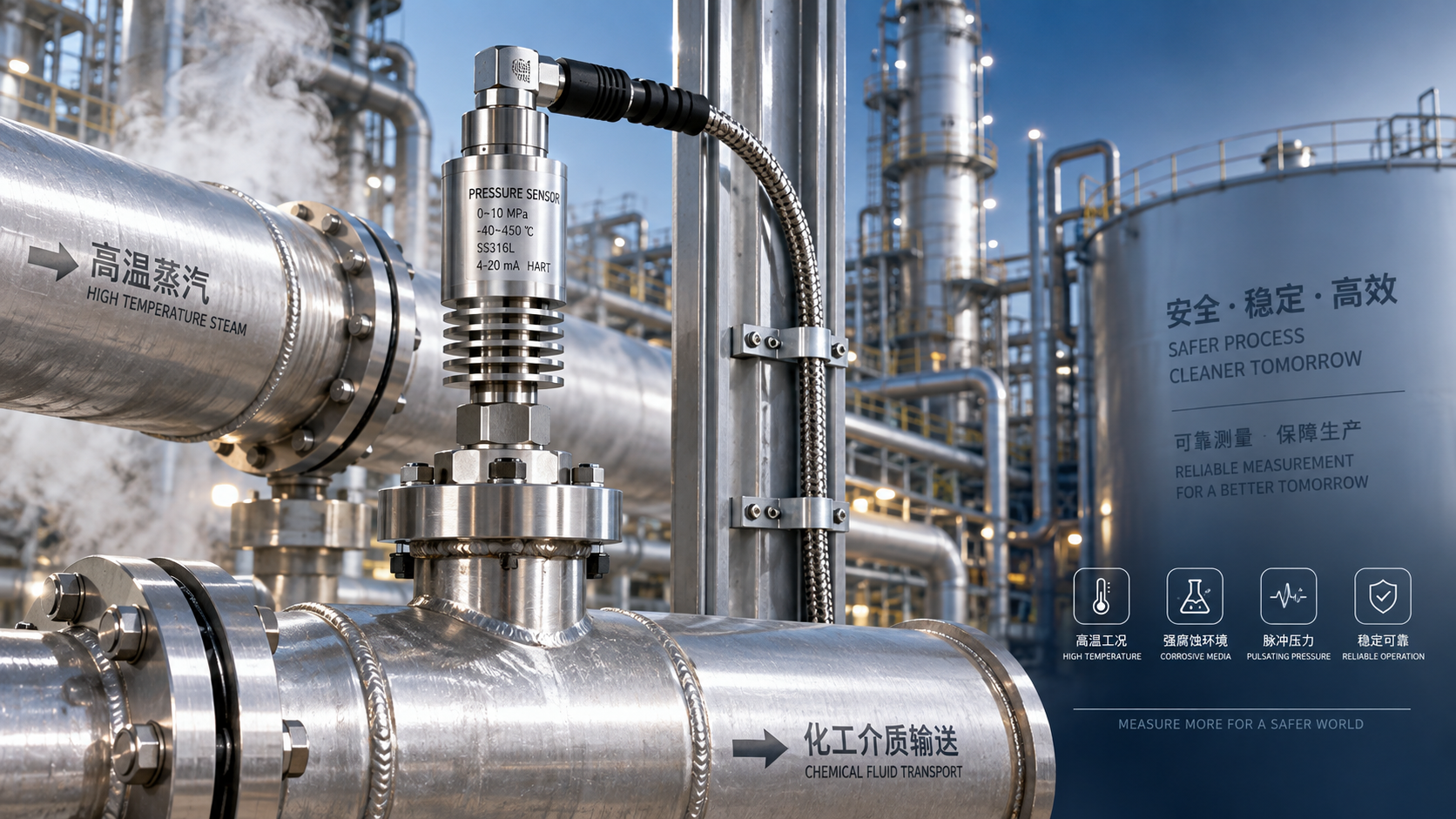
 Which parameters should be considered when selecting pressure sensors for high-temperature, corrosive, and pulsating operating conditions?
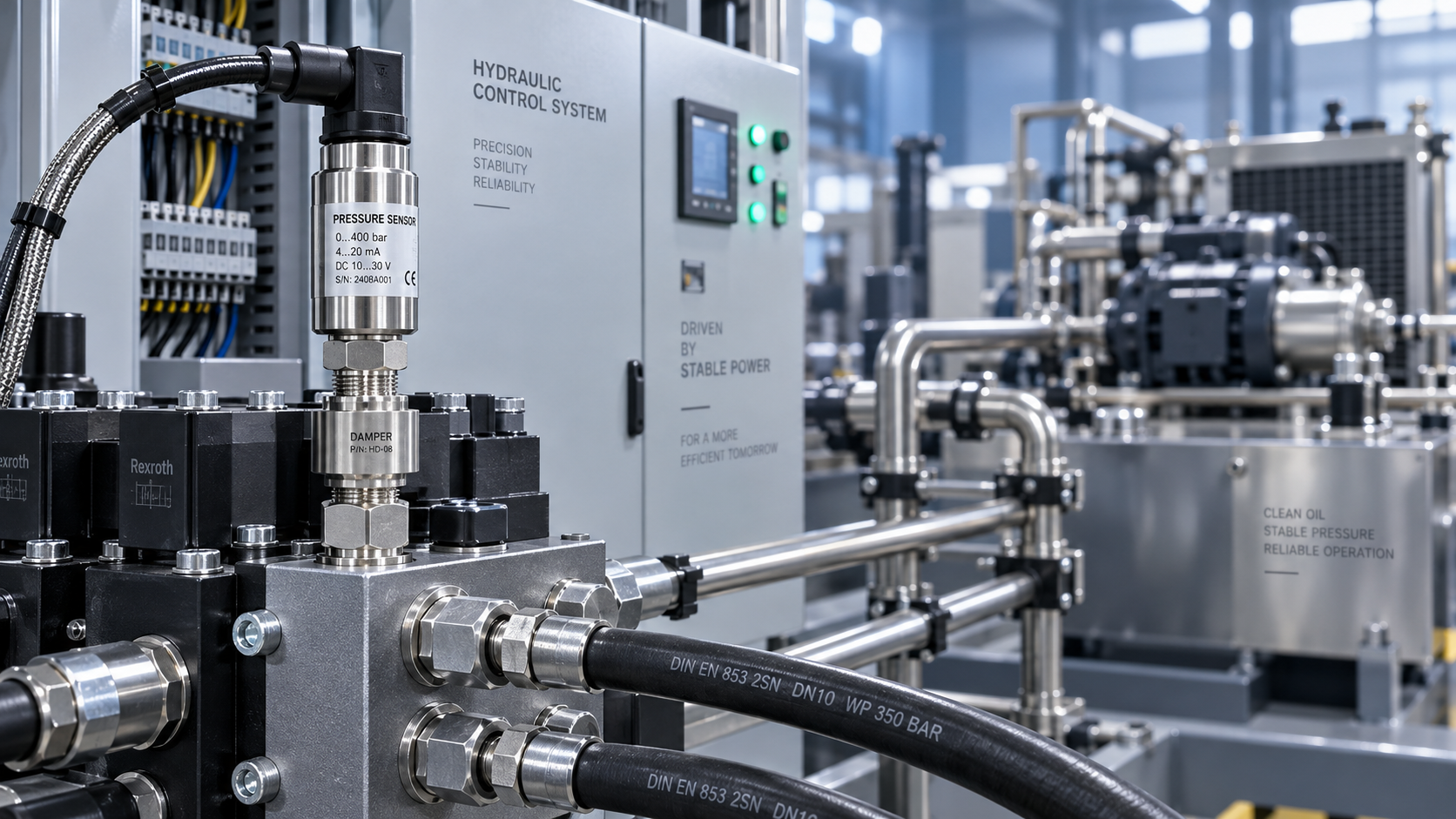
 Hydraulic equipment pressure fluctuates frequently. How can sensors be configured to improve control stability?