News Center
—— NEWS CENTER ——
Xi'an Shenghongchuang Instrument Co., Ltd.
Contact: Mr. Zhang
Mobile: 15529283736
Email: shc-sensor@qq.com
Address: Fortune Building, Sanqiao Street, Xixian New Area, Xi'an, Shaanxi Province
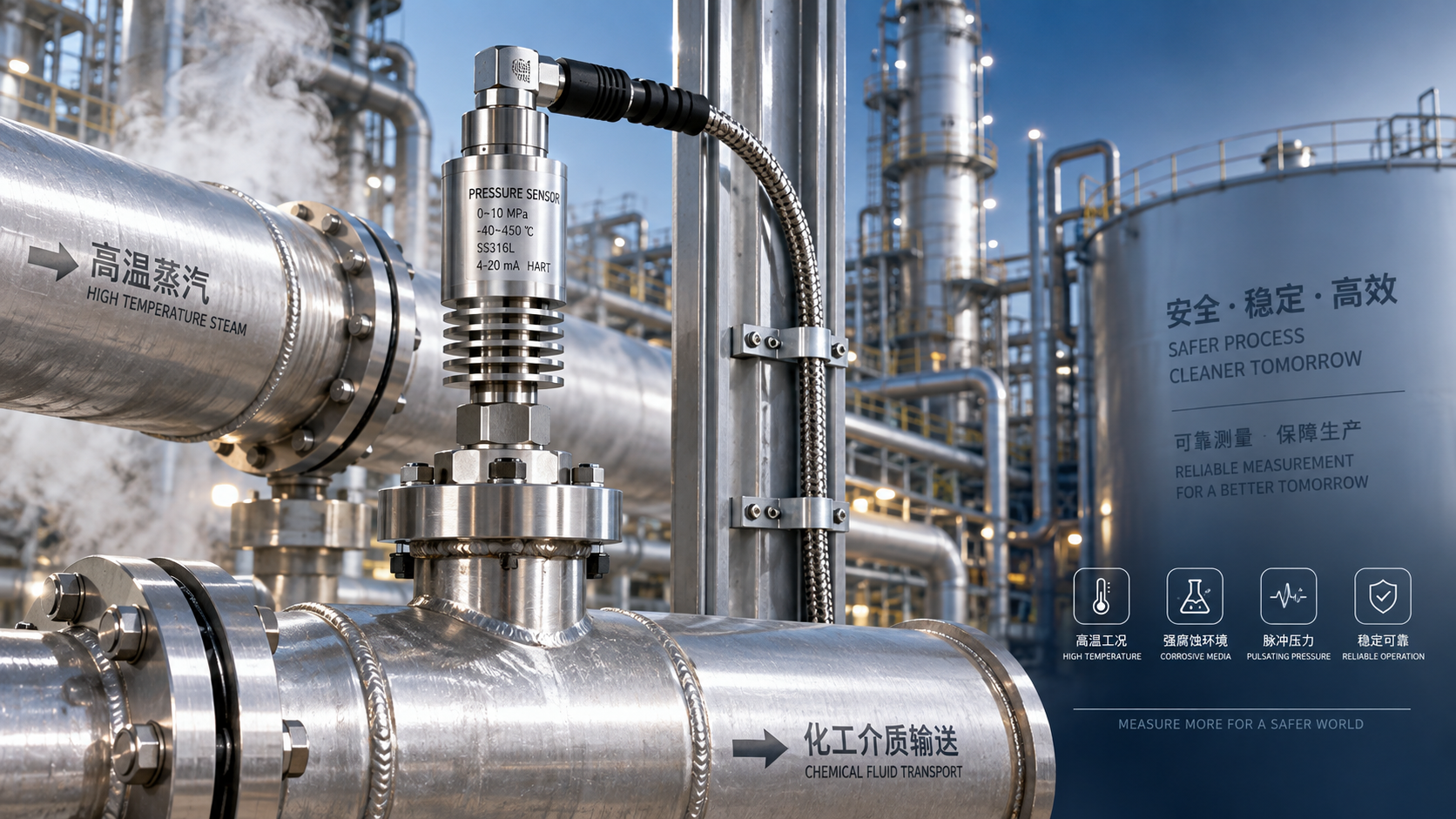
In the field of industrial automation, the correct selection of the PT102 pressure transmitter directly affects system stability. This article is aimed at technical evaluators and reveals 3 installation details that are most easily overlooked, helping you avoid common application misunderstandings of AST series sensors. From media compatibility to electrical interference protection, these key factors will determine the actual performance of transmitters such as PT102 and PT303.
1. Media compatibility: chemical matching that must be verified before selection
The chemical compatibility between the diaphragm material of the PT102 pressure transmitter and the process media is the root cause of 90% of field failures. A common mistake made by technical evaluators is to refer only to standard operating condition parameters while overlooking the following key points:
- Dynamic corrosion risk: The AST4400 pressure sensor uses a 316L stainless steel diaphragm, which performs excellently in a static pure water environment, but if the media contains chloride ions and there is turbulent flow with a velocity >2m/s, pitting corrosion may occur. It is recommended to use the Hastelloy C276 diaphragm solution of the AST43LP pressure sensor
- Temperature-concentration coupling effect: 40% concentration sulfuric acid has no effect on the ceramic diaphragm of the PT304 pressure transmitter at 20℃, but when the temperature rises to 80℃, the corrosion rate increases by 17 times
- Media phase change: The PT1211 pressure transmitter performs stably in liquid ammonia, but if the media may vaporize, the expansion coefficient of the sealing material must be specially verified
It is recommended to use the ASTM G31 standard for accelerated corrosion testing, or directly refer to the media compatibility matrix provided by Xi'an Shenghongchuang, which includes data for 186 common industrial media.
2. Mechanical installation stress: an underestimated cause of zero drift
Our field data shows that about 35% of calibration failure cases of the AST20HA pressure sensor are caused by improper mechanical installation. Technical teams should pay special attention to:
2.1 Pipeline concentricity deviation control
When the PT101 pressure transmitter is installed by flange, if the pipeline centerline deviation is >0.5° axial stress will be generated. According to the ASME B31.3 specification, it is recommended to:
2.2 Anti-interference solution under vibration environments
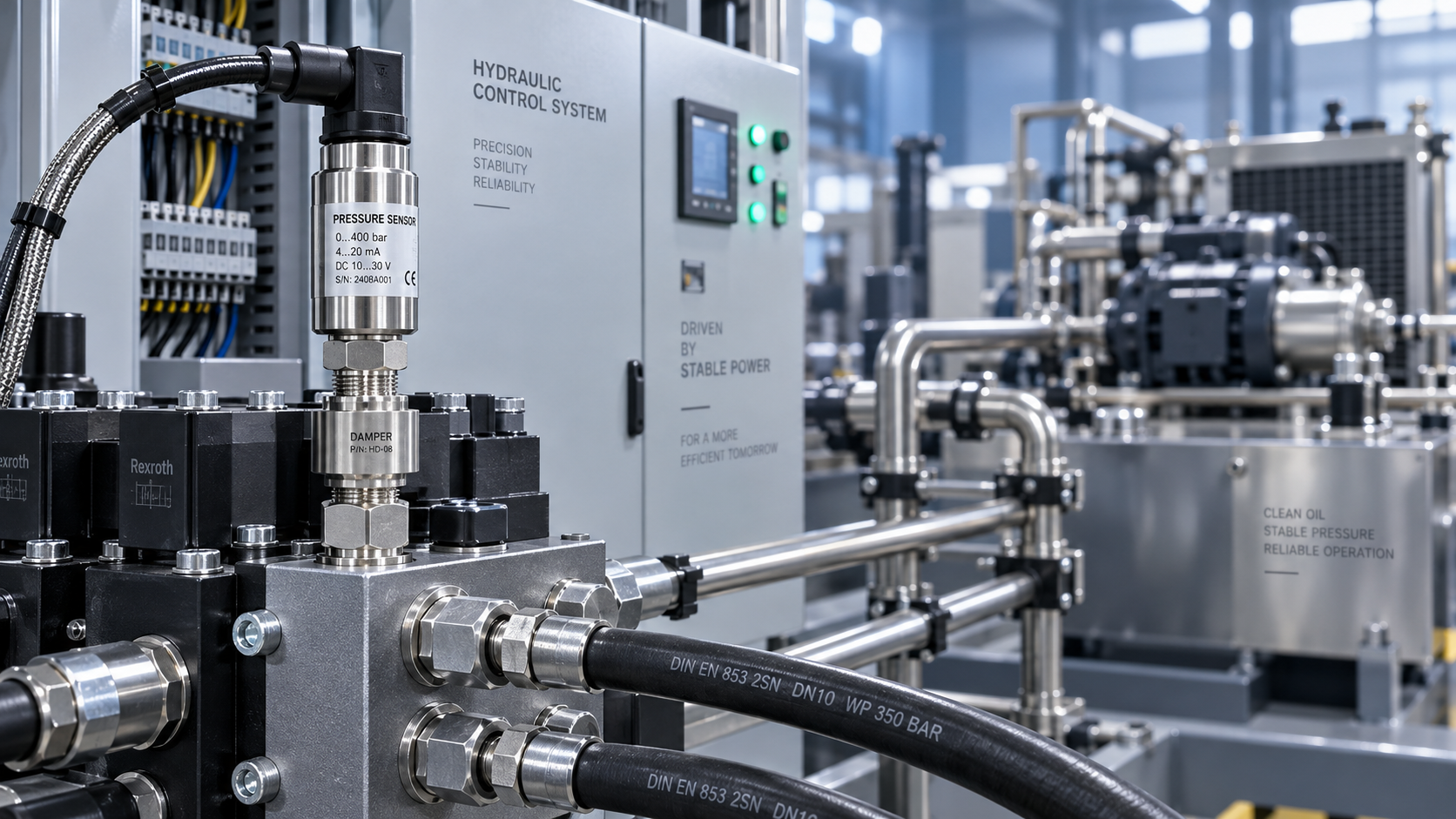
For vibration areas such as pump outlets, the PT102 pressure transmitter should be equipped with:
- Hydraulic pulse damper (can attenuate more than 85% of vibrations >15Hz)
- M12 locking connector dedicated to the AST4700 pressure sensor
- The natural frequency of the mounting bracket must be <1/3 of the system vibration frequency
3. Electrical system integration: hidden risks beyond the IP protection rating
Even if the PT303 pressure transmitter with IP67 protection is selected, signal abnormalities may still occur due to the following issues:
3.1 Ground loop interference
When there is a ground potential difference of >0.5V between the sensor and the PLC, the 4-20mA signal will have an error of 0.2%FS/V. Solutions include:
- Use the isolated output version of the PT304 pressure transmitter (isolation voltage ≥1500VAC)
- Install a signal isolator on the control cabinet side
- Ensure the resistance of all grounding points is <1Ω (refer to IEC 60364-5-54)
3.2 Radio frequency interference (RFI) protection
When installed near a frequency converter, it is recommended to:
- Select the PT1211 pressure transmitter with dual-shielded cable (inner shield grounded, outer shield floating)
- Keep cable routing more than 30cm away from power lines or cross at 90°
- Install an EMC filter at the DCS input end (such as Schaffner FN2090)
Summary and professional recommendations
By systematically addressing the three major issues of media compatibility, mechanical stress, and electrical interference, the measurement accuracy of the PT102 pressure transmitter can be improved to more than 98% of the nominal value. As a national high-tech enterprise, Xi'an Shenghongchuang's AST series sensors and PT series transmitters have passed:
- ISO 9001:2015 quality management system certification
- CE/ATEX explosion-proof certification (applicable to the AST43LP pressure sensor)
- Third-party verified pressure cycle testing exceeding 1 million cycles
If you need a customized selection solution or on-site installation guidance, please contact our technical engineering team immediately. We will provide you with a full-process solution including media analysis, stress calculation, and EMC design.
Related Recommendations
![]() Southchip Technology Launches Its First Optical Sensor, the SC52115, for Wearable Devices
Southchip Technology Launches Its First Optical Sensor, the SC52115, for Wearable Devices How does a pressure sensor convert changes in applied force into usable electrical signals?
 Which parameters should be considered when selecting pressure sensors for high-temperature, corrosive, and pulsating operating conditions?
 Hydraulic equipment pressure fluctuates frequently. How can sensors be configured to improve control stability?