News Center
—— NEWS CENTER ——
Xi'an Shenghongchuang Instrument Co., Ltd.
Contact: Mr. Zhang
Mobile: 15529283736
Email: shc-sensor@qq.com
Address: Fortune Building, Sanqiao Street, Xixian New Area, Xi'an, Shaanxi Province
The Core Principle of Diffused Silicon Hysteresis Pressure Sensors
As a key device in the field of industrial automation, the PMT102 pressure transmitter achieves precise pressure measurement through a diffused silicon hysteresis sensor. This article will analyze its working principle with illustrated explanations, helping contract executors quickly understand the technical characteristics of models such as CYB-23 and YPS-330, and providing professional reference for equipment selection.
The core of the diffused silicon hysteresis pressure sensor lies in its semiconductor strain gauge technology. When external pressure acts on the sensor, the silicon diaphragm undergoes micro deformation, causing changes in the resistance value of the embedded Wheatstone bridge. This change is converted by the precision circuit of the PMT-PMT102 pressure transmitter into a 4-20mA standard signal, enabling linear output of the pressure value. Compared with traditional piezoresistive sensors, its sensitivity is improved by about 30%, and temperature drift is controlled within ±0.05%FS/℃.
Breakdown of the Typical Working Process
- Pressure transmission stage: The medium transmits pressure through the 316 stainless steel isolation diaphragm to the filled silicone oil
- Deformation conversion stage: The silicone oil evenly transfers pressure to the diffused silicon sensing element
- Signal processing stage: The built-in ASIC chip performs real-time compensation for temperature/nonlinearity errors
- Output standardization stage: The V/I conversion circuit of the YPS-330 pressure transmitter generates industrial standard signals
Comparison of Key Model Technical Parameters
Key Points for Selection Decisions
Contract executors should focus on three indicators: first, the temperature compensation range marked for the CEMPX-CEMPX204 pressure transmitter, which directly affects measurement stability under extreme working conditions; second, overload capacity, for example, the domestic general-purpose pressure transmitter HDP708K anti-corrosion absolute pressure sensor can withstand impact up to 2 times full scale; finally, the protection rating must be verified, and specifications of IP67 or above are recommended for the petrochemical field.
System Integration Solutions
In actual engineering deployment, the QYB-QYB101 pressure transmitter needs to form a complete measurement chain together with supporting instruments. We recommend the following configuration scheme:
- Signal transmission link: Use twisted shielded cable, and add a signal repeater when the distance exceeds 300 meters
- Power supply configuration link: A 24VDC regulated power supply is recommended for two-wire devices, with a fluctuation range not exceeding ±10%
- Data acquisition link: Match with the dedicated acquisition module for the PLS-PLS pressure transmitter, with a sampling rate not lower than 10Hz
- Safety protection link: In flammable environments, an intrinsically safe barrier must be configured to comply with IECEx certification standards
Typical Fault Troubleshooting Guide
When the SNYB-SNYB810 pressure transmitter shows abnormal output, it can be diagnosed in three steps: check whether the power supply voltage is within the range of 9-36VDC; test whether the loop impedance is between 250-750Ω; finally, use a standard pressure source to verify the linearity of the sensor itself. Common problems are mostly caused by oxidation of cable connectors or diaphragm blockage due to medium crystallization.
Analysis of Industry Application Scenarios
In constant-pressure water supply systems, the response time of the DG-DG1215 pressure transmitter must be ≤5 milliseconds to effectively suppress the water hammer effect. In the rail transit field, more attention is paid to vibration adaptability, requiring random vibration testing in accordance with the EN 61373 standard. Different scenarios have significant differences in the technical requirements for the PMT-PMT120 pressure transmitter:
- Petrochemical industry: 316L stainless steel is preferred, resistant to H2S corrosion
- Power industry: Requires 0.1 class high accuracy, matched with a temperature composite sensor
- Food and pharmaceuticals
Hygienic design, compliant with 3-A Sanitary standards Maintenance and Servicing Specifications
To ensure the long-term stable operation of the FG-FG500 pressure transmitter, it is recommended to carry out the following operations every 6 months: use a dedicated calibrator for zero point/full scale calibration; check whether the O-ring is aging; clean the process connection threads. In corrosive media environments, the special coating version of the domestic general-purpose pressure transmitter HDP708K anti-corrosion absolute pressure sensor can be selected.
Technical Development Trends
The new generation PMT-PMT102 pressure transmitter is evolving in three directions: wireless transmission technology (compliant with the WirelessHART protocol), digital twin interface (supporting the OPC UA standard), and self-diagnosis functions (predicting remaining service life). These innovations reduce equipment maintenance costs by more than 40%, and are especially suitable for distributed application scenarios such as building automation.
Vendor Selection Criteria
When evaluating the ranking of diffused silicon hysteresis pressure sensor manufacturers, it is recommended to examine four dimensions: whether ISO 9001/14001 system certification is available; whether third-party inspection reports can be provided; whether there are typical engineering cases; and the response speed of technical support. High-quality suppliers are usually equipped with a 24-hour technical hotline and can provide customized range services.
Summary and Recommendations
Mastering the working principle of pressure transmitters helps contract executors make precise technical decisions. For harsh working conditions, it is recommended to choose products certified with SIL2, and pay attention to the compatibility of supporting instruments. Xi'an Shenghongchuang Instrumentation Co., Ltd. provides full-chain services from CEMPX-CEMPX204 pressure transmitters to system integration, and the technical team can tailor solutions for you.
Contact our engineers now to obtain detailed technical white papers and selection manuals for models such as CYB-23 and YPS-330, or make an appointment for on-site working condition evaluation services.
Related Recommendations
![]() Southchip Technology Launches Its First Optical Sensor, the SC52115, for Wearable Devices
Southchip Technology Launches Its First Optical Sensor, the SC52115, for Wearable Devices How does a pressure sensor convert changes in applied force into usable electrical signals?
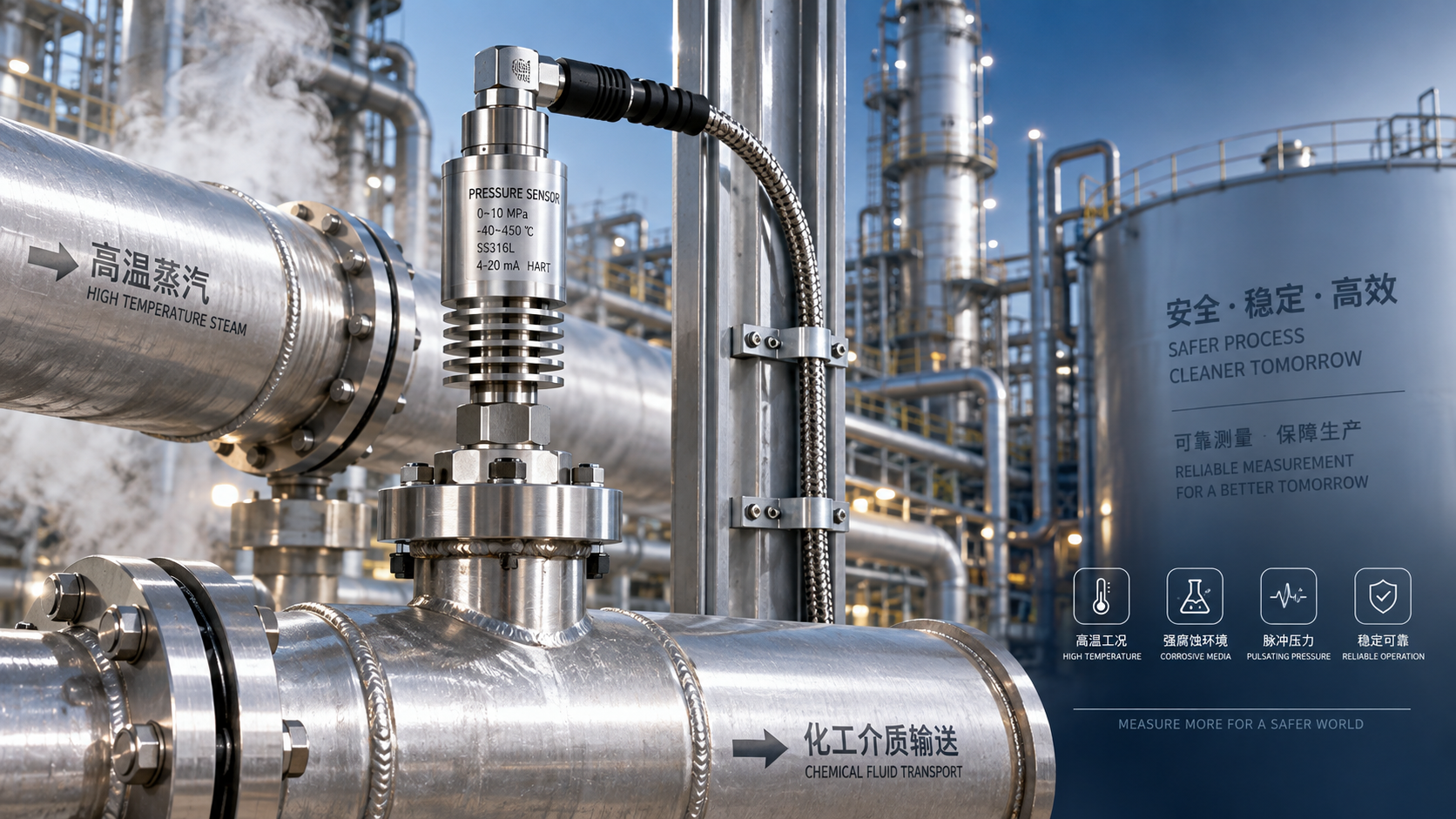
 Which parameters should be considered when selecting pressure sensors for high-temperature, corrosive, and pulsating operating conditions?
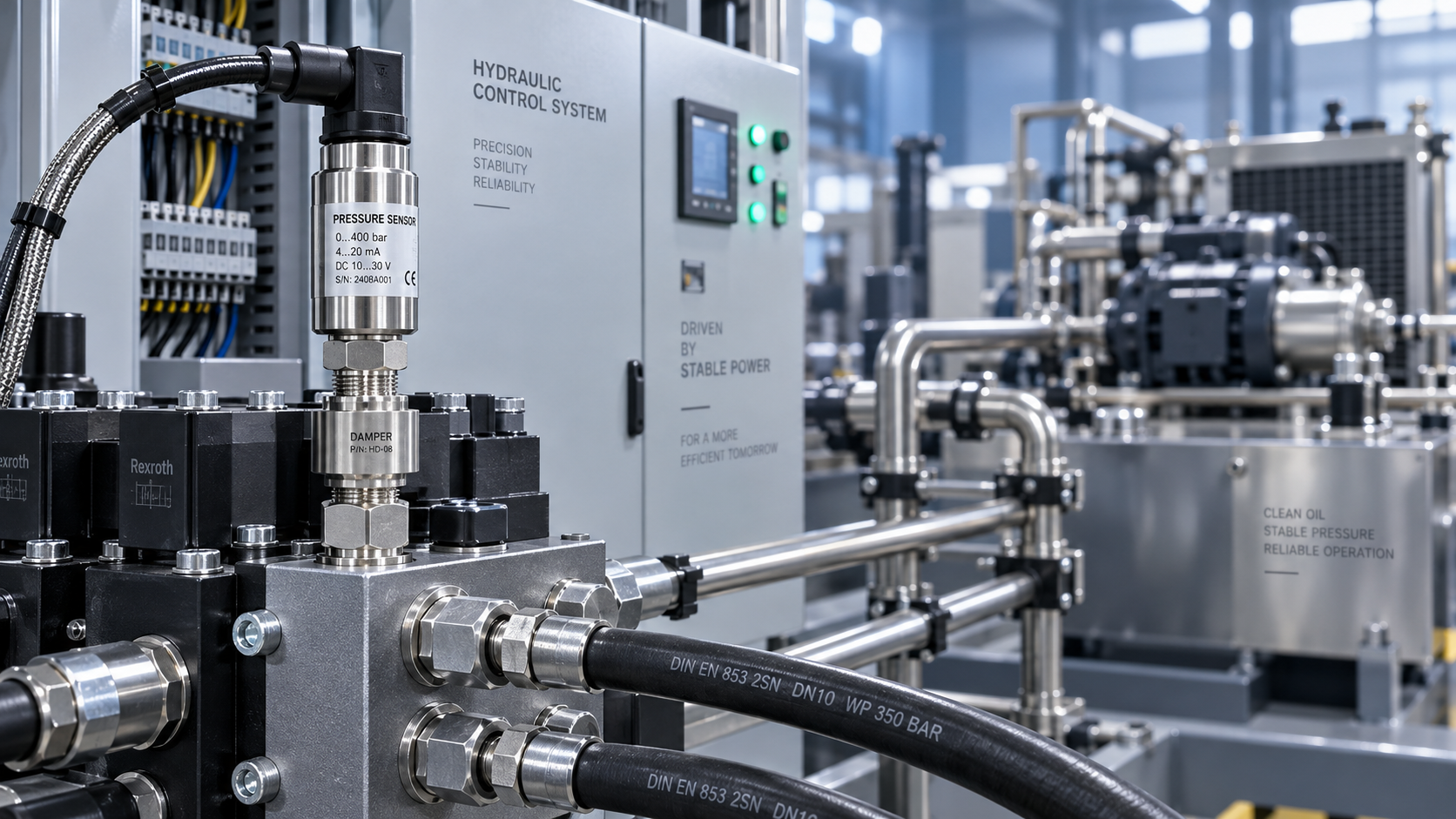
 Hydraulic equipment pressure fluctuates frequently. How can sensors be configured to improve control stability?