News Center
—— NEWS CENTER ——
Xi'an Shenghongchuang Instrument Co., Ltd.
Contact: Mr. Zhang
Mobile: 15529283736
Email: shc-sensor@qq.com
Address: Fortune Building, Sanqiao Street, Xixian New Area, Xi'an, Shaanxi Province
Introduction
In the field of industrial automation, the performance of the P200S-GB10CG12M4S pressure transmitter directly affects system stability. As the core component of a diffused silicon liquid and gas pressure sensor, its selection should focus on 5 key parameters such as accuracy, measuring range, and output signal. This article will analyze how to evaluate the advantages and disadvantages of the transmitter through technical parameters, helping technical evaluators make precise decisions.
1. Accuracy Class: The Core Indicator Determining Measurement Reliability
Accuracy is the primary parameter for evaluating the performance of the P200S-GB10CG12M4S pressure transmitter. The typical accuracy range of diffused silicon liquid and gas pressure sensors is between 0.1%~0.5%FS, while high-end models such as the PT124B-210 series can reach 0.075%. During technical evaluation, attention should be paid to:
- Long-term Stability: The annual drift of a high-quality transmitter should be less than 0.1%/year
- Temperature Effect: For every 10℃ change in operating temperature, the error should be controlled within 0.02%
- Linearity: The DG1300-BZ series adopts laser trimming technology, with non-linearity error ≤±0.05%
When comparing similar products such as the HG-S3 pressure transmitter, it is recommended to require the supplier to provide third-party test reports, especially regarding accuracy retention under working conditions such as vibration and shock.
2. Measuring Range: A Key Choice for Matching Actual Working Conditions
The standard measuring range of the P200S-GB10CG12M4S covers 0~10MPa, but special models such as PT124B-210-100MPa can meet ultra-high-pressure requirements. The following should be considered when purchasing:
Special attention should be paid: a 20% margin should be reserved for the upper limit of the measuring range to avoid sensor damage caused by pressure peaks. For corrosive media, the SY-PG1300 series with a Hastelloy diaphragm should be selected.
3. Output Signal Type: System Compatibility Assurance
Modern pressure transmitters mainly provide the following signal output methods:
- 4~20mA Analog Signal: Strong anti-interference capability, suitable for long-distance transmission, and the standard configuration for industrial-grade products such as PT-PT300
- RS485 Digital Signal: Supports the Modbus protocol, facilitating networked monitoring, such as the Vegabar-GV3 intelligent transmitter
- HART Protocol: Can superimpose digital communication on the basis of 4~20mA to realize remote parameter setting
During technical evaluation, it is necessary to confirm the interface type of the control system and check whether the signal refresh rate (usually required to be ≤100ms) meets process requirements.
4. Process Connection and Sealing Class
The P200S-GB10CG12M4S is standardly equipped with G1/2" thread, but different installation environments require special considerations:
- Sanitary Connection: The food and pharmaceutical industries should choose the PT124B-210-NPT1/4 with clamp connection
- Explosion-proof Certification: Chemical sites need to choose the DG1300-BZ-A-2 series with Ex d IIC T6 explosion-proof class
- IP Protection: Outdoor installation requires at least IP67, while submersible types need to meet the IP68 standard
The selection of sealing materials is equally important: fluororubber is suitable for most working conditions, while polytetrafluoroethylene (PTFE) can withstand strongly corrosive media.
5. Temperature Compensation and Long-term Stability
The temperature characteristics of diffused silicon sensors directly affect measurement accuracy, and high-quality transmitters should have:
- Wide-temperature-range Compensation: Automatic full-range temperature compensation at -40~125℃ (such as SY-PG1300-1.6MPa-GB)
- Zero-point Temperature Drift: ≤±0.02%FS/℃ (refer to IEC 60770 standard)
- Aging Test: Through a 1000-hour accelerated aging test, ensuring a 10-year service life
It is recommended to require suppliers to provide temperature cycle test reports, with special attention to the performance curve in the commonly used range of -20~80℃.
Summary and Purchasing Recommendations
When comprehensively evaluating the P200S-GB10CG12M4S pressure transmitter, it is recommended that technical evaluators:
- Give priority to manufacturers certified with ISO 9001/TS16949
- Request physical samples for 72-hour continuous testing
- Compare the technical solutions and quotations of at least 3 suppliers
As a professional pressure sensor manufacturer, Xi'an Shenghongchuang Instrument Co., Ltd. has all products tested by CNAS laboratories and provides an ultra-long 36-month warranty. If you need detailed technical parameters or customized solutions for the P200S-GB10CG12M4S, please contact our engineering team immediately.
Related Recommendations
![]() Southchip Technology Launches Its First Optical Sensor, the SC52115, for Wearable Devices
Southchip Technology Launches Its First Optical Sensor, the SC52115, for Wearable Devices How does a pressure sensor convert changes in applied force into usable electrical signals?
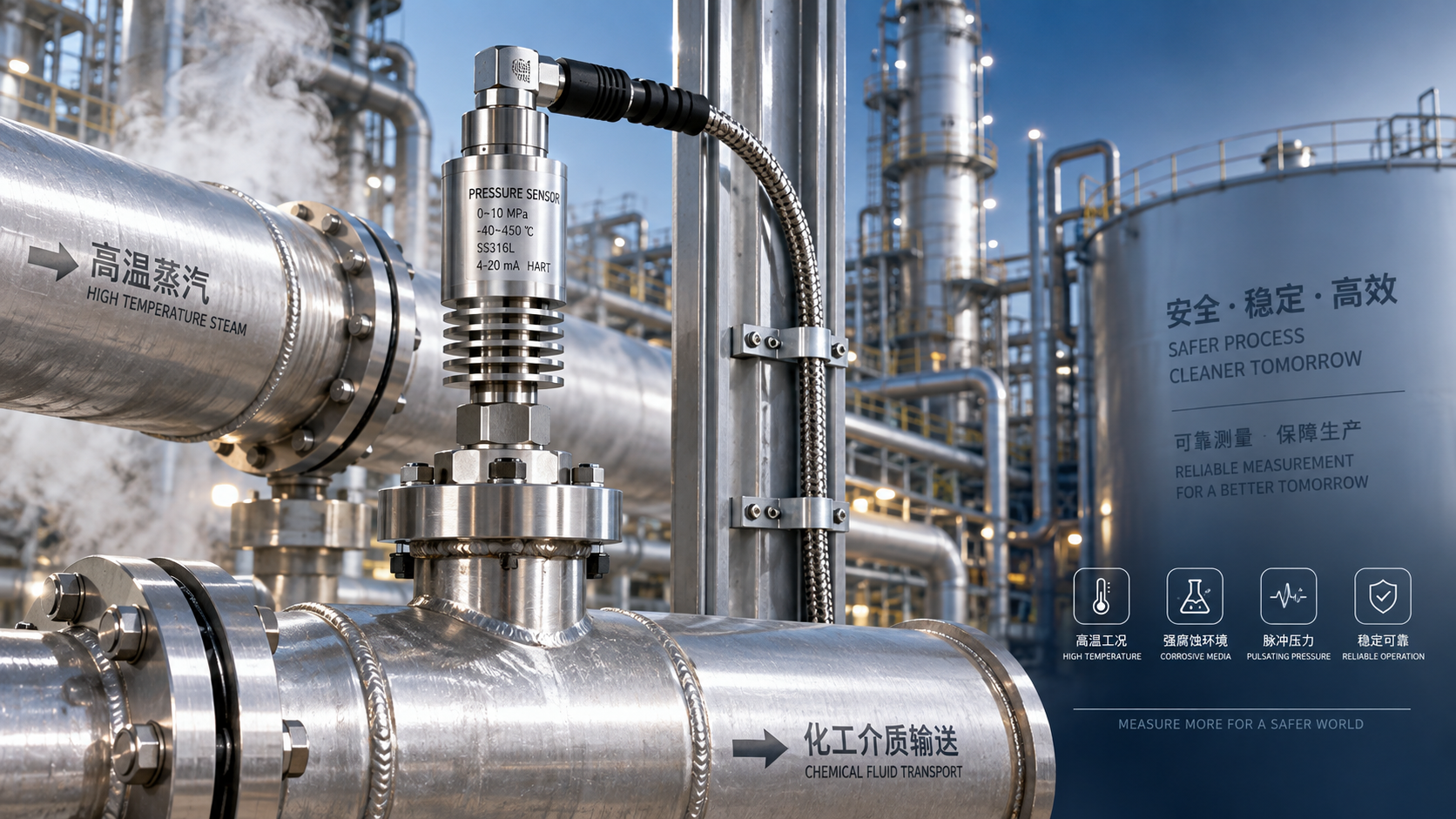
 Which parameters should be considered when selecting pressure sensors for high-temperature, corrosive, and pulsating operating conditions?
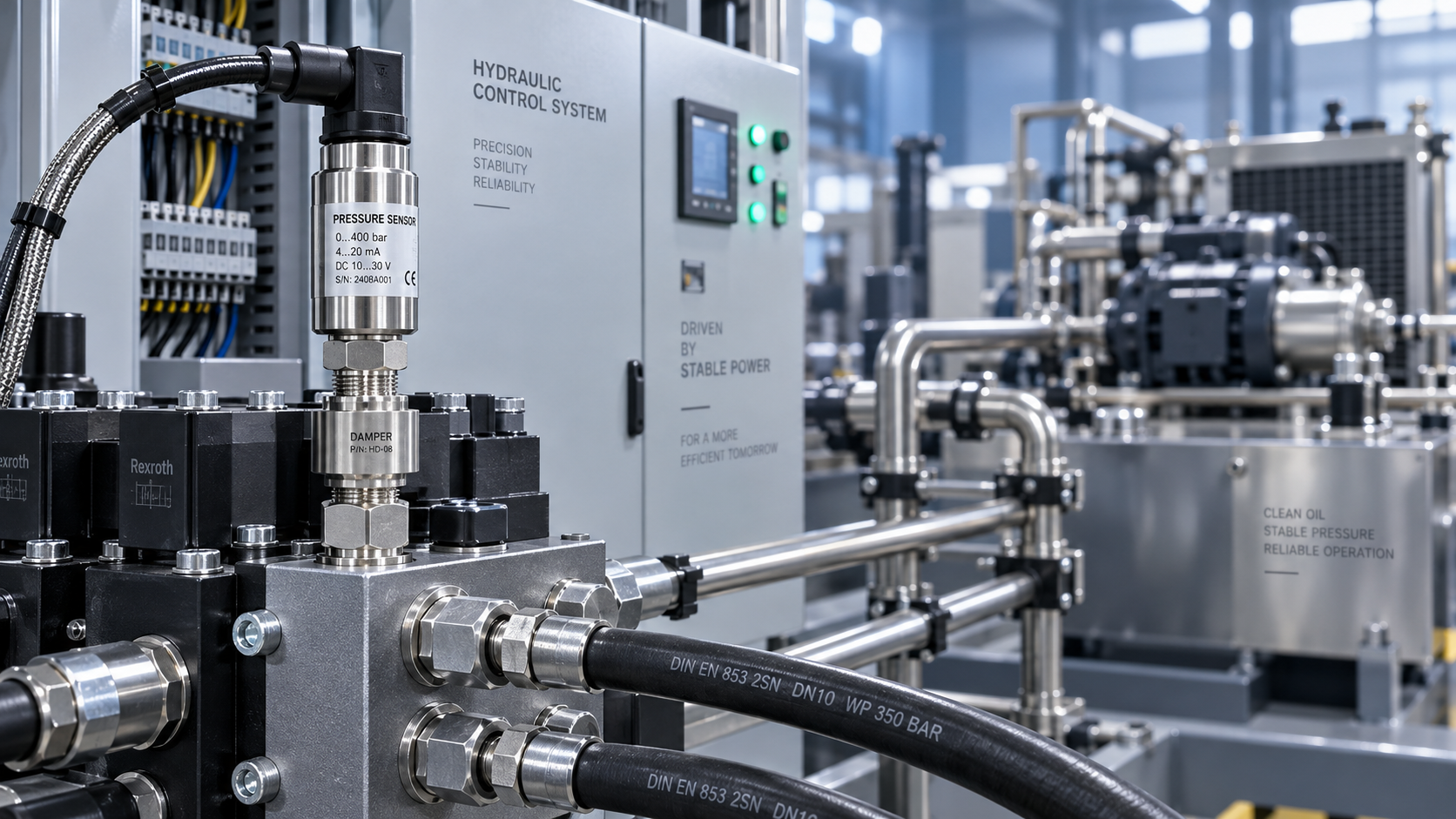
 Hydraulic equipment pressure fluctuates frequently. How can sensors be configured to improve control stability?