


News Center
—— NEWS CENTER ——
Xi'an Shenghongchuang Instrument Co., Ltd.
Contact: Mr. Zhang
Mobile: 15529283736
Email: shc-sensor@qq.com
Address: Fortune Building, Sanqiao Street, Xixian New Area, Xi'an, Shaanxi Province
LED Level Sensors and LCD Level Sensors: Why Price Should Not Be Judged by the Screen Alone
In level measurement project procurement, level sensors with display functions typically show greater price differences than models without displays. Price comparisons between LED level sensors and LCD level sensors are a concern for many purchasers, equipment integrators, and financial approvers. While the apparent difference between them is the display method, actual quotations are also affected by the measurement principle, output signal, housing material, process connection, environmental protection rating, and site operating conditions.
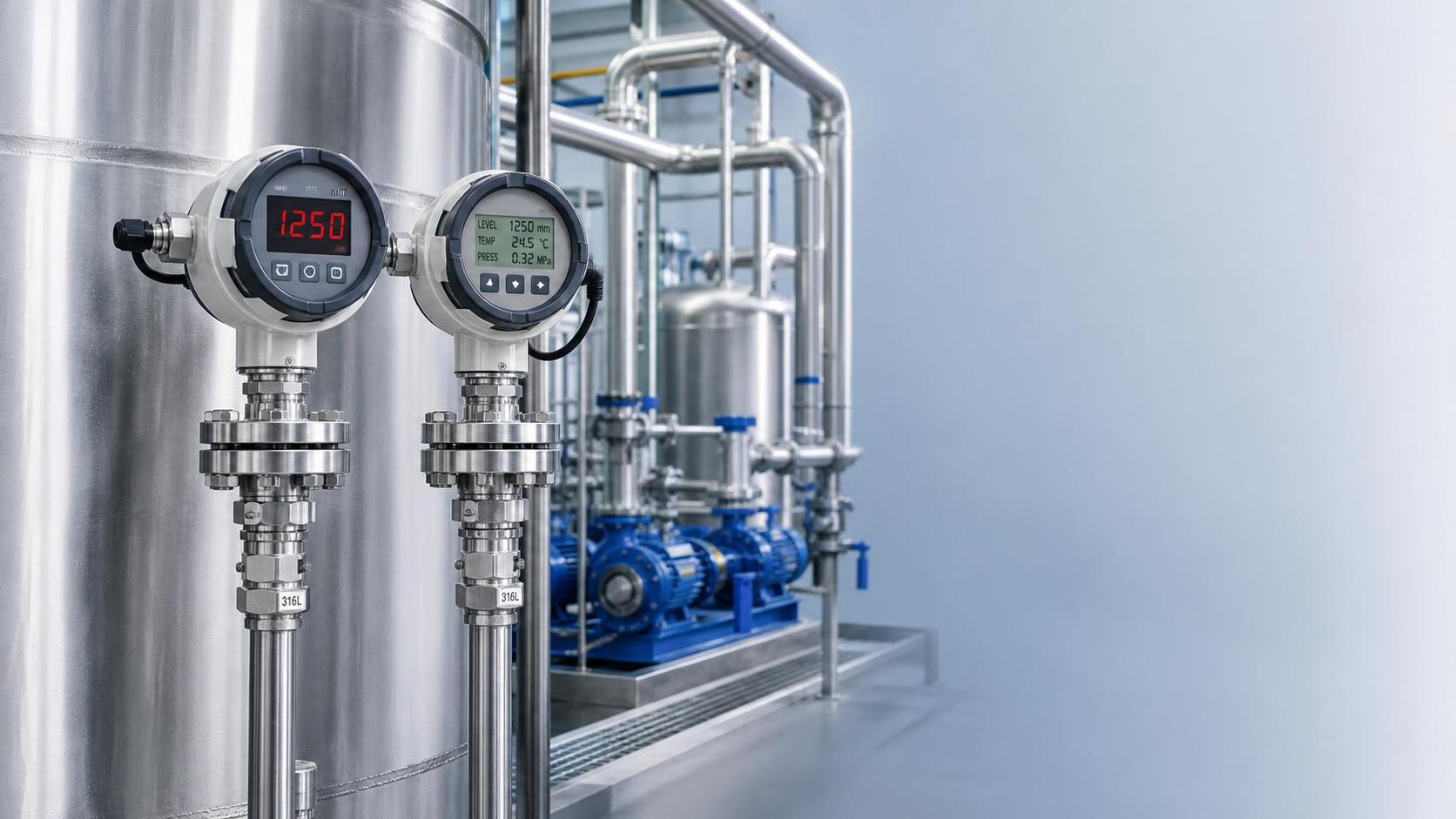
LED displays typically use digital tubes or illuminated characters, offering high brightness and good visibility from a distance. LCD displays mainly use liquid-crystal numeric or character interfaces, providing more displayed information and relatively lower power consumption. Under the same measuring range, accuracy, and pressure rating, the price difference caused by the LED and LCD display components themselves is often limited, with common configuration differences usually ranging from 5% to 15% of the total product price.
However, if an LCD model is equipped with menu programming, unit switching, trend display, alarm status, password protection, or communication parameter setting functions, its price may be 20% to 40% higher than that of a basic LED model. Therefore, when comparing quotations, first confirm whether the products are in the same measurement grade rather than directly judging the price based only on an “LED screen” or “LCD screen.”
Impact of Display Methods on Procurement Cost and Field Use
LED Display: Suitable for Quick Readings at Long Distances and in Bright Environments
LED level sensors commonly use red, green, or blue digital displays with high character brightness. In environments such as pump rooms, water conservancy gate stations, outdoor storage tanks, and workshop inspection routes, operators can usually still read level values quickly from 1 m to 5 m away. For applications requiring frequent inspections or involving complex on-site lighting, clear and intuitive LED readings offer practical value.
LED displays generally consume more power than standard LCD displays. When equipment is centrally powered by 24VDC, this difference usually does not become a critical limitation. For remote monitoring points requiring battery power, solar power, or long-term low-power operation, display-on time, sleep strategy, and complete-unit standby current should be evaluated.
Basic LED level display products have relatively straightforward structures and are suitable for displaying real-time level, percentage, or pressure-converted values corresponding to 4mA to 20mA. If the procurement objective is to enable field personnel to quickly confirm the level while data acquisition and alarm interlocking have already been completed by a PLC or host computer, an LED configuration usually offers a good cost-performance ratio.
Procurement Considerations for LED Configurations
Confirm whether the display supports switching between 0 to 100% level percentage, meters, millimeters, or engineering units, to avoid being able to read only raw pressure values on site. For different level ranges such as 5 m, 10 m, and 20 m, the number of displayed decimal places should also match the actual accuracy.
Verify whether the panel includes keypad locking, zero shift, and full-scale adjustment functions. For installation outdoors or in public areas, models with password locking can reduce measurement deviations caused by unauthorized parameter modifications.
If equipment is installed near strongly vibrating units, the display window, wiring terminals, and housing connection method also require particular confirmation. Comparing only display prices while overlooking vibration-resistant construction may significantly increase subsequent maintenance costs.
LCD Display: Suitable for Parameter Viewing and Low-Power Operation
LCD level sensors are commonly used in applications that require more status information to be displayed, such as level value, output current, units, alarm indicators, communication status, and menu parameters. For projects where technicians perform frequent commissioning and need to set damping time or measuring range on site, LCD multi-line displays and menu interaction are more convenient to operate.
In indoor control cabinets, equipment rooms, auxiliary equipment for food and pharmaceutical applications, or operating areas with stable lighting, LCD readability can generally meet requirements. It should be noted that standard LCDs may deliver poorer visual performance than high-brightness LEDs under direct strong sunlight, in low-temperature environments, or at wide viewing angles. The minimum ambient temperature at the site should be confirmed before procurement.
The price of LCD products is more closely related to interface functions. An LCD model displaying only a single level value may not be much more expensive than an LED model; however, products featuring backlighting, Chinese menus, HART communication, local configuration, and fault diagnosis functions are generally higher-configuration smart instruments and should not be simply compared side by side with basic digital LED models.
Six Configurations That Truly Create Price Differences
The core cost of a level sensor primarily comes from the sensing element and process solution. Submersible hydrostatic level sensors, diffused silicon pressure level transmitters, radar level meters, ultrasonic level meters, and magnetostrictive level meters operate on different principles and also have clearly different price ranges. Even when all are equipped with LED or LCD displays, their overall prices may differ by several times.
Accuracy grade is the second key factor. In conventional industrial level measurement, 0.5%FS accuracy can meet the needs of most water tanks, storage tanks, and process vessels. For metering control or high-stability applications, products with 0.25%FS or even higher accuracy require stricter sensor core selection and temperature compensation, so quotations naturally increase. The display should not become a reason to overlook the accuracy grade.
The third factor is wetted material and sealing method. Standard configurations such as 316L stainless steel and polyurethane cable may be selected for ordinary clean-water conditions; for media such as strong acids, strong alkalis, saline wastewater, and particle-containing slurry, PTFE, PVDF, Hastelloy, or special anti-corrosion coatings may be required. The costs associated with corrosion-resistant materials, flange connections, and explosion-proof certification are usually much higher than the display price difference between LED and LCD.
Technical Conditions That Should Be Standardized During Quotation Review
Purchasers should require suppliers to clearly specify the measuring range, medium temperature, supply voltage, output signal, accuracy grade, protection rating, and process connection in the quotation. For example, for level transmitters both powered by 24VDC and with 4mA to 20mA output, the calibration requirements for a 0 m to 5 m range and a 0 m to 30 m range are not exactly the same.
For outdoor water conservancy, wastewater treatment, and chemical projects, it should also be confirmed whether the protection rating reaches IP65, IP67, or higher requirements, whether the junction box is moisture-proof, and whether the cable outlet has reliable sealing. For flammable and explosive areas, explosion-proof markings, certificate scope, and installation requirements must be verified separately.
Communication functions also significantly affect price. 4mA to 20mA two-wire output is suitable for most conventional control systems; if RS485, Modbus, HART, or remote parameter configuration is required, the communication protocol, address settings, cable distance, and host computer compatibility should be included in the price comparison criteria.
Selecting LED or LCD Level Display Solutions by Operating Conditions
Water Conservancy, Water Treatment, and Outdoor Storage Tanks
In applications such as pools, water towers, pumping stations, channels, and wastewater lifting wells, on-site inspection personnel generally need to confirm values quickly. If the sensor is installed in a brightly lit location or where the viewing distance is long, priority should be given to a high-brightness LED display to facilitate routine inspection, together with 4mA to 20mA or RS485 signal connection to the control system.
The maintenance interval for water conservancy level sensors should be determined according to water quality, deposits, and installation location. Clean water or enclosed water tanks can be inspected once every 6 months to 12 months; for wastewater, river water, or sediment-containing media, it is recommended to inspect probe deposits, cable damage, and zero drift every 3 months to 6 months.
For outdoor selection, lightning protection, surge protection, and cable shielding should also be emphasized. The display method only addresses local reading; factors that truly affect long-term stability are waterproof sealing, mounting brackets, lead protection, and electrical interference resistance design.
Chemical Applications, Strong Alkalis, and Corrosion-Resistant Media
When using level sensors for strong alkalis, first confirm that the sensor wetted parts, cable sheath, sealing rings, and mounting flanges can all withstand the medium concentration and temperature. Do not overlook the corrosion risks of media such as sodium hydroxide and potassium hydroxide to ordinary metal and rubber components simply because an LCD has richer menu functions or an LED is lower priced.
There is no fixed answer for the service life of corrosion-resistant level sensors. Medium concentration, temperature, pressure fluctuations, cleaning frequency, and installation stress all create differences. Under properly matched operating conditions, compliant installation, and regular maintenance, industrial products can achieve a long service cycle; if materials are selected improperly, diaphragm corrosion or seal failure may occur within a relatively short time even when initial measurement is normal.
For vessels containing volatile gases, foam, crystallization, or agitation, it is necessary to further determine whether hydrostatic, ultrasonic, or radar solutions are suitable. Providing the medium name, concentration, maximum temperature, and tank structure during procurement can avoid repeat replacement costs resulting from selection deviations later.
Creating an Actionable Level Sensor Price Comparison Checklist
It is recommended to divide LED level sensors and LCD level sensors into two groups for comparison: “basic display type” and “smart configuration type.” Only by first defining the measurement principle, measuring range, accuracy, medium-contact materials, and protection requirements, and then comparing display, communication, alarm, and installation accessories, can meaningful procurement conclusions be reached.
For projects that only require on-site level reading and have a clear budget, an LED solution with a clear display, stable output, and reliable structure can be selected. For applications requiring local parameter adjustment, viewing multiple operating statuses, reduced commissioning difficulty, or consideration of low power consumption, LCD solutions offer greater advantages. Neither is absolutely superior or inferior; the key is whether the functions match the operating conditions and management process.
When submitting an inquiry, please prepare information including the medium name, level measuring range, installation method, supply voltage, output signal, operating temperature, pressure conditions, and whether LED or LCD display is required. Xi'an Shenghongchuang Instrument Co., Ltd. can provide level sensor selection, parameter confirmation, non-standard customization, and technical service recommendations based on site operating conditions, helping projects establish a reasonable balance among accuracy, reliability, and procurement cost.