News Center
—— NEWS CENTER ——
Xi'an Shenghongchuang Instrument Co., Ltd.
Contact: Mr. Zhang
Mobile: 15529283736
Email: shc-sensor@qq.com
Address: Fortune Building, Sanqiao Street, Xixian New Area, Xi'an, Shaanxi Province
Key Selection Factors for LDCR Electromagnetic Flowmeters in the Water Treatment Industry
In the water treatment industry, the selection of electromagnetic flowmeters directly affects the accuracy and stability of process control. As the core component of flow control equipment, the LDCR series electromagnetic flowmeters have become the preferred choice for municipal sewage and industrial wastewater treatment due to their excellent liquid flow sensor performance and water flow transmitter reliability. This article provides an in-depth analysis of the technical differences among five mainstream models such as ZFG-S and TOSHIBA-LF from the perspectives of measurement principles, lining materials, electrode selection, and other dimensions, providing operators with a basis for selection decisions.
1. Comparison of Measurement Accuracy and Range Ratio
There are significant differences in range ratio and accuracy class among different models of electromagnetic flowmeters:
- ZFG-S model: Uses low-frequency rectangular wave excitation technology, with a range ratio of up to 1000:1 and a basic error of ±0.3%R, making it particularly suitable for flow monitoring at the inlet and outlet of sewage treatment plants
- TOSHIBA-LF series: Equipped with a dual-frequency excitation system, it can still maintain high accuracy of ±0.2%R in wastewater measurement containing solid particles, with a range ratio of 800:1
- LY-LDE-A/B integrated and remote types: Optimizes signal stability through programmable frequency excitation, automatically adjusts the sampling frequency for liquids with different conductivity, and extends the range ratio to 1500:1
According to the requirements of GB/T18659-2018 "Electromagnetic Flowmeters", for water treatment scenarios it is recommended to select models with a range ratio ≥800:1 and automatic zero-point calibration function. For example, the built-in temperature compensation module of the ORBLDBE electromagnetic flowmeter can effectively overcome measurement deviations caused by changes in medium viscosity.
2. Analysis of Lining Materials and Medium Compatibility
The inserted PTFE rubber lining, as the core component in contact with the medium, directly affects the service life of the flowmeter:
For wastewater treatment scenarios with chloride ion concentrations exceeding 2000mg/L, it is recommended to give priority to the special ceramic lining of the ZFG-S electromagnetic flowmeter, whose corrosion resistance is more than 3 times higher than that of traditional PTFE rubber.
3. Electrode Configuration and Signal Processing Technology
The electrode material directly affects the signal acquisition quality of the liquid flow sensor:
- Tantalum electrode: Standard configuration for the ORBLDBE model, suitable for strongly corrosive media containing hydrochloric acid and sulfuric acid. Combined with its patented noise filtering algorithm, the signal-to-noise ratio is improved by 40%
- Hastelloy C276: The multi-electrode array design used in TOSHIBA-LF can automatically identify and compensate for measurement errors caused by asymmetry in the fluid profile
- Titanium electrode: The polarization suppression technology of the WSTE model can effectively overcome interference currents generated by electrolytes, making it particularly suitable for electroplating wastewater monitoring
According to on-site measured data, the SMART signal processor equipped in the LY-LDE series can control peak fluctuations during slurry measurement within ±1%FS, significantly outperforming conventional models.
4. Structural Design and Installation & Maintenance Points
Different models each have their own characteristics in mechanical structure:
- Remote display head: The WST electromagnetic flowmeter supports remote installation with a 10-meter cable, making it convenient for operation in harsh environments such as aeration tanks
- Quick-release mechanism: The clamp-type sensor design of ZFG-S shortens electrode cleaning time to 15 minutes
- IP68 protection: The fully welded stainless steel housing of LY-LDE-B is suitable for installation in underground pipe wells
It should be noted that the insertion installation of the AMF model requires straight pipe sections ≥5D upstream and downstream, while TOSHIBA-LF reduces this requirement to 3D through flow field optimization technology, greatly saving installation space.
Recommended Matching Solutions for Typical Application Scenarios
According to the characteristic requirements of different process sections in water treatment, the following model combination solutions are recommended:
- Municipal sewage treatment plants: Use LY-LDE-A at the water inlet (resistant to mud and sand abrasion), and ORBLDBE in the disinfection tank (resistant to sodium hypochlorite corrosion)
- Ultra-pure water systems in the electronics industry: WSTE electromagnetic flowmeter with 316L polished electrodes, meeting the cleanliness standard of SEMI F72
- Chemical wastewater treatment: ZFG-S+ceramic lining combination for handling media with high concentrations of organic solvents
Summary and Technical Service Support
As a national high-tech enterprise, Xi'an Shenghongchuang Instrumentation Co., Ltd. provides full-process services ranging from LDCR electromagnetic flowmeter selection consultation to on-site calibration. Our engineering team can recommend the optimal combination solution of liquid flow sensors and water flow transmitters based on your working conditions such as water quality parameters and pipeline layout. Contact our technical consultants now to obtain technical manuals and industry application case collections, including samples of inserted PTFE rubber lining materials.
Related Recommendations
![]() Southchip Technology Launches Its First Optical Sensor, the SC52115, for Wearable Devices
Southchip Technology Launches Its First Optical Sensor, the SC52115, for Wearable Devices How does a pressure sensor convert changes in applied force into usable electrical signals?
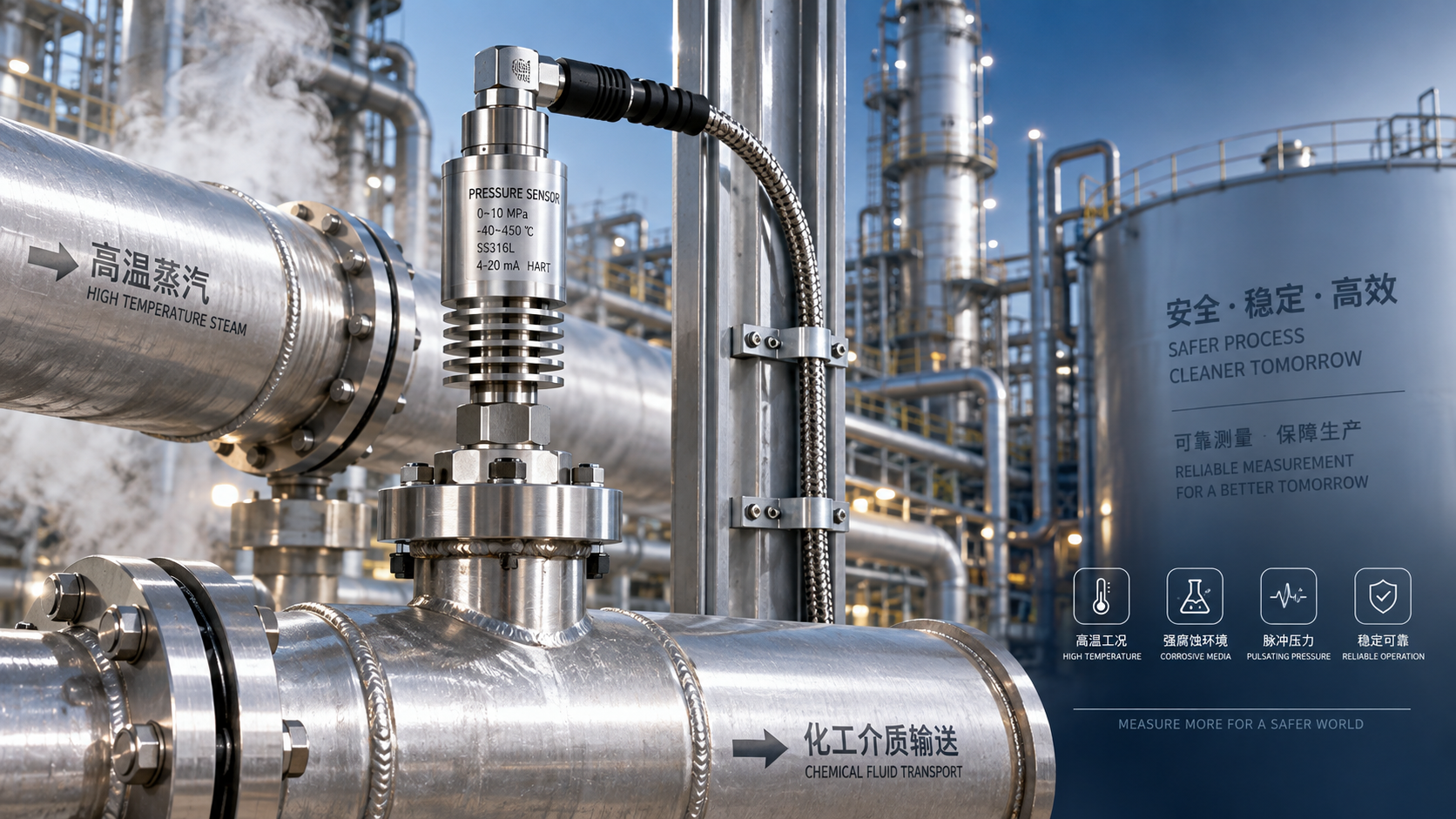
 Which parameters should be considered when selecting pressure sensors for high-temperature, corrosive, and pulsating operating conditions?
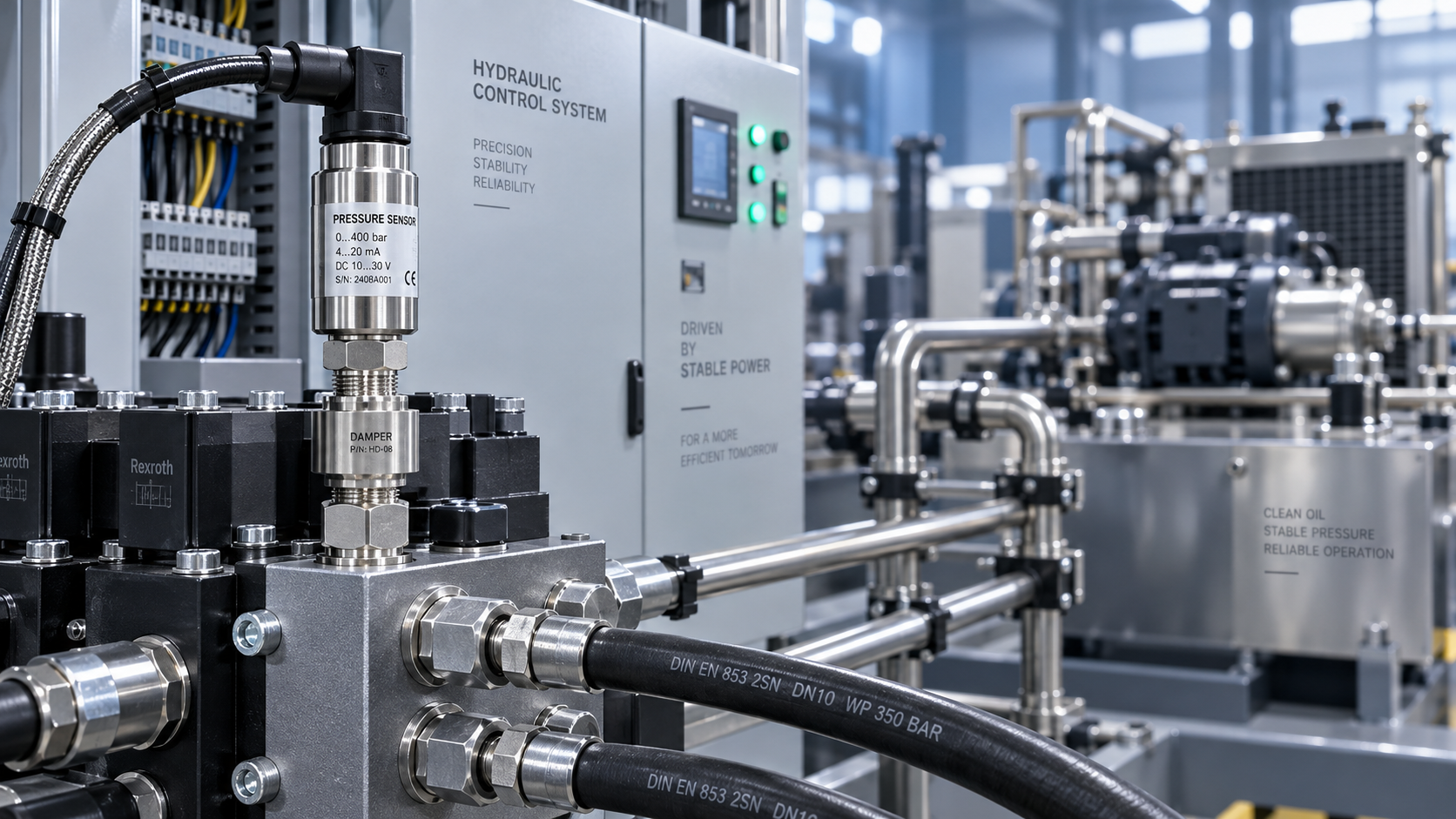
 Hydraulic equipment pressure fluctuates frequently. How can sensors be configured to improve control stability?